Junte-se a nós em uma viagem ao mundo dos livros!
Adicionar este livro à prateleira
Grey
Deixe um novo comentário Default profile 50px
Grey
Assine para ler o livro completo ou leia as primeiras páginas de graça!
All characters reduced
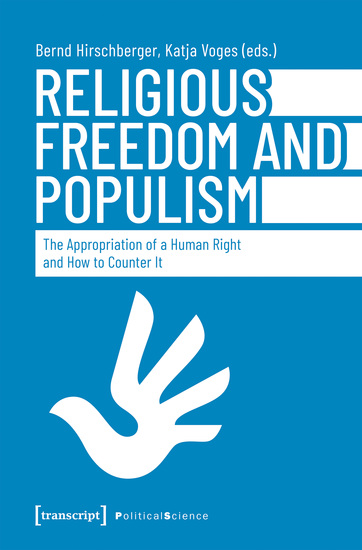
Religious Freedom and Populism - The Appropriation of a Human Right and How to Counter It - cover
LER

Religious Freedom and Populism - The Appropriation of a Human Right and How to Counter It

Bernd Hirschberger, Katja Voges

Editora: transcript Verlag

  • 0
  • 0
  • 0

Sinopse

Populism is a growing threat to human rights. They are appropriated, distorted, turned into empty words or even their opposite. The contributors to this volume examine these practices using the example of freedom of religion or belief, a human right that has become a particular target of right-wing populists and extremists worldwide. The contributions not only show the rhetorical patterns of appropriation and distortion, but also demonstrate for various countries which social dynamics favor the appropriation in each case and propose how to strengthen human rights and the culture of debate in democratic societies.
Disponível desde: 31/03/2024.
Comprimento de impressão: 371 páginas.

Outros livros que poderiam interessá-lo

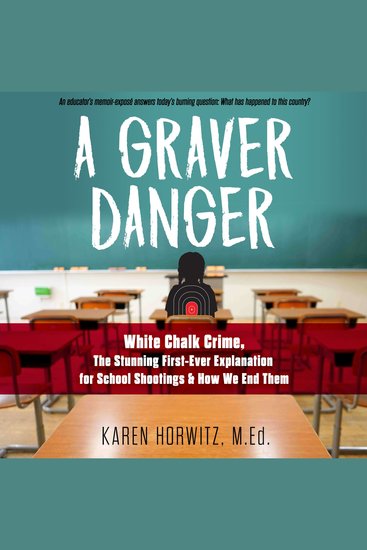
  • A Graver Danger - White Chalk Crime The Stunning First-Ever Explanation for School Shootings & How We End Them - cover

    A Graver Danger - White Chalk...

    Karen Horwitz M.Ed

    • 0
    • 0
    • 0
    You will be thrilled to find a book that answers what happened to America so you can help heal our beloved country. In 1995, Karen Horwitz, aka the CHANGE EVERYTHING TEACHER, discovered our schools suffered from the 'Harvey Weinstein syndrome'—the powerful get their way no matter how wicked until someone finds the courage to expose them. She wrote a memoir to do to those running our schools what that brave actress who testified against Weinstein did — expose and end wrongdoing of a different kind. Readers will learn why we have school shootings and how to end them and restore democracy.She names the corruption that transformed our schools from revered institutions to mere shells White Chalk Crime™ and reveals how it dismantled democracy. The sheer audacity and disbelief of this corruption prompted her to write a book so that citizens could comprehend its extent. She warns, "There are consequences for a society that allows evil an honored home. One is school shootings, which are the tip of the democracy-destroying iceberg, taking our country down Titanic-style. Abraham Lincoln warned, 'The philosophy of the schoolroom in one generation will be the philosophy of government in the next.'  When I taught, it was as if  Trump ran our schools."She reveals that those in power secretly thwart school reform and presents an 'idea invention' that will revolutionize education as Jeff Bezos did to marketing and Steve Jobs to computers. It includes a blueprint for top-notch schools that ensures a home for great teachers and tells about a grassroots movement for change.This book is a beacon of hope, showing that change is within reach. It inspires the reader to feel optimistic about the future of education and democracy. This engaging and insightful book on education takes those who cherish democracy and fear autocracy on a journey deep inside our schools, where the root of many of this nation's challenges lies. It will change a whole lot. PDFs at WhiteChalkCrime.com/audio
    Ver livro
  • For F*ck's Sake - Why Swearing is Shocking Rude and Fun - cover

    For F*ck's Sake - Why Swearing...

    Rebecca Roache

    • 0
    • 0
    • 0
    Why do we love to swear so much? Why do we get so offended when others do it? 


    In this lively and amusing exploration of the various puzzles that surround swearing, philosopher Rebecca Roache argues that what makes swearing offensive is not really the words at all: the offensiveness lies in what we don't say. The unspoken—and usually unconscious—inferences that speakers and listeners make about each other are key to explaining swearwords' capacity to shock. Swearing is unique among etiquette breaches in that it is designed to convey disrespect—swearing packs more of a punch than failing to say "please." 


    Roache helps listeners understand how swearing works, celebrating its power as a communicative tool and source of humor while also taking a close and serious look at specific words—those directed at women and women's bodies, for example—that function in particular, complex ways. She also examines the often-hypocritical ways swearing can be punished or censored. 


    Finally, Roache helps listeners appreciate that swearing isn't always bad. When it's not used offensively, it can foster social intimacy, can help people withstand pain, and might even help us curb our violent impulses.
    Ver livro
  • The Magnificent Mischief of Tad Lincoln - cover

    The Magnificent Mischief of Tad...

    Raymond Arroyo

    • 0
    • 0
    • 0
    Read by the author with an audiobook-exclusive Q&A! 
    From New York Times bestselling author and news anchor Raymond Arroyo comes a fun picture book biography of Tad Lincoln, his relationship with his father President Abraham Lincoln, and a story about a parent’s love for his son and the wisdom of a child. Full of humor, this romp through history will teach children about the power of curiosity, imagination, friendship, empathy, determination…and even a little mischief!  
    Tad Lincoln was forever getting into trouble. He bounced around the White House making mischief and annoying almost everyone but the president. Yet Tad was his father’s joy and comfort amidst a brutal war, a family tragedy, and the toll of holding the nation’s highest office. When Tad befriends a turkey meant to be holiday dinner, his plea for the pet to be spared teaches Abe a lesson about mercy. It also starts the tradition of the presidential turkey pardon, a tradition that presidents carry on to this day. 
    In The Magnificent Mischief of Tad Lincoln readers 4-8 will:learn about the larger-than-life personality of Tad Lincoln and his father President Abe Lincoln, highlighting the importance of familysee the impact of empathy and understanding towards othersbe inspired by Tad’s resilience and determination, as he overcomes challenges learning to read and dealing with a speech impedimentenjoy Tad’s mischievous and adventurous spirit, encouraging children to embrace their curiosity, explore new ideas, and make a difference in the lives of others by being themselves
    Ver livro
  • Civil Wars - A Very Short Introduction - cover

    Civil Wars - A Very Short...

    Monica Duffy Toft

    • 0
    • 0
    • 0
    Civil wars are the most common form of large-scale political violence. In the past thirty years, the study of civil wars has been one of the largest growing segments of the international relations field. Their causes are complex, ranging from fights over access to housing, jobs, and land or other resources, to political contests over offices, rights, and representation. Groups form, collapse, coalesce, align and realign, and then fight amongst themselves. Governments themselves change through elections, coups, military defeats, or revolutions. Understanding the origins of civil wars and their trajectories therefore demands some appreciation of the economic, political, social, cultural, and geographic order of societies. If there is one factor that best predicts why a civil war erupts, it is a prior civil war. That is why knowledge of a country's history of political violence, and associated narratives about who is to blame and why, are critical to understanding where a civil war might next occur. We now have a better understanding of the conditions under which civil wars generally emerge, how the fighting evolves, and how civil wars end. However, historical understanding—the human dimensions—remain every bit as critical. This book explores current debates on civil wars and how the reasons for fighting (and the nature of belligerents themselves) are changing.
    Ver livro
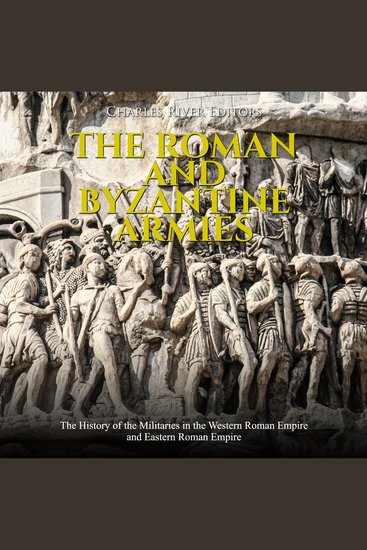
  • Roman and Byzantine Armies The: The History of the Militaries in the Western Roman Empire and Eastern Roman Empire - cover

    Roman and Byzantine Armies The:...

    Editors Charles River

    • 0
    • 0
    • 0
    The Roman army is one of the most famous fighting forces in history. Through its power and prowess, a once obscure Italian city forged an empire that encircled the Mediterranean and covered half of Europe. The physical remains of its presence can be traced from the mountainous borders of Scotland to the arid deserts of Egypt, but its legacy is far greater and more enduring, as Rome's influence continues to shape the political, legal, and cultural landscape of Europe to this very day. 
    While the Roman army is rightly famed as an institution, the image of the individual legionary is also an iconic one. The uniformed, disciplined soldier of the late Republic and early Empire is one of the first things many people imagine when they think of Rome. They are the ultimate image of the ancient soldier, their arms and armor instantly recognizable. Their abilities, not only as warriors but also as engineers and administrators, have made them role models for other soldiers through the centuries. In the same vein, their commanders are still celebrated and studied, and generals the world over have tried to emulate the likes of Julius Caesar. 
    The Byzantine Empire was the heir to two great cultures that cradled and nurtured European civilization: Greece and Rome. Constantinople, now called Istanbul, became a center of power, culture, trade, and technology poised on the edges of Europe and Asia, and its influence was felt not only throughout Europe but the Middle East, Africa, Central Asia, and the Far East. In reality, Byzantium was a strong, organized, highly effective and adaptable civilization for most of its long history. It owed its success in no small part to its military, which, in contrast to the feudal armies of Western Europe and the tribally based forces of the Middle East, operated with a high level of discipline, strategic prowess, efficiency, and organization.
    Ver livro

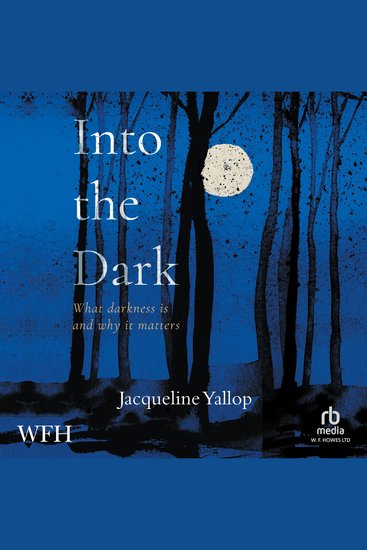
  • Into the Dark - What darkness is and why it matters - cover

    Into the Dark - What darkness is...

    Jacqueline Yallop

    • 0
    • 0
    • 0
    Can you remember the first time you encountered true darkness? The kind that remains as black and inky whether your eyes are open or closed? Where you can't see your hand in front of your face? 
     
    Jacqueline Yallop can. It was in an unfamiliar bedroom while holidaying in Yorkshire as a child, and ever since then she has been fascinated by the dark, by our efforts to capture or avoid it, by the meanings we give to it and the way our brains process it. 
     
    Taking a journey into the dark secrets of place, body and mind, she documents a series of night-time walks, exploring both the physical realities of darkness and the psychological dark that helps shape our sense of self. Exploring our enduring love-hate relationship with states of darkness, she considers how we attempt to understand and contain the dark, and, as she comes to terms with her father's deteriorating Alzheimer's, she reflects on how our relationship to the dark can change with time and circumstance. 
     
    Darkness captivates, baffles and appals us. It's a shifty thing of many textures, many moods, a state of fascination and of horror, an absence and a presence, solace and threat, a beginning and an end. Into the Dark is the story of the many darks that fascinate and assail us. It faces the darkness full on in all its guises and mysteries, celebrating it as a thing of beauty while peering into the void.
    Ver livro