Junte-se a nós em uma viagem ao mundo dos livros!
Adicionar este livro à prateleira
Grey
Deixe um novo comentário Default profile 50px
Grey
Assine para ler o livro completo ou leia as primeiras páginas de graça!
All characters reduced
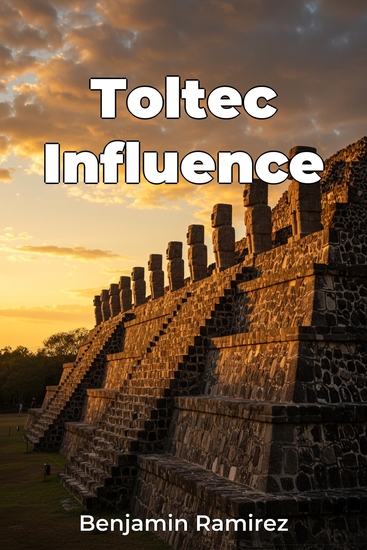
Toltec Influence - cover
LER

Toltec Influence

Benjamin Ramirez

Tradutor A AI

Editora: Publifye

  • 0
  • 0
  • 0

Sinopse

Toltec Influence explores the profound and lasting impact of the Toltec civilization on Mesoamerica, particularly on the Aztecs. It examines how the Toltecs, despite their relatively short reign, laid a cultural foundation that later societies deliberately emulated. The book highlights architectural innovations like Atlantean figures and serpent columns, alongside the integration of deities like Quetzalcoatl into the broader Mesoamerican religious landscape. Understanding the Toltec civilization provides insight into the ideological and physical structures adopted by successor cultures. The book meticulously dissects the Toltec's rise and decline, then transitions to the architectural techniques, symbolic meanings, and regional variations in their building styles. Subsequent chapters explore the Toltec religious system, focusing on key deities, rituals, and cosmological beliefs. By contrasting Toltec and Aztec practices, the book reveals how the Aztecs strategically appropriated Toltec elements to legitimize their rule and connect themselves to a prestigious past, reinforcing their political and spiritual authority. Through archaeological evidence, historical accounts, and art analysis, Toltec Influence offers a comprehensive look at Mesoamerican history. It stands out by focusing on how Toltec influence was transmitted and transformed, rather than simply cataloging similarities between cultures. This exploration offers value to students, scholars, and anyone interested in understanding the complex relationship between past and present in ancient civilizations.
Disponível desde: 29/03/2025.
Comprimento de impressão: 58 páginas.

Outros livros que poderiam interessá-lo

  • Liao Dynasty - Nomadic Conquerors of Northern China - cover

    Liao Dynasty - Nomadic...

    Rolf Hedger

    • 0
    • 0
    • 0
    The story of the Liao people begins in the vast and harsh steppe regions to the north of China, where they first emerged as a formidable force in the region’s history. The Liao were a nomadic group, characterized by their mastery of horseback riding and combat, which set them apart from the sedentary agricultural societies of the surrounding civilizations. Their origins are not fully understood, but it is widely believed that they came from the Mongolian Plateau, migrating southward and eastward into the northern reaches of China during the early centuries of the Common Era. 
    In their early years, the Liao people were organized into various tribes, each with its own leadership and customs. These tribes were constantly in motion, following the migratory patterns of their livestock and engaging in periodic warfare with one another for dominance and resources. Despite the chaotic nature of their existence, the Liao were bound together by a common identity rooted in their nomadic lifestyle and warrior culture. Over time, they developed a strong sense of unity, driven by their shared need to survive in an unforgiving environment. 
    As the tribes of the Liao people grew in number and influence, they began to organize themselves more systematically under the leadership of powerful chieftains. These chieftains rose to prominence not only through their military prowess but also through their ability to forge alliances and broker peace with neighboring peoples. The Liao were skilled diplomats, and many of their early leaders recognized the value of creating relationships with the settled agricultural societies that dominated China’s northern frontier. This strategic diplomacy allowed them to secure critical resources, such as grain and horses, while maintaining their autonomy and military strength.
    Ver livro
  • Rock 'n' Roll - A Very Short Introduction - cover

    Rock 'n' Roll - A Very Short...

    Elijah Wald

    • 0
    • 0
    • 0
    Rock 'n' roll appeared in the 1950s as the high-energy, electrically amplified music of young dancers and listeners, first in the United States and then around the globe, and from the beginning it symbolized more than music. First popularized as a marketing rubric to sell African-American rhythm and blues to white teenagers, it stood for racial integration, sexual freedom, youthful rebellion, and for change and modernity. It was never a single kind of music, and historians disagree about when it began and which artists or records should be included in its canon—but it was always a flashpoint, whether condemned as an assault on cultural standards or hailed as the most exciting movement of the twentieth century.This Very Short Introduction explores the complex musical styles and evolutions of the genre and also examines it as product, symbol, and vehicle of societal change. The introduction seamlessly integrates the genre with elements of 1955-1965's mass influence, including the rise of television and niche radio formats, the civil rights movement, a new concept of "teenagers" as a unique age group, and a sexual revolution. Rock 'n' Roll traces the rise and trajectories of the styles and musicians grouped as rock 'n' roll and their journey to becoming emblems of much more.
    Ver livro
  • Never Be Alone Again - How Bloghouse United the Internet and the Dancefloor - cover

    Never Be Alone Again - How...

    Lina Abascal

    • 0
    • 0
    • 0
    Whether you called it electro, indie dance, or were too busy scouring the internet for MP3s to care about a genre name, Never Be Alone Again: How Bloghouse United the Internet and the Dancefloor connects the disparate parts of an under-documented era in the first book focused on the musical and cultural phenomenon called bloghouse. 


    For a brief period in the mid-2000s, a network of independent music bloggers and fans merged the digital and physical worlds in a never-before-seen way. Their punk-inspired DIY ethos elevated noname DJs, music producers, and parties to a level of international success that was quickly eclipsed by corporatized EDM and the music festival boom. But before that, for a moment, there was bloghouse. 


    Never Be Alone Again: How Bloghouse United the Internet and the Dancefloor chronicles the rise of the DJ-slash-It Girl, roaming party photography, illegal Mp3 file sharing, canonical scene reports of bloghouse capitals Los Angeles and Paris, the overlooked impact of suburban Latino communities on nightlife, Kanye West's contribution to the movement, and the slow death of the blog itself.
    Ver livro
  • The Bond Code - cover

    The Bond Code

    Philip Gardiner

    • 0
    • 0
    • 0
    Ian Fleming was a true visionary, a dualistic individual who spent much time in his early life in a "special" school in Austria. It was here where he learned the sacred ways of the early Gnostics and Occultists and developed the very root of the enigmatic secret and eternal charisma of James Bond. 
     
    Fleming explicitly said that Bond was Manichean, a distinctly Gnostic concept. The Bond books and films are strategically seeded with alchemical and Gnostic references for those with "the eyes to see". Fleming associated with mystics and initiated individuals around the globe. 
     
    In the Bond Code, we shall see how deep this web of the occult truly went. Fleming lived in a fantasy world that led him into a land of sinister and esoteric thought. He created his own alter-ego as a great alchemical work to fulfill his own tumultuous and chaotic mind, and he left behind a set of clues and codes for us to decipher. 
     
    Philip Gardiner finally unravels the secret of James Bond, piece by piece, radically reappraising everything we thought we knew about this secret agent and his creator. 
     
    Join us on this journey in a very special and unique audio book version.
    Ver livro
  • Medieval Education - The Rise of Universities - cover

    Medieval Education - The Rise of...

    Harris Ropes

    • 0
    • 0
    • 0
    During the early medieval period, education in Europe was primarily shaped by the influence of the Church. With the decline of the Western Roman Empire, formal education systems deteriorated, leaving monasteries and cathedral schools as the main centers of learning. These institutions preserved classical knowledge and played a crucial role in the intellectual revival of the Middle Ages. Monastic and cathedral schools provided education for clergy members and, over time, expanded their reach to include nobles and, in some cases, commoners. 
    Monastic schools were among the earliest centers of learning, with monks serving as teachers and scribes. These schools focused on religious instruction, teaching Latin, biblical texts, and theological commentaries. The goal was to prepare future clergy members for service in the Church. Monastic scriptoria were responsible for copying and preserving important texts, ensuring the transmission of classical and Christian knowledge. While most students in monastic schools were destined for religious life, some noble families sent their sons for education in literacy and administration, as the Church held significant political influence. 
    Cathedral schools emerged as a response to the growing demand for education beyond monastic settings. They were often attached to large churches or bishoprics and provided instruction to a wider audience, including future clergymen, royal officials, and scholars. These schools offered a more structured curriculum, covering subjects such as grammar, rhetoric, and logic, which formed the foundation of medieval education. Over time, cathedral schools developed into important intellectual hubs, attracting students from various regions. The presence of prominent teachers and scholars helped establish certain cathedral schools as precursors to medieval universities.
    Ver livro
  • Original Method Actors The: The Lives and Legacies of James Dean Marlon Brando and Montgomery Clift - cover

    Original Method Actors The: The...

    Editors Charles River

    • 0
    • 0
    • 0
    It would be no exaggeration to say that James Dean has been more mythologized than any other actor in history, a development due more to his off-screen personality and conduct than the films he actually starred in. Much of Dean’s appeal derives from his humble and ordinary origins, and audiences are drawn to the romance of the Indiana farm boy who catapulted to the top of the motion picture industry in a single year — the same year that would see him die. 	Of course, James Dean remains well-known for being anything but humble and ordinary. As famous as his films are, Dean’s story is inextricably tied to his love for racing cars and his death in a high speed car crash.  
    Marlon Brando. Few names in the acting profession evoke such a strong, almost visceral reaction. Over the course of his long, prolific career, he was considered perhaps the greatest actor of the 20th century as well as one of the most complicated and misunderstood. Uniquely able to be both emotionally charged and technically constrained in the same performance, he single-handedly changed the direction of not only the American style of acting, influencing successors such as Robert De Niro, Al Pacino and even Johnny Depp, but the acting profession on a global scale. His iconic interpretations of characters such as Stanley Kowalski (A Streetcar Named Desire), Terry Malloy (On the Waterfront) and Vito Corleone (The Godfather) have been forever burned into the collective memory of film and theatre aficionados, scholars and critics for their immense passion, rage, love, defiance, vulnerability, cruelty and tenderness – basically, the full spectrum of the human condition. With several Oscars and Golden Globes to his name, Brando’s contributions remain the gold standard of the acting craft, and the American Film Institute has listed him as the 4th greatest screen legend in history.  
    Ver livro