Junte-se a nós em uma viagem ao mundo dos livros!
Adicionar este livro à prateleira
Grey
Deixe um novo comentário Default profile 50px
Grey
Assine para ler o livro completo ou leia as primeiras páginas de graça!
All characters reduced
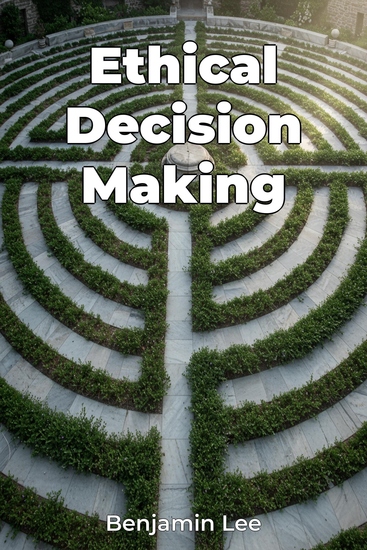
Ethical Decision Making - cover
LER

Ethical Decision Making

Benjamin Lee

Tradutor A AI

Editora: Publifye

  • 0
  • 0
  • 0

Sinopse

Ethical Decision Making explores the psychological underpinnings of moral choices in the workplace, challenging the notion that ethical lapses are solely due to "bad apples." Instead, it argues that systemic decision-making flaws and predictable psychological mechanisms significantly shape ethical conduct. The book delves into cognitive biases, such as confirmation bias, that cloud judgment, and examines how organizational culture, leadership styles, and incentive structures influence ethical behavior. By understanding these influences, organizations can create environments that promote ethical behavior and mitigate misconduct. The book progresses from examining the psychological foundations of moral judgment to practical applications in organizational settings. It integrates insights from management theory, psychology, and business management, providing a comprehensive understanding of ethical decision-making. What sets this book apart is its focus on applying behavioral ethics principles to real-world challenges, offering concrete strategies for implementing ethical programs and fostering a culture of ethical conduct. Ultimately, it equips readers with tools to identify ethical risks and design ethical incentive structures, promoting ethical conduct at all organizational levels.
Disponível desde: 20/02/2025.
Comprimento de impressão: 97 páginas.
Outros livros que poderiam interessá-lo

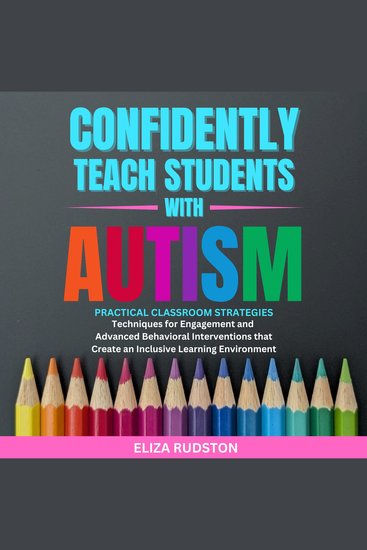
  • Confidently Teach Students with Autism - Practical classroom strategies techniques for engagement and advanced behavioral interventions that create an inclusive learning environment - cover

    Confidently Teach Students with...

    Eliza Rudston

    • 0
    • 0
    • 0
    Confidently Teach Students with Autism is an all-in-one guidebook for teachers with all levels of experience. This book will empower you to enhance the learning outcomes and engagement of your students, creating a positive and inclusive classroom atmosphere.  
    Here's a peek into what you'll find in this comprehensive guide: 
    Practical strategies for managing classroom behavior in students with autism. 
    Effective techniques for modifying lesson plans to support diverse learners. 
    Ways to create a sensory-friendly classroom environment without complex adjustments. 
    How to maintain a student with autism's attention with proven engagement techniques. 
    Essential communication strategies to build strong partnerships with parents. 
    A step-by-step guide to integrating visual supports into your daily teaching routine. 
    Top tech tools that can enhance learning and accessibility for students with autism. 
    Real-life case studies and examples to illustrate the practicality of each strategy. 
    Critical elements of positive behavior support plans individualized for your students. 
    How to promote social skills development through structured group activities. 
    Proven methods for assessing student progress in an inclusive classroom. 
    Tips for facilitating meaningful peer interactions between students with and without autism. 
    The secrets to using rewards and reinforcements effectively and ethically. 
    Success stories from classrooms around the world to inspire and motivate you. 
    Confidently Teach Students with Autism is designed to be straightforward and practical, offering insights that you can put into practice right away. Even if you have tight schedules and limited resources, these strategies are created to fit into your existing routine without overwhelming you.
    Ver livro
  • African American Slave Medicine - Herbal and Non-Herbal Treatments - cover

    African American Slave Medicine...

    Herbert C. Covey

    • 0
    • 0
    • 0
    African American Slave Medicine offers a critical examination of how African American slaves' medical needs were addressed during the years before and surrounding the Civil War. Drawing upon ex-slave interviews conducted during the 1930s and 1940s by the Works Project Administration (WPA), Dr. Herbert C. Covey inventories many of the herbal, plant, and non-plant remedies used by African American folk practitioners during slavery. He demonstrates how active the slaves were in their own medical care and the important role faith played in the healing process. This book links each referenced plant or herb to modern scientific evidence to determine its actual worth and effects on the patients. Through his study, Dr. Covey unravels many of the complex social relationships found between the African American slaves, Whites, folk practitioners, and patients. African American Slave Medicine is compelling and captivating listening that will appeal to scholars of African American history and those interested in folk medicine.
    Ver livro
  • The Twelve Keys Of Basil Valentine - cover

    The Twelve Keys Of Basil Valentine

    Basil Valentine

    • 0
    • 0
    • 0
    Brought to you by Altrusian Grace Media and narrated by Matthew Schmitz.
     
    The Twelve Keys of Basil Valentine is a widely reproduced alchemical book attributed to Basil Valentine. It was first published in 1599 by Johann Thölde who is likely the book's true author. It is presented as a sequence of alchemical operations encoded allegorically in words, to which images have been added. The first Basil Valentine book to discuss the keys is Ein kurtz summarischer Tractat, von dem grossen Stein der Uralten ("A Short Summary Tract: Of the great stone of the ancients"), 1599. The first part of the book is a discussion of general alchemical principles and advice about the philosopher's stone. The second half of Ein kurtz summarischer Tractat, under the subtitle "The Twelve Keys", contains twelve short chapters. Each chapter, or "key", is an allegorical description of one step in the process by which the philosopher's stone may be created. With each step, the symbolic names (Deckname, or code name) used to indicate the critical ingredients are changed, just as the ingredients themselves are transformed. The keys are written in such a fashion as to conceal as well as to illuminate: only a knowledgeable reader or alchemical adept was expected to correctly interpret the veiled language of the allegorical text and its related images. Alchemy.
    Ver livro
  • Searching for George Gordon Meade - The Forgotten Victor of Gettysburg - cover

    Searching for George Gordon...

    Tom Huntington

    • 0
    • 0
    • 0
    A historian chronicles the life of the Union Civil War general while recounting his own unusual journey during his investigation into the past. Who was George Gordon Meade? He should be remembered as one of the Civil War’s most important generals. Instead, history has pushed him aside. The hot-tempered Meade received command of the Union’s dysfunctional Army of the Potomac only three days before he defeated Robert E. Lee’s Confederates at Gettysburg. After that, Meade watched his reputation decline, thanks in part to the escape of Lee’s army, hostility from politicians and the press, the machinations of Gen. Daniel Sickles, and the rise of Ulysses S. Grant. “I suppose after a while,” Meade once grumbled, “it will be discovered I was not at Gettysburg at all.”  The Rodney Dangerfield of Civil War generals, Meade gets no respect—and author Tom Huntington wanted to find out why. In Searching for George Gordon Meade, he tells the story of the general’s life and his participation in the Civil War’s great engagements, from George McClellan’s Richmond Campaign to Appomattox. Huntington also provides accounts of his own investigations of Meade’s legacy. Along the way he hikes across battlefields, recites the names of fallen soldiers at a candlelit ceremony at Gettysburg, drinks a champagne toast at Meade’s grave on New Year’s Eve, and visits a severed leg, a buried arm, and a horse’s head. The result is a quirky and compelling mash-up of history, biography, travel, and journalism that casts new light on an overlooked figure from the past. Praise for Searching for George Gordon Meade“Unique and irresistible.” —Harold Holzer, chairman of Lincoln Bicentennial Foundation“Huntington’s wry, boisterous biography-within-a-travel journal . . . strives to remake the reputation of Meade and offers a compelling new way to approach biography.” —John G. Shelby, Meade: The Price of Command, 1863–1865 “It’s the rare reader who will not enjoy accompanying Huntington on his search for Meade.” —America’s Civil War "A refreshingly readable and well-researched book. . . . Searching for George Gordon Meade should be required reading for all those interested in Civil War history.” —Civil War News
    Ver livro
  • Swimming in the Sacred - Wisdom from the Psychedelic Underground - cover

    Swimming in the Sacred - Wisdom...

    PhD Rachel Harris

    • 0
    • 0
    • 0
    WISDOM FROM THE WOMEN HEALERS OF THE PSYCHEDELIC UNDERGROUND 


    The use of entheogens, or psychedelics, is out of the closet today. LSD, psilocybin, MDMA, and other medicines once associated only with the counterculture are now being legally studied for their healing properties. But as Rachel Harris shows, the underground use and study of psychedelics by women dates back to the Eleusinian Mysteries of ancient Greece. 


    Harris interviews the modern women elders carrying on this tradition to gather their hard-won wisdom of experience. Any listener interested in inspiration, healing, and enlightenment will find here a wonder-filled narrative packed with provocative and perhaps life-changing insight.
    Ver livro
  • Gardening at the Margins - Convivial Labor Community and Resistance - cover

    Gardening at the Margins -...

    Gabriel R. Valle

    • 0
    • 0
    • 0
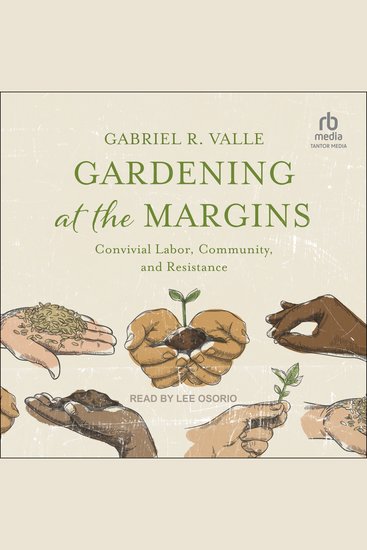
    Gardening at the Margins tells the remarkable story of a diverse group of neighbors working together to grow food and community in the Santa Clara Valley in California. Based on four years of deeply engaged ethnographic field research via a Participatory Action Research project with the people and ecosystems of La Mesa Verde home garden program, Gabriel R. Valle develops a theory of convivial labor to describe how the acts of care among the diverse gardeners—through growing, preparing, and eating food in one of the most income unequal places in the country—are powerful, complex acts of resistance. 


    The individuals featured in the book are imagining and building alternative worlds and futures amid the very real challenges they embody and endure. Climate change, for example, is forcing thousands of migrants to urban areas, which means recent immigrants' traditional environmental, nutritional, and healing knowledge will continue to be threatened by the pervasiveness of modernity and the homogenization of global capitalism. Moreover, once rural people migrate to urban areas, their ability to retain traditional foodways will remain difficult without spaces of autonomy. The stories in this book reveal how people create the physical space to grow food and the political space to enact autonomy to revive and restore agroecological knowledge needed for an uncertain future.
    Ver livro