Junte-se a nós em uma viagem ao mundo dos livros!
Adicionar este livro à prateleira
Grey
Deixe um novo comentário Default profile 50px
Grey
Assine para ler o livro completo ou leia as primeiras páginas de graça!
All characters reduced
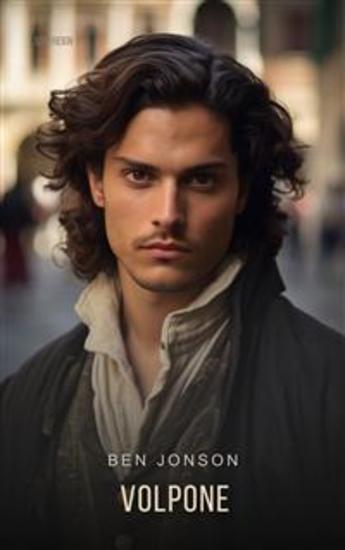
Volpone - The Fox - cover
LER

Volpone - The Fox

Ben Jonson

Editora: Interactive Media

  • 0
  • 0
  • 0

Sinopse

"Volpone: The Fox" is a satirical comedy by Ben Jonson. Volpone, a cunning and wealthy Venetian, pretends to be on his deathbed, enticing greedy acquaintances to offer him gifts in hopes of becoming his heir. Through this ruse, Volpone amasses wealth while toying with the aspirations of those around him. As the web of deception grows, absurd situations, mistaken identities, and comedic chaos ensue. Jonson's play critiques human greed and societal vices, exploring the consequences of unchecked ambition and the lengths people will go to attain material gain.
Disponível desde: 20/08/2023.
Comprimento de impressão: 278 páginas.

Outros livros que poderiam interessá-lo

  • Stuff and Nonsense - Poems by Lewis Carroll - cover

    Stuff and Nonsense - Poems by...

    Lewis Carroll

    • 0
    • 0
    • 0
    Alexander Woollcott called Lewis Carroll, author of Alice's Adventures in Wonderland, "the man who wrote the most enchanting nonsense in the English language." Besides his many stories, Lewis Carroll wrote nonsensical poems. Eleven of his poems appear here, the most famous of which being Jabberwocky, The Walrus and the Carpenter, and The Hunting of the Snark. Narrator Griffin Rogers recorded Jabberwocky as a Christmas present for his son before spending the next several years recording additional nonsense whenever he was able to find an unlocked window and sneak into a recording studio. (If that sounds like a lot of nonsense to you, you will love this audiobook - and so will your children.)
    Ver livro
  • Quietus II: Sophie - cover

    Quietus II: Sophie

    William T McCartney

    • 0
    • 0
    • 0
    The play is about the spiritual and emotional journey of Sophie, as she tries to find spiritual meaning and direction. Her friends try to guide her and be part of her journey.
    Ver livro
  • Oedipus at Colonus - cover

    Oedipus at Colonus

    Sophocles

    • 0
    • 0
    • 0
    Dive into the mesmerizing conclusion of Sophocles' Theban Trilogy with 'Oedipus at Colonus,' a captivating audiobook that stands as a testament to the enduring power of Greek tragedy.In the final chapter of his tumultuous life, Oedipus, once a proud king brought low by fate and his own actions, seeks solace and redemption in the town of Colonus. Blinded and exiled, he embarks on a profound journey toward tranquility, only to find himself once more at the center of earthly and divine conflicts.This audiobook brings Sophocles' timeless text to life with skillful narration, immersing you in Oedipus' poignant quest for peace. Experience the deeply human themes of repentance, forgiveness, and the desire for rest after a life filled with hardship. Observe how Oedipus, in his final hours, grapples with the repercussions of his past, the nature of his present, and the uncertainty of his legacy.'Oedipus at Colonus' is more than a tragic tale—it is a profound exploration of human endurance in the face of suffering, and the possibility of redemption even in the bleakest of circumstances. Whether you're a student of classical literature, a lover of timeless dramas, or an audiobook enthusiast seeking a thought-provoking listen, this rendition of 'Oedipus at Colonus' offers a rich, immersive experience that will resonate long after the final words have been spoken.Step into the world of ancient Greek drama and explore the depths of human resilience and the quest for peace with 'Oedipus at Colonus.' Let this immortal story touch your heart, challenge your perceptions, and leave you with timeless insights into the human condition.
    Ver livro
  • The Two Voices - An autobiographical poem written by Tennyson after his friend committed suicide - cover

    The Two Voices - An...

    Alfred Lord Tennyson

    • 0
    • 0
    • 0
    Alfred Tennyson was born on August 6th, 1809, in Somersby, Lincolnshire, the fourth of twelve children. 
    Most of Tennyson's early education was under the direction of his father, although he did spend four unhappy years at a nearby grammar school.  He also showed an early and burgeoning talent for writing; by the age of twelve he had written a 6,000-line epic poem.  
    In the 1820s, however, Tennyson’s father began to suffer frequent mental breakdowns exacerbated by his alcoholism. One brother had frequent violent quarrels with his father, a second would be confined to an insane asylum, and another was later an opium addict. 
    Tennyson left home in 1827 to join his brothers at Trinity College, Cambridge and with it escape from Somersby. At Trinity he was those who knew little of the problems that clouded his life. Although shy he was keen to make new friends; he was handsome, intelligent, humorous, and a gifted impersonator. 
    That same year, he and his brother Charles published Poems by Two Brothers. It attracted the attention of the “Apostles," a select undergraduate literary club led by Arthur Hallam. They provided friendship and confidence. Hallam and Tennyson became the best of friends. 
    The pair, in the summer of 1830, were involved in a ridiculous jaunt to take money and secret messages to revolutionaries plotting to overthrow the Spanish king. Tennyson's political enthusiasm was marginal compared to Hallam's, but he was glad to make his first trip abroad.  
    The landscape and atmosphere of the Pyrenees generated such wonderful poems as "Oenone," "The Lotus-Eaters;" inspired by a waterfall in the mountains; and "The Eagle;" invoked from the sight of the great hunters circling above them. The small village of Cauteretz and the surrounding valley became a location Tennyson would return to many times over the next sixty years. 
    In 1830, he published Poems, ‘Chiefly Lyrical’ and in 1832 a volume entitled ‘Poems’.  Tennyson, stung by the harshness of several reviews, would not publish again for nine years.  
    In the autumn of 1833, in what was meant as a gesture of gratitude and reconciliation to his father, Hallam accompanied him to the Continent. In Vienna Hallam died suddenly of apoplexy as a result of a congenital malformation of the brain.  
    Hallam’s death, together with that of his father and a myriad of anxieties, stem-ming mainly from the belief that his family were grimly attached to poverty, and fears that he might become a victim of epilepsy, madness, alcohol, and drugs, as others in his family had, or that he might die like Hallam, conspired to upset the delicate balance of Tennyson's emotions.  
    In 1836, he became engaged to Emily Sellwood. From their correspondence it is clear that she was very much in love with him. He seems to excessively worry about not having the financial means to marry.  He was also falling into trances, which he thought were connected with the epilepsy from which other family members suffered. To marry, he thought, would mean passing on the disease to any children he might father. He broke off the engagement. 
    During these years he used the dark feelings and events to write many of his finest works; "Ulysses," "Morte d'Arthur," "Tithonus," "Tiresias," and "Break, break, break."  
    In 1842 Tennyson’s Poems (in two volumes) was a tremendous critical and popular success.  
    In 1845 he was granted a government pension of £200 a year in recognition of his poetic achievements and his financial need.  Despite this financial support his doubts persisted.  
    Life for Tennyson was becoming increasingly productive and more lucrative.  By 1849 ‘The Princess’ had been published. He was now offered a large advance if he would assemble his elegies on Hallam into one complete poem.  
    Tennyson had now also resumed his relationship with Emily Sellwood and by the following year was talking again of marrying her. 
    In the Spring of 1850 the Poet Laureate William Wordsworth died and a new Laureate was
    Ver livro
  • Li'l Bastard - cover

    Li'l Bastard

    David McGimpsey

    • 0
    • 0
    • 0
    Finalist for the 2012 Governor General's Award for Poetry


    Chicagoland hot-dog stands are open late. What the fuck you want?' one cashier asks me. What the fuck did I want? Hope? A car? To write? Jesus, I knew – just give me a Pepsi. 


    David McGimpsey's ?fth collection of poems takes to new levels the melding of the deeply personal and the culturally popular that drove his acclaimed book Sitcom (nominated for the A. M. Klein Prize for Poetry). This is confessional poetry as written by a chronic trickster and a committed liar.
      
       
    Written in part as an homage to the poetic idols of McGimpsey's youth, John Berryman and Robert Lowell, Li'l Bastard is a collection of 'chubby sonnets' – sixteen-line poems organized into eight longer sequences – that explore the poet's obsessions and engagements with America and Canada, popular culture, love and death, aging, baseball and beer and Barnaby Jones. Adopting a wild array of tones and artistic strategies, from picaresque to fantasy, to observational humour and the simple song lyric, these poems map the poet's midlife crisis on a wild ?ight that touches down in Montreal, Chicago, Nashville, Texas and L.A.
      
       
    Poignant and often achingly funny, Li'l Bastard will no doubt cement McGimpsey's status as a beloved and ever-surprising original.
    Ver livro
  • Heavy Is the Head - cover

    Heavy Is the Head

    Sumaya Enyegue

    • 0
    • 0
    • 0
    "Where does all the grief go when it's not tugging at your wrist?" Enyegue's debut collection is an ode to girlhood, to Blackness, to generational trauma, sexual assault, and mental health. 
     
    This collection does not aim to heal anyone who reads it, but instead help them confront their own healing. Rather than sugar-coated bullets that enter you lightly, these poems are designed to hurt.  
     
    They are for the girls with difficult names, the boys with softness at their core, and the people with neither. They are meant for the people who are Black, and the people who are not—because we are all tethered together by the heaviness of the human experience.
    Ver livro