Junte-se a nós em uma viagem ao mundo dos livros!
Adicionar este livro à prateleira
Grey
Deixe um novo comentário Default profile 50px
Grey
Assine para ler o livro completo ou leia as primeiras páginas de graça!
All characters reduced
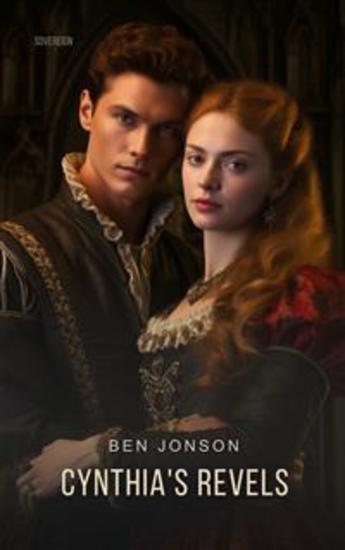
Cynthia's Revels - The Fountain of Self-Love - cover
LER

Cynthia's Revels - The Fountain of Self-Love

Ben Jonson

Editora: Interactive Media

  • 0
  • 0
  • 0

Sinopse

"Cynthia's Revels: The Fountain of Self-Love" by Ben Jonson is a satirical play that delves into the world of courtly flattery, vanity, and self-indulgence. The court of Queen Cynthia (a representation of Queen Elizabeth I) is populated by characters representing various vices and follies. The central character, Crites, is a young courtier who seeks self-improvement through the Fountain of Self-Love. Through witty dialogues and sharp humor, Jonson critiques the artificiality of courtly life, the pursuit of personal gain, and the consequences of excessive self-love. The play serves as a mirror to society's vanities and excesses, offering a comedic yet incisive commentary on human nature.
Disponível desde: 20/08/2023.
Comprimento de impressão: 280 páginas.
Outros livros que poderiam interessá-lo

  • A Rare Recording of TS Eliot Reading His Poem The Love Song of J Alfred Prufrock - cover

    A Rare Recording of TS Eliot...

    TS Eliot

    • 0
    • 0
    • 0
    Thomas Stearns Eliot (September 26, 1888 - January 4, 1965) was an American-British poet, essayist and playwright. He is considered to be one of the 20th century's greatest poets, as well as a central figure in English-language Modernist poetry. His use of language, writing style, and verse structure reinvigorated English poetry. He is also noted for his critical essays, which often re-evaluated long-held cultural beliefs.
    Ver livro
  • Poems from the Wilderness - cover

    Poems from the Wilderness

    Jack Mayer

    • 0
    • 0
    • 0
    Wilderness inspired poems composed on the trail by an American doctor/poet, sharing his love of the backcountry, trail-walking, camping, and the “wilderness effect,” a unique sensation of aliveness and deep connection. Mayer’s poetry explores our human experience of the natural world, our intimate and mysterious connections to flora and fauna. It proclaims the opportunity that walking mindfully in the wilderness offers to experience the divine. The uniqueness and intensity of these musings lead his poems to attempt reconciliation of our lived experience with physics, spirit, and music, the latter manifested in his experience of singing to the dying; the wisdom of nature rendered in music and consolation. A few poems are inspired by Mayer’s medical practice. Some spring from his ordinary life and reflections on his childhood and family, which have followed him into the woods. 
    “Ever since Emerson sent American poets into the woods to discover their souls, the connections between language and spirit have been steadily forged on this continent. Jack Mayer is a writer I've long admired, and in these bright, sensuous, deeply reflective poems we encounter a wilderness that exists on many levels: the Vermont trails that he loves, walks and dreams, and the contours of his own expansive spirit. I read these poems with increasing pleasure, and plan to return to them again and again. Mayer is a fine, fresh voice in American poetry.” —Jay Parini, author of New and Collected Poems, 1975-2015 
    “These poems...recall such earlier wilderness poets as Han Shan and Gary Snyder. Like those ancestors’ dispatches from the heights, they combine reflections on time and reality with the glow of physical exertion in the open air. Mayer’s humor also bubbles up in ways that make his voice a distinctive and delightful addition to this lineage.”—John Elder, author of Reading the Mountains of Home
    Ver livro
  • Antony and Cleopatra - cover

    Antony and Cleopatra

    William Shakespeare

    • 0
    • 0
    • 0
    Antony and Cleopatra (First Folio title: The Tragedie of Anthonie, and Cleopatra) is a tragedy by William Shakespeare. The play was first performed, by the King's Men, at either the Blackfriars Theatre or the Globe Theatre in around 1607; its first appearance in print was in the Folio of 1623.
    The plot is based on Thomas North's 1579 English translation of Plutarch's Lives (in Ancient Greek) and follows the relationship between Cleopatra and Mark Antony from the time of the Sicilian revolt to Cleopatra's suicide during the Final War of the Roman Republic. The major antagonist is Octavius Caesar, one of Antony's fellow triumvirs of the Second Triumvirate and the first emperor of the Roman Empire. The tragedy is mainly set in the Roman Republic and Ptolemaic Egypt and is characterized by swift shifts in geographical location and linguistic register as it alternates between sensual, imaginative Alexandria and a more pragmatic, austere Rome.
    Many consider Shakespeare's Cleopatra, whom Enobarbus describes as having "infinite variety", as one of the most complex and fully developed female characters in the playwright's body of work. She is frequently vain and histrionic enough to provoke an audience almost to scorn; at the same time, Shakespeare invests her and Antony with tragic grandeur. These contradictory features have led to famously divided critical responses. It is difficult to classify Antony and Cleopatra as belonging to a single genre. It can be described as a history play (though it does not completely adhere to historical accounts), as a tragedy (though not completely in Aristotelian terms), as a comedy, as a romance, and according to some critics, such as McCarter, a problem play. All that can be said with certainty is that it is a Roman play, and perhaps even a sequel to another of Shakespeare's tragedies, Julius Caesar.
    Among the most significant works William Shakespeare: Hamlet, Othello, King Lear, Macbeth, Orpheus, Romeo and Juliet, Julius Caesar, Troilus and Cressida, The Tempest, Venus and Adonis, Antony and Cleopatra, Measure for Measure, The Winter's Tale and many more.
    Ver livro
  • The Hurting Kind - cover

    The Hurting Kind

    Ada Limón

    • 0
    • 0
    • 0
    An astonishing collection about interconnectedness—between the human and nonhuman, ancestors and ourselves—from National Book Critics Circle Award winner, National Book Award finalist and U.S. Poet Laureate Ada Limón.“I have always been too sensitive, a weeper / from a long line of weepers,” writes Limón. “I am the hurting kind.” What does it mean to be the hurting kind? To be sensitive not only to the world’s pain and joys, but to the meanings that bend in the scrim between the natural world and the human world? To divine the relationships between us all? To perceive ourselves in other beings—and to know that those beings are resolutely their own, that they “do not / care to be seen as symbols”?With Limón’s remarkable ability to trace thought, The Hurting Kind explores those questions—incorporating others’ stories and ways of knowing, making surprising turns, and always reaching a place of startling insight. These poems slip through the seasons, teeming with horses and kingfishers and the gleaming eyes of fish. And they honor parents, stepparents, and grandparents: the sacrifices made, the separate lives lived, the tendernesses extended to a hurting child; the abundance, in retrospect, of having two families.Along the way, we glimpse loss. There are flashes of the pandemic, ghosts whose presence manifests in unexpected memories and the mysterious behavior of pets left behind. But The Hurting Kind is filled, above all, with connection and the delight of being in the world. “Slippery and waddle thieving my tomatoes still / green in the morning’s shade,” writes Limón of a groundhog in her garden, “she is doing what she can to survive.”
    Ver livro
  • Mahogany Eve - cover

    Mahogany Eve

    Alan Payne

    • 0
    • 0
    • 0
    An exotic and ambitious collection in which deceptively simple structures are built to carry an impressive weight of interest and reference. – Andrew Motion
    The guardian spirit of this book is a mahogany sculpture called Eve, part of the permanent collection in the Graves Art Gallery in Sheffield. She's looking over her shoulder. Her gaze takes in journeys across the Atlantic, beaches in the Caribbean, a boarding school in Yorkshire, departures and arrivals, home- comings, a grandmother buried in Port of Spain, two brothers on the Orinoco, Hindu gods and goddesses, runaways, castaways, slaves, a cartographer who never leaves his room, mothers and sons, fathers and sons, and a goat pulling a bishop on a sledge…
    Alan Payne's poems are rooted in the Caribbean, evoking a sense of separation and loss, and touch on the contradictions and betrayals of colonialism.
    Shortlisted for the 2025 Derek Walcott Prize
    Ver livro
  • What the Living Do - Poems - cover

    What the Living Do - Poems

    Marie Howe

    • 0
    • 0
    • 0
    Informed by the death of a beloved brother, here are the stories of childhood, its thicket of sex and sorrow and joy, boys and girls growing into men and women, stories of a brother who in his dying could teach how to be most alive. What the Living Do reflects ““a new form of confessional poetry, one shared to some degree by other women poets such as Sharon Olds and Jane Kenyon. Unlike the earlier confessional poetry of Plath, Lowell, Sexton et al., Howe’s writing is not so much a moan or a shriek as a song. It is a genuinely feminine form…a poetry of intimacy, witness, honesty, and relation”” (Boston Globe).


    This audio edition of What the Living Do is beautifully read by the author. Produced and published by Echo Point Books & Media, an independent bookseller in Brattleboro, Vermont.


    Cover photograph: Song of Sentient Beings (1134) by Bill Jacobson (1994), used with permission. ©1998 Marie Howe §
    Ver livro