Junte-se a nós em uma viagem ao mundo dos livros!
Adicionar este livro à prateleira
Grey
Deixe um novo comentário Default profile 50px
Grey
Assine para ler o livro completo ou leia as primeiras páginas de graça!
All characters reduced
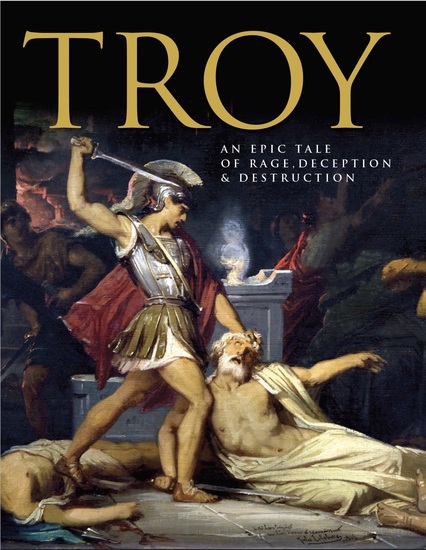
Troy - An Epic Tale of Rage Deception & Destruction - cover
LER

Troy - An Epic Tale of Rage Deception & Destruction

Ben Hubbard

Editora: Amber Books Ltd

  • 0
  • 0
  • 0

Sinopse

“Was this the face that launch’d a thousand ships/ And burnt the topless towers of Ilium?” – Christopher Marlowe, Doctor Faustus A story of gods and mortals, of such famous episodes as the Trojan Horse and Achilles mortally wounded in his heel, of warriors such as Odysseus and Hector, of beauties such as Helen, of leaders such as Agamemnon and Menelaus, the Trojan War is a classic story from the ancient world that never ceases to lose its appeal. But how well do we really know it? Do we remember Odysseus feigning madness to avoid the battle? Or Achilles, that great warrior, disguising himself as a woman so that he didn’t have to fight? Troy – An Epic Tale of Rage, Deception & Destruction tells the story of the Trojan War from its beginnings with the sparring of the gods to the love story between Paris and Helen to the war fleet, the siege, and on to the final battles and destruction of the city. From a conflict that’s set in motion by Helen – ‘the face that launched a thousand ships’ – it ends, ten years later, with Odysseus setting sail on what turns out to be his own ten- year voyage home. The book offers a fascinating history that provides a broader context for the war, examining the social and political background, the role of women in Greek society, and the weapons and style of warfare practiced. It also highlights where sources differ on aspects of the story. Illustrated with more than 180 colour and black-and-white artworks, photographs and maps, the book is an expertly written account and investigation of one of the classic stories of ancient mythology.
Disponível desde: 19/12/2024.
Comprimento de impressão: 224 páginas.
Outros livros que poderiam interessá-lo

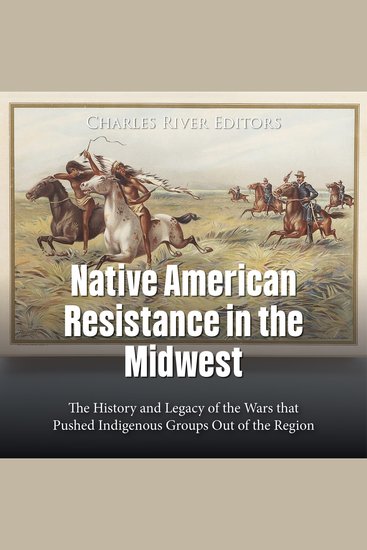
  • Native American Resistance in the Midwest: The History and Legacy of the Wars that Pushed Indigenous Groups Out of the Region - cover

    Native American Resistance in...

    Editors Charles River

    • 0
    • 0
    • 0
    Throughout history, there have been men of war and men of peace, but few have actually had a war named after them. One of them was Pontiac, also known as Obwandiyag, an Odawa chief who left his mark on history by continuing the battle against the British after their official triumph during the French and Indian War. While modern historians question how important Pontiac’s role was in shaping America’s destiny, his leadership during Pontiac’s War was seen at that time as important enough to warrant significant articles and even a few 18th century books. Since these books were written by the British, or at least men who supported their cause, the descriptions of Pontiac were often not complimentary. Likewise, 19th century authors tended to portray him as something of an evil genius who plotted against the British and then drove his people into battle.  
    For the most part, the conflicts that followed consisted mostly of the Native Americans suffering defeat in the face of a better-equipped adversary, interspersed with binding treaties, which, on the side of the federal government, proved not very binding at all. Occasionally, however, there arose a Native American leader of such ability that such defeats were temporarily reversed, and Little Turtle, the war chief of the Miami tribe, was one such man.  
    The Battle of Tippecanoe, fought on November 7, 1811 near present-day Lafayette, Indiana, involved forces of fewer than 2,000 Native American warriors and white soldiers, and only about 300 men were killed or wounded on both sides. Given those numbers, it’s apparent that the battle was far from being a Saratoga or a Gettysburg in terms of its scale or significance as an historical turning point, yet it was one of the most important battles in the early 19th century. 
    Ver livro
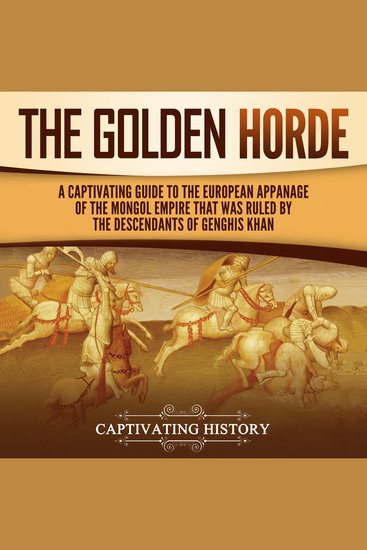
  • Golden Horde The: A Captivating Guide to the European Appanage of the Mongol Empire That Was Ruled by the Descendants of Genghis Khan - cover

    Golden Horde The: A Captivating...

    Captivating History

    • 0
    • 0
    • 0
    Unveil the Epic History of the Golden Horde! 
    Journey back to the times of Genghis Khan and discover how he divided his empire into four parts, shaping the course of history. For over two centuries, the Golden Horde ruled a vast region, influencing lands from the Urals to Poland, from the taiga to the Caspian Sea. 
    Explore the Mysteries of the Eurasian Steppe 
    Learn why the Eurasian Steppe, stretching from the Danube to Manchuria, produced nomadic armies that threatened empires in Europe and China for three thousand years. 
    Unravel the Rise of Moscow 
    Understand how Kievan Rus’ dominated Russian lands while Moscow was just an outpost and how Moscow rose to power by aligning with the Mongols. 
    Discover Shocking Historical Events 
    See how a fight in Caffa led to the Black Death devastating Europe. Be surprised by Venice’s and Genoa’s involvement in the slave trade and its connection to the Golden Horde and Mamluk Egypt. 
    Here are just some of the things you will learn about in this audiobook:Why the Mongols executed the last Abbasid caliph by trampling him to death.The terror tactics of the Mongols, including the massacre of entire cities.Why European horses starved on the steppe while Mongol ponies thrived.The diverse trade items that traveled the Silk RoadHow medieval merchants navigated bureaucracy by bribing customs officials in Crimea. 
    To delve into these captivating stories and the profound impact of the Golden Horde, scroll up and click the “add to cart” button now!
    Ver livro
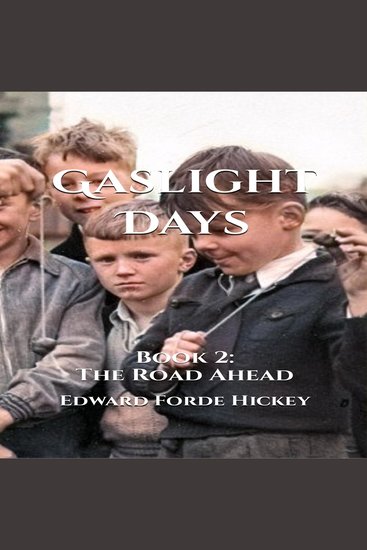
  • Gaslight Days: Book 2 - The Road Ahead - cover

    Gaslight Days: Book 2 - The Road...

    Edward Forde Hickey

    • 0
    • 0
    • 0
    A chance to delve into the minds of children and adults among the ruined streets of post-war London. The streets were our playground with not a car in sight, where we played all day.On Sundays, bugle boy bands marched past us and in the evening the military band raised our spirits.Life was never dull. Our parents took us to the zoo and for boat rides on the Serpentine.
    Ver livro
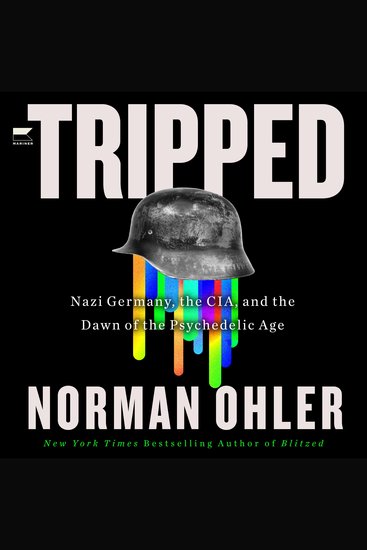
  • Tripped - Nazi Germany the CIA and the Dawn of the Psychedelic Age - cover

    Tripped - Nazi Germany the CIA...

    Norman Ohler

    • 0
    • 0
    • 0
    “A fleet-footed and propulsive account . . . Brilliantly sifting a massive history for its ideological through lines, this is a must-read."" — Publishers Weekly (starred review) 
    The author of the New York Times bestseller Blitzed returns with a provocative new history of drugs and postwar America, examining the untold story of how Nazi experiments into psychedelics covertly influenced CIA research and secretly shaped the War on Drugs.  
    Berlin 1945. Following the fall of the Third Reich, drug use—long kept under control by the Nazis’ strict anti-drug laws—is rampant throughout the city. Split into four sectors, Berlin's drug policies are being enforced under the individual jurisdictions of each allied power—the Soviet Union, Britain, France, and the US. In the American zone, Arthur J. Giuliani of the nascent Federal Bureau of Narcotics is tasked with learning about the Nazis’ anti-drug laws and bringing home anything that might prove “useful” to the United States. 
    Five years later, Harvard professor Dr. Henry Beecher began work with the US government to uncover the research behind the Nazis psychedelics program. Begun as an attempt to find a “truth serum” and experiment with mind control, the Nazi study initially involved mescaline, but quickly expanded to include LSD. Originally created for medical purposes by Swiss pharmaceutical Sandoz, the Nazis coopted the drug for their mind control military research—research that, following the war, the US was desperate to acquire. This research birthed MKUltra, the CIA's notorious brainwashing and psychological torture program during the 1950s and 1960s, and ultimately shaped US drug policy regarding psychedelics for over half a century. 
    Based on extensive archival research on both sides of the Atlantic, Tripped is a wild, unconventional postwar history, a spiritual sequel to Norman Ohler’s New York Times bestseller Blitzed. Revealing the close relationship and hidden connections between the Nazis and the early days of drugs in America, Ohler shares how this secret history held back therapeutic research of psychedelic drugs for decades and eventually became part of the foundation of America’s War on Drugs.
    Ver livro
  • The Republic - cover

    The Republic

    Plato

    • 0
    • 0
    • 0
    The Republic (Greek: Politeia) is a Socratic dialogue, written by Plato around 380 BC, concerning the definition of (justice), the order and character of the just city-state and the just man, reason by which ancient readers used the name On Justice as an alternative title (not to be confused with the spurious dialogue also titled On Justice). The dramatic date of the dialogue has been much debated and though it must take place some time during the Peloponnesian War, "there would be jarring anachronisms if any of the candidate specific dates between 432 and 404 were assigned".    It is Plato's best-known work and has proven to be one of the most intellectually and historically influential works of philosophy and political theory. In it, Socrates along with various Athenians and foreigners discuss the meaning of justice and examine whether or not the just man is happier than the unjust man by considering a series of different cities coming into existence "in speech", culminating in a city (Kallipolis) ruled by philosopher-kings; and by examining the nature of existing regimes.    The participants also discuss the theory of forms, the immortality of the soul, and the roles of the philosopher and of poetry in society. Short Summary (Epilogue): X.1—X.8. 595a—608b. Rejection of Mimetic Art X.9—X.11. 608c—612a. Immortality of the Soul X.12. 612a—613e. Rewards of Justice in Life X.13—X.16. 613e—621d. Judgment of the Dead The paradigm of the city — the idea of the Good, the Agathon — has manifold historical embodiments, undertaken by those who have seen the Agathon, and are ordered via the vision. The centre piece of the Republic, Part II, nos. 2–3, discusses the rule of the philosopher, and the vision of the Agathon with the allegory of the cave, which is clarified in the theory of forms.    The centre piece is preceded and followed by the discussion of the means that will secure a well-ordered polis (City). Part II, no. 1, concerns marriage, the community of people and goods for the Guardians, and the restraints on warfare among the Hellenes. It describes a partially communistic polis. Part II, no. 4, deals with the philosophical education of the rulers who will preserve the order and character of the city-state. In Part II, the Embodiment of the Idea, is preceded by the establishment of the economic and social orders of a polis (Part I), followed by an analysis (Part III) of the decline the order must traverse. The three parts compose the main body of the dialogues, with their discussions of the "paradigm", its embodiment, its genesis, and its decline. The Introduction and the Conclusion are the frame for the body of the Republic.    The discussion of right order is occasioned by the questions: "Is Justice better than Injustice?" and "Will an Unjust man fare better than a Just man?" The introductory question is balanced by the concluding answer: "Justice is preferable to Injustice". In turn, the foregoing are framed with the Prologue (Book I) and the Epilogue (Book X). The prologue is a short dialogue about the common public doxai (opinions) about "Justice". Based upon faith, and not reason, the Epilogue describes the new arts and the immortality of the soul.
    Ver livro
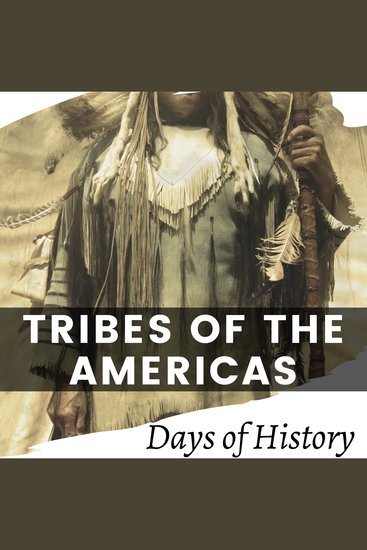
  • Tribes of the Americas - A Comprehensive Look at Native American Culture - cover

    Tribes of the Americas - A...

    Days of History

    • 0
    • 0
    • 0
    Prepare to embark on a captivating journey through the rich and diverse heritage of the indigenous peoples of America!  
    This book offers an enlightening and comprehensive account of the unique histories, cultures, and contributions of Native Americans throughout time. 
    As you delve into this fascinating exploration, you'll discover the incredible stories and legacies that have shaped the world we know today. This book promises to captivate and educate, leaving you with a newfound appreciation for the resilience and cleverness of these incredible people. 
    Key features of the book include: 
    • An in-depth and immersive narrative that spans centuries: From the earliest indigenous societies to modern-day Native American communities, this book offers a sweeping account of the evolution of indigenous cultures, traditions, and ways of life. 
    • A celebration of the richness and diversity of Native American heritage: Through detailed accounts of customs, beliefs, and artistic expressions, our book showcases the unparalleled beauty and complexity of these ancient civilizations. 
    • Fascinating insights into the lives of famous Native American figures: Learn about the influential leaders, warriors, and visionaries who have left an indelible mark on history and helped shape the course of events in America and beyond. 
    Don't miss out on this enlightening and inspiring journey through the rich heritage and culture of indigenous peoples! Secure your copy today, and begin an unforgettable adventure that will transport you through time and unveil the incredible stories of the first Americans.
    Ver livro