¡Acompáñanos a viajar por el mundo de los libros!
Añadir este libro a la estantería
Grey
Escribe un nuevo comentario Default profile 50px
Grey
Suscríbete para leer el libro completo o lee las primeras páginas gratis.
All characters reduced
Morning Raindrops - cover

Morning Raindrops

Beata Mołdoch

Editorial: BookRix

  • 0
  • 0
  • 0

Sinopsis

 Morning Raindrops   is a collection of poems and thoughts about suffering, healing, love and hope. The author fights with her own weaknesses and describes them in an incredibly gentle way, as if suffering was our everyday life. The title morning raindrops are traces after the night storm, which symbolize hope after the tragedy in our lives. 
Disponible desde: 11/08/2023.
Longitud de impresión: 19 páginas.

Otros libros que te pueden interesar

  • Romeo and Juliet: More than just a story of young love - A Group Discussion - cover

    Romeo and Juliet: More than just...

    Vines Graener

    • 0
    • 0
    • 0
    Welcome to Romeo and Juliet. In this audiobook, we take a deeper look at one of William Shakespeare’s most enduring tragedies. While the story of Romeo and Juliet is widely known for its themes of love and loss, this exploration focuses on the nuanced layers of their relationship, the societal forces at play, and the personal choices that shape their tragic fate. By examining key moments in the play, we uncover how Shakespeare explores themes like family loyalty, the tension between love and hate, fate versus free will, and the consequences of impulsive actions. Join us as we uncover fresh insights into this timeless tale and reflect on its profound relevance even in today’s world.
    Ver libro
  • Baby's Own Aesop - cover

    Baby's Own Aesop

    Walter Crane

    • 0
    • 0
    • 0
    "Baby's Own Aesop" presents the fables as one-stanza limericks, each "pictorially pointed" by Walter Crane, the noted painter and illustrator. He apprenticed to master wood-engraver, William James Linton, who furnished the draft of the book's poems for Crane to edit. "Baby's Own Aesop" is available in a beautiful facsimile edition of colored engravings from the International Children's Digital Library, with which your child can read along while listening to the recording. (Summary by Denny Sayers)
    Ver libro
  • The Comedy of Errors - cover

    The Comedy of Errors

    William Shakespeare

    • 0
    • 0
    • 0
    Mistaken identity (which the Elizabethans called “Error”) is nearly always amusing, whether on the stage or in actual life. The Comedy of Errors is a play in which this situation is developed to the extreme of improbability – but we lose sight of this improbability in the roaring fun which results. Nowadays we should call a play of this type a farce, since most of the fun comes from situations which are improbable and the play depends on these for success, rather than on characterization or dialogue. Shakespeare’s Comedy of Errors draws on a much older play, Menaechmi, written by the ancient Roman playwright Plautus (254–184 B.C.).A merchant of Syracuse has twin sons and buys twin servants for them. His wife, with one twin and one servant, is soon separated from him by a shipwreck, and comes to live in Ephesus. When grown, the other son and his slave start out to find their brothers, and the father, some years later, starts out in turn to find them. Once in Ephesus, an amusing series of errors begins. The wife takes the wrong twin for her husband, the master beats the wrong slave, the wrong son disowns his father, the twin at Ephesus is arrested instead of his brother, and the twin slave Dromio of Syracuse is claimed as a husband by a black kitchen girl of Ephesus. The situation gets more and more mixed, until at last the real identity of the strangers from Syracuse is established, and all ends happily. 
    Featuring the voices of Susan Iannucci, Gary MacFadden, David Shears, Dara Brown, Blaise Doran, Aisling Gray, Claudia Anglade, Kendra Murray and P.J. Morgan
    Ver libro
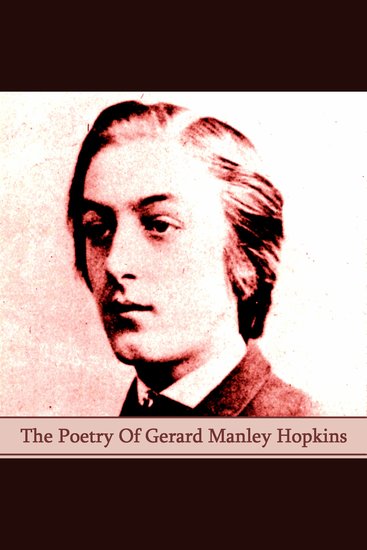
  • The Poetry of Gerard Manley Hopkins - Innovative poet that posthumously inspired T S Eliot Dylan Thomas W H Auden & others - cover

    The Poetry of Gerard Manley...

    Gerard Manley Hopkins

    • 0
    • 0
    • 0
    Gerard Manley Hopkins was born in Stratford, then part of Essex on 28th July, 1844, to deeply religious parents?the first of nine children. 
    The family moved to Hampstead in 1852, near to where John Keats had lived thirty years before.  At age ten the young Gerard was sent to school in nearby Highgate and afterwards to Balliol College, Oxford. 
    Hopkins was unusually shy and reserved and prone to bizarre ideas. He once argued that most people drank more liquids than they really needed and bet that he could go without drinking for a week. He persisted until his tongue was black and he collapsed.  
    In January 1866 Hopkins composed his most ascetic poem, The Habit of Perfection but a few days later he included poetry in the list of things to be given up for Lent. In July he decided to become a Catholic and by May 1868 Hopkins firmly "resolved to be religious." Less than a week later, he made a bonfire of his poems and ceased to write for almost seven years.  
    In 1874 Hopkins returned to the Society of Jesus at Manresa House, Roehampton to teach classics. While he was studying in the Jesuit house of theological studies in North Wales, he was asked to write a poem to commemorate the foundering of a German ship in a storm. So in 1875 he was moved to take up poetry once more and write a lengthy poem, The Wreck of the Deutschland, inspired by the Deutschland maritime disaster in which 157 people died, including five nuns.  The poem was accepted but not printed by a Jesuit publication. This rejection fed his ambivalence about his poetry. Most of his poetry remained unpublished until after his death. 
    Hopkins chose the austere and restrictive life of a Jesuit and was at times gloomy. The brilliant student who had left Oxford with a first-class honours degree failed his final theology exam and although ordained in 1877, Hopkins would not progress in the order. That same year he wrote God’s Grandeur, and sonnets including The Starlight Night and finished The Windhover. 
    In 1884 he became professor of Greek and Latin at University College Dublin. His English roots, his disagreement with current Irish politics, as well as his own small stature (5'2"), shy nature and personal foibles meant that he was not an effective teacher. This and his isolation in Ireland deepened his gloom.  
    The final years of his life continued to find him in a depressed state and to restrict his poetic inspiration. His extremely heavy work load coupled with the dislike of living in Dublin, away from England and friends meant his health further deteriorated, even his eyesight began to fail. As a devout Jesuit, he found himself in an artistic dilemma. To subdue any egotism which would violate the humility required by his religious position, he decided never to publish his poems.  
    After suffering several bouts of diarrhoea, Gerard Manley Hopkins died of typhoid fever on 8th June, 1889 at the early age of 44. On his death bed, his last words were, "I am so happy, I am so happy. I loved my life." 
     This volume comes to you from Portable Poetry, a specialized imprint from Deadtree Publishing.  Our range is large and growing and covers single poets, themes, and many compilations.
    Ver libro

  • The 15th of Finality - cover

    The 15th of Finality

    Valentyne DeBudge

    • 0
    • 0
    • 0
    She said she'd send someone to help him escape. 
    But escape what? 
    Since the day Sage's mother died, he was left with nothing more than the nagging feeling that there was something right in front of his eyes. Student Council President, perfect marks and attendance, Sage's picturesque life shatters the night he meets Drew. 
    An endearing young man, Drew lands in his life and claims it's all a lie. 
    Every moment scripted, every movement monitored, Sage finds himself at the heart of a conspiracy. Trusted allies become potential enemies and he starts to sense that everyone is keeping a bigger secret from him, even Drew. 
    He must use his wit to discern friend from foe and to read between the lines of his scripted world before the people in control realize he knows 
    in order to break free in  
    The 15th of Finality.
    Ver libro
  • Ordinary Decent Criminal - cover

    Ordinary Decent Criminal

    Ed Edwards

    • 0
    • 0
    • 0
    'This is what it feels like to have something to lose. This is why people only fight when they've got nothing to lose.'
    It's the early 1990s and recovering addict Frankie Donnelly has just been sentenced to three and a half years in jail for dealing drugs.
    None of Frankie's fellow convicts are what they seem. In the most unexpected of places, he discovers that the revolution is not dead. It's just sleeping.
    Ordinary Decent Criminal by Ed Edwards is a one-man story of freedom, revolution and messy love. It was first performed on a tour of the UK in 2025 – including a run at the Edinburgh Festival Fringe, where it won a Fringe First Award – directed by Charlotte Bennett and starring renowned political comedian Mark Thomas. It was produced by Paines Plough, Live Theatre, Theatre Royal Plymouth and Ellie Keel Productions, in association with Synergy Theatre Project.
    This edition also includes the stirring short play Sanctuary which explores the true-life story of Sri Lankan communist Viraj Mendis, who spent two years seeking sanctuary in a Manchester church in the 1980s.
    Ver libro