


Goosebumps
Batuta Ribeiro
Maison d'édition: Babelcube
Synopsis
Goosebumps is a collection of 13 short stories guaranteed to have you wetting yourself in fear just before bedtime.
Disponible depuis: 13/01/2017.

Maison d'édition: Babelcube
Goosebumps is a collection of 13 short stories guaranteed to have you wetting yourself in fear just before bedtime.
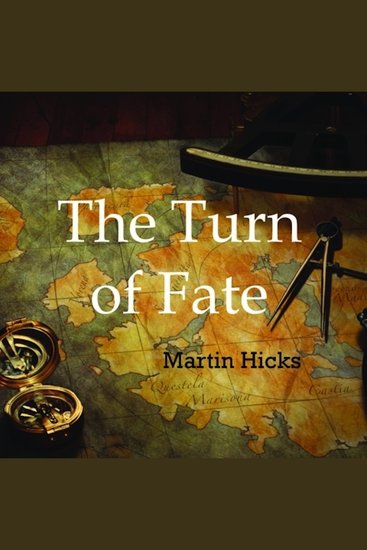
It is the autumn of 1864 and the Confederate raider Palmetto is in Far Eastern waters, where an encounter with Malay pirates and an attack by hostile islanders have left her seriously undermanned.

Thomas Grover, Palmetto’s captain, must continue to elude the US warships hunting for his ship, while somehow finding a way of recruiting replacements for his crew. Failure to accomplish this will compel him to undertake a hazardous, return voyage to the American coast, where the overwhelming strength of the US blockading fleet awaits his beleaguered vessel.

About the Author:

Martin Hicks lives in Fraserburgh, in Aberdeenshire, Scotland. He began writing after a career in education and “The Turn of Fate,” the concluding novel of the “Palmetto” series, is his twelfth book. He is currently working on a further title.
Voir livre
Throughout the long centuries of human history is the want, and the need, to share information, to exchange ideas and for that knowledge and experience, for curiosity and learning, to be the basis of a civil society.
In literature the ambition is much narrower.  In order to be known, to be popular, you had to be published.  And for that people had to know you existed and your ideas worth reading.  Obviously for most of humanity’s time people couldn’t read and texts couldn’t be published in any great number.
In the 15th Century Gutenberg’s printing press began the revolution to address the second and by the 19th century had gathered pace with startling speed and mass distribution.  Education for the many was brought in to help people understand more of their world and, with new skills, how to have a better place within it.  Now, if the powers that owned the presses and means of distribution agreed an audience would now be able to avail themselves of your ideas, your printed words.
Sadly, in the thirst for the new, the recent and the past fell from sight, relegated to dark corners and dusty shelves.
But the printed word is rarely without someone, somewhere busying themselves through piles of papers and books rediscovering what a good story is, whatever its age.
Sadly, in the thirst for the new, the recent and the past fell from sight, relegated to dark corners and dusty shelves.
But the printed word is rarely without someone, somewhere busying themselves through piles of papers and books rediscovering what a good story is, whatever its age.
In this volume we offer up a small selection of those talents whose time has now come again.
Voir livre

Unearth the Unimaginable…
In the shadows of ordinary lives, where reality blurs with the inexplicable, lies a collection of stories that will chill your bones and ignite your imagination.
Enter a world where a mirror refuses to reflect, where shadows come to life, where dreams turn into nightmares, and where prophecies whispered in the dead of night may seal your fate. From the haunting melody of a cursed music box to the twisted allure of a diabolical toyshop, each tale is a dark and thrilling journey into the unknown.
Dare to explore the twisted corridors of "The Hospice," where a dying patient's prophecy sends shivers down a young nurse's spine. Feast upon the unimaginable at Club Numinous, where culinary delights hide a terrifying secret. Discover the terror of "Crybaby Bridge," where a haunting legend becomes all too real. These tales and more await you within the pages of this anthology, penned with a touch of madness and a love for the macabre. Every story is a doorway, and behind each lies a realm of fear, mystery, and dark fascination.
Do you dare to cross the threshold?
Voir livre
Throughout the long centuries of human history is the want, and the need, to share information, to exchange ideas and for that knowledge and experience, for curiosity and learning, to be the basis of a civil society.
In literature the ambition is much narrower.  In order to be known, to be popular, you had to be published.  And for that people had to know you existed and your ideas worth reading.  Obviously for most of humanity’s time people couldn’t read and texts couldn’t be published in any great number.
In the 15th Century Gutenberg’s printing press began the revolution to address the second and by the 19th century had gathered pace with startling speed and mass distribution.  Education for the many was brought in to help people understand more of their world and, with new skills, how to have a better place within it.  Now, if the powers that owned the presses and means of distribution agreed an audience would now be able to avail themselves of your ideas, your printed words.
Sadly, in the thirst for the new, the recent and the past fell from sight, relegated to dark corners and dusty shelves.
But the printed word is rarely without someone, somewhere busying themselves through piles of papers and books rediscovering what a good story is, whatever its age.
Sadly, in the thirst for the new, the recent and the past fell from sight, relegated to dark corners and dusty shelves.
But the printed word is rarely without someone, somewhere busying themselves through piles of papers and books rediscovering what a good story is, whatever its age.
In this volume we offer up a small selection of those talents whose time has now come again.
Voir livre

Our ‘fight of flight’ response is something hardwired into the primitive part of our brain.  Our need to survive, to outlive whatever danger poses, that immediate threat to our lives is little short of a marvel.  Everything else is abandoned in order to survive.  Whilst in modern times that ability has been somewhat modified and ‘reasoned’ away to an extent, in past years it’s what usually kept you alive.

In this volume people struggle valiantly to survive and to exist no matter the extent of the threat they face. In the words of our authors including William Hope Hodgson, Richard Connell, Jack London, Honore de Balzac and a wealth of others, they vividly demonstrate how or whether the participants survive … or fail.

01 - Short Stories About Survival - An Introduction
 02 - The White Silence by Jack London
 03 - A Passion in the Desert by Honoré de Balzac
 04 - The Interlopers by Saki the pseudonym for H H Munro
 05 - The Outcasts of Poker Flat by Bret Harte
 06 - Taman by Mikhail Yurievich Lermontov
 07 - The Great Slave by Zane Grey
 08 - The Voice in the Night by William Hope Hodgson
 09 - The Most Dangerous Game by Richard Connell
 10 - The Open Boat by Stephen Crane
 11 - To Build a Fire by Jack London
 12 - The Snowstorm - Part 1 by Leo Tolstoy
 13 - The Snowstorm - Part 2 by Leo Tolstoy
Voir livre
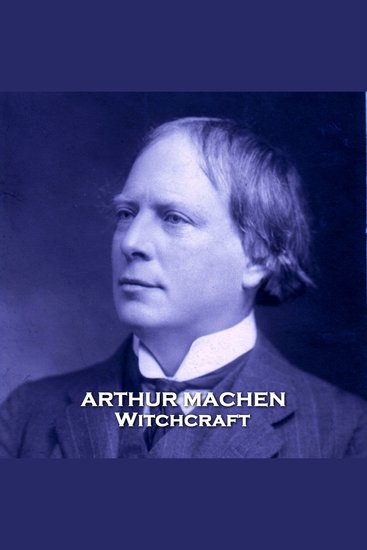
Arthur Llewelyn Jones was born in Caerleon, Monmouthshire on the 3rd March 1863.
Machen came from a long line of clergymen, and when he was two, his father became vicar of a small parish about five miles north of Caerleon, and Machen was brought up at the rectory there.
In his early years he received an excellent classical education, but family poverty ruled out university, and he was sent to London to sit exams to attend medical school but failed the exams.  He did show literary promise with the publication of the poem ‘Eleusinia’ in 1821.  But life in London was difficult and it was only in 1884 that he published again and was taken on to translate several French works which thereafter became the standard editions for many years.
In 1887, his father died.  That same year he married Amelia Hogg, a maverick music teacher with a passion for the theatre.  He also began to receive legacies from Scottish relatives which allowed him to devote more time to writing.
After publishing in literary magazines in 1894 he published his first book ‘The Great God Pan’.  Its sexual and horrific content very much helped sales.
Over the next decade or so he wrote some of his best work but was unable to find a publisher mainly due to the collapse of the decadent market over Oscar Wilde’s scandalous trial.
In 1899, his wife died and during his long recovery he took up acting and travelled around the country as part of a travelling company.  Three years later he was publishing again and had remarried.
Re-publishing of earlier works helped anchor both his reputation and his income.  By the time the Great War opened Europe’s wounds he returned to the public eye with ‘The Bowmen’ helped by the publicity around the ‘Angel of Mons’ episode.
However, by the late 20’s new works had dried up and his back catalogue was no longer a source of regular income.
In 1932 he received a Civil List pension of ₤100 per annum but other work was not forthcoming.  His finances finally stabilised with a literary appeal in 1943 for his eightieth birthday and allowed him to live his remaining years in relative comfort.
Arthur Machen died on 15th December 1947 in Beaconsfield. He was 84.
Voir livre





