Junte-se a nós em uma viagem ao mundo dos livros!
Adicionar este livro à prateleira
Grey
Deixe um novo comentário Default profile 50px
Grey
Assine para ler o livro completo ou leia as primeiras páginas de graça!
All characters reduced
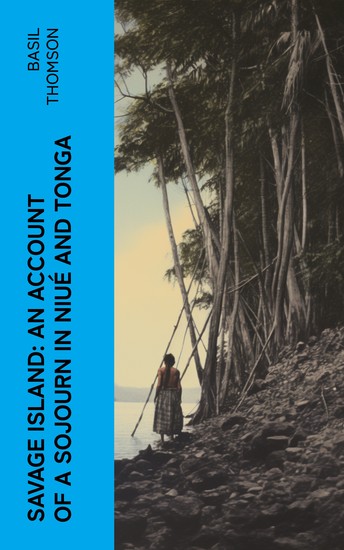
Savage Island: An Account of a Sojourn in Niué and Tonga - cover
LER

Savage Island: An Account of a Sojourn in Niué and Tonga

Basil Thomson

Editora: e-artnow

  • 0
  • 0
  • 0

Sinopse

"Savage Island: An Account of a Sojourn in Niué and Tonga" by Basil Thomson. Published by e-artnow. e-artnow publishes a wide range of titles that encompasses every genre. From well-known classics & literary fiction and non-fiction to forgotten−or yet undiscovered gems−of world literature, we issue the books that need to be read. Each e-artnow edition has been meticulously edited and formatted to boost readability for all e-readers and devices. Our goal is to produce eBooks that are user-friendly and accessible to everyone in a high-quality digital format.
Disponível desde: 30/11/2023.
Comprimento de impressão: 1390 páginas.

Outros livros que poderiam interessá-lo

  • French Language - cover

    French Language

    Fabien Arnaud

    • 0
    • 0
    • 0
    This book includes:French For BeginnersFrench Short StoriesFrench For Beginners:This book will help you on your journey in French. Don’t rush through the book. You can start with a lesson a day and then use and practice what you learned immediately. Don’t wait until you get to France actually to start speaking French. Once you get through each lesson, get a friend or just about anybody you can practice French with and start gabbing away. The point of language is that it should be used, not just learned.Here’s some topics covered in this book:? French pronunciation? Verbs? Useful Everyday expressions? Conversations? And much moreFrench Short Stories Book:Ready To Learn The French Language quickly and in a practical way with exciting short novels?It is no secret that language proficiency grows through practice. The more you practice a foreign language, the more comfortable you will become with it. For beginner French speakers, it is essential not only to expand your vocabulary, but also to build confidence in your ability to speak, read, and master the language.The 21 captivating French stories in this book (I have included one bonus story at the end) have been carefully crafted for new French speakers to help with learning new words and phrases while also strengthening your confidence by reinforcing what you already know. So, how should you use this book? It is best to start at the beginning, as the stories in this book will get progressively more sophisticated. Each story comes with a series of questions in French to gauge your comprehension of the story, as well as a glossary of some new words or terms that were introduced in that story. Get your copy now!
    Ver livro
  • Aboriginal Australia - A Cultural and Historical Overview - cover

    Aboriginal Australia - A...

    Lillian Brooks

    • 0
    • 0
    • 0
    Aboriginal Australia represents one of the world’s oldest continuous cultures, with a history that spans over 65,000 years. The Aboriginal peoples of Australia have a deep connection to the land, having lived across the continent for millennia, developing diverse societies, languages, and spiritual beliefs. This rich cultural heritage reflects an extraordinary resilience, as Aboriginal communities have adapted to a wide range of environments, from the arid deserts to lush rainforests. 
    The term "Aboriginal" refers to the diverse Indigenous groups that inhabit Australia, each with their own unique customs, languages, and traditions. There are over 250 distinct language groups, with their own dialects and systems of social organization. These communities have historically been hunter-gatherers, using sophisticated methods of land management, such as controlled fire-stick farming, to ensure the sustainability of their environment. The interconnectedness of land, culture, and spirituality is central to Aboriginal identity, where the landscape itself holds profound cultural significance. The concept of “Country” goes beyond mere geography—it is a living, breathing entity with deep spiritual meaning.
    Ver livro
  • Muromachi Period - Ashikaga Shoguns and the Rise of Feudal Japan - cover

    Muromachi Period - Ashikaga...

    Rolf Hedger

    • 0
    • 0
    • 0
    The Muromachi Period, spanning from 1336 to 1573, marked a significant turning point in Japanese history, characterized by the rise of the Ashikaga Shogunate and the gradual shift toward decentralized feudal rule. This period emerged following the fall of the Kamakura Shogunate, as Ashikaga Takauji established his military government in Kyoto. The political, social, and cultural transformations that unfolded during this time laid the foundation for the later Sengoku era, a period of constant warfare among regional warlords. 
    The decline of the Kamakura Shogunate stemmed from mounting dissatisfaction among the samurai class, who had grown discontent with the Hojo regents’ rule. The Mongol invasions of Japan in 1274 and 1281 had placed immense strain on the government, as victory brought no financial rewards for the warriors who had fought to defend the nation. With no lands to distribute as compensation, loyalty to the shogunate weakened, creating an opportunity for ambitious leaders to challenge its authority. Amid this unrest, Emperor Go-Daigo launched the Kenmu Restoration (1333–1336), an effort to reestablish imperial rule. However, his failure to recognize the interests of the samurai led to his downfall. 
    Ashikaga Takauji, originally a supporter of the emperor, turned against him and seized power, defeating both imperial and Kamakura loyalists. In 1336, Takauji established his own military government, known as the Muromachi Bakufu, in Kyoto. Unlike the Kamakura Shogunate, which ruled from a distant military capital, the Muromachi Shogunate was strategically located in the heart of Japan’s cultural and political sphere. Takauji’s rule was solidified in 1338 when he was officially
    Ver livro

  • Blood From a Stone - A Memoir of How Wine Brought Me Back from the Dead - cover

    Blood From a Stone - A Memoir of...

    Adam S. McHugh

    • 0
    • 0
    • 0
    Men's Journal Best Wine Books 2023 and André Simon Food and Drink Book Award Longlist
    "This is the story of how wine brought me back from the dead."
    Thus begins Adam McHugh's transition through the ending of one career—as a hospice chaplain and grief counselor—into the discovery of a new life in wine among the grapevines of the Santa Ynez Valley of California.
    "This is the corkscrewing tale of how I got to Santa Ynez, eventually, and the questions that came up along the way," he continues. "You and I are going to take a long wine tour together on our way there, and we will make plenty of stops for a glass and some local wine history. As you will see, I reached into the old, old story of wine in order to find my new story, which begins, as so many wine love stories do, in the French countryside."
    With warmth and wit, Adam tells the story of what happens when things fall apart and when where you live no longer feels like home. From the south of France to Champagne to the California central coast, the trail winds toward new life and healing through the good gifts of wine, friendship, and a sense of place. Pour a glass and join the adventure.
    Ver livro
  • Voyage of the Beagle - cover

    Voyage of the Beagle

    Charles Darwin

    • 0
    • 0
    • 0
    "Voyage of the Beagle" is a renowned travel memoir written by Charles Darwin, chronicling his five-year journey aboard the HMS Beagle, which sailed from 1831 to 1836. The book provides a vivid account of Darwin's experiences, observations, and discoveries during the voyage, particularly focusing on the natural history, geology, and anthropology of the places he visited, including South America, the Galapagos Islands, Australia, and Tahiti.
    Ver livro
  • The Science of Mummification - Techniques and Secrets Revealed - cover

    The Science of Mummification -...

    Omar Khalil

    • 0
    • 0
    • 0
    Mummification, the art and science of preserving bodies after death, has fascinated both historians and scientists for centuries. In ancient Egypt, mummification was not merely a process of preservation but also a vital part of the culture’s religious beliefs. The Egyptians believed in an afterlife, where the soul would continue to exist in a parallel realm. The preservation of the body was considered essential for the soul’s journey, as it would serve as a vessel for the soul's return. This chapter delves into the origins and purpose of mummification, shedding light on the techniques that evolved over millennia. 
    The practice of mummification is believed to have begun around 3500 BCE, initially as a natural process. Early Egyptians buried their dead in shallow graves in the hot, dry desert sands. The dry conditions naturally desiccated the bodies, preserving them for years or even centuries. However, as Egyptian society developed and religious beliefs became more complex, the need for a more deliberate and refined method of preservation emerged. Over time, the Egyptians developed techniques to prevent decomposition, ensuring that the deceased would be preserved for the afterlife. 
    Mummification’s primary purpose was to ensure the deceased’s body remained intact for the soul’s journey to the afterlife. Ancient Egyptians believed that the body was necessary for the soul to recognize and reunite with the deceased in the next world. The process, therefore, was not just about keeping the body intact; it was about ensuring the deceased's spiritual well-being. Alongside the physical mummification process, elaborate burial rituals were performed, including the offering of food, goods, and prayers to help guide the deceased through the afterlife.
    Ver livro