Junte-se a nós em uma viagem ao mundo dos livros!
Adicionar este livro à prateleira
Grey
Deixe um novo comentário Default profile 50px
Grey
Assine para ler o livro completo ou leia as primeiras páginas de graça!
All characters reduced
The Village Rector - cover
LER

The Village Rector

Balzac Honoré de

Tradutor Katharine Prescott Wormeley

Editora: DigiCat

  • 0
  • 0
  • 0

Sinopse

In "The Village Rector," Honoré de Balzac presents a nuanced exploration of rural life in 19th-century France, blending philosophical musings with a vivid portrayal of village dynamics. The narrative centers around the struggles of the titular rector, a compassionate and idealistic clergyman, whose efforts to uplift the moral and intellectual standards of his community face numerous challenges. Balzac's intricate prose and detailed characterizations reflect the social hierarchies and economic realities of the time, illustrating how personal aspirations frequently clash with societal constraints. Set against the backdrop of the emerging modern French society, the novel serves as a microcosm of the broader transformations affecting the nation, encapsulating the tensions between tradition and progress within a richly textured literary style. Honoré de Balzac, a seminal figure in the realist movement, drew upon his extensive observations of Parisian society and provincial life to create his masterpieces. Inspired by his own experiences in a deeply class-conscious society, Balzac sought to illuminate the complexities of human behavior and the sociopolitical landscape of his time. His meticulous research and unwavering dedication to realism transformed literature, and "The Village Rector" stands as a testament to his insight and artistic prowess. Readers seeking an authentic representation of life in rural France, infused with philosophical depth and social critique, will find "The Village Rector" an enlightening and enriching experience. Balzac's ability to weave everyday struggles with the larger existential questions guarantees that this work remains relevant and thought-provoking, inviting readers to reflect on the intricacies of human relationships and moral dilemmas.
Disponível desde: 16/09/2022.
Comprimento de impressão: 233 páginas.

Outros livros que poderiam interessá-lo

  • The Maltese Falcon - cover

    The Maltese Falcon

    Samuel Dashiell Hammett

    • 0
    • 0
    • 0
    What is everyone willing to kill for?
    
    First published in 1930, The Maltese Falcon by Dashiell Hammett is the novel that reshaped detective fiction forever. Set in a shadowy world of deception and greed, the story follows private investigator Sam Spade as he is drawn into a dangerous hunt for a legendary jeweled statue—and the truth behind it.
    
    With sharp dialogue, moral ambiguity, and relentless tension, Hammett strips the detective story down to its toughest elements. Sam Spade is neither hero nor villain, but a man navigating lies, betrayal, and violence with cold intelligence and personal code.
    
    This landmark novel established the hard-boiled style and laid the foundation for modern crime fiction and film noir.
    
    Inside this eBook, you'll experience:
    
    One of the most influential detective novels ever written
    
    The iconic character of Sam Spade
    
    Fast-paced action and razor-sharp dialogue
    
    A defining work of American noir fiction
    
    Adapted into one of the most famous films in cinema history and studied worldwide, The Maltese Falcon remains essential reading for fans of classic mysteries and crime literature.
    
    Enter the world where trust is deadly and truth has a price. Buy now and experience the novel that defined noir.
    Ver livro
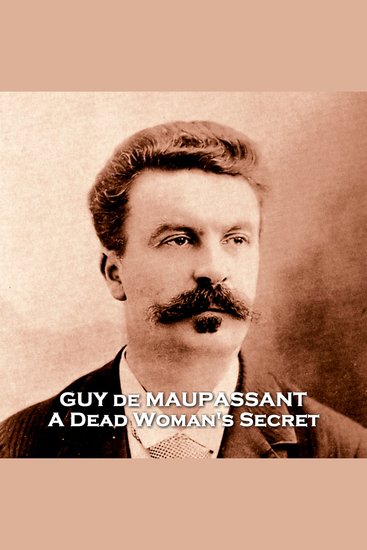
  • A Dead Woman's Secret - From their pens to your ears genius in every story - cover

    A Dead Woman's Secret - From...

    Guy de Maupassant

    • 0
    • 0
    • 0
    Henri René Albert Guy de Maupassant was born on August 5th, 1850 near Dieppe in France.  
    Maupassant’s early life was badly torn when at age 11 (his younger brother Hervé was then five) his mother, Laure, a headstrong and independent-minded woman, risked social disgrace in order to obtain a legal separation from her husband. 
    After the separation, Laure kept custody of her two boys. With the father now forcibly absent, Laure became the most influential and important figure in the young boy's life.   
    Maupassant’s education was such that he rebelled against religion and other societal norms but a developing friendship with Gustave Flaubert began to turn his mind towards creativity and writing. 
    After graduation he volunteered for the Franco-Prussian war. With its end he moved to Paris to work as a clerk in the Navy Department.  Gustave Flaubert now took him under his wing.  Acting as a literary guardian to him, he guided the eager Maupassant to debuts in journalism and literature.  For Maupassant these were exciting times and the awakening of his creative talents and ambitions. 
    In 1880 he published what is considered his first great work, ‘Boule de Suif’, (translated as as ‘Dumpling’, ‘Butterball’, ‘Ball of Fat’, or ‘Ball of Lard’) which met with a success that was both instant and overwhelming.  Flaubert at once acknowledged that it was ‘a masterpiece that will endure.’ Maupassant had used his talents and experiences in the war to create something unique.  
    This decade from 1880 to 1891 was to be the most pivotal of his career.  With an audience now made available by the success of ‘Boule de Suif’ Maupassant organised himself to work methodically and relentlessly to produce between two and four volumes of work a year.  The melding of his talents and business sense and the continual hunger of sources for his works made him wealthy. 
    In his later years he developed a desire for solitude, an obsession for self-preservation, and a fear of death as well as a paranoia of persecution caused by the syphilis he had contracted in his youth.  
    On January 2nd, 1892, Maupassant tried to commit suicide by cutting his throat.  Unsuccessful he was committed to the private asylum of Esprit Blanche at Passy, in Paris.  It was here on July 6th, 1893 that Henri René Albert Guy de Maupassant died at the age of only 42.
    Ver livro
  • Anne of Avonlea - cover

    Anne of Avonlea

    Lucy Maud Montgomery

    • 0
    • 0
    • 0
    Classic novel by L. M. Montgomery, sequel to the adored 'Anne of Green Gables'.  
    Anne tries her strength as the teacher at school and local community improver, with funny and memorable adventures on the way.
    Ver livro
  • Slip Under the Microscope A (Unabridged) - cover

    Slip Under the Microscope A...

    H. G. Wells

    • 0
    • 0
    • 0
    This story talks about social class at universities in the late 1800s and it also looks at the idea of scholarships. The main character is the son of a cobbler and he's at university on a scholarship, unlike the other students who are from wealthy families who are able to pay for their education.
    Ver livro
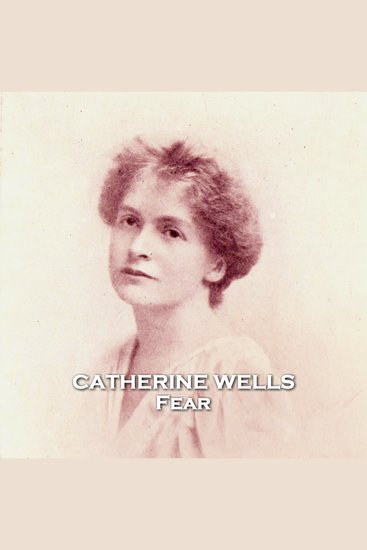
  • Fear - From their pens to your ears genius in every story - cover

    Fear - From their pens to your...

    Catherine Wells

    • 0
    • 0
    • 0
    Little information survives on Catherine’s life. 
    She was born Amy Catherine Robbins in 1872. 
    In about 1892 she was a student in a biology cramming class where the teacher was H G Wells.  Though married he was quickly attracted to his student and within a short time they were living together in Woking, Surrey.  He then divorced his first wife and married Catherine in October 1895 at St Pancras register office. 
    In the early years they were poor to the point that they could not afford to start a family.  When they did they had two children; Philip in 1901 and Frank two years later. 
    For much of her life she seemed to pursue other interests, being a mother, a gardener, running much of her husband’s business affairs and this seemed to leave little time for her own literary pursuits.  She published little during her lifetime apart from a few poems and some short stories.  Indeed her prodigiously talented husband even referred to her as ‘Jane’ and soon all around her did too, her writing life seemingly in another personality far, far away.   
    By the mid 20’s she was ill with cancer and succumbed to its advance in 1927. 
    Wells, although wayward and promiscuous during much of the marriage, now attempted to put his wife’s literary merits into book form and published ‘The Book of Catherine Wells’, a collection of short stories and poems.
    Ver livro
  • A Wireless Message - From their pens to your ears genius in every story - cover

    A Wireless Message - From their...

    Ambrose Bierce

    • 0
    • 0
    • 0
    Ambrose Gwinnett Bierce was born on 24th June 1842 at Horse Cave Creek in Meigs County, Ohio. His parents were poor but they introduced him to literature at an early age, instilling in him a deep appreciation of books, the written word and the elegance of language.  
    Growing up in Koscuisko County, Indiana poverty and religion were defining features of his childhood, and he would later describe his parents as “unwashed savages” and fanatically religious, showing him little affection but always quick to punish. He came to resent religion, and his introduction to literature appears to be their only positive effect. 
    At age 15 Bierce left home to become a printer’s devil, mixing ink and fetching type at The Northern Indian, a small Ohio paper. Falsely accused of theft he returned to his farm and spent time sending out work in the hopes of being published. 
    His Uncle Lucius advised he be sent to the Kentucky Military Institute. A year later he was commissioned as an Officer.  As the Civil War started Bierce enlisted in the 9th Indiana Infantry Regiment.  
    In April 1862 Bierce fought at the Battle of Shiloh, an experience which, though terrifying, became the source of several short stories. Two years later he sustained a serious head wound and was off duty for several months. He was discharged in early 1865.  
    A later expedition to inspect military outposts across the Great Plains took him all the way to San Francisco. He remained there to become involved with publishing and editing and to marry, Mary Ellen on Christmas Day 1871.  They had a child, Day, the following year.  
    In 1872 the family moved to England for 3 years where he wrote for Fun magazine. His son, Leigh, was born, and first book, ‘The Fiend’s Delight’, was published.  
    They returned to San Francisco and to work for a number of papers where he gained admiration for his crime reporting. In 1887 he began a column at the William Randolph Hearst’s San Francisco Examiner.  
    Bierce’s marriage fell apart when he discovered compromising letters to his wife from a secret admirer. The following year, 1889 his son Day committed suicide, depressed by romantic rejection. 
    In 1891 Bierce wrote and published the collection of 26 short stories which included ‘An Occurrence at Owl Creek Bridge’.  Success and further works including poetry followed.  
    Bierce with Hearst’s resources helped uncover a financial plot by a railroad to turn 130 million dollars of loans into a handout. Confronted by the railroad and asked to name his price Bierce answered “my price is $130 million dollars. If, when you are ready to pay, I happen to be out of town, you may hand it over to my friend, the Treasurer of the United States”.  
    He now began his first foray as a fabulist, publishing ‘Fantastic Fables’ in 1899.  But tragedy again struck two years later when his second son Leigh died of pneumonia relating to his alcoholism.  
    He continued to write short stories and poetry and also published ‘The Devil’s Dictionary’.  
    At the age of 71, in 1913 Bierce departed from Washington, D.C., for a tour of the battlefields where he had fought during the civil war. At the city of Chihuahua he wrote his last known communication, a letter to a friend. It’s closing words were “as to me, I leave here tomorrow for an unknown destination,” Ambrose Bierce then vanished without trace.
    Ver livro