Junte-se a nós em uma viagem ao mundo dos livros!
Adicionar este livro à prateleira
Grey
Deixe um novo comentário Default profile 50px
Grey
Assine para ler o livro completo ou leia as primeiras páginas de graça!
All characters reduced
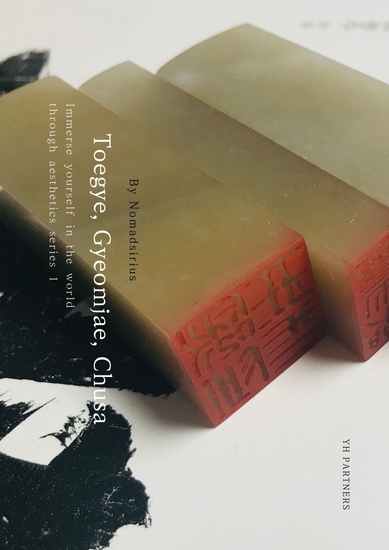
Toegye Gyeomjae Chusa - cover
LER

Toegye Gyeomjae Chusa

박 Nomadsirius

Editora: YH Partners

  • 0
  • 0
  • 0

Sinopse

Prologue.

Aesthetics is the emotional perception of beauty introduced by Baumgarten (1714-1762) in Germany during the mid-18th century.
Aesthetics, with the goal of systematically interpreting aesthetic values, traces its philosophical origins back to ancient Greece.
To understand the perception of beauty in both the East and the West, we investigate the philosophical foundations of aesthetic judgment found in Greek aesthetics, Eastern Confucianism, Buddhism, Zen aesthetics, medieval aesthetics, Renaissance aesthetics, modern aesthetics, and contemporary aesthetics.


\"Gödel, Escher, Bach (1979)\" by American cognitive scientist Douglas Richard Hofstadter (1945- ) serves as the inspiration for the creation of \"Toegye, Gyeomjae, Chusa (2023).\"
Hofstadter investigates the neural mechanisms of cognition in the lives and works of Gödel, Escher, and Bach.
Austrian mathematician Kurt Gödel (1906-1978) poses profound philosophical inquiries about formal logic, mathematical logic, and the foundations of mathematical systems.
Dutch printmaker Moritz Escher (1898-1972) ventures beyond the boundaries of reality and imagination by blending mathematical principles and aesthetics within the realm of surrealism.
German composer Johann Sebastian Bach (1685-1750) translates the counter-reformation and the upheaval that affected Northern Europe after the Thirty Years\' War (1618-1648) into dynamic, unconventional, and sensuous Baroque auditory art.


\"Toegye, Gyeomjae, Chusa (2023)\" is an encounter of philosophy and aesthetics recorded from an artist\'s monograph perspective.
Toegye Yi Hwang (1501-1570), a Confucian scholar of the Joseon Dynasty, firmly establishes the dualism of principle and vital forces based on the theory of principle superiority, which dualizes li-ki into enduring li and ephemeral qi.
Gyeomjae Jeong Seon (1676-1759), a painter from the later period of the Joseon Dynasty, reinterprets the monism of principle and vital forces, viewing it as a single attribute or order of qi\'s action, and opens up a new horizon in the world of landscape painting.
Chusa Kim Jeong-hui (1786-1856), a scholar from the later period of the Joseon Dynasty, creates an ideal new calligraphy style based on his research in Qing Dynasty classical studies, which harmonizes the monism of principle and vital forces of Yulgok and the dualism of principle and vital forces of Toegye, free from the constraints of theoretical Confucianism.
Attempting individual reflections on the lives, scholarship, philosophy, and aesthetics of Toegye, Gyeomjae, and Chusa, it approaches the fusion of clarity and universality.
Establishing a cosmology based on the dualism of principle and vital Forces, I seek to find the essence of aesthetics in the movement of qi, which is the change in the universe.
Disponível desde: 20/10/2023.
Comprimento de impressão: 150 páginas.

Outros livros que poderiam interessá-lo

  • My People the Sioux - cover

    My People the Sioux

    Luther Standing Bear

    • 0
    • 0
    • 0
    "The preparation of this book has not been with any idea of self-glory. It is just a message to the white race; to bring my people before their eyes in a true and authentic manner. The American Indian has been written about by hundreds of authors of white blood or possibly by an Indian of mixed blood who has spent the greater part of his life away from a reservation. These are not in a position to write accurately about the struggles and disappointments of the Indian. Therefore, I trust that in reading the contents of this book the public will come to a better understanding of us. I hope they will become better informed as to our principles, our knowledge, and our ability. It is my desire that all people know the truth about the first Americans and their relations with the United States Government."
    Ver livro
  • Hidden Brilliance - Redefining Genius: The Overlooked Intellectual Giant - cover

    Hidden Brilliance - Redefining...

    John Harpoon

    • 0
    • 0
    • 0
    Genius is often perceived through a narrow lens, typically defined by extraordinary achievements, groundbreaking discoveries, or exceptional skills. However, this traditional view of genius overlooks many individuals whose brilliance remains hidden from the mainstream. The nature of genius is far more complex and multifaceted than society tends to acknowledge. It exists not only in those who are celebrated publicly but also in those whose contributions go unnoticed or unrecognized due to societal limitations or biases. 
    At its core, genius is about exceptional intellectual capacity, but this capacity can manifest in many different ways. It is not always about creating world-changing inventions or becoming a famous name. For many, genius lies in quiet innovation, subtle insights, and the ability to solve problems in unique and unconventional ways. It can be seen in the person who finds creative solutions to everyday challenges or in the thinker who makes a significant impact in a specific, narrow field of knowledge, even if that knowledge doesn’t capture the world’s attention.
    Ver livro
  • 10 Ancient Roman Concepts That Explain the Modern World - cover

    10 Ancient Roman Concepts That...

    D. S. Yvon

    • 0
    • 0
    • 0
    These ancient concepts come from an assortment of wisdom found in the time of the Roman Empire include: 
    The Tacitus Razor: “If you want to know who controls you, see who you’re not allowed to criticize.” This is how comedians accidently reveal a society's hierarchy—they call everyone naked, and soon discover who the king is. 
    The Slavery Syndrome. Roman historian Sallust: “Few men desire liberty; most men wish only for a just master.” Genuine liberty means making decisions 24/7; parsing right from wrong; solving pesky dilemmas using nothing but one’s own mind.  
    The Polybius Warning: 2nd century B.C. historian Polybius warned that a falling birthrate precedes civilizational collapse. Fewer births mean men and women have checked out. Polybius believed the Greek civilization fell due to its “low birth rate…” 
    The Pliny Principle: “It is wonderful how the mind is stirred and quickened into activity by brisk bodily exercise.”  
    The Uses of Folly. Roman historian Herodotus: “If a man insisted always on being serious, and never allowed himself a bit of fun and relaxation, he would go mad.”  
    6. The Vitruvius Rule: Modern architects love asymmetrical structures, but Ancient Roman architect Vitruvius said a building out of proportions is like a deformed body. Nature herself “composed the human body” and the rest of creation using “due proportions.” The Vitruvius Rule: No symmetry? Off to cemetery. 
    And more!
    Ver livro
  • The Invisible Hand - Economic Intelligence And Industrial Espionage - cover

    The Invisible Hand - Economic...

    Davis Truman

    • 0
    • 0
    • 0
    "The Invisible Hand" delves deep into the clandestine world of economic intelligence and industrial espionage, where the forces shaping global economies are often unseen and unknown. 
    In this riveting exploration, author Davis Truman unveils the intricate web of intrigue that underpins modern capitalism. From covert operations to sophisticated cyber espionage, this book reveals how nations and corporations deploy their resources relentlessly for competitive advantage. 
    Drawing from real-life examples and historical case studies, "The Invisible Hand" exposes governments' and businesses' shadowy tactics to gain insight into their rivals' strategies, steal trade secrets, and manipulate markets. 
    Ver livro
  • Real Estate Exam Secrets Revealed - Unlock proven strategies and insider techniques to excel on your exam and achieve mastery - cover

    Real Estate Exam Secrets...

    Orson Vexley

    • 0
    • 0
    • 0
    Real Estate Exam Secrets Revealed: A Simplified Guide with Essential Explanations 
    Are you aiming to advance your career and enhance your knowledge by successfully passing your real estate exam? 
    In search of a thorough guide that includes everything you need to excel? Your quest ends here! 
    This guide is your ultimate companion for deepening your understanding, applying your skills, and engaging in practical exercises. With this resource, you're set for success. 
    Updated to align with the latest Real Estate Exam structure. 
    Key Features of This Comprehensive Guide: - In-depth insights into real estate exam certification - Detailed explanations of key concepts related to the real estate field - Effective strategies for exam preparation and problem-solving 
    Our guide stands out with its extensive coverage, essential for your exam success. Concepts are explored in detail, ensuring you grasp them fully. Please note that this guide is an independent resource and is not affiliated with any official real estate entity. 
    Crafted with a clear structure and straightforward language, the guide ensures smooth transitions between topics. Say goodbye to convoluted jargon and welcome clear, precise, and technically accurate content. So, why wait? Click the BUY NOW button, secure your guide, and embark on your journey to acing your real estate exam!
    Ver livro
  • The Story of Philosophy Plato - cover

    The Story of Philosophy Plato

    Will Durant

    • 0
    • 0
    • 0
    "The Story of Philosophy: Plato" by Will Durant is a captivating exploration of the life and philosophical ideas of the ancient Greek thinker, Plato. In this edition, Durant brings Plato's philosophy to life with vivid imagery that enhances the reader's understanding and engagement.
    Durant provides readers with a comprehensive overview of Plato's life, from his upbringing in ancient Athens to his establishment of the Academy, one of the earliest institutions of higher learning in the Western world. He delves into Plato's major philosophical works, such as "The Republic" and "The Symposium," offering insightful commentary on their significance and enduring relevance.
    Through clear and accessible prose, Durant unpacks Plato's key philosophical concepts, including the theory of forms, the allegory of the cave, and the concept of the philosopher-king. He explores Plato's ideas about justice, virtue, and the nature of reality, illuminating their impact on subsequent generations of thinkers.
    "The Story of Philosophy: Plato" is not only a biography of Plato but also a celebration of his enduring legacy. Durant's engaging storytelling and thoughtful analysis make this book a must-read for anyone interested in philosophy, history, or the timeless wisdom of the ancient Greeks.
    Ver livro