Junte-se a nós em uma viagem ao mundo dos livros!
Adicionar este livro à prateleira
Grey
Deixe um novo comentário Default profile 50px
Grey
Assine para ler o livro completo ou leia as primeiras páginas de graça!
All characters reduced
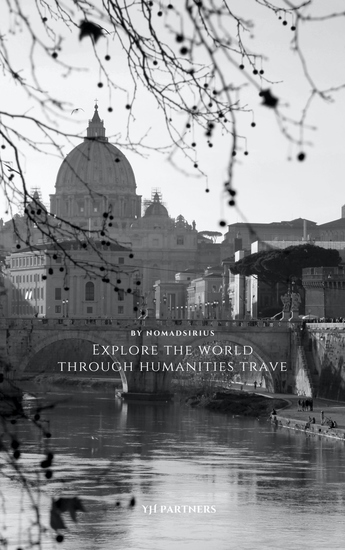
Explore the world through humanities travel - cover
LER

Explore the world through humanities travel

박 Nomadsirius

Editora: YH Partners

  • 0
  • 0
  • 0

Sinopse

Prologue.Due to the impact of ethnic circumstances left in history, the ethnic characteristics remain, approaching the humanities journey through the clarity of comprehensive historiography.Following the trajectory of the history of each country, changed at the whims of the goddess of luck, Fortuna, the humanities journey explores the paths of history.In contrast to the Tu\'kke of Greek mythology, who left luck to the dice, in Roman mythology, Fortuna determines destiny with a wheel.We traverse James Joyce and Shakespeare\'s England, Dante Alighieri and Leonardo da Vinci, Umberto Eco\'s Italy, Rubens\'s Belgium, Nikos Kazantzakis\'s Greece, Milan Kundera\'s Czechoslovakia, Descartes and Vincent van Gogh, Sartre\'s France, and Dostoevsky\'s Russia.The internal meaning of history involves the exploration of truth, thought, and effort to approach it, as well as the investigation of causes and origins.In the timeless hours between the dog and the wolf, we revel in the freedom that transcends all formality during that elusive evening time.Embarking on a humanities journey through comprehensive historiography, we explore the world.Humanities travel is enriching when life itself is beautiful.
Disponível desde: 15/12/2023.
Comprimento de impressão: 201 páginas.
Outros livros que poderiam interessá-lo

  • What Is Property? - An Inquiry into the Principle of Right and of Government - cover

    What Is Property? - An Inquiry...

    Pierre-Joseph Proudhon

    • 0
    • 0
    • 0
    ‘Property is Theft’, a phrase which has passed into common parlance, was the rallying call of Pierre-Joseph Proudhon’s political treatise What Is Property? Proudhon (1809-1865) was both admired and excoriated. A political theorist of the first order, he was vilified in his native France by the Communists and the Monarchists alike, though admired by Karl Marx as well as many in the nation’s academia and judiciary who valued the clarity of his thought and analytical method.  
     
    He criticised both Right and Left (the very definition of French political thinking), describing them as two sides of the same coin. Their solutions to society’s ills, he said, were like Thesis and Antithesis, based on a common error and both inadequate to the task of healing society. He offered, instead, a third way, which he called his Synthesis. Regarded as the founder of modern Anarchism, his aim was not to engender chaos, as the word anarchy often connotes, but to suggest a workable, political, and economic foundation for society which would promote order and equity for all under the most unfettered conditions of individual liberty.  
     
    Proudhon grew up in poverty, and was home schooled as a child, but received a bursary in his youth sufficient to allow him to attend the City College in his home town (though not sufficient, it seems, to buy him shoes). There, he discovered the library which introduced him to a world, classical and contemporary, previously denied him. Lacking wealth or contacts, he worked variously as a printer, a compositor and proof-reader by day and an essayist by night, learning Latin along the way to assist in his work. In 1830, a friend, a scholar, invited Proudhon to join him in Paris to pursue his philosophical writings full time. When a cholera outbreak forced his return home, Proudhon spent the next few years juggling his two careers. In 1839, he applied for a pension (bursary) at the Academy of Besançon which obliged him to write works on its behalf.  
     
    What Is Property?, published in France in 1840, was his first. It was so controversial that little else followed. However, it established his reputation, and he was eventually able to pursue his philosophical work full time. What Is Property? (First Memoir) attempts to uncover the roots of poverty and associated social ills and examines different attitudes to poverty and wealth from the Greeks to the present day. Proudhon quickly identifies a common thread, property, which he distinguishes from possession, and argues that only a fundamental, though gradual, abandonment of property (as an asset) and all that flows from it, can rescue society from its current conflicts. The memoir seeks to illuminate the underlying causes of war, poverty, slavery, and oppression and points the way to a solution. In effect, it is a practical manual for the survival of mankind. The Second Memoir (1841), included on this recording, is Proudhon’s response to the criticisms of the First Memoir, initially uncomprehending and then self-assured by turns. What Is Property? is Proudhon’s masterwork. It divides opinion, but no one who hears it can come away with their view of their own world unchanged.  
     
    Translation: Benjamin R. Tucker.
    Ver livro
  • The National Road - Dispatches from a Changing America - cover

    The National Road - Dispatches...

    Tom Zoellner

    • 0
    • 0
    • 0
    This collection of "eloquent essays that examine the relationship between the American landscape and the national character" serves to remind us that despite our differences we all belong to the same land (Publishers Weekly). 


    What does it mean when a nation accustomed to moving begins to settle down, when political discord threatens unity, and when technology disrupts traditional ways of building communities? Is a shared soil enough to reinvigorate a national spirit? 


    From the embaattled newsrooms of small town newspapers to the pornography film sets of the Los Angeles basin, from the check–out lanes of Dollar General to the holy sites of Mormonism, from the nation's highest peaks to the razed remains of a cherished home, like a latter–day Woody Guthrie, Tom Zoellner takes to the highways and byways of a vast land in search of the soul of its people. 


    By turns nostalgic and probing, incisive and enraged, Zoellner's reflections reveal a nation divided by faith, politics, and shifting economies, but—more importantly—one united by a shared sense of ownership in the common land.
    Ver livro
  • One Nation Under the Influence - America's Drug Habit and How We Can Overcome It - cover

    One Nation Under the Influence -...

    Kevin A. Sabet

    • 0
    • 0
    • 0
    We are in the midst of the worst drug crisis in American history. What are we going to do about it?Around 100,000 Americans died of a drug overdose last year—nearly double the number who died in Vietnam. More than 1,000,000 have perished since 2000, thanks largely to an explosion of fentanyl and other addictive opioids. But fentanyl, abundant methamphetamine, and other lethal drugs are not the only things that are killing us: our policy is. So far, America has lacked the will to do better. That must change, and this book tells us how.No one is immune, which is why Kevin Sabet has authored this remarkable book. Sabet, dubbed the "the quarterback of the new anti-drug movement" by Salon, has spent most of his life battling the destructive effects of drugs. In One Nation Under the Influence, he asks hard questions and provides clear answers, taking listeners from the streets of San Francisco and New York to the southern border, up to Canada, and across to Europe to show how we can chart a necessary way forward. The solutions are out there, if only we have the will to apply them.
    Ver livro
  • Becoming Baba Yaga - Trickster Feminist and Witch of the Woods - cover

    Becoming Baba Yaga - Trickster...

    Kris Spisak, GennaRose Nethercott

    • 0
    • 0
    • 0
    When darkness, fear, and instability inundate our daily lives, folktale figures like Baba Yaga speak to the dichotomy of our existence—the hope and the horror, the magic and the mundane. At once an old hag and an enchantress, a demon and wish granter, a feminist and nothing more than a fairytale, Baba Yaga is an endlessly complex folktale character. 


    Becoming Baba Yaga provides an in-depth look at the Baba Yaga mythos and history through Slavic folklore. Filled with historical and cultural context, analyses, and the stories themselves that add depth to the conversation. A comprehensive resource for anyone hoping to learn more about this ambiguous character and how her multifaceted presence still ripples through the present day, Becoming Baba Yaga is as thoughtful as it is illuminating. 


    Spisak explores Baba Yaga's connection to nature as an Earth goddess and as an herbalist. She also delves into the Shadow Self and Baba Yaga's aspect as a trickster and places her in a modern context as not merely a witch of the woods but also as an archetype and force for finding your own path. Becoming Baba Yaga shares how she is both a force for good as much as evil and a feminist before her time.
    Ver livro
  • ATOMIC HABITS 10-Minute Summary - An Easy & Proven Way to Build Good Habits and Break Bad Ones - cover

    ATOMIC HABITS 10-Minute Summary...

    James Cleary

    • 0
    • 0
    • 0
    This book by James Clear offers an approach rooted in neuroscience, psychology, and sociology to help people build positive habits and eliminate negative ones. Its core premise is that habits are the foundation of success, and that small, incremental changes can lead to significant improvements in one’s life. 
    Beyond their personal impact on identity and success, Atomic Habits also raises broader questions about the role habits play in shaping societies and cultures. While Clear focuses on individual development, his principles can be applied collectively. For example, what would happen if governments, businesses, or communities intentionally designed environments that encourage good habits at scale? Behavioral architecture is already in use in some areas—like walkable city design or waste reduction through nudging strategies—but its full potential remains largely untapped. 
    Another underexplored aspect is how digital technology affects habit formation. In a world where algorithms influence what we see, read, and buy, our habits are no longer purely personal choices—they’re shaped by systems designed to maximize our engagement. This raises a critical question: how can we regain control over our behavior in such a hyperconnected environment? 
    Habits are valuable when they fit the context, but what happens when that context changes? A habit that’s beneficial today might become irrelevant—or even harmful—tomorrow. Real mastery isn’t just about building habits; it’s also about knowing when to adapt or let them go. 
    Ultimately, the book reminds us that the power to change lies in our hands—not in sweeping decisions, but in the small, consistent actions we take each day. Over time, those actions shape who we become and what we achieve. 


    Ver livro
  • Everybody's Political What's What - cover

    Everybody's Political What's What

    George Bernard Shaw

    • 0
    • 0
    • 0
    Confronted with these facts our sentimental hearthstone vaporing about parental care and me sacredness of the family as the inviolable unit of human society is only an excuse for doing nothing. Element­ary civilization is impossible without a moral code like the Ten Commandments, a technique of language, writing, and arithmetic, and a legal code of compulsory behavior completely abolishing individual liberty and free will within its scope. Unless people can be depended on to behave in an expected manner they cannot live in society, and must be either corrected or, if incorrigible, killed. Their life must be mostly dictated and institutional, and mere activities determined and predicable. And somebody must teach me codes to the children. They must be imposed on the child dogmatic­ally until it is old enough to understand them. 
    They can be imposed in various ways, by merciless whippings of children and cruel punishments of adults as well as by less savage and mischievous methods ; but they must be imposed somehow, or me human world will be an Alsatian madhouse. The necessity is fundamental; and the statesman who imagines that a formula of Liberty, Equality, Fraternity, will solve all his problems will discover, if he is capable of learning from experience, that liberty must give way to equality and that fraternity may mean either the fraternity of Cain and Abel or the friendship of David and Jonathan. Children, if they are to grow up as citizens, must learn a good deal that their parents could not teach them even if they had the necessary time. The statesman must make provision for this teaching or he will presently find himself faced with the impossible task of maintaining civilization witl1 savages instead of citizens.
    Ver livro