Join us on a literary world trip!
Add this book to bookshelf
Grey
Write a new comment Default profile 50px
Grey
Subscribe to read the full book or read the first pages for free!
All characters reduced
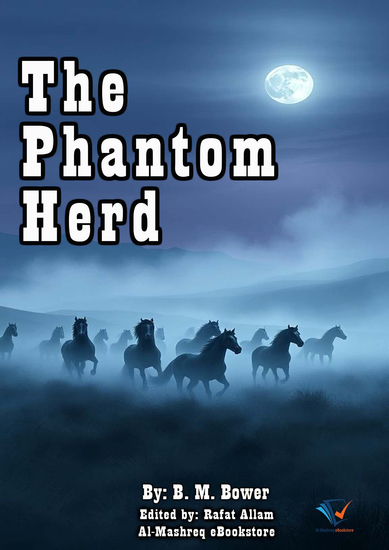
The Phantom Herd - cover

The Phantom Herd

B. M. Bower

Publisher: Al-Mashreq eBookstore

  • 0
  • 0
  • 0

Summary

The Phantom Herd follows Luck Lindsay, a motion picture director determined to capture the authentic spirit of the American West on film. As he assembles a cast of real cowboys and ventures into the rugged landscapes, Luck confronts the challenges of filmmaking, the unpredictability of nature, and the haunting presence of a mysterious herd of horses. Bower's tale intertwines the magic of cinema with the raw beauty of the frontier, offering a unique perspective on storytelling and the pursuit of authenticity.
Available since: 06/14/2025.
Print length: 200 pages.

Other books that might interest you

  • Something About Ann - cover

    Something About Ann

    J. Everett Prewitt

    • 0
    • 0
    • 0
    Something About Ann is a historical fiction novella with eleven short stories. The novella and the short stories follow a group of soldiers who faced a traumatic experience in Vietnam but remained close after returning to the States. Violence and turmoil continue to haunt the soldiers as they try to normalize their lives. Sometimes relying on the help of each other, and sometimes relying on the skills they’ve gained in combat, most prevail.
    Show book
  • Waiting for Wovoka - Envoys of Good Cheer and Liberty - cover

    Waiting for Wovoka - Envoys of...

    Gerald Vizenor

    • 0
    • 0
    • 0
    In the summer of 1962, a group of young Native American puppeteers travel in a converted school bus from the White Earth Reservation to the Century 21 Exposition, World's Fair in Seattle, Washington. The five Natives, three young men and two young women, have endured abandonment, abuse, poverty, and find solace, humor, and courage with a mute puppeteer—a Native woman in her seventies who writes original dream songs, and creates hand puppets and ironic parleys that mock the ghosts of authority. Dummy Trout, the mute puppeteer, also figured in Native Tributes and Satie on the Seine. The troupe attends a performance of Waiting for Godot by Samuel Beckett and they create a puppet parley for Wovoka, the inspiration of the Native American Ghost Dance Religion.
    Show book
  • Fountain of the Drowning - The Path of Land and Sea - cover

    Fountain of the Drowning - The...

    Reem Bassiouney

    • 0
    • 0
    • 0
    Fountain of the Drowning is a multi-layered narrative set in the late 19th and early 20th centuries, a period when Egypt witnessed dramatic events, from the constructionof the Suez Canal to the British occuation, which brought about rapid modernaization and the Europeanization of social norms.
    Show book
  • That Pinson Girl - cover

    That Pinson Girl

    Gerry Wilson

    • 0
    • 0
    • 0
    In a bleak Mississippi farmhouse in 1918, Leona Pinson gives birth to an illegitimate son whose father she refuses to name, but who will, she is convinced, return from the war to rescue her from a hardscrabble life with a distant mother, a dangerous brother, and a dwarf aunt. When, instead, her lover returns with a wife in tow, her dreams are shattered. As her brother's violence escalates and her aunt flees, Leona must rely on the help of Luther Biggs, the son of Leona's grandfather and one of his former slaves, to protect her child. Told against the backdrop of the deprivation of World War I, the tragedies of the influenza epidemic, and the burden of generations of betrayal, That Pinson Girl unfolds in lyrical, unflinching prose, engaging the timeless issues of racism, sexism, and poverty.
    Show book
  • The Rob I Knew - Memories & Poems of Robert Frost Shared by Farmhand Carl Burell - cover

    The Rob I Knew - Memories &...

    Eric Copenhaver

    • 0
    • 0
    • 0
    Enjoy this captivating journey into the life and poetry of Robert Frost, as his dear friend and farmhand, Carl Burell, shares stories about Rob with the people of Derry, New Hampshire at the Derry Centennial Celebration of 1927. 
    This fictional reenactment provides an enlightening and entertaining look inside the early years of Robert Frost through the eyes of his childhood friend, farming mentor and hired hand. Carl’s intimate view provides a unique perspective on Frost’s life as a novice farmer among the people of Derry, whom Frost freely appropriated in much of his poetry. As he reflects, Carl muses on his own appearance in some of Frost’s poems, and the manner in which the poet transformed his experiences on a hardscrabble New England farm into revered, monetized literature. Along the way, Carl also reads many of his favorite Frost poems, masterfully capturing the transcendent power of these enduring masterpieces in his native voice. 
    For lovers of poetry, Frost enthusiasts, teachers and students, The Rob I Knew is a unique and absorbing way to explore and appreciate one of our great American poets. 
    Eric Copenhaver, author and performer of this compelling audiobook, is a displaced New Hampshire native and lifelong Frost devotee—who is delighted to be channeling the colorful Carl Burell.
    Show book
  • Traitor - cover

    Traitor

    Jr. Thomas Dixon

    • 0
    • 0
    • 0
    Dixon lived through Reconstruction, and believed it ranked with the French Revolution in brutality and criminal acts. The Traitor (1907), the final book in his trilogy which also includes The Leopard’s Spots (1902), and The Clansman (1905), spans a two-year period just after Reconstruction (1870-1872), and covers the decline of the Ku Klux Klan in North Carolina. Dixon, whose father was an early Klan leader, maintained that the original Klan, the “reconstruction Klan” was morally formed in desperation to protect the people from lawlessness, address Yankee brutality, and save southern civilization. Now, in this final installment, he portrays how and why the later Klan falls into disrepute. The story includes folk legends, haunted houses, secret passageways, and spectral apparitions as part of its complicated story, weaving fact, fiction and romance in typical Dixon style. 
     
    While defamed as a white supremacist by today’s multi-cultural society, thus falling far out of favor, Dixon was one of the most popular American writers of the period, faithfully depicting the wide range of racial/cultural opinions of 19th century America. (Summary by Michele Fry)
    Show book