¡Acompáñanos a viajar por el mundo de los libros!
Añadir este libro a la estantería
Grey
Escribe un nuevo comentario Default profile 50px
Grey
Suscríbete para leer el libro completo o lee las primeras páginas gratis.
All characters reduced
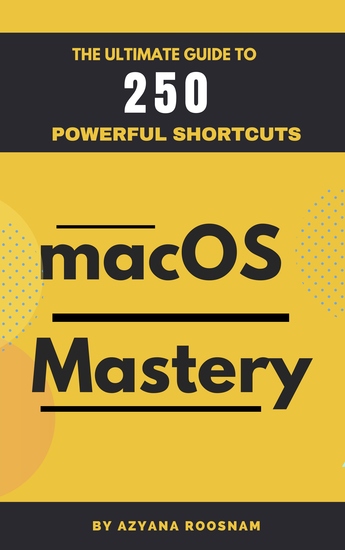
MacOS Mastery - The Ultimate Guide to 250 Powerful Shortcuts - cover

MacOS Mastery - The Ultimate Guide to 250 Powerful Shortcuts

Azyana Roosnam

Editorial: Prefect Press

  • 0
  • 0
  • 0

Sinopsis

Mastering the tricks and shortcuts of macOS can greatly save valuable time and provide a new experience with Apple products. By utilizing these shortcuts, you can significantly boost your productivity. However, it may require some effort on your part, as it involves adopting a new behavioral approach and letting go of your reliance on the mouse. But with practice, you will become adept at using macOS efficiently.
 
As the saying goes, mastering these shortcuts can help you establish your own identity as a proficient Mac user. In this book, I have organized the contents in a way that aims to assist any Mac user, regardless of the macOS version they are using. Additionally, all the shortcuts provided in this book are fully functional on various series of MacBooks, including MacBook Pro, MacBook Air, and iMac. To aid readers in better understanding, visual references have also been included.
 
Key Features
 
Renders a clear conception of macOS keyboard shortcuts
 
Shares the exclusive highlights
 
Exhibits the most advisable tips
 
Presents visual references
 
Presented 250 shortcuts for power users
 
Shortcuts are categorized into four groups, i.e. Startup, Commonly used, Accessibility, and Administrative
Disponible desde: 18/04/2023.
Longitud de impresión: 152 páginas.


Otros libros que te pueden interesar

  • It's Time to Talk (and Listen) - How to Have Constructive Conversations About Race Class Sexuality Ability & Gender in a Polarized World - cover

    It's Time to Talk (and Listen) -...

    PhD Alicia Del Prado, PhD...

    • 0
    • 0
    • 0
    We talk every day—and we often do it without thinking. But, as you well know, there are some things that are harder to talk about—especially issues pertaining to politics, culture, lifestyle, and diversity. If you've ever struggled in a conversation about a "controversial" topic with a loved one, work colleague, or even a stranger, you know exactly how uncomfortable and heated the discussion can become. And even if you are one of the lucky few that expresses themselves eloquently, how do you move beyond mere "lip service" and turn words into actionable change? 


    This groundbreaking book will show you how to get to that important next level in difficult conversations, to talk in an authentic and straightforward way about culture and diversity, and to speak from the heart with tools from the head. Using a simple eight-step approach, you'll learn communication strategies that are supported by research and have been practiced in classrooms, work meetings, therapy sessions, and more. 


    With this book as your guide, you'll learn to navigate these difficult conversations, and take what you've learned beyond the conversation and out into the world—whether it's through politics, social justice movements, or simply expanding the minds of those around you.
    Ver libro
  • Evicted: Book Summary & Analysis - cover

    Evicted: Book Summary & Analysis

    Briefly Summaries

    • 0
    • 0
    • 0
    This is a concise summary and analysis of Evicted, by Matthew Desmond. It is not the original book and is not affiliated with or endorsed by Matthew Desmond. Ideal for those seeking a quick and insightful overview.
     
    This gripping work of narrative nonfiction explores the devastating impact of eviction on the lives of low-income families. Set in a Midwestern city, the book follows several tenants and landlords as they navigate the complex web of poverty, housing policies, and economic inequality. Through vivid storytelling and meticulous research, it reveals how eviction is not just a consequence of poverty but a driving force that perpetuates it. This powerful account sheds light on the urgent need for housing reform and social justice.
    Ver libro
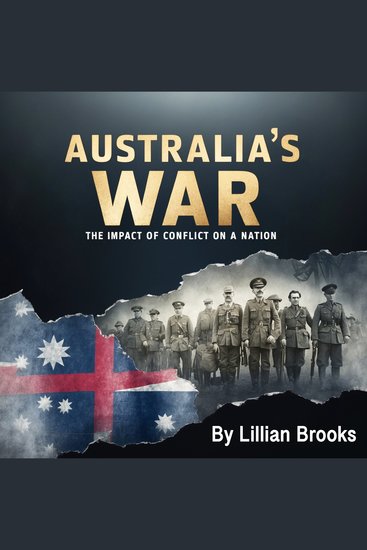
  • Australia's War - The Impact of Conflict on a Nation - cover

    Australia's War - The Impact of...

    Lillian Brooks

    • 0
    • 0
    • 0
    The early 20th century was a time of great change and tension around the world. As nations sought to expand their influence, new alliances were formed, and existing powers prepared for conflict. Australia, still a young nation and part of the British Empire, found itself drawn into global events far from its shores. The road to war for Australia was shaped by its loyalty to Britain and its growing sense of national identity. 
    At the start of the 1900s, Australia was still under the authority of the British Empire, a relationship that influenced much of its foreign policy. Britain, having secured its position as a world power, was engaged in a series of alliances and military preparations. The rise of Germany as a strong military power created a climate of fear and competition across Europe. Tensions escalated as nations began to stockpile arms, form alliances, and take aggressive stances toward one another. 
    For Australia, the decision to support Britain in times of war was almost unquestioned. The strong ties to the mother country shaped much of the public opinion and government decisions. Australia’s leaders viewed their role as part of Britain’s global defense network, and many believed that supporting Britain in a time of war would strengthen Australia’s position as a member of the Empire. The idea of imperial loyalty was central to national identity, and Australia’s involvement in any potential conflict was seen as a duty to uphold British prestige and security.
    Ver libro
  • Developing to Scale - Technology and the Making of Global Health - cover

    Developing to Scale - Technology...

    Heidi Morefield

    • 0
    • 0
    • 0
    The first critical book on “appropriate technology,” Developing to Scale shows how global health came to be understood as a problem to be solved with the right technical interventions. 
      
    In 1973, economist E. F. Schumacher published Small Is Beautiful, which introduced a mainstream audience to his theory of “appropriate technology”: the belief that international development projects in the Global South were most sustainable when they were small-scale, decentralized, and balanced between the traditional and the modern. His theory gained widespread appeal, as cuts to the foreign aid budget, the national interests of nations seeking greater independence, postcolonial activism, and the rise of the United States’ tech sector drove stakeholders across public and private institutions toward cheaper tools. In the ensuing decades, US foreign assistance shifted away from massive modernization projects, such as water treatment facilities, toward point-of-use technologies like village water pumps and oral rehydration salts. This transition toward the small scale had massive implications for the practice of global health. 
      
    Developing to Scale tells the history of appropriate technology in international health and development, relating the people, organizations, and events that shaped this consequential idea. Heidi Morefield examines how certain technologies have been defined as more or less “appropriate” for the Global South based on assumptions about gender, race, culture, and environment. Her study shows appropriate technology to be malleable, as different constituencies interpreted its ideas according to their own needs. She reveals how policymakers wielded this tool to both constrain aid to a scale that did not threaten Western interests and to scale the practice of global health through the development and distribution of technical interventions.
    Ver libro
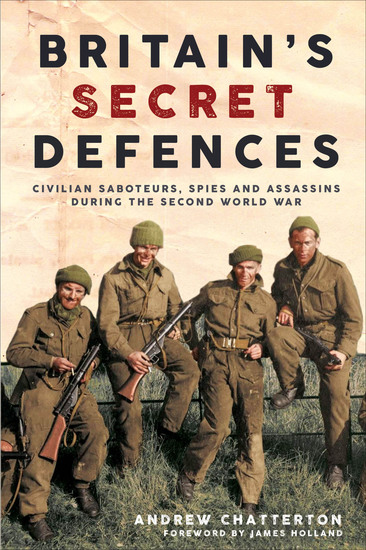
  • Britain’s Secret Defences - Civilian Saboteurs Spies and Assassins During the Second World War - cover

    Britain’s Secret Defences -...

    Andrew Chatterton

    • 0
    • 0
    • 0
    The first full history of the highly trained and ruthless civilian volunteers secretly trained across Britain to be deployed in the case of a German invasion.The narrative surrounding Britain’s anti-invasion forces has often centered on ‘Dad’s Army’-like characters running around with pitchforks, on unpreparedness and sense of inevitability of invasion and defeat. The truth, however, is very different.  Top-secret, highly trained and ruthless civilian volunteers were being recruited as early as the summer of 1940. Had the Germans attempted an invasion they would have been countered by saboteurs and guerrilla fighters emerging from secret bunkers, and monitored by swathes of spies and observers who would have passed details on via runners, wireless operators and ATS women in disguised bunkers.  Alongside these secret forces, the Home Guard were also setting up their own ‘guerrilla groups’, and SIS (MI6) were setting up post-occupation groups of civilians – including teenagers – to act as sabotage cells, wireless operators, and assassins had the Nazis taken control of the country.  The civilians involved in these groups understood the need for absolute secrecy and their commitment to keeping quiet meant that most went to their grave without ever telling anyone of their role, not even their closest family members. There has been no official and little public recognition of what these dedicated men and women were willing to do for their country in its hour of need, and after over 80 years of silence the time has come to highlight their remarkable role.
    Ver libro
  • Warriors Hate War - Strategy politicization successes and failures of the American military - cover

    Warriors Hate War - Strategy...

    Glenn Sturm

    • 0
    • 0
    • 0
    Why, after over 100 Sigma war games showed us that we could not win, did we still go into Vietnam? Why, if one military doctrine irrefutably indicates that it can succeed time after time, is it not adopted in every military action? Why do warriors hate war? Because their bosses don't understand it. What's the mission? How do we win? What is winning? Bush said that winning was when the major combat operations were ceasing. Maybe so, but knowing how to win a war while striving not to be in one makes a real warrior. Warriors Hate War-Strategy, politicization, successes, and failures of the American military by Glenn Sturm explores the military actions since WW11 through lenses that reveal alternate outcomes and pose frameworks that could inform decision-making for the future of war and, more importantly, peace. 
    About the Author 
    Glenn W Sturm earned a Juris Doctor with honors from the Levin College of Law at the University of Florida, where he was named to the Order of the Coif. Sturm served in the U.S. military as a commissioned officer on active duty and in the reserves for over 30 years. In his other lives, he is a best-selling author, photographic artist, and philanthropist, and he strives every day to make the lives of others better while continuing to navigate his way through over a decade and a half of life with incurable cancer.
    Ver libro