Junte-se a nós em uma viagem ao mundo dos livros!
Adicionar este livro à prateleira
Grey
Deixe um novo comentário Default profile 50px
Grey
Assine para ler o livro completo ou leia as primeiras páginas de graça!
All characters reduced
Nature's Double Edge - The Art Science and Enduring Legacy of Ernst Haeckel - cover
LER

Nature's Double Edge - The Art Science and Enduring Legacy of Ernst Haeckel

Azhar ul Haque Sario

Editora: Azhar Sario Hungary

  • 0
  • 0
  • 0

Sinopse

Nature’s Double Edge: The Art, Science, and Enduring Legacy of Ernst Haeckel is a book that takes you deep into the wild, brilliant, and messy world of Ernst Haeckel. He was a scientist who loved nature so much he didn’t just study it—he drew it too. This book starts with his early life as a medical student. It moves to how he became a big name pushing Darwin’s evolution ideas. His drawings of tiny sea creatures like Radiolaria and jellyfish are jaw-dropping. They helped science and even sparked the Art Nouveau style. You’ll read about his big idea called Monism—seeing nature as one giant, connected thing. But it’s not all rosy. The book digs into his mistakes too—like pushing bad ideas about race and eugenics. It shows how his work touched biology, art, and even how we think about the environment today. There’s history, science, and a bit of philosophy all mixed in. It’s a full look at a guy who saw beauty in nature but stumbled along the way.


So, why pick this book over others? It’s got something special. Other books might just praise Haeckel or trash him, but this one finds the middle ground. It celebrates his genius—like how his art still inspires architects and designers today through biomimicry. Yet it doesn’t hide his flaws—it calls them out and explains why they matter. You’ll see how his old drawings connect to modern ideas like biophilic design, making nature part of our lives. It’s not just a story about him; it’s about how art, science, and big questions collide. No other book ties all that together like this. It’s honest, it’s deep, and it makes you think about nature and knowledge in a new way. If you’re curious about how one person can shape so much—and trip up too—this book’s for you.


Disclaimer: This book is independently produced and isn’t tied to any board or institution. It’s made under nominative fair use, respecting intellectual property while giving you a fresh, honest take on Ernst Haeckel’s life and work.
Disponível desde: 12/06/2025.
Comprimento de impressão: 178 páginas.
Outros livros que poderiam interessá-lo

  • Radioactive - Marie & Pierre Curie: A Tale of Love and Fallout - cover

    Radioactive - Marie & Pierre...

    Anônimo

    • 0
    • 0
    • 0
    SOON TO BE A MAJOR MOTION PICTURE directed by Marjane Sartrapi, starring Rosamund Pike and Sam Riley.  
    NATIONAL BOOK AWARD FINIALIST.  
    ""Vivid and ethereal."" —New York Times  
    “Radioactive is quite unlike any book I have ever read—part history, part love story, part art work and all parts sheer imaginative genius.” 
    — Malcolm Gladwell 
    Radioactive is the mesmerizing, landmark biography of Marie Curie, by acclaimed author and artist Lauren Redniss. Through brilliant storytelling, Redniss walks us through Curie’s life, which was marked by extraordinary scientific discovery and dramatic personal trauma—from her complex working and romantic relationship with Pierre Curie, to their discovery of two new scientific elements, to Pierre’s tragic death, to Marie’s two Nobel Prizes. A haunting and wondrous portrait of one of history's most intriguing figures, Radioactive is a stunning biography and a true work of art. Whether young or old, scientific novice or expert, no one will fail to be moved by Lauren Redniss’s eerie and wondrous evocation of one of history’s most intriguing figures. 
    Supplemental enhancement PDF accompanies the audiobook.
    Ver livro
  • A Model Crime - From their pens to your ears genius in every story - cover

    A Model Crime - From their pens...

    William Pett Ridge

    • 0
    • 0
    • 0
    William Pett Ridge was born at Chartham, near Canterbury, Kent, on 22nd April 1859.  
    His family’s resources were certainly limited. His father was a railway porter, and the young Pett Ridge, after schooling in Marden, Kent became a clerk in a railway clearing-house. The hours were long and arduous, but self-improvement was Pett Ridge’s goal.  After working from nine until seven o’clock he would attend evening classes at Birkbeck Literary and Scientific Institute and then to follow his passion; the ambition to write.  He was heavily influenced by Dickens and several critics thought he had the capability to be his successor.  
    From 1891 many of his humourous sketches were published in the St James's Gazette, the Idler, Windsor Magazine and other literary periodicals of the day. 
    Pett Ridge published his first novel in 1895, A Clever Wife. By the advent of his fifth novel, Mord Em'ly, a mere three years later in 1898, his success was obvious.  His writing was written from the perspective of those born with no privilege and relied on his great talent to find humour and sympathy in his portrayal of working class life. 
    Today Pett Ridge and other East End novelists including Arthur Nevinson, Arthur Morrison and Edwin Pugh are being grouped together as the Cockney Novelists.   
    In 1924, Pugh set out his recollections of Pett Ridge from the 1890s: “I see him most clearly, as he was in those days, through a blue haze of tobacco smoke. We used sometimes to travel together from Waterloo to Worcester Park on our way to spend a Saturday afternoon and evening with H. G. Wells. Pett Ridge does not know it, but it was through watching him fill his pipe, as he sat opposite me in a stuffy little railway compartment, that I completed my own education as a smoker... Pett Ridge had a small, dark, rather spiky moustache in those days, and thick, dark, sleek hair which is perhaps not quite so thick or dark, though hardly less sleek nowadays than it was then”. 
    With his success, on the back of his prolific output and commercial success, Pett Ridge gave generously of both time and money to charity. In 1907 he founded the Babies Home at Hoxton.  This was one of several organisations that he supported that had the welfare of children as their mission.  
    His circle considered Pett Ridge to be one of life's natural bachelors. In 1909 they were rather surprised therefore when he married Olga Hentschel.  
    As the 1920’s arrived Pett Ridge added to his popularity with the movies. Four of his books were adapted into films.  
    Pett Ridge now found the peak of his fame had passed. Although he still managed to produce a book a year he was falling out of fashion and favour with the reading public and his popularity declined rapidly.  His canon runs to over sixty novels and short-story collections as well as many pieces for magazines and periodicals. 
    William Pett Ridge died, on 29th September 1930, at his home, Ampthill, Willow Grove, Chislehurst, at the age of 71. 
    He was cremated at West Norwood on 2nd October 1930.
    Ver livro
  • 100 Great Scientists Who Changed the World - cover

    100 Great Scientists Who Changed...

    John Balchin

    • 0
    • 0
    • 0
    'If I saw further than others it is because I was standing on the shoulders of giants.' 
    - Sir Isaac Newton 
     
    This audiobook introduces 100 of these giants of scientific discovery: the men and women who, often in the face of extreme skepticism or worse, have striven and succeeded in pushing back the boundaries of human knowledge. Ranging across the spectrum of scientific endeavor, from the cosmology of Copernicus and Galileo, to the medical revolutions of Hippocrates and Galen, it includes the fields of physics, biology, chemistry and genetics. 
     
    Spanning from the ancient world to the 20th century, these figures include:AristotleLeonardo di VinciBenjamin FranklinIsaac NewtonStephen Hawking 
     
    100 Great Scientists Who Changed the World provides riveting insight into the men and women who shaped the world today.
    Ver livro
  • Some Enchanted Evening - cover

    Some Enchanted Evening

    Franklin Morrow

    • 0
    • 0
    • 0
    “Some Enchanted Evening” by Franklin Morrow is a heartfelt memoir chronicling the remarkable journey of Frank and his beloved wife Geri’s thirty-five years of marriage. Through tales of love, achievements, near tragedies, and defining moments, the book invites readers to join Frank and Geri as they navigate the landscapes of memory and the twists and turns of a life lived fully. From chairing major Palm Beach Galas to facing the daunting prospects of hospital corridors, Frank and Geri’s story is one of resilience and unwavering love. Their shared adventures take them to far-flung corners of the world, each locale leaving unforgettable memories on their souls. Amidst the grandeur and simplicity of life, the book delves into moments of quiet reverence, such as the Gnocchi ceremonies that bind them to tradition and family. However, alongside the sweetness of life, Frank and Geri also endure the bitter sting of loss, including the passing of Frank’s beloved son due to COVID-19. Through these trials, their bond grows stronger, marked by three unique and extraordinary vow renewals reaffirming their deep commitment to each other.
    Ver livro
  • The Confessions of St Augustine - cover

    The Confessions of St Augustine

    Bishop of Hippo St. Augustine,...

    • 0
    • 0
    • 0
    Embark on a profound journey through the struggles and revelations of one of Christianity's most influential figures with Confessions by Augustine of Hippo. This masterful autobiography transcends the mere recounting of Augustine's early life of sin and his pivotal conversion to Christianity, offering readers a timeless meditation on the human condition, the power of faith, and the quest for understanding and truth.  
    Confessions stands as a cornerstone in Western literature and theological thought, profoundly impacting not just Christian theology but also philosophy and the broader human search for meaning. Written with unparalleled eloquence, Augustine's introspective exploration of his own life serves as a mirror reflecting universal truths about the trials and transformations that define the human experience.  
    Through his candid narrative, Augustine embarks on a philosophical inquiry into memory, time, and the nature of God, making Confessions not just a tale of personal redemption but also a compelling discourse on the essence of existence itself. This book invites readers into a deep contemplation of their own spiritual journey, encouraging a reflective exploration of faith, the complexities of the human psyche, and the pursuit of inner peace. 
    Discover why luminaries across centuries have drawn inspiration from Augustine's insights. Confessions promises not just a story of conversion but a profound engagement with the mysteries of life—a literary and spiritual odyssey that continues to resonate with readers seeking wisdom and solace in their own lives. 
    This audiobook was narrated and produced by RAM Studios, where humans and artificial intelligence collaborate to create an excellent listening experience. (The reading is done primarily by AI)
    Ver livro
  • Araby - From their pens to your ears genius in every story - cover

    Araby - From their pens to your...

    James Joyce

    • 0
    • 0
    • 0
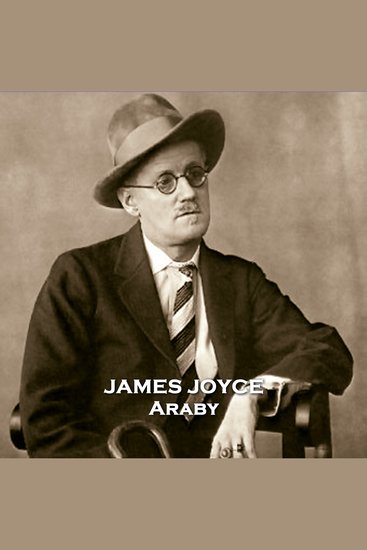
    James Augustine Aloysius Joyce was born on the 2nd February 1882 in Dublin into a middle-class family, and the eldest of ten surviving siblings 
    Admired as a brilliant student he briefly attended the Christian Brothers-run O'Connell School before excelling at the Jesuit schools of Clongowes and Belvedere.  From there he went on to attend University College Dublin from 1898, studying English, French and Italian 
    In 1902, Joyce was now in his early twenties, and went to Paris to study Medicine but soon abandoned his teachings.  Back in Dublin to attend to his dying Mother he met Nora Barnacle. They bonded immediately into a life-long match. Together they decided to emigrate to Europe.  The couple lived in Trieste, Rome, Paris, and finally Zürich where Joyce pursued a variety of jobs and ventures to supplement his literary pursuits but none of these paid off.  
    After publishing a poetry volume, ‘Chamber Music’, in 1907, his short story collection ‘The Dubliners’, in 1914, helped establish his talent in the rapidly changing world.  
    Although far from home Joyce’s literary heart and works were set in his recollections of Dublin.  Characters are close resemblances of family and friends and indeed enemies.  His landmark work ‘Ulysses’, published in 1922, is set in the streets and alleyways of the city as it parallels Homer’s Odyssey in a variety of styles including its famed stream of consciousness. 
    His pen continued to produce classics of the order of ‘A Portrait of the Artist as A Young Man’ and ‘Finnegan’s Wake’ together with several volumes of poetry and a play ‘The Exiles, in 1918.   
    On the 11th January 1941, Joyce underwent surgery in Zürich for a perforated duodenal ulcer. The next day he fell into a coma. On the 13th after a brief period of lucidity in which he called for his wife and son he passed.  He was 58.
    Ver livro