¡Acompáñanos a viajar por el mundo de los libros!
Añadir este libro a la estantería
Grey
Escribe un nuevo comentario Default profile 50px
Grey
Suscríbete para leer el libro completo o lee las primeras páginas gratis.
All characters reduced
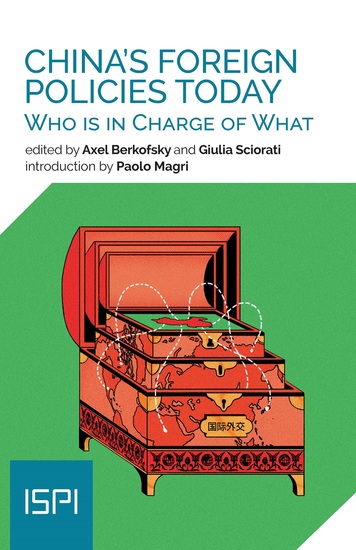
China's Foreign Policies Today - Who is in Charge of What - cover

China's Foreign Policies Today - Who is in Charge of What

Axel Berkofsky, Giulia Sciorati

Editorial: Ledizioni

  • 0
  • 0
  • 0

Sinopsis

Since Xi Jinping took power in 2012, China's foreign policy has significantly shifted from a defensive to an assertive approach. For decades, Beijing worked to integrate into the liberal international order, presenting itself as a peacefully rising power. By contrast, however, under Xi's leadership, the country is attempting to create a global system that is more favourable to its own interests.
The Report examines China's current foreign policy approach, and the drivers behind the country's shift away from tradition. What are the main features of China's foreign policy today? How are decisions being taken, and to what extent do interest groups continue to have a say in decision-making after the recent power centralisation?
Disponible desde: 25/05/2022.
Longitud de impresión: 130 páginas.
Otros libros que te pueden interesar

  • Benjamin Drew - The Refugee Narratives of Fugitive Slaves in Canada - cover

    Benjamin Drew - The Refugee...

    Vicent Cucarella Ramón

    • 0
    • 0
    • 0
    Benjamin Drew's "North-Side View of Slavery: The Refugee, or the Narratives of Fugitive Slaves in Canada" (1856) is a collection of his interviews with former slaves living in Canada who had escaped from the United States, and an invaluable example of the transnational abolitionist movement's political agenda. These edited oral accounts show how these runaways turned into African Canadians and reconfigured new meanings of Blackness in Canada, set out the foundations of a Black Canadian sense of attachment, and eventually helped to reshape North America by contributing to the birth of the Canadian nation-state.
    Ver libro
  • The Cuban Missile Crisis - Brink of Nuclear War - cover

    The Cuban Missile Crisis - Brink...

    Nova Ashford

    • 0
    • 0
    • 0
    The Cuban Missile Crisis, one of the most critical moments in the Cold War, did not emerge in isolation but was the culmination of a decades-long geopolitical struggle between the United States and the Soviet Union. The context of this crisis lies deeply within the broader Cold War, which began shortly after the end of World War II. This period was marked by intense ideological rivalry, military standoffs, and a nuclear arms race that would define much of the second half of the 20th century. 
    The origins of the Cold War can be traced back to the conflicting political and economic ideologies of the two superpowers. The United States, championing capitalism and democracy, viewed the spread of communism, led by the Soviet Union, as a direct threat to global stability and democratic values. On the other hand, the Soviet Union, under the leadership of Joseph Stalin, sought to expand the reach of communism and solidify its control over Eastern Europe, which had been acquired as a result of the war. This division between the capitalist West and the communist East created a tense geopolitical environment that shaped every diplomatic interaction between the two powers. 
    In the early stages of the Cold War, several key events served to heighten the distrust between the U.S. and the Soviet Union. The Berlin Blockade in 1948, the Korean War in the early 1950s, and the formation of opposing military alliances like NATO (North Atlantic Treaty Organization) and the Warsaw Pact solidified the division of the world into two hostile camps. As both nations escalated their military capabilities, the nuclear arms race emerged as a central aspect of Cold War tensions. The development and stockpiling of nuclear weapons made the Cold War not just an ideological battle but also a dangerous game of survival, with the constant threat of global annihilation hanging over every political and military maneuver.
    Ver libro
  • Gujarat Files - Pardaposhi Di Cheerpharh - cover

    Gujarat Files - Pardaposhi Di...

    Rana Ayyub

    • 0
    • 0
    • 0
    "Gujarat Files" by Rana Ayyub is a groundbreaking investigative book that exposes the dark underbelly of the Gujarat riots, fake encounters, and political assassinations. Through a daring covert operation, journalist Rana Ayyub disguised herself as a filmmaker from the American Film Institute Conservatory, adopting the alias Maithili Tyagi. In "Gujarat Files," she interviews high-ranking bureaucrats and senior police officers who held critical roles in Gujarat between 2001 and 2010. These candid conversations reveal shocking details about the state's administration, implicating key figures in controversial events during that period. 
    "Gujarat Files" offers readers an eye-opening account of the power dynamics, the political manipulation, and the systemic corruption that surrounded the Gujarat riots and their aftermath. With gripping revelations, this book has become essential reading for those interested in Indian politics, human rights, and investigative journalism. "Gujarat Files" provides a rare insider's perspective, making it a must-read for anyone seeking to understand the intricacies of the Gujarat riots. Available for worldwide delivery, "Gujarat Files" continues to be a powerful tool for truth-seekers and a reminder of the importance of fearless journalism. 
    You can order it from Sikh Siyasat and get it delivered anywhere in the world.
    Ver libro
  • Reality Therapy - Facing Reality Taking Responsibility - cover

    Reality Therapy - Facing Reality...

    Vivian Westlake

    • 0
    • 0
    • 0
    Reality Therapy is a therapeutic approach that emphasizes personal responsibility and focuses on the present moment, encouraging individuals to make choices that align with their true desires and values. Developed by Dr. William Glasser in the 1960s, it diverges from traditional therapeutic methods by centering on the idea that behavior is a choice and that people can gain control of their lives through conscious decisions. 
    At the core of Reality Therapy is the concept that all behavior is purposeful and is driven by an individual's attempt to fulfill basic needs. These needs include survival, love and belonging, power, freedom, and fun. When people feel that these needs are unmet, they often engage in behaviors that are designed to satisfy them, even if those behaviors are not helpful or productive. Reality Therapy challenges individuals to evaluate whether their current behaviors are effective in meeting these needs and whether they are serving their long-term goals. 
    Another key aspect of Reality Therapy is the belief that individuals can only control their own actions. While external circumstances may influence a person's situation, the therapy stresses that the responsibility for behavior lies with the individual. This approach encourages people to focus on what they can change—namely, their actions—and to stop blaming others or external conditions for their problems. It promotes the idea that by changing one’s choices, it is possible to create a more fulfilling and responsible life.
    Ver libro
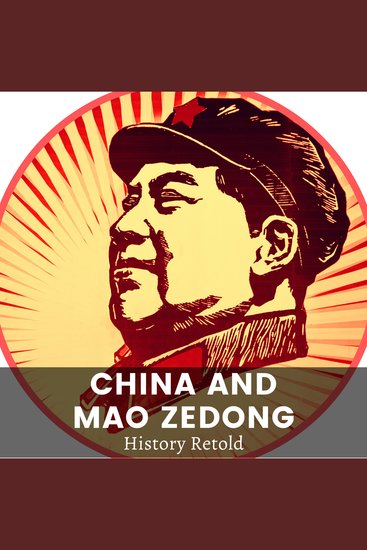
  • Mao Zedong - The Cultural Revolution and the Communist Party - cover

    Mao Zedong - The Cultural...

    Kelly Mass

    • 0
    • 0
    • 0
    Mao Zedong has had a tremendous impact on the Chinese nation. During his Great Leap Forward, he was responsible for more deaths than both Hitler and Stalin, making him the biggest mass murderer in history. 
    Mao Zedong, typically called Chairman Mao, was a Chinese communist revolutionary who functioned as the starting dad of peoples's Republic of China (PRC), judgment as the chairman of the Chinese Communist Party from 1949 till his death in 1976. Maoism is a Marxist-- Leninist dogma that includes his theories, army operations, and political programs. 
    What happened during the Great Leap Forward? Why did so many farmers starve to death? And what else did Mao Zedong do during his reign? You will find out more about those and other questions in this book.
    Ver libro
  • Imperial Life - The Glory Order and Entertainment of the Roman Empire (3 in 1) - cover

    Imperial Life - The Glory Order...

    Rogan Fish

    • 0
    • 0
    • 0
    This bundle invites readers to walk the marble-paved streets of Rome at its height. The first section, Imperial Rome, explores the structured yet lavish lives of Roman elites, administrators, and common citizens. It reveals how the empire maintained order across vast territories using laws, infrastructure, and an intricate bureaucracy—while projecting power through majestic architecture and imperial ceremonies. From the palaces of emperors to the hum of city forums, this part paints a vivid picture of Rome's beating heart. 
    The second section, Gladiators and Games, dives into the thrilling (and often brutal) world of Roman entertainment. Learn about the engineering marvels of the Colosseum, the blood-soaked spectacles that kept the masses distracted, and the lives of gladiators who fought for fame and freedom. This part also covers chariot racing, theatrical performances, and the philosophy behind “bread and circuses”—how entertainment functioned as both cultural glue and political strategy. 
    In the final section, The Pax Romana, readers will discover the period of unprecedented peace and prosperity that allowed art, trade, and daily life to flourish. This chapter explores how stability encouraged innovation and helped Rome become a melting pot of cultures, ideas, and wealth. Imperial Life is a journey into the grandeur, governance, and gatherings that made Rome more than a military powerhouse—it was also a cultural empire that continues to fascinate the modern world.
    Ver libro