¡Acompáñanos a viajar por el mundo de los libros!
Añadir este libro a la estantería
Grey
Escribe un nuevo comentario Default profile 50px
Grey
Suscríbete para leer el libro completo o lee las primeras páginas gratis.
All characters reduced
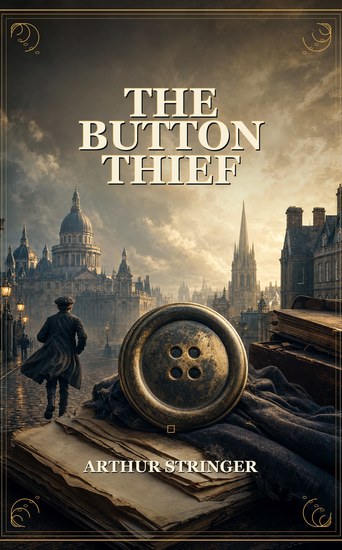
The Button Thief - cover

The Button Thief

Arthur Stringer

Editorial: Caelwick Press

  • 0
  • 0
  • 0

Sinopsis

The Button Thief by Arthur Stringer is offered here in a clean English digital edition prepared for fluent ebook reading. The work stands within classics and gives modern readers direct access to a public-domain classic with navigable structure and a restrained typographic presentation. The opening pages establish the book's atmosphere with this first movement: SKEEL, the mild eyed young expert of the Amalgamated Wireless, began to realize that he was going to be late. And the thought of being late at this, his first official dinner in Washington, made him desperate. He took a deep breath, thrust a determined thumb knuckle down between his Adam's apple and This edition is suited to readers who want a reliable, uncluttered version of the text for study, rediscovery, and sustained reading.
Disponible desde: 06/06/2026.
Longitud de impresión: 35 páginas.

Otros libros que te pueden interesar

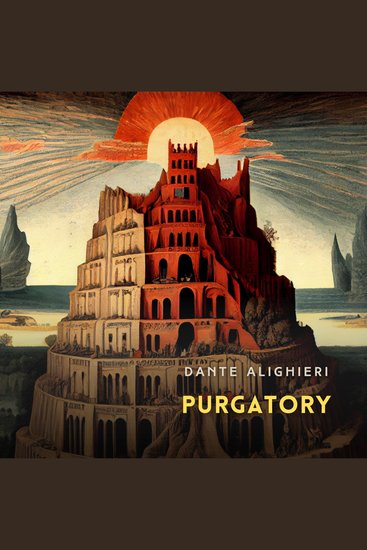
  • Purgatory - cover

    Purgatory

    Dante Alighieri

    • 0
    • 0
    • 0
    Dante Alighieri’s Purgatory, the second part of The Divine Comedy, follows the poet’s ascent of Mount Purgatory, a mountain of spiritual purification shaped by divine justice. Guided by Virgil, Dante climbs through seven terraces, each corresponding to one of the seven deadly sins, where souls undergo penance to cleanse their vices. Along the way, he encounters penitents who inspire reflection on pride, envy, wrath, sloth, greed, gluttony, and lust. As dawn rises and hope grows, the journey symbolizes repentance, moral growth, and the soul’s preparation for divine love. Rich in theological insight and poetic beauty, Purgatory bridges damnation and grace, offering a vision of redemption through humility, free will, and divine mercy.
    Ver libro
  • Two Tales from Stephen Crane - The Open Boat An Episode of War - cover

    Two Tales from Stephen Crane -...

    Stephen Crane

    • 0
    • 0
    • 0
    Stephen Crane was an American novelist, poet and journalist. Crane is noted for his early employment of naturalism, a literary style in which characters face realistically portrayed and often bleak circumstances, but Crane added impressionistic imagery and biblical symbolism to the austere realism. Here are two of his most famous stories, The Open Boat and An Episode of War.
    Ver libro
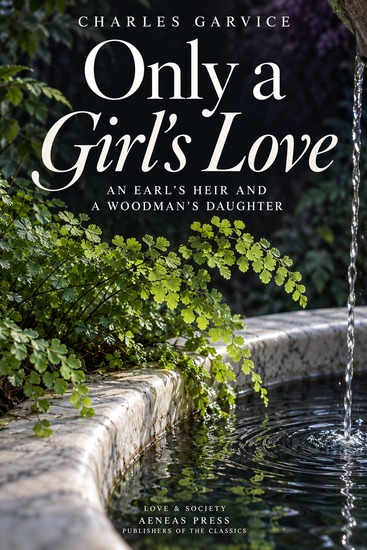
  • Only a Girl's Love - An Earl's Heir and a Woodman's Daughter - cover

    Only a Girl's Love - An Earl's...

    Charles Garvice

    • 0
    • 0
    • 0
    A poor girl and a man far above her station, kept apart for three volumes by a will, a rival and a misunderstanding neither will explain. Garvice sold in the millions to readers the reviewers never counted, at sevenpence a copy in the railway bookstalls; Arnold Bennett called him the most successful novelist in England and meant it as a fact, not a compliment. Fifty-seven plates after painters including Arthur Hughes and Myles Birket Foster carry the story's quieter themes of devotion, rest and the pull of home.
    Ver libro
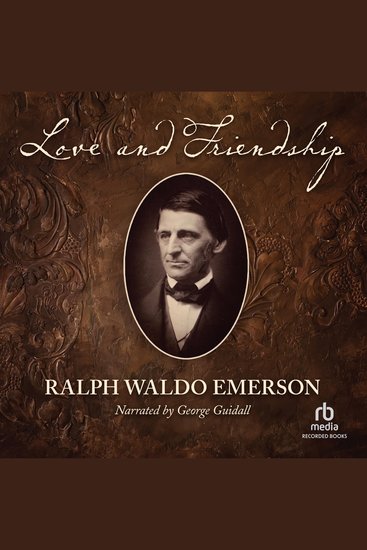
  • Love and Friendship - cover

    Love and Friendship

    Ralph Waldo Emerson

    • 0
    • 0
    • 0
    "A friend is a person with whom I may be sincere," wrote Ralph Waldo Emerson in Love and Friendship, a collection of essays on relationships. "Before him, I may think aloud. I do then with my friends as I do with my books. I would have them where I can find them, but I seldom use them."
    Ver libro
  • The Kentons - A Novel of Americans Abroad - cover

    The Kentons - A Novel of...

    William Dean Howells

    • 0
    • 0
    • 0
    An Ohio family — a judge, his wife, and a daughter recovering from an unsuitable attachment — is taken to Europe to get over it, and the Atlantic and the Dutch canals do not much help. Howells edited The Atlantic and was the most powerful literary broker in America; this 1902 novel is his quiet study of ordinary decent people being wrong about their own children, and the father is beautifully done. Fifty-eight plates of family portraits and harbor scenes by Homer, Chase and their peers, from Vermeer to Bellows, echo the novel's domestic crossings.
    Ver libro
  • The Luck Of Roaring Camp And Other Tales With Condensed Novels Spanish And American Legends And Earlier Papers - cover

    The Luck Of Roaring Camp And...

    Bret Harte

    • 0
    • 0
    • 0
    The opportunity here offered [Footnote: By the appearance in England several years ago of an edition of the author's writings as then collected.] to give some account of the genesis of these Californian sketches, and the conditions under which they were conceived, is peculiarly tempting to an author who has been obliged to retain a decent professional reticence under a cloud of ingenious surmise, theory, and misinterpretation. He very gladly seizes this opportunity to establish the chronology of the sketches, and incidentally to show that what are considered the "happy accidents" of literature are very apt to be the results of quite logical and often prosaic processes.The author's first volume was published in 1865 in a thin book of verse, containing, besides the titular poem, "The Lost Galleon," various patriotic contributions to the lyrics of the Civil War, then raging, and certain better known humorous pieces, which have been hitherto interspersed with his later poems in separate volumes, but are now restored to their former companionship. This was followed in 1867 by "The Condensed Novels," originally contributed to the "San Francisco Californian," a journal then edited by the author, and a number of local sketches entitled "Bohemian Papers," making a single not very plethoric volume, the author's first book of prose. But he deems it worthy of consideration that during this period, i.e. from 1862 to 1866, he produced "The Society upon the Stanislaus" and "The Story of M'liss," — the first a dialectical poem, the second a Californian romance, — his first efforts toward indicating a peculiarly characteristic Western American literature. He would like to offer these facts as evidence of his very early, half-boyish but very enthusiastic belief in such a possibility, — a belief which never deserted him, and which, a few years later, from the better-known pages of "The Overland Monthly," he was able to demonstrate to a larger and more cosmopolitan audience in the story of "The Luck of Roaring Camp" and the poem of the "Heathen Chinee." But it was one of the anomalies of the very condition of life that he worked amidst, and endeavored to portray, that these first efforts were rewarded by very little success; and, as he will presently show, even "The Luck of Roaring Camp" depended for its recognition in California upon its success elsewhere. Hence the critical reader will observe that the bulk of these earlier efforts, as shown in the first two volumes, were marked by very little flavor of the soil, but were addressed to an audience half foreign in their sympathies, and still imbued with Eastern or New England habits and literary traditions. "Home" was still potent with these voluntary exiles in their moments of relaxation. Eastern magazines and current Eastern literature formed their literary recreation, and the sale of the better class of periodicals was singularly great. Nor was the taste confined to American literature. The illustrated and satirical English journals were as frequently seen in California as in Massachusetts; and the author records that he has experienced more difficulty in procuring a copy of "Punch" in an English provincial town than was his fortune at "Red Dog" or "One-Horse Gulch." An audience thus liberally equipped and familiar with the best modern writers was naturally critical and exacting, and no one appreciates more than he does the salutary effects of this severe discipline upon his earlier efforts.When the first number of "The Overland Monthly" appeared, the author, then its editor, called the publisher's attention to the lack of any distinctive Californian romance in its pages, and averred that, should no other contribution come in, he himself would supply the omission in the next number.
    Ver libro