¡Acompáñanos a viajar por el mundo de los libros!
Añadir este libro a la estantería
Grey
Escribe un nuevo comentario Default profile 50px
Grey
Suscríbete para leer el libro completo o lee las primeras páginas gratis.
All characters reduced
The History of the Great War (Complete 6 Volume Edition) - Enriched edition World War I Through The Eyes of the Fighters (Including Maps and Plans in 6 Volumes) - cover

The History of the Great War (Complete 6 Volume Edition) - Enriched edition World War I Through The Eyes of the Fighters (Including Maps and Plans in 6 Volumes)

Arthur Conan Doyle

Editorial: Musaicum Books

  • 0
  • 0
  • 0

Sinopsis

Arthur Conan Doyle's 'The History of the Great War' is a comprehensive 6-volume edition that chronicles the events of World War I in great detail. Doyle's writing style is both engaging and informative, providing readers with a deep understanding of the war's complexities and impacts. This historical work is considered a valuable resource for those interested in studying the First World War from a literary perspective, as Doyle's meticulous research and vivid storytelling bring the war to life on the pages. The narrative is gripping, vividly depicting the struggles and sacrifices of the soldiers on the front lines, as well as the political and social context of the era. Arthur Conan Doyle, best known for his Sherlock Holmes mysteries, was a prolific writer with a keen interest in history and politics. His experiences as a doctor during the Boer War may have influenced his decision to write about the Great War, showcasing his commitment to documenting significant events in world history. His authoritative voice and attention to detail make 'The History of the Great War' a must-read for history enthusiasts and scholars alike. I highly recommend 'The History of the Great War' to readers who are looking for a comprehensive and well-written account of World War I. Doyle's mastery of storytelling and his in-depth research make this 6-volume edition a valuable addition to any historical library, providing insights into one of the most significant events of the 20th century.

In this enriched edition, we have carefully created added value for your reading experience:
- A succinct Introduction situates the work's timeless appeal and themes.
- The Synopsis outlines the central plot, highlighting key developments without spoiling critical twists.
- A detailed Historical Context immerses you in the era's events and influences that shaped the writing.
- An Author Biography reveals milestones in the author's life, illuminating the personal insights behind the text.
- A thorough Analysis dissects symbols, motifs, and character arcs to unearth underlying meanings.
- Reflection questions prompt you to engage personally with the work's messages, connecting them to modern life.
- Hand‐picked Memorable Quotes shine a spotlight on moments of literary brilliance.
- Interactive footnotes clarify unusual references, historical allusions, and archaic phrases for an effortless, more informed read.
Disponible desde: 06/10/2017.
Longitud de impresión: 1179 páginas.


Otros libros que te pueden interesar

  • The Anxious Person's Guide to Non-Monogamy - Your Guide to Open Relationships Polyamory and Letting Go - cover

    The Anxious Person's Guide to...

    Lola Phoenix, LCSW Kathy G....

    • 0
    • 0
    • 0
    Embarking on a non-monogamous relationship can be a daunting experience, opening old wounds that cause anxiety, fear, and confusion, something Lola Phoenix knows about all too well. 


    In this all-you-need-to-know guide to exploring non-monogamy, polyamory, and open relationships, Lola draws upon their years of experience in giving advice and being non-monogamous to provide guidance for every stage of your journey, helping you to prioritize your mental health and wellbeing along the way. 


    Beginning with advice on starting out—such as finding your anchor, figuring out your personal reasons for pursuing non-monogamy, challenging your fears and practicing self-compassion—the book proceeds to cover the emotional aspects of non-monogamous relationships, including dealing with jealousy and judgement, managing anxiety and maintaining independence, as well as practical elements such as scheduling your time, negotiating boundaries, and managing your expectations, all accompanied with activities for further exploration. 
    Whether you are new to non-monogamy, or have been non-monogamous for years, this insightful and empowering book will provide you with the emotional tools you will need to live a happy non-monogamous life.
    Ver libro
  • Mexican History - Facts about Emiliano Zapata and the Revolution of Mexico - cover

    Mexican History - Facts about...

    Kelly Mass

    • 0
    • 0
    • 0
    This book deals with the following topics: 
    1 - Emiliano Zapata: Emiliano Zapata Salazar was a revolutionary in Mexico. He was a key figure in the Mexican Revolt of the years 1910 until 1920, and also the primary leader of the people's revolution in the Mexican state of Morelos and the creator of the Zapatismo agrarian movement. Zapata was born in the rural town of Anenecuilco in the state of Morelos, at the time of a period when peasant communities dealt with increasing pressure from the small-landowning class, which monopolized land and water resources for sugar-cane production with the support of totalitarian Porfirio Daz (President from the year 1877 to 1880 and from 1884 to 1911). 
    2 - Mexican Revolution: The Mexican Revolution was a great revolution that included a series of army local battles instead of a single united struggle. It destroyed the Federal Force and changed it with an innovative army, changing Mexican civilization and governance at the same time It also culminated in the adoption of a new constitution that included the revolutionaries' ideal visions. In spite of the fact that President Porfirio Daz's (from about 1880 to 1911) rule had grown progressively out of favor over the prior 31 years, there was no indicator that a transformation would break out in the year 1910.
    Ver libro
  • Global Debt - The Financial Time Bomb Affecting Nations and Citizens - cover

    Global Debt - The Financial Time...

    Marcus Klein

    • 0
    • 0
    • 0
    The global debt crisis is one of the most pressing issues of our time, affecting nations, corporations, and individuals alike. Over the past several decades, debt has skyrocketed across the world, creating a complex web of financial obligations that have far-reaching consequences. As debt levels soar, the very foundations of economic stability are being threatened, with severe implications for future generations. This book seeks to explore the various dimensions of the global debt crisis and its impact on societies and economies. 
    At the heart of the issue lies the interconnectedness of global economies. In today’s world, financial markets, international trade, and political systems are all intricately linked. A debt crisis in one country can quickly spread to others, as seen in past global financial meltdowns. The global economy operates as a delicate balance, where debt plays a central role in fueling growth. However, when debt becomes excessive, it can destabilize entire financial systems, leading to recessions, defaults, and social upheaval. This is particularly true for countries and corporations that rely heavily on borrowing to maintain their operations and growth. 
    This book will provide an in-depth look at the causes, consequences, and potential solutions to the global debt crisis. From national debt and the borrowing practices of governments to the rising levels of consumer and corporate debt, each section will explore the different aspects of debt that contribute to this growing problem. Understanding the dynamics of debt is crucial for comprehending the broader economic trends and risks that shape the modern world.
    Ver libro
  • Black Power and the American Myth - 50th Anniversary Edition - cover

    Black Power and the American...

    C.T. Vivian

    • 0
    • 0
    • 0
    In 1970, C. T. Vivian, a close colleague of Martin Luther King, Jr. and a member of his executive staff, sat down to take stock of the civil rights movement and the progress it had made. His assessment was that it failed, and that the blame lay in the existence of myths about America. 


    As prophetic today as it was fifty years ago, Vivian's voice rings out as a critique and a call to action for a society in deep need of justice and peace. 


    The civil rights struggle that began when Rosa Parks, a seamstress in Montgomery, Alabama, decided to sit in the front of a bus has deeply altered American society and the American conscience. Yet from several perspectives, that movement has resulted in failure. The Black struggle for independence is more of an uphill climb than ever. Why? C. T. Vivian asserts that the civil rights movement failed because it was built on certain myths about America: 


    ● the myth that Americans will do what is right as soon as they know what is right. 


    ● the myth that legislation leads to justice. 


    ● the myth that America is an open society where any minority group can advance. 


    ● the myth that an ethic of love forms the core of the American conscience.
    Ver libro
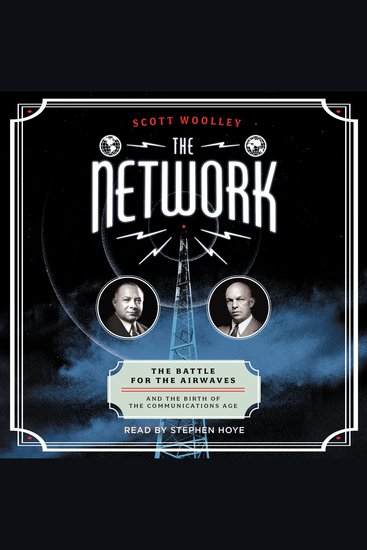
  • The Network - The Battle for the Airwaves and the Birth of the Communications Age - cover

    The Network - The Battle for the...

    Anónimo

    • 0
    • 0
    • 0
    The astonishing story of America’s airwaves, the two friends—one a media mogul, the other a famous inventor—who made them available to us, and the government which figured out how to put a price on air. 
    This is the origin story of the airwaves—the foundational technology of the communications age—as told through the forty-year friendship of an entrepreneurial industrialist and a brilliant inventor. 
    David Sarnoff, the head of RCA and equal parts Steve Jobs, Jack Welch, and William Randolph Hearst, was the greatest supporter of his friend Edwin Armstrong, developer of the first amplifier, the modern radio transmitter, and FM radio. Sarnoff was convinced that Armstrong’s inventions had the power to change the way societies communicated with each other forever. He would become a visionary captain of the media industry, even predicting the advent of the Internet. 
    In the mid-1930s, however, when Armstrong suspected Sarnoff of orchestrating a cadre of government officials to seize control of the FM airwaves, he committed suicide. Sarnoff had a very different view of who his friend’s enemies were. 
    Many corrupt politicians and corporations saw in Armstrong’s inventions the opportunity to commodify our most ubiquitous natural resource—the air. This early alliance between high tech and business set the precedent for countless legal and industrial battles over broadband and licensing bandwidth, many of which continue to influence policy and debate today.
    Ver libro
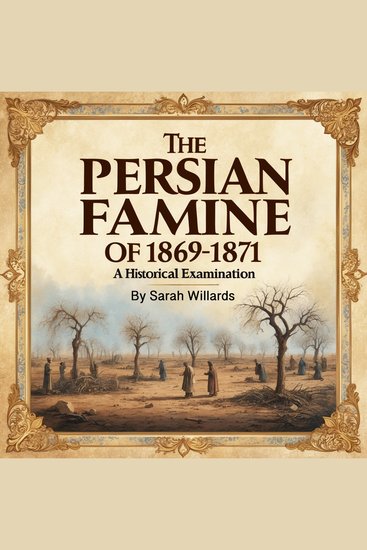
  • The Persian Famine of 1869-1871 - A Historical Examination - cover

    The Persian Famine of 1869-1871...

    Sarah Willards

    • 0
    • 0
    • 0
    The Persian Famine of 1869-1871 stands as one of the most devastating human catastrophes in the history of 19th-century Persia. It was a tragedy of massive proportions, affecting a significant portion of the population, leading to widespread death, displacement, and suffering. The famine took place during a period of political and economic instability in Persia, under the rule of the Qajar dynasty, and its consequences would resonate throughout the region for years to come. 
    The immediate causes of the famine were a combination of natural disasters, economic mismanagement, and poor governance. A severe drought struck the region in the early years of the famine, leading to crop failures across vast areas of Persia. Wheat and barley, which formed the staple diet of the population, were decimated, leaving millions without their primary source of food. This was further compounded by the devastation of locust swarms that wiped out whatever little remained of the crops. The government’s inability to respond effectively to these crises exacerbated the situation, as there was no coordinated effort to distribute food or provide relief to the suffering population. 
    The geography of Persia also played a significant role in the scale of the famine. With its vast arid regions and limited irrigation infrastructure, Persia was highly vulnerable to fluctuations in climate and weather. The droughts, combined with an inefficient agricultural system, led to widespread food shortages, particularly in the rural areas where most of the population lived. In the cities, food prices soared, making it even more difficult for the poor to survive. As the crisis deepened, people were forced to resort to extreme measures for survival, including selling their children into slavery or fleeing to other regions in search of food.
    Ver libro