¡Acompáñanos a viajar por el mundo de los libros!
Añadir este libro a la estantería
Grey
Escribe un nuevo comentario Default profile 50px
Grey
Suscríbete para leer el libro completo o lee las primeras páginas gratis.
All characters reduced
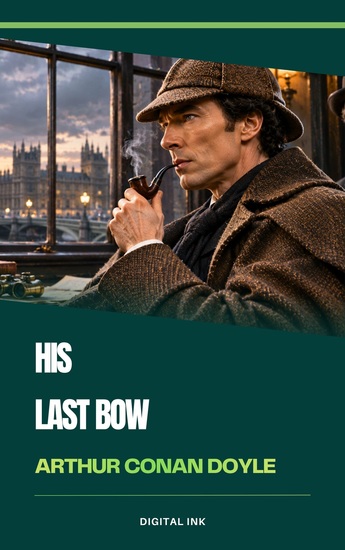
His Last Bow - cover

His Last Bow

Arthur Conan Doyle

Editorial: Digital Ink

  • 0
  • 0
  • 0

Sinopsis

Even when danger comes from beyond the world of ordinary crime, Sherlock Holmes remains ready to use his extraordinary intelligence and investigative skills.

In His Last Bow, Arthur Conan Doyle presents a collection of Sherlock Holmes stories featuring mysterious cases, unexpected discoveries, and challenging investigations. The famous detective faces a variety of puzzles, including crimes involving deception, hidden motives, and international espionage. The collection also includes its memorable title story, set against the backdrop of the First World War.

Blending traditional detective fiction with elements of adventure and spy fiction, this collection offers another fascinating look into the world of Sherlock Holmes.

Join Sherlock Holmes for another collection of intriguing cases and thrilling discoveries. Get your copy today!
Disponible desde: 02/11/2026.
Longitud de impresión: 231 páginas.


Otros libros que te pueden interesar

  • The Ultroom Error - cover

    The Ultroom Error

    Jerry Sohl

    • 0
    • 0
    • 0
    In The Ultroom Error by Jerry Sohl, Dr. Karl Hoder, a brilliant but troubled scientist, creates the Ultroom, a revolutionary machine capable of reshaping reality. When a skeptical journalist visits his lab, the demonstration takes an unexpected turn—unleashing forces beyond human control. As the Ultroom manipulates space and time, reality itself begins to unravel, plunging both men into a terrifying dimension where logic and physics cease to function. A gripping blend of classic science fiction and psychological suspense, The Ultroom Error explores the dangers of unchecked ambition and the fragility of human perception in the face of the unknown.
    Ver libro
  • Po' Sandy - cover

    Po' Sandy

    Charles W. Chesnutt

    • 0
    • 0
    • 0
    "Po' Sandy" is a second short story from The Conjure Woman, was published in The Atlantic in 1888.  It follows the same frame narrative as the previous one with Julius McAdoo advising John against following through with his plans of demolishing a schoolhouse to build a kitchen. In this short story, Sandy is an enslaved man owned by Mars Marrabo McSwayne, who sends Sandy to travel to help friends and families. During one of Sandy's trips, McSwayne sells Sandy's wife and replaces her for another woman named Tenie. Over time, Sandy and Tenie develop a relationship, at which point Tenie reveals to Sandy that she was a conjure woman for some time in her life. With this information, the couple decides that they will turn Sandy into a tree so that he no longer has to travel and turn him back into a person from time to time. However, as McAdoo relates, one day McSwayne decides to have the tree cut down to build floorboards in his kitchen, ending the life of Sandy. Afterwards, other enslaved people claimed that they heard groans and moans coming from the floor, resulting in the belief that the building was haunted. This led to the kitchen being demolished, of which lumber was used to build the schoolhouse that John wishes to dismantle to build a kitchen in its place. After hearing the haunted story from McAdoo, Annie dissuades John from dismantling the schoolhouse to build the kitchen and leaves it alone.
    Ver libro
  • The Border Line - From their pens to your ears genius in every story - cover

    The Border Line - From their...

    D H Lawrence

    • 0
    • 0
    • 0
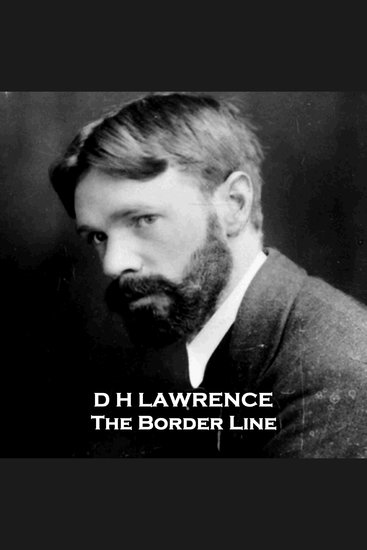
    David Herbert Lawrence was born on the 11th September 1885 in Eastwood, Nottinghamshire, a coal mining town where the reality of a harsh life was only useful as experiences for future literary works. 
    He was educated at Beauvale Board School and became the first local boy to receive a scholarship to attend Nottingham High School. After 3 years he became a junior clerk in Haywood’s surgical appliances factory. He was also attempting a literary career which, in the short term, led to a teacher training position in Eastwood and later a teaching qualification from University College, Nottingham.  
    Lawrence’s first efforts were poems, short stories and a draft of ‘The White Peacock’. Moving to London and a teaching position in Croydon his writing attracted the attention of Ford Madox Ford, editor of The English Review, and he commissioned him to write ‘Odour of Chrysanthemums’.  
    Wanting to write full-time he now began work on what would become ‘Sons and Lovers.   
    In 1912 he met the older and married mother-of-three Frieda Weekley. They eloped to Germany and here Lawrence could see for himself the growing tensions with France.  So keen was his interest that he was arrested and accused of being a British spy.  
    In early 1914 Frieda obtained her divorce and they returned to Britain to be married just days before the outbreak of war. Owing to her German parentage, and his own public dislike of militarism and violence, the couple were treated with contempt and suspicion throughout the war years.  
    Despite this he continued to write but his reputation in England was so tarnished and, mirrored by his own disdain for the country, he and Frieda left England in November 1919, first for Europe and then America via Ceylon and Australia. 
    They bought a ranch in Taos, New Mexico and visited Mexico several times. The third visit in March 1925 caused a near fatal attack of malaria. To convalesce they moved to Florence. Here he continued work on ‘Lady Chatterley’s Lover’ which for many years would cause controversy. A renewed interest in oil painting resulted in an exhibition in 1929 which was raided by the police and several works were confiscated.  
    D H Lawrence died of complications arising from a bout of tuberculosis on the 2nd of March 1930 in Vence, France.  He was 44.
    Ver libro
  • The Mysterious Death on the Underground Railroad - From their pens to your ears genius in every story - cover

    The Mysterious Death on the...

    Baroness Orczy

    • 0
    • 0
    • 0
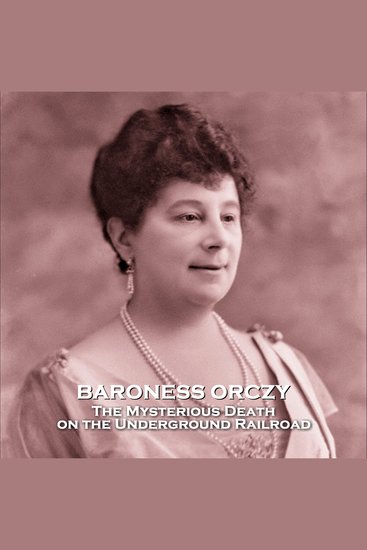
    Emma Magdolna Rozália Mária Jozefa Borbála Orczy de Orci, or more familiarly, Baroness Emmuska Orczy, was born on the 23rd September 1865, in Tarnaörs, Heves County, Hungary. 
    The family lived in their ancestral home; a great, rambling farmhouse on the river Tarna.  Orczy’s memories of the time were of sophisticated parties, sparkling conversation, joyful dancing and gypsy music.  But fear of a peasant uprising meant moving to Budapest and then many years of semi-nomadic travels across Europe. 
    Arriving in London in 1880 Orczy, aged 15, studied painting and, a few years later, had some pictures exhibited at the Royal Academy. 
    London, she now felt, was home, her spiritual birthplace.  
    Art school also provided a husband; the young illustrator, Montague Barstow, the son of an English clergyman.  
    Determined to prove herself as a writer she plunged headlong into a writing career shortly after her son’s birth.  In a mere five weeks she wrote the adventure classic ‘The Scarlet Pimpernel’.  Originally rejected, she re-worked it as a successful play.  It was then published as a best-selling book in 1905 and later a very successful movie.   
    Politically Orczy was a conservative with an unwavering belief in the superiority of the aristocracy and of the British Empire.  During World War I, she formed the Women of England's Active Service League, tasked with recruiting female volunteers "to persuade every man I know to offer his service to his country".   
    In the coming years the family lived on an estate in Kent, in a tasteful London home and an extravagant villa in Monte Carlo.  All the while Orczy’s pen wrote novels, short stories, plays, translations and, eventually, her autobiography.  
    Baroness Orczy died on the 12th November 1947 at Henley-on-Thames in South Oxfordshire.  She was 82.
    Ver libro
  • The Ghost in the Cupboard Room - From their pens to your ears genius in every story - cover

    The Ghost in the Cupboard Room -...

    Wilkie Collins

    • 0
    • 0
    • 0
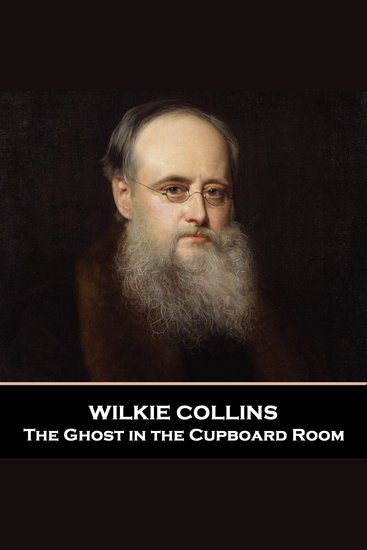
    Wilkie Collins was born on 8th January 1824 in Marylebone, London.  
    The family moved several times in his early years before, at 12, they travelled to France and Italy for 2 years where the sights and atmosphere made a deep and lasting impression on him. 
    He resumed his education at Mr Cole’s private boarding school in Highbury, Islington.  Here, he began his literary career under unusual circumstances: the school bully would give him no peace until he had been told a bedtime story.  This ‘little brute’ helped create one of England’s greatest writers.  
    On leaving school, in 1841, he became a clerk at a tea merchant before, 2 years later, publishing his first short story.  However, his first novel was rejected and remained so during his lifetime.  
    A brief stint at Lincoln’s Inn to please his father and to acquire a steady income was halted by his father’s death.  Collins then wrote and published his fathers’ memoirs.  He then completed his legal education though he would never practice.  
    In March 1851, he was introduced to Charles Dickens and there now started a period of sustained literary output and a remarkable lifelong friendship.  His stories were published in Dicken’s magazines, and he toured with Dicken’s theatrical before the two of them travelled to the Continent. 
    By the early 1860’s worrying signs of ill-health appeared with rheumatic gout.  As it worsened, he sought respite and cures in German spa towns and gave up writing to help his recuperation. 
    His personal life had become very complicated.  He was living with the widowed Caroline Graves and conducting an affair with a much younger Martha Rudd.  With the serialised release of ‘The Moonstone’ and vicious attacks of gout Caroline left him and married another.  Collins was now prescribed opium and was soon its lifelong dependent.  Martha bore him two children and with the return of a now divorced Caroline Graves he now divided his time between the two women. 
    In 1874 he set aside writing to tour North America on a reading tour. 
    Throughout his later years he continued to write and publish.  In all 30 novels, 14 plays, 60 short stories and over a 100 non-fiction essays as well as many more collaborations with Dickens. 
    In 1884 the Society of Authors elected him as it’s Vice-President. 
    Wilkie Collins died from a paralytic stroke on September 23rd, 1889, in London. He was 65.
    Ver libro
  • Nobody’s Story - cover

    Nobody’s Story

    Charles Dickens

    • 0
    • 0
    • 0
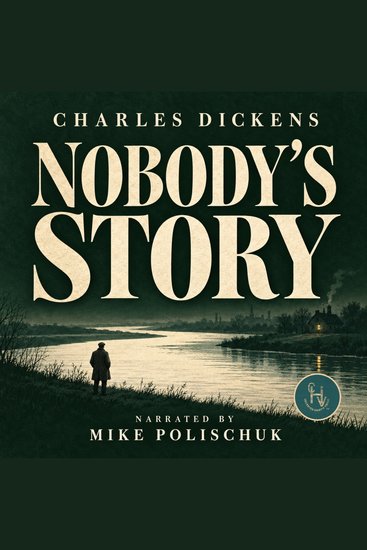
    In this searing Christmas parable from Charles Dickens, Nobody—a humble laborer by a mighty river—struggles to keep hearth, hope, and family alive while the pompous Bigwig family debates his fate from a comfortable distance. As ignorance takes root and a devastating pestilence descends, Dickens’s fierce social critique lays bare how the neglect of the powerful rebounds on all, and how the destinies of rich and poor are bound together in one human story. Sharply observed, deeply compassionate, and hauntingly relevant, this short classic distills Dickens’s moral urgency into a moving portrait of the “rank and file” who carry the world on their shoulders. Narrated by Mike Polischuk with clarity and emotional truth, this performance captures the warmth of the fireside, the chill of loss, and the quiet dignity of working lives too often overlooked. Perfect for a reflective evening listen, Nobody’s Story speaks to readers of A Christmas Carol and fans of thought‑provoking fiction that lingers long after the final line. Step into a timeless reminder that society rises—or falls—together.
    Ver libro