Junte-se a nós em uma viagem ao mundo dos livros!
Adicionar este livro à prateleira
Grey
Deixe um novo comentário Default profile 50px
Grey
Assine para ler o livro completo ou leia as primeiras páginas de graça!
All characters reduced
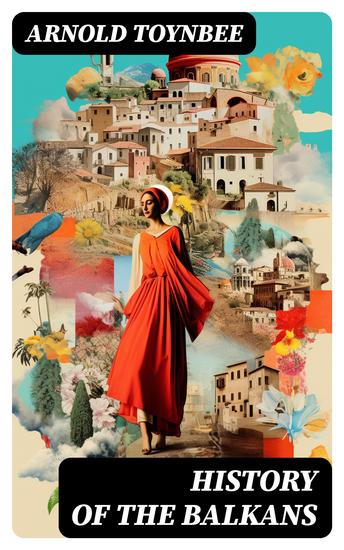
History of the Balkans - cover
LER

History of the Balkans

Arnold Toynbee

Editora: DigiCat

  • 0
  • 0
  • 0

Sinopse

Arnold Toynbee's "History of the Balkans" offers a profound analysis of the complex socio-political tapestry of the Balkan region from ancient times to the 20th century. Through a distinctive comparative approach, Toynbee intertwines historical narratives with the interplay of civilizations, examining how geographical, economic, and cultural factors have shaped the destinies of the peoples in this tumultuous area. His eloquent prose encapsulates the tragedy of the Balkans, reflecting on the cyclical nature of conflict and cooperation that marks its history, thereby situating the region within the broader context of European history. A prominent British historian and philosopher of history, Arnold Toynbee's extensive academic background, including his work at the Royal Institute of International Affairs and his involvement in World War II as a historian, informs his perspective in this work. His scholarly rigor and commitment to understanding the underlying dynamics of civilizations culminate in this critical examination of the Balkans, a region pivotal to both European and world affairs, especially in the turbulent 20th century. "History of the Balkans" is essential reading for anyone seeking to comprehend the historical forces that shape contemporary geopolitical landscapes. Toynbee's insights are invaluable for students, historians, and general readers alike, providing a nuanced understanding vital to addressing the complexities of not only the Balkans but also broader global issues.
Disponível desde: 13/11/2023.
Comprimento de impressão: 270 páginas.
Outros livros que poderiam interessá-lo

  • How Can We Stop Fighting - The Right Help At The Right Time - cover

    How Can We Stop Fighting - The...

    Dee Tozer

    • 0
    • 0
    • 0
    It’s normal for couples to fight – isn’t it? When is a fight just a difference of opinion or a mild disagreement and when does it become an argument which leads to a destructive, hurtful fight? Should we stop the fight before it starts? 
    “How Can We Stop Fighting” is all about stopping the nasty accusations and hostility. Couples in thriving affectionate relationships do fight – however they fight in constructive ways which don’t harm their relationship. This book shows you the difference. Fights usually start with a difference of opinion, then escalate to a disagreement which is more animated, then to an argument with greater hostility. An argument typically has three stages of hostile oppositional strength.Hostility at stage one comprises of nasty attacking or defending words with throat tension and a raised voice. In Stage two both partners are yelling at each other, with facial expressions and body language clearly expressing heightened anger and frustration. When Stage two escalates to Stage three one or both partners start screaming nasty accusations at the other, threatening to divorce, using extremely vile language. This book shows you what to do instead..
    Ver livro
  • Dopamine Reset - Reclaim Your Focus Motivation and Joy in the Digital Age - cover

    Dopamine Reset - Reclaim Your...

    Claire Donnelly

    • 0
    • 0
    • 0
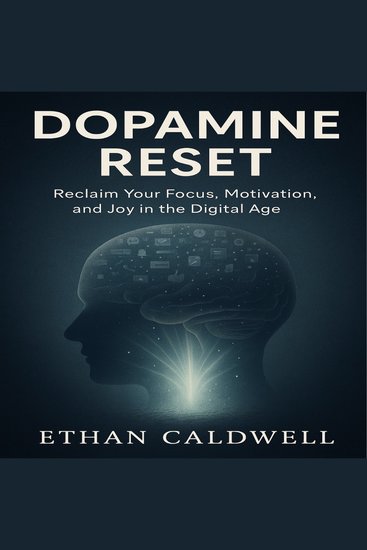
    Are you tired of feeling constantly distracted, drained by digital overload, and struggling to focus or feel joy? 
    In today’s fast-paced, tech-driven world, our brains are under siege—hijacked by dopamine spikes from endless notifications, social media, and digital distractions. Dopamine Reset is your science-backed guide to reclaiming your brain’s natural balance and restoring true focus, motivation, and lasting happiness. 
    Inside, you’ll discover:The neuroscience behind dopamine and how it drives habits, motivation, and pleasure.Signs and symptoms of digital overload—and how to break free.Proven techniques to reset your brain’s reward system without deprivation or rigid digital detoxes.The Dopamine Diet: nutrition and lifestyle habits to nourish your mind and body.Mindfulness, movement, and meditation practices to restore calm, build resilience, and spark creativity.Step-by-step templates and checklists to create your personal reset plan—and track real results.Strategies for overcoming setbacks, handling cravings, and maintaining lasting change. 
    Imagine waking up focused and energized, completing deep work with ease, and finding satisfaction in both small moments and big wins—at work, at home, and in your relationships. Dopamine Reset blends cutting-edge research, real-world case studies, and practical tools for anyone ready to thrive in the digital age. 
    Stop chasing fleeting digital highs. Start living with focus, motivation, and joy. Your reset starts now!
    Ver livro
  • Why Do We Want to Dominate Or Be Subservient to Another? - Ojai 1949 - Public Talk 11 - cover

    Why Do We Want to Dominate Or Be...

    Jiddu Krishnamurti

    • 0
    • 0
    • 0
    "Why do we want to dominate or be subservient to another? - 20 August 1949  
    • Why is it that we dominate, consciously or unconsciously? 
    • To submit oneself to another is the negative form of domination. We shall not 
    be able to solve this problem by thinking in terms of opposites. 
    • Is not domination a process of isolation, which denies relationship? 
    • Can there be relationship between two people if there is any sense of 
    domination or submissiveness? 
    • Q: Is not the experience of the past a help towards freedom and right action in 
    the present? 
    • Q: Is my believing in survival after death a hindrance to liberation through self- 
    knowledge? 
    • Q: Why is it certain individuals identify themselves with you or with your state 
    of being and thereby gain authority for themselves?"
    Ver livro
  • Ancient Mesopotamia: An Enthralling Overview of Mesopotamian History Starting from Eridu through the Sumerians Akkadians Assyrians Hittites and Persians to Alexander the Great - cover

    Ancient Mesopotamia: An...

    Enthralling History

    • 0
    • 0
    • 0
    How much do you know about the “cradle of civilization?” Come explore the legacy of the brilliant ancient Mesopotamians who transformed the world. 
    Ancient Mesopotamia’s legacy was truly revolutionary. Childlike pictures scratched into wet clay evolved into the first written language. The Mesopotamians wrote the first epic poems, the first hymns, the first histories, and the first law codes. They developed the first wheel for transportation; simple carts that hauled bricks or produce morphed into chariots racing along at thirty-five miles per hour. 
    They gazed at the sky and mapped it, observing the planets’ retrograde motions and predicting lunar and solar eclipses. They developed the concept of time, measurements, basic counting, higher math, and hydraulic engineering. 
    Mesopotamia gave birth to the world’s first great empires—the Akkadians, Assyrians, Babylonians, and Achaemenids—which stretched over three continents. 
    A glimpse at the questions this overview unpacks includes:How old is the world’s first city?How did the Eridu Genesis compare to Noah and the ark?How fast was the world’s first postal system?How many times did Babylon’s patron god Marduk get stolen?How did Hammurabi’s law code compare to the Law of Moses?Who calculated pi (π) to the value of 3.125 and understood the Pythagorean theorem twelve centuries before Pythagoras was born?Did Xerxes really have a million men in his army?Which empire encompassed 44 percent of the world’s population?What eunuch poisoned most of the Persian royal family?And much, much more! 
    Get this audiobook now to learn the stories of incredible ancient Mesopotamia!
    Ver livro
  • Genealogy - A Guide to Genealogical Research and Finding Your Ancestors - cover

    Genealogy - A Guide to...

    Sophie Henner

    • 0
    • 0
    • 0
    Genealogy delves into the complex web of family relationships and historical contexts that shape individual and collective identities. It often begins with an inquiry into one's own family background, such as understanding the origins and branches of one’s family tree. Researchers use various resources, including birth, marriage, and death records, census data, military records, and immigration documents, to trace the lineage and connections of family members across generations. 
      
    The process typically starts with gathering information from living relatives and personal family records. This foundational knowledge helps in identifying potential research paths. Genealogists then use historical records and archives to fill in gaps, verifying information and uncovering new details about ancestors' lives, including their social, economic, and geographical contexts. 
      
    Genealogy also involves examining historical events, migrations, and cultural influences that impacted family histories. By integrating historical data with personal records, genealogists create a richer understanding of how family histories intertwine with broader historical narratives.
    Ver livro
  • From Vocal Poetry to Song - Towards a Theory of Song Objects - cover

    From Vocal Poetry to Song -...

    Jean Nicolas De Surmont

    • 0
    • 0
    • 0
    Although the song is often the subject of monographs, one of its forms remains insufficiently researched: the vocalised song, communicated to the spectator through performance. The study of the song takes one back to the study of vocal practices, from aesthetic objects to forms and to plural styles. To conceive a song means approaching it in its different instances of creation as well as its linguistic diversity.  Jean Nicolas De Surmont proposes ways of research and analysis useful to musicians, musicologists, and literary critics alike. In his book he takes up the issue of vocal poetry in addition to examining the theoretic aspects of song objects. Rather than offering an autonomous model of analysis, De Surmont extends the research fields and suggests responses to debates that have involved everyone interested in vocal poetic forms.
    Ver livro