Junte-se a nós em uma viagem ao mundo dos livros!
Adicionar este livro à prateleira
Grey
Deixe um novo comentário Default profile 50px
Grey
Assine para ler o livro completo ou leia as primeiras páginas de graça!
All characters reduced
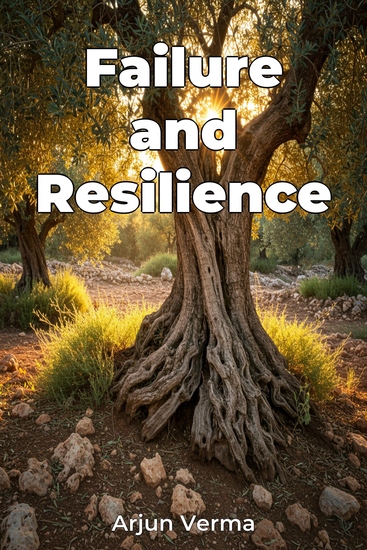
Failure and Resilience - cover
LER

Failure and Resilience

Arjun Verma

Tradutor A AI

Editora: Publifye

  • 0
  • 0
  • 0

Sinopse

Failure and Resilience explores how adversity can be a catalyst for profound personal and spiritual growth, uniquely blending psychological resilience theories with the example of Jesus Christ. It examines the nature of failure, emphasizing its potential for learning and character development, rather than viewing it as a purely negative experience. The book highlights the importance of effective coping mechanisms, drawing from both psychological principles and spiritual insights, to empower individuals to not only withstand trials but also emerge stronger. A key insight reveals is how embracing failure helps cultivate resilience and a stronger moral compass.

 
The book is structured in three parts, progressing from defining failure and resilience through a psychological lens, to analyzing Jesus' responses to adversity, like his strength during betrayal, and finally integrating these perspectives to offer practical strategies for cultivating resilience in everyday life. Readers will discover techniques for reframing negative thoughts and fostering a sense of purpose. By connecting theology, counseling, and leadership studies, the book offers a holistic understanding of resilience, making it invaluable for those seeking personal growth or facing life's challenges.
Disponível desde: 03/03/2025.
Comprimento de impressão: 81 páginas.

Outros livros que poderiam interessá-lo

  • Medieval Education - The Rise of Universities - cover

    Medieval Education - The Rise of...

    Harris Ropes

    • 0
    • 0
    • 0
    During the early medieval period, education in Europe was primarily shaped by the influence of the Church. With the decline of the Western Roman Empire, formal education systems deteriorated, leaving monasteries and cathedral schools as the main centers of learning. These institutions preserved classical knowledge and played a crucial role in the intellectual revival of the Middle Ages. Monastic and cathedral schools provided education for clergy members and, over time, expanded their reach to include nobles and, in some cases, commoners. 
    Monastic schools were among the earliest centers of learning, with monks serving as teachers and scribes. These schools focused on religious instruction, teaching Latin, biblical texts, and theological commentaries. The goal was to prepare future clergy members for service in the Church. Monastic scriptoria were responsible for copying and preserving important texts, ensuring the transmission of classical and Christian knowledge. While most students in monastic schools were destined for religious life, some noble families sent their sons for education in literacy and administration, as the Church held significant political influence. 
    Cathedral schools emerged as a response to the growing demand for education beyond monastic settings. They were often attached to large churches or bishoprics and provided instruction to a wider audience, including future clergymen, royal officials, and scholars. These schools offered a more structured curriculum, covering subjects such as grammar, rhetoric, and logic, which formed the foundation of medieval education. Over time, cathedral schools developed into important intellectual hubs, attracting students from various regions. The presence of prominent teachers and scholars helped establish certain cathedral schools as precursors to medieval universities.
    Ver livro
  • Alone With God - cover

    Alone With God

    Peter Walker

    • 0
    • 0
    • 0
    Where can I go from your Spirit?Where can I flee from your presence?If I go up to the heavens, you are there;If I make my bed in the depths, you are there.If I rise on the wings of the dawn,if I settle on the far side of the sea,even there your hand will guide me,your right hand will hold me fast.(Psalm 139:7-10)
    Ver livro
  • The Extinction of Experience - Being Human in a Disembodied World - cover

    The Extinction of Experience -...

    Christine Rosen

    • 0
    • 0
    • 0
    A reflective, original invitation to recover and cultivate the human experiences that have atrophied in our virtual world. 


    We embraced the mediated life—from Facetune and Venmo to meme culture and the Metaverse—because these technologies offer novelty and convenience. But they also transform our sense of self and warp the boundaries between virtual and real. What are the costs? Who are we in a disembodied world? 


    In The Extinction of Experience, Christine Rosen investigates the cultural and emotional shifts that accompany our embrace of technology. In warm, philosophical prose, Rosen reveals key human experiences at risk of going extinct, including face-to-face communication, sense of place, authentic emotion, and even boredom. Considering cultural trends, like TikTok challenges and mukbang, and politically unsettling phenomena, like sociometric trackers and online conspiracy culture, Rosen exposes an unprecedented shift in the human condition, one that habituates us to alienation and control. To recover our humanity and come back to the real world, we must reclaim serendipity, community, patience, and risk.
    Ver livro
  • GreenTOpia - Towards a Sustainable Toronto - cover

    GreenTOpia - Towards a...

    Alana Wilcox, Christina...

    • 0
    • 0
    • 0
    More trees. Hydrogen-fuelled cabs. Urbiology. A new model of taxation. Solar panels on big-box stores. The art of salvage. Composters for dog poo in city parks. Retrofitting our urban slabs. Gardening the Gardiner. Ravine City. What would make Toronto a greener place?
       
    In the third volume of the uTOpia series, dozens of imaginative Torontonians think big and small about sustainability. From suggestions for changes to our transit system and more mixed-use neighbourhoods to a tongue-in-cheek proposal for a painted line around the city and a short comic book about Toronto in the year 2057, GreenTOpia challenges the city and its residents to rethink what it means to be green in a metropolis, and how to take their love of the city one green step further. Other pieces include an interview with Mayor David Miller and a breakdown of the ecological impact of our morning coffee. GreenTOpia features photos, maps and a 56 page green directory of resources, organizations, incentives and programs promoting sustainability in the GTA.
    Ver livro
  • Russian History: From Russian Tsars To Soviet Communist Empire 3 Books In 1 - Ivan The Terrible Peter The Great Lenin And The Bolsheviks Stalin & Putin's Ukraine War - cover

    Russian History: From Russian...

    HISTORY FOREVER

    • 0
    • 0
    • 0
    3 BOOKS IN 1!Book 1 - The History Of Russia: The Rise And Fall Of Soviet Communism: Russian History Of The Tsars, Lenin And The Bolsheviks, Stalin & The Russian RevolutionBook 2 - Soviet Union: Russian History Of The Tsars And The Collapse Of The Ussr After World War 2Book 3 - Russia Ukraine War 2022: Putin's Invasion Of Ukraine: History Of Russia-Ukraine Relations And The Russia's War On Ukraine
    Ver livro
  • The Pax Romana - Peace and Prosperity in the Roman Empire - cover

    The Pax Romana - Peace and...

    Rogan Fish

    • 0
    • 0
    • 0
    The Pax Romana, meaning "Roman Peace," was a remarkable period of stability and prosperity that lasted for over two centuries. It began with the rise of Augustus, Rome’s first emperor, following the chaotic years of civil war that had plagued the late Republic. This era saw the establishment of a strong centralized government, economic growth, and the expansion of Rome’s influence across the Mediterranean and beyond. The foundations of this peace were carefully laid through political reforms, military strength, and a redefined vision of Roman leadership. 
    The aftermath of the civil wars that marked the late Republic left Rome in a state of disarray. The assassination of Julius Caesar in 44 BCE triggered a power struggle, culminating in the final confrontation between Octavian—Caesar’s adopted heir—and Mark Antony. With his victory at the Battle of Actium in 31 BCE, Octavian secured his position as the dominant ruler of Rome. In 27 BCE, he formally accepted the title of Augustus from the Senate, marking the beginning of the imperial system. This transition ended the Republic but ushered in an era of stability that would define the next two centuries. 
    Augustus carefully crafted a government that appeared to preserve Republican traditions while consolidating power in his hands. By maintaining the illusion of senatorial authority, he avoided the fate of his great-uncle, Julius Caesar. However, his rule was firmly grounded in the principles of autocracy. He reorganized the military, ensuring its loyalty through direct financial incentives, and established a standing army with permanent stations along the empire’s borders. This professionalization of the military reduced internal conflicts and safeguarded the empire from external threats.
    Ver livro