¡Acompáñanos a viajar por el mundo de los libros!
Añadir este libro a la estantería
Grey
Escribe un nuevo comentario Default profile 50px
Grey
Suscríbete para leer el libro completo o lee las primeras páginas gratis.
All characters reduced
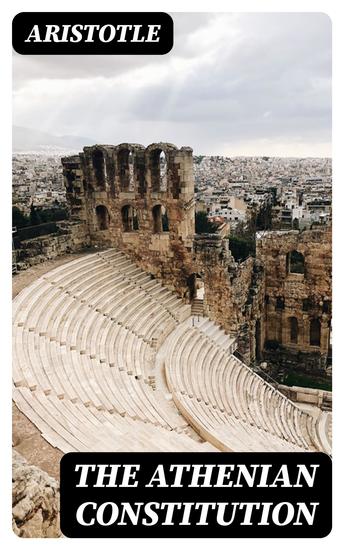
The Athenian Constitution - cover

The Athenian Constitution

Aristotle

Traductor Frederic G. Kenyon

Editorial: DigiCat

  • 0
  • 0
  • 0

Sinopsis

In "The Athenian Constitution," Aristotle offers a meticulous examination of the political structures and governance of Athens, blending empirical observation with sharp philosophical insight. Written in the 4th century BCE, this seminal text employs a descriptive and analytical literary style, presenting a systematic account of Athenian democracy, including its institutions, electoral processes, and social nuances. Aristotle's examination serves not only as a historical document but also as a foundational work in political philosophy, illuminating the complexities of civic life and governance in one of history's most influential city-states. Aristotle, one of the foremost philosophers of antiquity, was profoundly influenced by his experiences in the Athenian polis as well as the intellectual milieu of his time, particularly through his tutelage under Plato. His firsthand encounters with political dynamics, coupled with his rigorous philosophical training, give weight to his analysis, allowing him to delineate the virtues and flaws of democratic governance. Aristotle's objective approach also reflects his broader philosophical inquiry into ethics, politics, and human behavior, demonstrating how governance is a reflection of human nature. This essential read is recommended for scholars, students, and anyone interested in the roots of democratic thought and the intricacies of governance. Aristotle's insights into civic responsibility and political structure remain profoundly relevant, inviting readers to reflect on the principles that underpin modern democracies and the timeless quest for justice and efficiency in governance.
Disponible desde: 04/09/2022.
Longitud de impresión: 64 páginas.
Otros libros que te pueden interesar

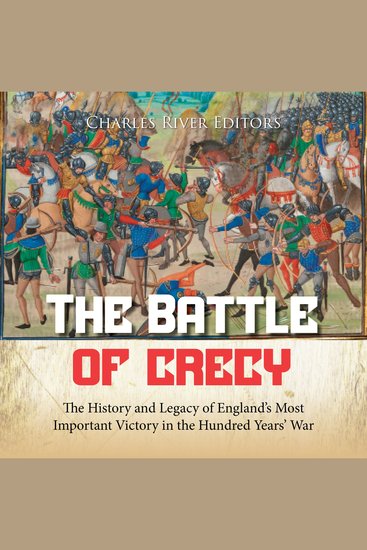
  • Battle of Crécy The: The History and Legacy of England’s Most Important Victory in the Hundred Years’ War - cover

    Battle of Crécy The: The History...

    Editors Charles River

    • 0
    • 0
    • 0
    Although it ended over 550 years ago, the Hundred Years’ War still looms large in the historical consciousness of England and France, even if the name of the famous war is a misnomer. The war was more of a series of separate conflicts between the English and French monarchies, interspersed with periods of peace, and its reputation remains an odd one, in part because its origins were based on royal claims that dated back centuries. Furthermore, the English and French remained adversaries for nearly 400 years after it ended. 
    That said, the war was transformative in many respects, and the impact it had on the geopolitical situation of Europe cannot be overstated. While some might think of the war as being a continuation of the feudal tradition of knights and peasants, the Hundred Years’ War revolutionized European warfare, and it truly helped to usher in the concept of nationalism on the continent. In England, it is remembered as a period of grandeur and success, even though the English lost the war and huge swathes of territory with it, while the French remember it as a strategic victory that ensured the continued independence of France and the denial of English hegemony. The legacy of the war has lived on ever since, helping determine how England became politically severed from the continent, how the knightly chivalric tradition slid into irrelevance, and how battlefield dominance can still leave a nation a loser in war. 
    Indeed, nothing characterized that dominance quite like the campaign that culminated with the Battle of Crécy, where the English used their diverse forces to maximum effect to defeat the French, a victory that allowed the English to eventually take and hold Calais. For about two centuries, Calais would remain the last foothold England retained on the continent, and the famous Tudor King Henry VIII conducted one of the last campaigns of his life in an effort to maintain it. 
    Ver libro
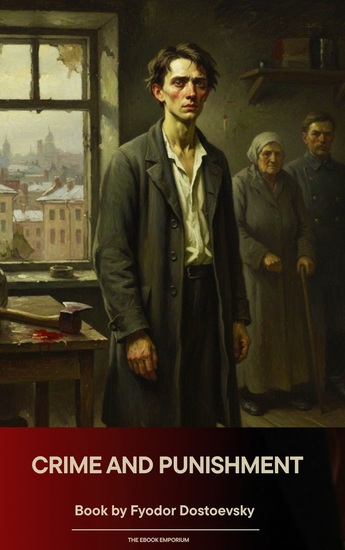
  • Crime and Punishment - cover

    Crime and Punishment

    Fyodor Dostoevsky

    • 0
    • 0
    • 0
    "I did not kill a human being, but a principle!"
    
    In the sweltering slums of St. Petersburg, a brilliant but destitute student named Rodion Raskolnikov conceives a terrifying theory: that "extraordinary" men are above the law, permitted to commit any crime for the sake of a higher purpose. To prove his hypothesis, he murders a cynical old pawnbroker. But as a cat-and-mouse game ensues with the cunning investigator Porfiry Petrovich, Raskolnikov finds himself haunted not by the law, but by his own conscience. His only hope for salvation lies with Sonia, a young woman forced into a life of suffering, who offers a path of radical humility and spiritual rebirth.
    
    A Descent into the Human Mind: Crime and Punishment is arguably the greatest psychological study ever written. Dostoevsky takes the reader deep into the feverish, fractured mind of a killer, making us complicit in his rationalizations and his subsequent agony. It is a visceral experience that explores the thin line between genius and madness, and the devastating weight of a secret.
    
    The Battle for the Soul: The novel is a masterpiece of ideological conflict. Raskolnikov is pulled between the cold, rational nihilism of the 19th-century "New Men" and the profound, self-sacrificing faith represented by Sonia. Through their interactions, Dostoevsky argues that no intellectual theory can withstand the fundamental human need for connection and moral truth.
    
    A Timeless Search for Redemption: Beyond the murder and the investigation, this is a story about the possibility of a second chance. It is a grueling journey through the "hell" of the human ego toward the light of confession and renewal. Crime and Punishment is not just a book you read; it is an experience that stays with you forever.
    
    Step into the mind of a killer. Purchase "Crime and Punishment" today and discover the depth of the human heart.
    Ver libro
  • Roman and Byzantine Armies The: The History of the Militaries in the Western Roman Empire and Eastern Roman Empire - cover

    Roman and Byzantine Armies The:...

    Editors Charles River

    • 0
    • 0
    • 0
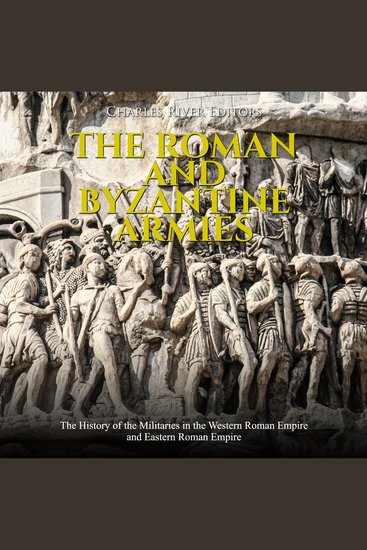
    The Roman army is one of the most famous fighting forces in history. Through its power and prowess, a once obscure Italian city forged an empire that encircled the Mediterranean and covered half of Europe. The physical remains of its presence can be traced from the mountainous borders of Scotland to the arid deserts of Egypt, but its legacy is far greater and more enduring, as Rome's influence continues to shape the political, legal, and cultural landscape of Europe to this very day. 
    While the Roman army is rightly famed as an institution, the image of the individual legionary is also an iconic one. The uniformed, disciplined soldier of the late Republic and early Empire is one of the first things many people imagine when they think of Rome. They are the ultimate image of the ancient soldier, their arms and armor instantly recognizable. Their abilities, not only as warriors but also as engineers and administrators, have made them role models for other soldiers through the centuries. In the same vein, their commanders are still celebrated and studied, and generals the world over have tried to emulate the likes of Julius Caesar. 
    The Byzantine Empire was the heir to two great cultures that cradled and nurtured European civilization: Greece and Rome. Constantinople, now called Istanbul, became a center of power, culture, trade, and technology poised on the edges of Europe and Asia, and its influence was felt not only throughout Europe but the Middle East, Africa, Central Asia, and the Far East. In reality, Byzantium was a strong, organized, highly effective and adaptable civilization for most of its long history. It owed its success in no small part to its military, which, in contrast to the feudal armies of Western Europe and the tribally based forces of the Middle East, operated with a high level of discipline, strategic prowess, efficiency, and organization.
    Ver libro
  • The Lynch Mob Story - Secrets of the Civilian Soldiers - cover

    The Lynch Mob Story - Secrets of...

    Marco Donniell Harrington

    • 0
    • 0
    • 0
    In the heart of a desolate, war-torn landscape, six ghost soldiers embarks on a perilous mission to unearth the sinister secrets of a shadowy organization and its enigmatic leader. As they traverse through treacherous terrains and haunted ruins, they are met with an unrelenting barrage of terror and bullets. The air is thick with the stench of blood and the whispers of long-buried secrets. Each step forward brings them closer to a chilling revelation, but also to the brink of annihilation.The ghostly warriors, bound by a pact forged in the fires of betrayal, must navigate a labyrinth of lies and deceit. As the stakes rise, trust becomes a fragile commodity, and the line between friend and foe blurs. Shadows from the past resurface, and every corner they turn reveals another piece of a puzzle that could lead to either redemption or doom.With their ethereal existence teetering on the edge, the soldiers must unravel the truth behind the malevolent force that has orchestrated their fall from grace. In a deadly game of cat and mouse, where every decision could mean life or death, they race against time to expose the puppet master pulling the strings. The price of failure is steep, and the question looms large: who will pay, and where will the final confrontation unfold?Prepare for an epic tale of valor and vengeance, where the past and present collide in a thunderous clash of steel and spirit. Blood will be spilled, secrets will be unearthed, and in the end, the truth will be unveiled in a reckoning that will shake the very foundations of their haunted existence.
    Ver libro
  • Making Makers - The Past the Present and the Study of War - cover

    Making Makers - The Past the...

    Michael P. M. Finch

    • 0
    • 0
    • 0
    Making Makers presents a comprehensive history of a seminal work of scholarship which has exerted a persistent attraction for scholars of war and strategy: Makers of Modern Strategy. It reveals the processes by which scholars conceived and devised the book, considering both successful and failed attempts to make and remake the work across the twentieth century, and illuminating its impact and legacy. It explains how and why these volumes took their particular forms, unearths the broader intellectual processes that shaped them, and reflects on the academic parameters of the study of war in the twentieth century. In presenting a complete genesis of the Makers project in the context of intellectual trends and historical contingency, this book reflects on a more complex and nuanced appraisal of the development of scholarship on war. In so doing it also offers contributions to the intellectual biographies of key figures in the history of war in the twentieth century, including Edward Mead Earle and Peter Paret. Making Makers contributes to an intellectual history of military history and contextualizes the place of history and historians in strategic and security studies. It is not only a history of the book, but a history of the networks of scholars involved in its creation, their careers, and lines of patronage, crossing international boundaries, from Europe to the USA, to Asia and Australia.
    Ver libro
  • African Americans and the Revolutionary War: The History of Black Soldiers in the American Revolution - cover

    African Americans and the...

    Editors Charles River

    • 0
    • 0
    • 0
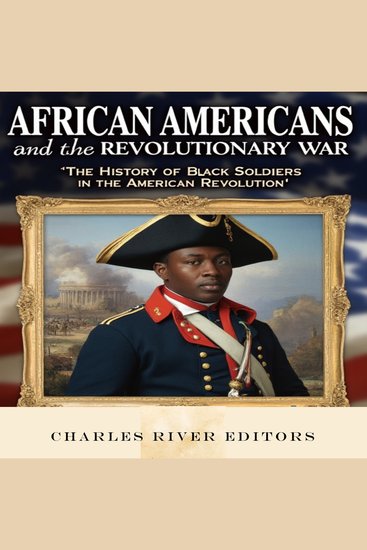
    The American Revolution is replete with seminal moments that every American learns in school, from the “shot heard ‘round the world” to the Declaration of Independence, but the events that led up to the fighting at Lexington & Concord were borne out of 10 years of division between the British and their American colonies over everything from colonial representation in governments to taxation, the nature of searches, and the quartering of British regulars in private houses. From 1764-1775, a chain of events that included lightning rods like the Townshend Acts led to bloodshed in the form of the Boston Massacre, while the Boston Tea Party became a symbol of nonviolent protest.  
    	The political and military nature of the Revolutionary War was just as full of intrigue. While disorganized militias fought the Battles of Lexington & Concord, George Washington would lead the Continental Army in the field while men like Thomas Jefferson drafted the Declaration of Independence in Philadelphia and Benjamin Franklin negotiated overseas in France. Benedict Arnold would become one of his nation’s most vital war heroes and its most notorious traitor, French forces would play a crucial role at the end of the war, and the Treaty of Paris would conclude the Revolution with one last great surprise.  
    	Perhaps not surprisingly, the Revolution was far more complex than often depicted, both demographically and politically. Not all the British colonies in North America joined the rebel colonies - East and West Florida remained British (although Britain almost lost both to Spain), while the Bahamas, Bermuda, and the Caribbean colonies remained in the empire. The colonies in what is now Canada also remained loyal, namely Quebec, Newfoundland, Nova Scotia, and Rupert’s Land. 
    Ver libro