


¡Acompáñanos a viajar por el mundo de los libros!
Añadir este libro a la estantería
Grey
Escribe un nuevo comentario Default profile 50px
Grey
Suscríbete para leer el libro completo o lee las primeras páginas gratis.
All characters reduced
Lysistrata - cover

Lysistrata

Aristophanes

Traductor Jack Lindsay

Editorial: DigiCat

  • 0
  • 0
  • 0

Sinopsis

In Aristophanes' timeless comedy, "Lysistrata," the Athenian playwright masterfully weaves a narrative that tackles themes of war, gender dynamics, and political activism through the lens of humor and irony. This spirited work, primarily set against the backdrop of the Peloponnesian War, depicts Lysistrata, a cunning Athenian woman who orchestrates a bold strike—one that encourages women to withhold sexual favors from their husbands until peace is achieved. Through clever dialogue, satire, and the vivid characterization of its female protagonists, Aristophanes crafts a rich exploration of the societal tensions of his time, blending political commentary with exuberant farce and thus challenging the structures of patriarchy and warfare that dominate classical Athens. Aristophanes (c. 448–c. 380 BC), hailed as one of the greatest comic playwrights of ancient Greece, often utilized his sharp wit and innovative storytelling techniques to address contemporary issues. Drawing on his experiences living through the tumultuous events of the Peloponnesian War, Aristophanes sought to provoke thought and laughter, reflecting the collective anxieties and aspirations of his society. His unique ability to highlight the absurdity of human behavior and political folly ultimately underlines the relevance of his work throughout history. "Lysistrata" remains a quintessential text that resonates with readers today, inviting reflections on the intersections of gender, power, and resistance. It is a must-read for anyone interested in the complexities of human relationships and the persistent quest for peace in the face of conflict. With its blend of humor and incisive social critique, this vibrant play invites audiences to recognize the power of solidarity and the transformative potential of women in history.
Disponible desde: 04/09/2022.
Longitud de impresión: 47 páginas.

Otros libros que te pueden interesar

  • The Untilled Field - cover

    The Untilled Field

    George Moore

    • 0
    • 0
    • 0
    "The Untilled Field" by George Moore is a collection of short stories portraying the complexities of Irish rural life in the late 19th century. Moore masterfully explores themes of love, loss, and societal expectations in a landscape shaped by tradition and change. Through vivid characters and evocative settings, the narratives offer a poignant reflection on the clash between old and new, capturing the struggles and joys of individuals navigating a transforming Ireland. Moore's prose unveils the human condition with sensitivity, making this collection a timeless exploration of the universal challenges faced by those living in the untamed fields of cultural transition.
    Ver libro
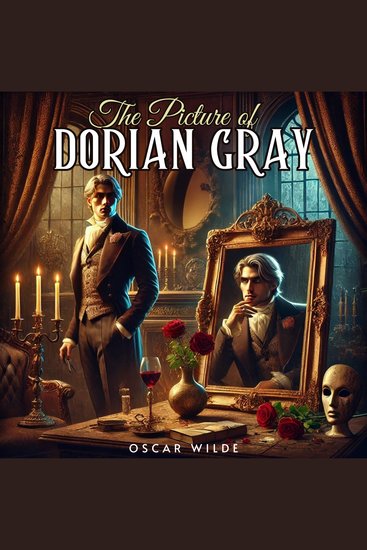
  • The Picture of Dorian Gray - cover

    The Picture of Dorian Gray

    Oscar Wilde

    • 0
    • 0
    • 0
    The Picture of Dorian Gray by Oscar Wilde is a captivating tale of beauty, moral corruption, and the pursuit of eternal youth. This classic novel follows the story of Dorian Gray, a young man whose life takes a dark turn when he becomes the subject of a portrait painted by the talented artist Basil Hallward. Enchanted by his own beauty, Dorian wishes that he could remain forever young while the portrait ages in his place. 
    As Dorian delves deeper into a life of indulgence and hedonism, he is influenced by the charismatic and cynical Lord Henry Wotton, who encourages him to embrace a lifestyle devoid of morals. With each act of vice, the portrait reveals the true cost of Dorian’s choices, reflecting the degradation of his soul while he remains outwardly unchanged. 
    Wilde’s novel explores themes of vanity, the consequences of a life lived without accountability, and the complexities of human nature. It serves as a profound commentary on the superficiality of society and the dangers of sacrificing one’s integrity for pleasure. 
    This audiobook version brings to life Wilde’s rich prose and sharp wit, inviting listeners to experience Dorian’s mesmerizing journey and moral descent. Perfect for lovers of gothic fiction and philosophical literature, The Picture of Dorian Gray is a timeless exploration of the duality of man and the price of vanity. 
    Start Listening to The Picture of Dorian Gray today and immerse yourself in Oscar Wilde’s timeless exploration of beauty, art, and morality!
    Ver libro
  • Maxim Gorky - A Short Story Collection - Nominated for the Nobel prize in literature 5 times Gorky was a truly special short story writer we implore you to see why in this collection - cover

    Maxim Gorky - A Short Story...

    Maxim Gorky

    • 0
    • 0
    • 0
    Alexei Maximovich Peshkov was born on 28th March 1868, in Nizhny Novgorod, Russia. 
     
    Better known as Maxim Gorky he was orphaned at 11 and ran away from home at 12.  At 19 he had already attempted suicide and thereafter travelled, by foot, across the Russian Empire for 5 years. 
     
    His first book ‘Essays & Stories’ in 1898 was a sensation and so began a long career as an author of short stories, novels and plays.  Gorky saw writing as a moral and political act that would help to change the unjust world around him.  He was an ardent early advocate of the emerging Marxist movement and publicly opposed the Tsarist regime leading several times to his arrest.  
     
    In 1904 he began his own theatre but the censor banned every play and Gorky was forced to abandon the project. 
     
    But Gorky was a financially successful author, editor, and playwright and gave monies to political parties as well as for civil rights and social reform.  The brutal shooting of workers, which set in motion the Revolution of 1905, pushed Gorky more decisively toward radical solutions.  
     
    In 1906 he went to the United States to raise funds for the Bolsheviks. Those experiences including a scandal over travelling with his lover and not his wife deepened his contempt for the ‘bourgeois soul.’ 
     
    Gorky now moved to Capri in Italy, both for health reasons and to escape the increasingly repressive times in Russia.  
     
    An amnesty for the 300th anniversary of the Romanov dynasty saw him return to Russia in 1914. His politics remained close to the Bolshevik cause.  But soon, after the 1918 revolution, his essays referred to Lenin as a tyrant for his senseless arrests and repression.  He was soon appealing to the outside world for food aid after the catastrophic crop failure. 
     
    In October 1921 Gorky returned to Italy, now in Fascist hands, and settled in Sorrento until 1932.  His health worsened with the onset of tuberculosis. 
     
    He wrote several successful books there but now decided to find an understanding with the communist regime. Stalin invited him home and his return was hailed as a major propaganda victory.  He was decorated with the Order of Lenin, and a province, a park, and various streets re-named in his honour. 
     
    But he had his faults too.  In 1933, Gorky co-edited a book on the White Sea-Baltic Canal and denied even a single prisoner died during its construction, but thousands had. As well, knowing that some Nazis were homosexual, a phrase was attributed to him that said ‘exterminate all homosexuals and fascism will vanish’.  Although he was himself was quoting another he was decidedly homophobic. 
     
    With the increase of Stalinist repression in 1935 Gorky was placed under unannounced house arrest. 
     
    Maxim Gorky died on the 18th June 1936 from pneumonia.  He was 68. 
     
    Stalin and Molotov were among those who carried Gorky's urn of ashes at his funeral. 
     
    01 - Maxim Gorky - A Short Story Collection - An Introduction 
    02 - Twenty-Six Men and a Girl by Maxim Gorky 
    03 - One Autumn Night by Maxim Gorky 
    04 - In The Steppe by Maxim Gorky 
    05 - Her Lover by Maxim Gorky 
    06 - Chelkash - Part 1 by Maxim Gorky 
    07 - Chelkash - Part 2 by Maxim Gorky 
    08 - Chelkash - Part 3 by Maxim Gorky
    Ver libro
  • In Bayswater - One family is home to many secrets in this classic modernist short story - cover

    In Bayswater - One family is...

    Mary Butts

    • 0
    • 0
    • 0
    Mary Frances Butts was born on 13th December 1890 in Poole, Dorset. 
     
    Her early years were spent at Salterns, an 18th-century house overlooking Poole Harbour.  Sadly in 1905 her father died, and she was sent for boarding at St Leonard's school for girls in St Andrews. 
     
    Her mother remarried and, from 1909, Mary studied at Westfield College in London, and here, first became aware of her bisexual feelings.  She was sent down for organising a trip to Epsom races and only completed her degree in 1914 when she graduated from the London School of Economics.  By then Mary had become an admirer of the occultist Aleister Crowley and she was given a co-authorship credit on his ‘Magick (Book 4)’. 
     
    In 1916, she began the diary which would now detail her future life and be a constant reference point for her observations and her absorbing experiences. 
     
    During World War I, she was doing social work for the London County Council in Hackney Wick, and involved in a lesbian relationship.  Life changed after meeting the modernist poet, John Rodker and they married in 1918. 
     
    In 1921 she spent 3 months at Aleister Crowley's Abbey of Thelema in Sicily; she found the practices dreadful and also acquired a drug habit.  Mary now spent time writing in Dorset, including her celebrated book of short stories ‘Speed the Plough’ which saw fully develop her unique Modernist prose style. 
     
    Europe now beckoned and several years were spent in Paris befriending many artists and writing further extraordinary stories.   
     
    She was continually sought after by literary magazines and also published several short story collections as books. Although a Modernist writer she worked in other genres but is essentially only known for her short stories.  Mary was deeply committed to nature conservation and wrote several pamphlets attacking the growing pollution of the countryside. 
     
    In 1927, she divorced and the following year her novel ‘Armed with Madness’ was published.  A further marriage followed in 1930 and time was spent attempting to settle in London and Newcastle before setting up home on the western tip of Cornwall.  By 1934 the marriage had failed. 
     
    Mary Butts died on 5th March 1937, at the West Cornwall Hospital, Penzance, after an operation for a perforated gastric ulcer. She was 46. 
     
    Her story ‘In Bayswater’ grippingly describes a man’s friendship with a dysfunctional family he rents a room from.  As each facet reveals itself his opinion and decisions change, back and forth, this way and that….
    Ver libro
  • Exasperated - A Short Story Collection - The simplest things become the hardest tasks - cover

    Exasperated - A Short Story...

    J M Barrie, Frank Stockton, G K...

    • 0
    • 0
    • 0
    In this volume we discover that the obvious and the easy are not perhaps as obvious and easy as our authors first present them. 
     
    They play with us.  There is certainty.  Then there is uncertainty.  There is a fact and then seemingly not. 
     
    One thing we can rely on though is that each new twist and turn takes us on a journey of frustration and exasperation that is as enjoyable as it is bewildering. 
     
    And, in the company of the sparkling wits of Chesterton, Aumonier, Barrie and a host of others who summon indignation and vexation as they rile and befuddle us then being exasperated was never quite so much fun. 
     
    01 - Exasperated - A Short Story Collection - An Introduction 
    02 - A Somewhat Improbable Story by G K Chesterton 
    03 - The Man Who Did Not Believe in Luck by Jerome K Jerome 
    04 - Putois by Anatole France 
    05 - The Lady, or the Tiger by Frank Stockton 
    06 - The Inconsiderate Waiter by J M Barrie 
    07 - The Absent Minded Man by Jerome K Jerome 
    08 - The Little Room by Madeline Yale Wynne 
    09 - The Mysterious Card by Cleveland Moffet 
    10 - Where Was Wych Street by Stacy Aumonier
    Ver libro
  • Statement of Randolph Carter The (Unabridged) - cover

    Statement of Randolph Carter The...

    H. P. Lovecraft

    • 0
    • 0
    • 0
    "The Statement of Randolph Carter" is the first person testimony of the titular character, who has been found wandering through swampland in an amnesiac shock. In his statement, Carter attempts to explain the disappearance of his companion, the occultist Harley Warren. Warren has come into the possession of a book, written in an unknown language, the exact contents of which he never revealed to Carter. Carter mentions that Warren has other "strange, rare books on forbidden subjects", several of which are in Arabic. From his mysterious book, Warren apparently deduces that doors or stairways exist between the surface world, and the underworld. He encourages Carter to travel with him to the location of one such portal, an ancient graveyard near Big Cypress Swamp. Upon arriving, Warren locates a particular tomb, and opens it to reveal a staircase that descends into the earth. Taking a lantern, he leaves Carter on the surface, and follows the stairs into the darkness, communicating with his companion by a telephone wire. After several minutes of silence, Warren suddenly begins to make vague, panicked outbursts that culminate in a desperate plea for Carter to flee. Finally, after Warren is silent for several minutes, Carter calls to him down the line, only to hear an alien voice telling him that Warren is dead.
    Ver libro
