¡Acompáñanos a viajar por el mundo de los libros!
Añadir este libro a la estantería
Grey
Escribe un nuevo comentario Default profile 50px
Grey
Suscríbete para leer el libro completo o lee las primeras páginas gratis.
All characters reduced
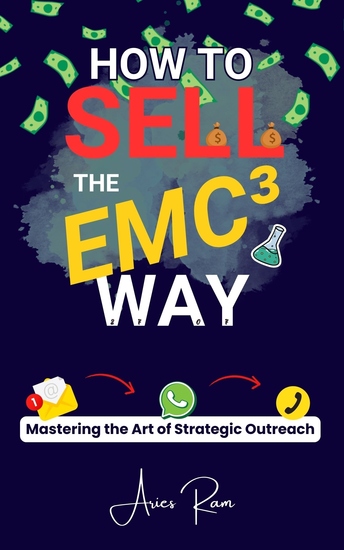
How To Sell The EMC³ Way - Mastering the Art of Strategic Outreach - cover

How To Sell The EMC³ Way - Mastering the Art of Strategic Outreach

Aries Ram

Editorial: Publishdrive

  • 0
  • 0
  • 0

Sinopsis

Get ready to sell 3x better and revolutionize your sales strategy after reading this. 
 
How To Sell The EMC³ Way introduces a game-changing formula—Email, Message, Call, and Move On—that will help you master the art of strategic outreach and skyrocket your sales performance.
 
Perfect for beginner sales professionals, team leaders, and managers, this book reveals the secret to engaging prospects in a way that feels natural, personal, and effective.
 
In an era where connection is key, this book shows you how to craft emails that grab attention, send WhatsApp messages that spark interest, and make calls that convert prospects into customers.
 
Learn how to build relationships across multiple channels, combine persistence with professionalism, and identify when it’s time to move on from leads that aren’t worth your energy.
 
Packed with proven techniques, real-life examples, and practical tips, How To Sell The EMC³ Way gives you a step-by-step guide to improving your sales game, upgrading your mindset, and driving better results.Whether you're just starting your journey or looking to sharpen your selling skills, this book will help you build a successful sales process that works.Gift it to your colleagues and watch your team unlock their full potential, transforming everyday sales into long-term success.Ready to take your sales to the next level?Let EMC³ lead the way.
Disponible desde: 09/05/2025.
Longitud de impresión: 63 páginas.
Otros libros que te pueden interesar

  • Spend Shift - How the Post-Crisis Values Revolution Is Changing the Way We Buy Sell and Live - cover

    Spend Shift - How the...

    Anónimo

    • 0
    • 0
    • 0
    How we, consumers, responded to the 2008 recession and continue to  respond to its aftermath is the crux of much speculation. Will we  remain "frugal" or will we go back to our spending ways? What about  this economic crisis has changed the way we live and how will it  affect America's future?   After decades of unfettered indulgence, Americans are spent. We  over-consumed--financed with debt--which has overleveraged our  country and erased 13 trillion of consumer wealth and nearly 45% in  America's equities and housing values. In the process, we have  decimated trust in our financial system, government, and business.  In SPEND SHIFT, John Gerzema, Chief Insights Officer at Young  how  we are moving from mindless to mindful consumption; and how we are  opting for better goods and services, rather than just "more." As a  consequence, companies are presented with an extraordinary  opportunity to revolutionize their models to reconnect with the  new, unwound consumer. Businesses that adapt to these new consumer  behaviors will drive business that scale reputation, not debt, and  that will expand profit margins by delivering both "value" and  "values."  Through insight, social data, and in depth  observation, SPEND SHIFT analyzes the changing American  consumer psyche, documents the five shifting values and consumer  behaviors that are remaking America, and explains what it means to  businesses and leaders. This will be a must-read for anyone  interested in how consumerism is changing and how to understand and  connect with consumer during and after the recession.
    Ver libro
  • Blood and Treasure - The Economics of Conflict from the Vikings to the Modern Era - cover

    Blood and Treasure - The...

    Duncan Weldon

    • 0
    • 0
    • 0
    Wars are expensive, both in human terms and monetary ones. But while warfare might be costly it has also, at times, been an important driver of economic change and progress. Over the long span of history nothing has shaped human institutions—and thus the process of economic development—as much as war and violence. Wars made states and states made wars. As the costs of warfighting grew so did state structures, taxation systems and national markets for debt. And as warfare became ever more destructive the incentive for governments to resort to it changed too. 
     
    Blood and Treasure looks at the history and economics of warfare from the Viking Age to the war in Ukraine, examining how incentives and institutions have changed over the centuries. It surveys how warfare helped drive Europe's rise to global prominence, and it explains how the total wars of the twentieth century required a new type of strategy, one that took economics seriously. 
     
    Underpinning this riveting narrative is a focus on how and why the economics of conflict have changed over time. This is a story of how economics can help to explain the motivations of war, and how understanding the history of warfare can help explain modern economics.
    Ver libro
  • Build Your Board Build Your Business: The Path to Million Dollar Success Explained - cover

    Build Your Board Build Your...

    Barbara Clarke

    • 0
    • 0
    • 0
    As a CEO charged with elevating your business and ensuring its growth, the path can feel long—and lonely—without the right support. But behind every successful CEO is a board of directors, a diverse group of mentors rich in knowledge and experience, capable of guiding you in your company’s development and laying a foundation for you to flourish. Are you ready to start building?In Build Your Board, Build Your Business, economist, investor, and entrepreneur Barbara Clarke shows how to take your company to the next level and fulfill your potential by developing the board of directors your company needs for success. Whether you’re a CEO now or aspiring to be one, this book is the business companion that will help you organize your intentions and goals, streamline your effort, and utilize the diversity your organization has to offer. Your personal success means more overall success for your company. With worksheets, questionnaires, and exercises to demystify the process of building a board, Build Your Board, Build Your Business is a thought-provoking companion for any business owner's journey to success.
    Ver libro
  • HBR's 10 Must Reads on Entrepreneurship and Startups - cover

    HBR's 10 Must Reads on...

    William A. Sahlman, Reid...

    • 0
    • 0
    • 0
    The best entrepreneurs balance brilliant business ideas with a rigorous commitment to serving their customers' needs. 


    If you read (or listen) to nothing else on entrepreneurship and startups, listen to these ten articles by experts in the field. We've combed through hundreds of articles in the Harvard Business Review archive and selected the most important ones to help you build your company for enduring success. 


    Leading experts and practitioners such as Clayton Christensen, Marc Andreessen, and Reid Hoffman provide the insights and advice that will inspire you to: understand what makes entrepreneurial leaders tick; know what matters in a great business plan; adopt lean startup practices such as business model experimentation; be prepared for the race for scale in Silicon Valley; better understand the world of venture capital—and know what you'll get along with VC funding; and take an alternative approach to entrepreneurship: buy an existing business and run it as CEO.
    Ver libro
  • Moonshot - A NASA Astronaut’s Guide to Achieving the Impossible - cover

    Moonshot - A NASA Astronaut’s...

    Mike Massimino

    • 0
    • 0
    • 0
    Learn the NASA Astronaut mindset to solve problems, provide leadership in the face of adversity, and never give up on the pursuit of your wildest dreams. Mike Massimino achieved his dream of exploring space—now he distills stories and insights from NASA into an actionable guide to accomplish your biggest goals.   Mike reveals how to make possible the seemingly impossible—on Earth.  Written with characteristic wit and a big heart, Mike identifies ten hard-earned lessons of spaceflight and other life experiences, including:  • One in a Million Is Not Zero: The odds are against you. Do it anyway.  • The Thirty-Second Rule: You’re going to make mistakes. Learn how to deal with them. • Be Amazed: The universe is an incredible place. Stop what you’re doing and look around.  • Know When to Pivot: Change is inevitable. Accept and embrace it.  We all have our own personal “moon shots” we’d like to take in life, but as mission control will tell you, doing one big thing really means getting a thousand little things right along the way. Moonshot is the book that will show you how to do just that, and help set you on the right path to achieve your own personal and professional dreams.   
    Ver libro
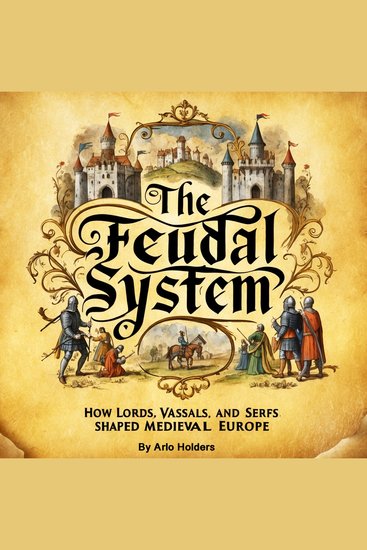
  • The Feudal System - How Lords Vassals and Serfs Shaped Medieval Europe - cover

    The Feudal System - How Lords...

    Arlo Holders

    • 0
    • 0
    • 0
    Feudalism was a dominant social, economic, and political system in medieval Europe that shaped the lives of millions from the 9th to the 15th centuries. Rooted in the decline of the Roman Empire, it emerged as a response to the need for local defense, stability, and order. With the fall of centralized authority, particularly in the wake of the collapse of Roman imperial power, local leaders, and warriors filled the vacuum, giving rise to a new hierarchical structure that became the backbone of medieval society. 
    At the heart of feudalism was the relationship between lords and vassals, defined by a system of land ownership and mutual obligations. The land, or fief, was the most valuable asset in the feudal system. Lords, or landowners, granted portions of their land to vassals, typically in exchange for military service, loyalty, and other obligations. In return for this land, vassals swore an oath of fealty to their lord, pledging to serve him in times of war, provide counsel, and honor the lord’s authority. This bond was often formalized through ceremonies that emphasized loyalty and trust, making feudalism not just a legal arrangement but a deeply personal relationship. 
    In addition to the lord-vassal dynamic, serfs and peasants formed the labor force that sustained the feudal economy. While lords and vassals fought battles and governed lands, serfs worked the fields and managed agriculture, which was the primary source of wealth in the medieval world. Unlike slaves, serfs were bound to the land, unable to leave without their lord’s permission. In exchange for protection and the right to work the land, serfs provided a portion of their crops and other goods as rent.
    Ver libro