
¡Acompáñanos a viajar por el mundo de los libros!
Añadir este libro a la estantería
Grey
Escribe un nuevo comentario Default profile 50px
Grey
Suscríbete para leer el libro completo o lee las primeras páginas gratis.
All characters reduced
Feminism and Sex-Extinction - cover

Feminism and Sex-Extinction

Arabella Kenealy

Editorial: DigiCat

  • 0
  • 0
  • 0

Sinopsis

In "Feminism and Sex-Extinction," Arabella Kenealy delves into the intersection of feminist thought and the sociocultural implications of reproductive choices. The book critiques the traditional narratives surrounding women's roles, arguing for a more nuanced understanding of femininity that encompasses both the biological and societal dimensions of existence. Kenealy employs a colloquial yet incisive literary style, engaging readers with her sharp wit and observational prowess as she tackles pressing issues of her time, situating the discourse within the broader context of early 20th-century feminist movements and evolving scientific perspectives on gender and reproduction. Arabella Kenealy, a prominent British physician and suffragist, was deeply engaged in the dialogues of her day, influenced by both her medical background and her commitment to women's rights. Her professional experiences underscored the importance of women's autonomy in reproductive health, shaping her arguments against patriarchal structures that limited women's choices. This unique combination of medical knowledge and feminist advocacy made her a pioneering figure in advocating for women's agency amidst societal constraints. "Feminism and Sex-Extinction" is essential reading for anyone interested in the foundations of feminist theory and the ongoing conversations surrounding gender, reproduction, and autonomy. Kenealy's incisive analysis and passionate prose invite readers to reflect critically on the legacy of these issues, making this book a profound contribution to both feminist scholarship and contemporary debates.
Disponible desde: 10/08/2022.
Longitud de impresión: 286 páginas.
Otros libros que te pueden interesar

  • Women at War - The Pivotal Role of Women in the Allied Effort - cover

    Women at War - The Pivotal Role...

    Sage Winters

    • 0
    • 0
    • 0
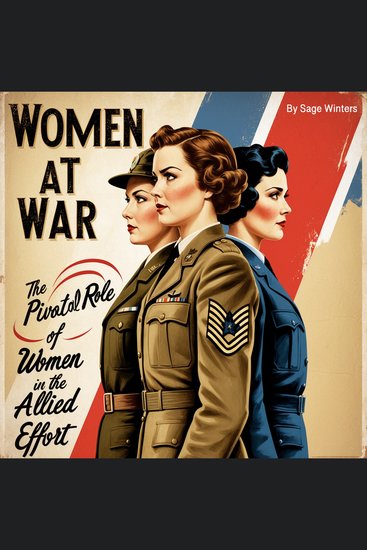
    Before the outbreak of World War II, women’s roles in society were primarily defined by traditional expectations of domesticity and support. The early 20th century saw most women confined to the home, tasked with caring for children, managing households, and supporting their husbands. While some women worked outside the home, their opportunities were limited to roles deemed suitable for their gender, such as teaching, nursing, and clerical work. A societal emphasis on strict gender roles reinforced the idea that women’s contributions were secondary to those of men.  
      
    Despite these restrictions, change was already stirring in many parts of the world. The suffrage movement had gained momentum in the late 19th and early 20th centuries, granting women the right to vote in some countries. This political shift signaled the beginning of a broader movement toward gender equality. Women’s participation in the workforce during World War I also laid important groundwork, as millions stepped into roles vacated by men who had gone to fight. Although many women were forced to relinquish these jobs after the war, the experience proved their capability and fueled the belief that women could contribute beyond the domestic sphere.  
      
    However, the interwar period brought mixed progress. The economic hardships of the Great Depression in the 1930s reinforced traditional values in some regions, with governments and employers often prioritizing men for scarce jobs. At the same time, women’s organizations continued to advocate for expanded rights, education, and opportunities. The period also saw significant cultural shifts, with women entering public life in new ways. The flapper era of the 1920s, for instance, challenged societal norms by embracing independence, freedom of expression, and modernity. 
    Ver libro
  • Cristero War - The Rebellion against the Mexican Government's Anti-Catholic Laws - cover

    Cristero War - The Rebellion...

    Kelly Mass

    • 0
    • 0
    • 0
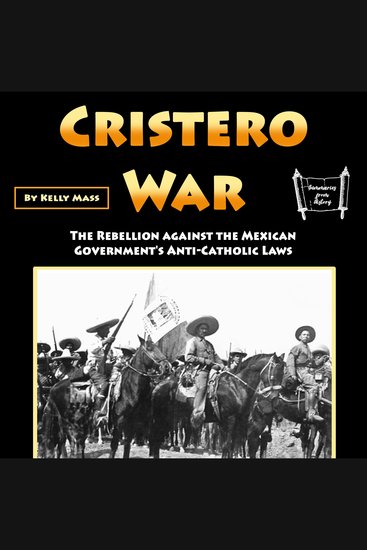
    The Cristero War, also known as the Cristero Rebellion or La Cristiada [la kistjaa], was a widespread and deeply significant conflict that unfolded in central and western Mexico during the late 1920s. It was primarily driven by a violent response to the secularist and anti-clerical provisions of the 1917 Mexican Constitution, which sought to curtail the influence of the Catholic Church over the country's political and social life. The Constitution introduced sweeping reforms, including the restriction of church property rights and the severe limitations placed on the clergy’s ability to engage in public life. 
    This growing tension reached a boiling point when President Plutarco Elías Calles, who came into power in 1924, took decisive action to enforce these secular provisions. In 1926, Calles issued an executive order to aggressively implement Article 130 of the 1917 Constitution, known as the Calles Law. This law effectively outlawed many aspects of Catholicism in Mexico, including the practice of the religion in public spaces, the establishment of religious orders, and the public involvement of the clergy in education and politics. Calles' aim was to reduce the power of the Catholic Church, which had long been one of the most influential institutions in Mexican society, and to curb what he perceived as an obstacle to modernization and national unity.
    Ver libro
  • SMALL TALK - Relationship building and the art of persuasion How to Confide in People Calm Your Nerves and Boost Your Charm (2022 Guide for Beginners) - cover

    SMALL TALK - Relationship...

    Christopher Cannon

    • 0
    • 0
    • 0
    How do you approach initiating a conversation? 
    With an engaging subject, do the words come quickly and naturally? 
    Or do you stumble and stammer, increasing your anxiety? 
      
    Communication is critical in human beings. Communication is what distinguishes us, from our oldest ancestors, who initially employed sign language before having the capacity to construct languages, to the contemporary day, with all of its social etiquette and conventions.  
      
    It is also necessary for developing trust, relationships, obtaining what we want and need, and just having fun. 
      
    Small Talk is a book that will help you develop your conversational skills by providing tips on: 
     The fundamental guidelines for small chatHow to Improve Your Social SkillsBegin a discussionMaking contact with someoneIncreasing your self-assuranceSix steps to making your dream a reality 
    And much more... 
      
    The ability to strike up a conversation with someone in a social context, at business, or in public is a valuable talent that we should all aim towards. You can accomplish it in less time than you think using Small Talk. 
      
    Scroll up and click Add to Cart to get your copy right now!
    Ver libro
  • Frédéric Chopin: A short biography - 5 Minutes: Short on time - long on info! - cover

    Frédéric Chopin: A short...

    5 Minutes, 5 Minute Biographies,...

    • 0
    • 0
    • 0
    Frédéric Chopin, composer and pianist: Life and works in a short biography! Everything you need to know, brief and concise. Infotainment, education and entertainment at its best!
    Ver libro
  • Beyond the Odds - Understanding and Managing Perceived Risks - cover

    Beyond the Odds - Understanding...

    Ahmed Elidrisy

    • 0
    • 0
    • 0
    "Beyond the Odds" offers a nuanced exploration of risk perception and management, challenging conventional wisdom and providing fresh insights into how individuals and organizations perceive, assess, and respond to risks. 
    Drawing on interdisciplinary research and real-world examples, this book examines the cognitive biases and psychological factors that influence risk perception, shedding light on why people often overestimate or underestimate risks. 
    Through practical frameworks a n d case studies, readers gain a deeper understanding of how to effectively manage risks, navigate uncertainty, and make informed decisions in various domains, from finance and business to health and environmental policy. 
    Whether you're a risk manager, decision-maker, or concerned citizen, "Beyond the Odds" equips you with the knowledge and tools to navigate the complexities of risk in an uncertain world.
    Ver libro
  • The Byzantine Empire - Eastern Legacy - cover

    The Byzantine Empire - Eastern...

    Harris Ropes

    • 0
    • 0
    • 0
    The origins of the Byzantine Empire are deeply rooted in the legacy of the Roman Empire. As the Roman Empire grew increasingly difficult to manage due to its vast size, Emperor Diocletian initiated a division in the late 3rd century CE, separating the empire into Eastern and Western regions. This decision, though initially administrative, laid the groundwork for what would become two distinct political and cultural entities. While the Western Roman Empire succumbed to barbarian invasions and internal instability, the Eastern Roman Empire endured, evolving into what we now recognize as the Byzantine Empire. 
    One of the most pivotal moments in the birth of Byzantium came in 330 CE, when Emperor Constantine the Great established a new capital on the site of the ancient city of Byzantium. Renamed Constantinople, meaning "City of Constantine," it was strategically located on the Bosporus Strait, bridging Europe and Asia. This location was not only advantageous for trade but also easier to defend from invasions. Constantinople quickly rose to prominence as a center of politics, culture, and commerce, outshining Rome itself in influence and prestige. The city’s grandeur, with its towering walls and monumental architecture, symbolized the strength and ambition of the new Eastern Empire. 
    The early years of the Byzantine Empire were marked by both challenges and triumphs. While the Western Roman Empire fell in 476 CE, the Eastern Empire continued to thrive, preserving Roman laws, administrative systems, and military traditions. However, the Byzantines were not merely Roman in continuation—they adapted and transformed their identity over time. Greek became the dominant language, replacing Latin in most official and cultural contexts, and Orthodox Christianity emerged as a defining feature of Byzantine life.
    Ver libro