Junte-se a nós em uma viagem ao mundo dos livros!
Adicionar este livro à prateleira
Grey
Deixe um novo comentário Default profile 50px
Grey
Assine para ler o livro completo ou leia as primeiras páginas de graça!
All characters reduced
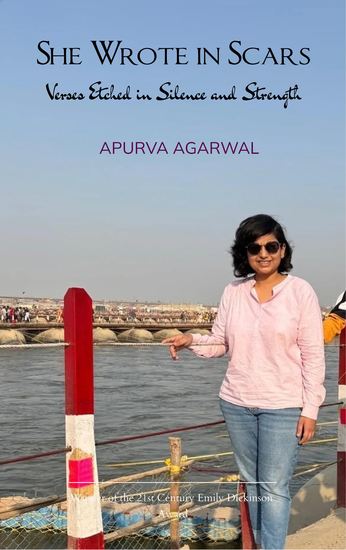
She Wrote In Scars - Verses Etched in Silence and Strength - cover
LER

She Wrote In Scars - Verses Etched in Silence and Strength

Apurva Agarwal

Editora: Libresco Feeds Pvt Ltd

  • 0
  • 0
  • 0

Sinopse

She Wrote in Scars: Verses Etched in Silence and Strength offers a glimpse into the quiet places where pain and resilience have met without words. These verses weren’t rushed—they were born from raw moments, deep reflection, and slow healing. Crafted from silence and emotion, they hold fragments of the human experience. Through each poem, the writer hoped readers would find echoes of their own journeys—the broken, the brave, and everything in between. This collection stands as a gentle reminder: scars have been carried, strength has been found, and silence has been honored as the space where true stories have lived.
Disponível desde: 20/02/2025.
Comprimento de impressão: 41 páginas.

Outros livros que poderiam interessá-lo

  • Verse - cover

    Verse

    Alexander Herron

    • 0
    • 0
    • 0
    Vaulted recordings, & monologues.
    Ver livro
  • King of Scotland - cover

    King of Scotland

    Iain Heggie

    • 0
    • 0
    • 0
    King of Scotland is an award-winning, dark comedy and a free adaptation of Gogol's A Diary of a Madman. 
    Long-term unemployed Tommy McMillan joins a government-funded retraining scheme, "Up the Ladder". Cited as a shining example of the government's employment policies and chosen for a media profile, Tommy is taken on by the Department of Upward Mobility. The department gets more than they bargained for; however, when they discover just how far up the ladder Tommy is expecting to go. 
    Featuring trouserless bankers, talking dogs, flying taxis, and a razor-sharp parody of the workings of politics, King of Scotland is an outrageous Fringe First-winning monologue. 
    About the author: Award-winning playwright Iain Heggie is one of Scotland's leading playwrights. His plays include the Mobil prize-winning play A Wholly Healthy Glasgow (1988) and the John Whiting Award-winning play American Bagpipes (1989). His other plays include An Experienced Woman Gives Advice, Don Juan, Love Freaks, and Wiping My Mother's Arse.
    Ver livro
  • The Tragedy of Timon of Athens - cover

    The Tragedy of Timon of Athens

    William Shakespeare

    • 0
    • 0
    • 0
    The Tragedy of Timon of Athens (The Life of Tymon of Athens) is a play by William Shakespeare, probably written in collaboration with Thomas Middleton in about 1605–1606, which was published in the First Folio in 1623. It is about the fortunes of an Athenian named Timon. The central character is a beloved citizen of Athens who through tremendous generosity spends his entire fortune on corrupt hangers-on only interested in getting the next payout.
    The earliest-known production of the play was in 1674, when Thomas Shadwell wrote an adaptation under the title The History of Timon of Athens, The Man-hater. Multiple other adaptations followed over the next century, by writers such as Thomas Hull, James Love and Richard Cumberland. The straight Shakespearean text was performed at Smock Alley in Dublin in 1761, but adaptations continued to dominate the stage until well into the 20th century.
    ... Flavius arrives. He wants the money as well, but he also wants Timon to come back into society. Timon acknowledges that he has had one true friend in Flavius, a shining example of an otherwise diseased and impure race, but laments that this man is a mere servant. He invites the last envoys from Athens, who hoped Timon might placate Alcibiades, to go hang themselves, and then dies in the wilderness. Alcibiades, marching on Athens, then throws down his glove, and ends the play reading the bitter epitaph Timon wrote for himself, part of which was composed by Callimachus:
    "Here lies a wretched corpse of wretched soul bereft:
    Seek not my name: a plague consume you wicked caitiffs left!"
    Here lie I, Timon, who alive, all living men did hate,
    Pass by, and curse thy fill, but pass and stay not here thy gait...
    Among the most significant works William Shakespeare: Hamlet, Othello, King Lear, Macbeth, Orpheus, Romeo and Juliet, Julius Caesar, Troilus and Cressida, The Tempest, Venus and Adonis, Antony and Cleopatra, Measure for Measure, The Winter's Tale and many more.
    Ver livro
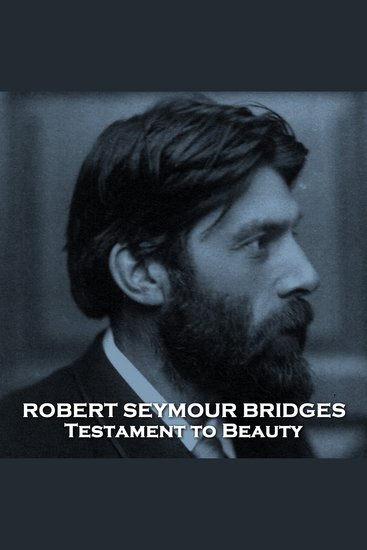
  • Testament to Beauty - A former Poet Laureate demonstrates his poetic talents in this tender and beautiful verse - cover

    Testament to Beauty - A former...

    Robert Seymour Bridges

    • 0
    • 0
    • 0
    Robert Seymour Bridges, OM was born on 23rd October 1844 at Walmer in Kent where he spent his early childhood in a house overlooking the anchoring ground of the British fleet.  
    His father died aged only 47 in 1853. A year later his mother remarried and the family relocated to Rochdale, where his stepfather was the vicar.  
    In 1854 Bridges was sent to Eton College and attended until 1863.  After Eton he went to Corpus Christi College at Oxford. There he became good friends with Gerard Manley Hopkins and would later compile an edition of his poems that is now considered a major contribution to English literature. 
    He graduated from Oxford, in 1867, with a second-class degree in literae humaniores.  Initially he planned to join the Church of England and travelled to the Middle East to broaden his religious horizons.  However, he soon decided that life as a physician would be a better path and, after 8 months studying German (that being the language of many scientific papers at the time) he began his study of medicine at St. Bartholomew's Hospital in 1869.  His long-term ambition was that by the age of forty he could retire from medicine to devote himself to writing. 
    Unfortunately Bridges failed his final medical examinations in 1873 and, as unable to immediately retake the papers, spent six months in Italy learning Italian as well as immersing himself in its art. In July 1874 he went to Dublin to continue his medical studies. Re-examined in December he passed and became a house physician at St Bartholomew's Hospital. It was whilst here that he engaged in a series of highly critical remarks about the Victorian medical establishment. One such was his claim that whilst working as a young doctor he saw a staggering 30,940 patients in one year. 
    A bout of severe pneumonia and lung disease forced his retirement from the medical profession in 1882 and so, slightly ahead of schedule, he began his literary career in earnest.  He already been writing for several years and had published his first poetry collection in 1873.  
    After his illness and a trip to Italy, Bridges moved, with his mother, to Yattendon in Berkshire.  It was during this time, from 1882 to 1904, that Bridges wrote most of his best-known lyrics as well as eight plays and two masques, all in verse.  
    It was also here, in 1884, that he married Monica Waterhouse. They would go on to have three children and spend the rest of their lives in rural seclusion, in an idyllic marriage, first at Yattendon, then at Boars Hill, Oxford. 
    Bridges made an important contribution to hymnody with the publication in 1899 of his Yattendon Hymnal. This collection of hymns became a bridge between the Victorian hymnody of the late 19th century and the modern hymnody of the early 20th century. He was also a chorister at Yattendon church for 18 years. 
    In 1902 Monica and his daughter Margaret became seriously ill with tuberculosis, and a move from Yattendon to a healthier climate was in order. After several temporary homes they moved abroad to spend a year in Switzerland before returning to settle again in England at Chilswell House, which Bridges had designed, and built on Boar's Hill overlooking Oxford University.   
    His greatest achievement though was still some years ahead of him.  The office of Poet Laureate was held by Alfred Austin but with his death it was offered first to Rudyard Kipling, who refused it, and then to Bridges. He was appointed Poet Laureate in 1913 by George V, the only medical graduate to have ever held the office. Bridges, at this time, was neither highly regarded nor well known but a safe pair of hands in a World rapidly being overshadowed by the storms about to erupt over Europe and the First World War. 
    The events of this War, including the wounding of his son, Edward, had a sobering effect on Bridges' poetry. His work became fiercely patriotic. In 1915 edited a volume of prose and poetry, The Spirit of Man, intended to appeal to readers living in war time
    Ver livro

  • The Iliad - cover

    The Iliad

    Homer

    • 0
    • 0
    • 0
    Immerse yourself in the epic grandeur of The Iliad by Homer, one of the greatest masterpieces of ancient literature. This timeless epic poem transports listeners to the heart of the Trojan War, where gods and mortals clash in a dramatic tale of heroism, honor, and fate. 
    Follow the legendary warrior Achilles as his wrath shapes the course of the war, leading to fierce battles, tragic losses, and unforgettable acts of bravery. Witness the struggles of iconic figures like Hector, Agamemnon, and Odysseus, as their destinies intertwine amidst the chaos of war and the will of the gods. 
    Expertly narrated to capture the rhythm and intensity of Homer’s original verse, this audiobook brings to life the grandeur of ancient Greece, filled with vivid imagery, powerful emotions, and timeless themes of pride, loyalty, and the human condition. 
    Start listening to The Iliad today and experience the epic saga that has inspired generations for over 2,000 years!
    Ver livro
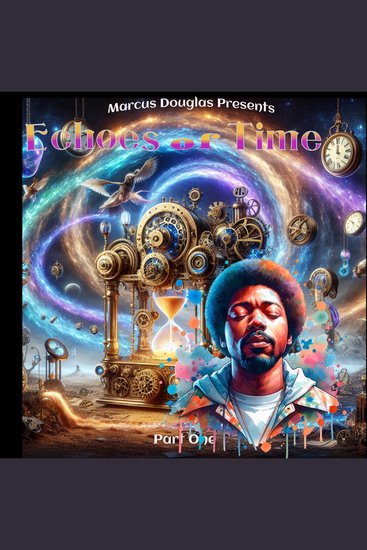
  • Marcus Douglas Presents Echoes of Time Part One - cover

    Marcus Douglas Presents Echoes...

    Marcus Douglas

    • 0
    • 0
    • 0
    Echoes of Time Part One 
    In this riveting tale of spiritual suspense, readers are introduced to Frederick Sutton, a security supervisor at a technology plant who seemingly has it all. His marriage is on the rocks, but he’s confident he can fix things between them. Meanwhile, his two cousins, Curtis and Bruce, have both hit rock bottom in their lives. Curtis is a former drug dealer with a criminal record who’s about to be sent back to prison for the third time, while Bruce is a former football star whose career was cut short by injury. 
      
    One day, everything changes when Fred’s life takes a dramatic turn for the worse. His wife wants a divorce and full custody of their child after discovering that he slept his way up the corporate ladder. As Fred tries to pick up the pieces of his life, he comes face to face with a future version of himself who hands him a time-traveling device called the Paradox Tempus. His cousins Curtis and Bruce, who know all too well the life of crime, join him in using the device to go back in time to change their lives. 
      
    This story explores themes of predestination, time travel, déjà vu, visions, prophesying, and the butterfly effect. Through the eyes of Frederick Sutton and his cousins Curtis and Bruce, readers will be captivated by the twists and turns of this thrilling tale. Will they be able to change their lives for the better using the Paradox Tempus, or will they fall victim to their past mistakes? Find out in this heart-pounding adventure full of suspense and surprises. 
     
    Ver livro