¡Acompáñanos a viajar por el mundo de los libros!
Añadir este libro a la estantería
Grey
Escribe un nuevo comentario Default profile 50px
Grey
Suscríbete para leer el libro completo o lee las primeras páginas gratis.
All characters reduced
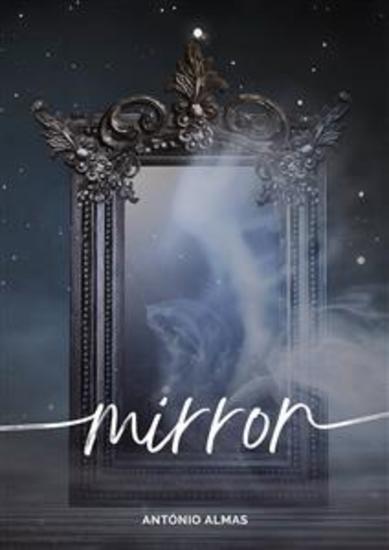
Mirror - cover

Mirror

Antonio Almas

Editorial: Babelcube

  • 0
  • 0
  • 0

Sinopsis

I no longer know how I found you, whether it was during a walk by the sea, or if it was you who wandered the plains seeking the cool shade of my body. I know that a lifetime has passed, that we have been almost everything, although we continue to be almost nothing. Friendship, love, and longing are part of our essence. I have already held your hand, listened to you attentively, idolized you as a goddess, and even dared to kiss your lips. 


We are like the sea, I the wave that comes and goes, you the mermaid who hides in the deep refuge of solitude and appears on the bow of my ship from time to time. 


This silence that happens after the thunder is pure meditation, an act of contrition that leads us to balance the euphoria with the calm of being just people, as ordinary as everyone else, almost as complex as many. 


And here I am, after so many years, once again a tsunami, rising above the broken waves of the sea to bring you to the surface and to kiss your lips once more.
Disponible desde: 11/10/2024.
Longitud de impresión: 60 páginas.

Otros libros que te pueden interesar

  • Camano Island's Heartbeat - The Story About Love Escaping Despair - cover

    Camano Island's Heartbeat - The...

    Short Story Press, Michael Knighton

    • 0
    • 0
    • 0
    In this story, you will experience a wide range of emotions while applying to the consistent theme of maintaining a positive outlook even in times of negativity and disarray. The story takes the reader and main character through a story that exemplifies: 
    ● The relatable occurrence of sadness that all beings have experienced 
    ● The importance of keeping a positive outlook in order to pull yourself out of the depths of sadness 
    ● The implication to not cling or hold on to the past and look towards the future 
    ● The ideology that serving and giving yourself brings happiness 
    ● The power of a relationship and bond between animal and man 
    ● The heavy weight of expectations that comes from friends and family that can keep people from following their dreams 
    ● Beautifies family relationships and the need for understanding as a person who is an introvert and desires to be alone 
    ● The ideology that action is important, and to take action immediately 
    ● The Buddhist ideology of having the option to be running from darkness to brightness or from darkness to more darkness - you decide. 
    ● The concept that all things rise, stay for some time, then pass away indicating there is no need to hate something viewed as negative or even love and attach oneself to something positive 
    ● A story that shows there is happiness where you look for it, and sadness if you desire it. 
    All the ideas portrayed in the story of Peter are to help the world today find the most out of the life they live. To realize they can give themselves if they feel that they don’t have enough and there is someone who needs it more than you know. It indicates to not wallow in sadness, even if it is all you have. It shows to take action and do good as this will be the best thing to heal you from your darkness. Stay bright! 
    HowExpert publishes quick 'how to' guides on all topics from A to Z by everyday experts.
    Ver libro
  • Phantompains - cover

    Phantompains

    Therese Estacion

    • 0
    • 0
    • 0
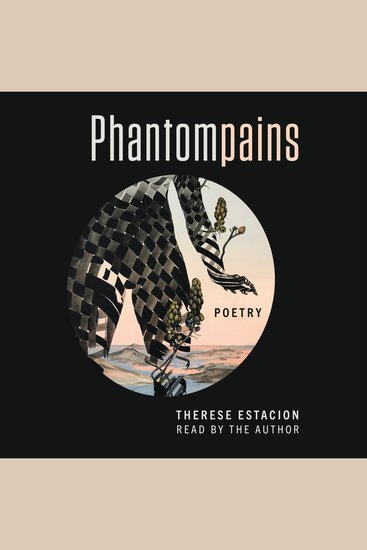
    Therese Estacion survived a rare infection that nearly killed her, but not without losing both her legs below the knees, several fingers, and reproductive organs. Phantompains is a visceral, imaginative collection exploring disability, grief and life by interweaving stark memories with dreamlike surrealism.
    Taking inspiration from Filipino horror and folk tales, Estacion incorporates some Visayan language into her work, telling stories of mermen, gnomes, and ogres that haunt childhood stories of the Philippines and, then, imaginings in her hospital room, where she spent months recovering after her operations.
    Estacion says she wrote these poems out of necessity: an essential task to deal with the trauma of hospitalization and what followed. Now, they are demonstrations of the power of our imaginations to provide catharsis, preserve memory, rebel and even to find self-love.
    Ver libro
  • Later Poems - cover

    Later Poems

    Julia Caroline Dorr

    • 0
    • 0
    • 0
    This is the last volume in Julia Caroline Dorr's collected poems, the Later Poems.  - Summary by Carolin
    Ver libro
  • His Last Bow: Some Reminiscences of Sherlock Holmes (version 2 Dramatic Reading) - cover

    His Last Bow: Some Reminiscences...

    Sir Arthur Conan Doyle

    • 0
    • 0
    • 0
    The last collection of Sherlock Holmes short stories contains some of the most dramatic moments of the entire Sherlock Holmes canon. "The Dying Detective" sees the great Holmes brought low by a fatal illness and refusing even Dr Watson's medical care. "The Bruce-Partington Plans" is a case of national importance, not least for the introduction of Mycroft Holmes. It also contains the quintessential Holmes line "whatever remains, however improbable, must be the truth.""The Devil's Foot" is what happens when the great sleuth and his doctor attempt to go on a restful holiday. "His Last Bow" is the last ever Sherlock Holmes story, about his war service and undercover spy experiences. These and other classic Holmes and Watson stories are here brought to life by a dramatic cast of voices, so sit back and let the mysteries unfold! (Summary by Beth Thomas) Dr. John Watson (Narrator), read by Cori Samuel 
    Sherlock Holmes, read by Beth Thomas 
    Inspector Lestrade, read by Natalie Paula 
    Additional Narration: Shakira Searle 
    Other featured voices: azureblue, James Callaghan, ablestonebridge, Norman Elfer, Brian Mansi, Teresa Bauman, Frances Brown, K. Cotter, MaryAnn, Arnaldo Machado, Levi Throckmorton, Etel Buss, Eden Rea-Hedrick, ToddHW, Rapunzelina, Jeanie, David Olson, Adam, TriciaG, Julia Niedermaier, P. J. Morgan 
     
    Audio edited by: Adele de PignerollesAdditional editing by: Piotr Nater
    Ver libro
  • The Visionary - cover

    The Visionary

    Emily Brontë

    • 0
    • 0
    • 0
    LibriVox volunteers bring you 18 recordings of "The Visionary" by Ellis Bell (Emily Brontë). This was the weekly poem for January 1, 2012. 
     
    The first 12 lines originally appeared in one of a large group of Gondal poems, the word coming from the name of a fictitious island kingdom in a fantasy created by Emily and her sister Anne. When Emily finally consented to have some of her poems published in 1846, along with those of sisters Charlotte and Anne, she selected parts of the Gondal poems and removed all reference to the fantasy land. However, this poem first appeared in a new, expanded edition of the sisters' poetry (in 1850, after both Emily and Anne had died) and was apparently derived as follows: 
     
    "The Visionary (October 9, 1845)This poem is part of the same Gondal poem from which Emily carved "The Prisoner. A Fragment." Charlotte Brontë took lines 1-12 of Emily's original poem, "Julian M. and A.G Rochelle," and added 8 lines of her own. Thus, the positive ending in which the watcher has a spiritual experience is Charlotte's and the watcher may be seen as Emily rather than a Gondal character. In Charlotte's version, it is hard to explain the guiding light in the window of stanze 2."(Source) 
     
    This account is fully supported by other sources. So the poem, as it was published in 1850, is a combination of work by Emily and Charlotte. Charlotte is accused by critics of using a heavy hand in editing some of Emily's formerly unpublished poems for the 1850 volume. (Introduction by Leonard Wilson)
    Ver libro
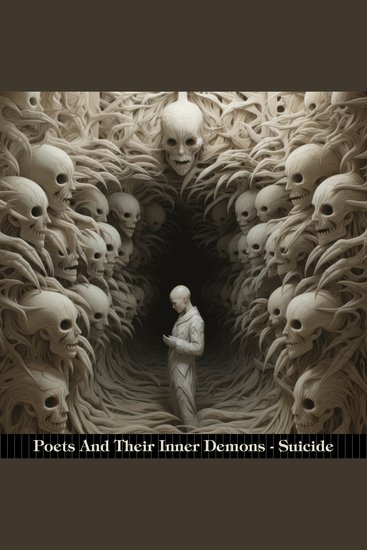
  • Poets & Their Inner Demons – Suicide - Poems by poets all linked by suffering similar issues - cover

    Poets & Their Inner Demons –...

    John Gould Fletcher, Marina...

    • 0
    • 0
    • 0
    The stereotypical image of a poet is one of unknown talent starving in a garret and who’s faithfulness and legacy to the art is discovered only after their death. 
    In some cases this is undoubtedly true, but Poets being human and with the same building blocks of physical and mental health as the rest of us, also had the same afflictions and problems as the rest of us.   
    The long roll call of names and the truncated legacies that were left behind is filled with these lost talents. 
    In this volume the despair at life in general and their art in particular ruins lives in a few short moments.  Do their poems reflect this upcoming tragedy or at a particular point are they simply overwhelmed by what they see as a hopeless situation.   
    The long roll call and the truncated legacies that were left behind is filled with the names of these lost talents.
    Ver libro