Junte-se a nós em uma viagem ao mundo dos livros!
Adicionar este livro à prateleira
Grey
Deixe um novo comentário Default profile 50px
Grey
Assine para ler o livro completo ou leia as primeiras páginas de graça!
All characters reduced
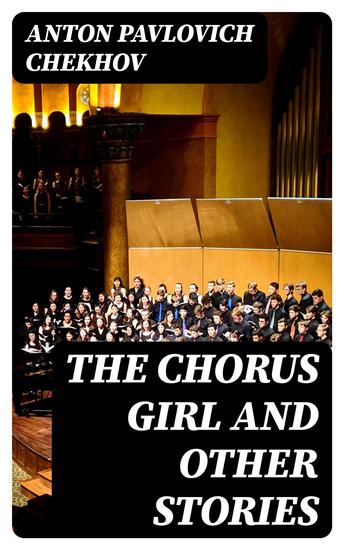
The Chorus Girl and Other Stories - cover
LER

The Chorus Girl and Other Stories

Anton Pavlovich Chekhov

Tradutor Constance Garnett

Editora: DigiCat

  • 0
  • 0
  • 0

Sinopse

In "The Chorus Girl and Other Stories," Anton Pavlovich Chekhov masterfully encapsulates the essence of human experience through a collection of poignant narratives that traverse the complexities of love, aspiration, and societal constraints. Chekhov's hallmark literary style, characterized by its subtle humor and psychological depth, invites readers into the intimate lives of his characters, where happiness often collides with disappointment. Within the context of late 19th-century Russia, these stories reflect the burgeoning realism that emerged as a reaction against romanticism, exposing the stark, sometimes brutal truths of everyday life. Chekhov, a physician by training and a prolific writer, utilized his keen observations of human behavior and emotional nuance to craft these tales. His background in medicine enabled him to delve deeply into the psyche of his characters, revealing the intricate interplay between individual desires and societal expectations. Inspired by his own experiences in a rapidly changing Russia, Chekhov's work often critiques social norms while illuminating the plight of the marginalized, making his stories timeless in their relevance and resonance. Readers seeking an exploration of the human condition will find "The Chorus Girl and Other Stories" a compelling addition to their literary repertoire. Chekhov's insightful prose not only provides a window into the lives of his characters but also encourages reflection on the universal themes that continue to define our existence, transcending the boundaries of time and culture.
Disponível desde: 16/09/2022.
Comprimento de impressão: 175 páginas.

Outros livros que poderiam interessá-lo

  • Carmilla - cover

    Carmilla

    Sheridan Le Fanu

    • 0
    • 0
    • 0
    A Gothic Horror of the Vampire, predating Dracula by some 26 years. Carmilla is a tale of creeping horror, narrated by a young girl, who finds herself beset by a mysterious illness, that her newfound and mysterious friend, Carmilla surely can't have anything to do with... Considered one of the founding works within the Vampire genre, its influence can be found throughout popular horror fiction and other media. 
    Written by Sheridan Le Fanu and narrated by Michael Ward.
    Ver livro
  • The Garden Party - cover

    The Garden Party

    Katherine Mansfield

    • 0
    • 0
    • 0
    The Garden Party is a 1922 short story by Katherine Mansfield. It was first published (as "The Garden-Party") in three parts in the Saturday Westminster Gazette on 4 and 11 February 1922, and the Weekly Westminster Gazette on 18 February 1922. It later appeared in The Garden Party: and Other Stories. Its luxurious setting is based on Mansfield's childhood home at 133 Tinakori Road (originally numbered 75), the second of three houses in Thorndon, Wellington that her family lived in.
    The wealthy Sheridan family prepares to host a garden party. Laura is charged with instructing the workers on the placement of the marquee. Her haughty air quickly disintegrates into an intimidating admiration for the workingmen, with whom she feels a personal connection.
    Ver livro
  • Notes From the Underground - The Exclusive Edition With the Original Translation To Immerse Yourself in the Torments of the Underground Man - cover

    Notes From the Underground - The...

    Fyodor Dostoevsky

    • 0
    • 0
    • 0
    Notes from Underground" by Fyodor Dostoevsky is a profound psychological and philosophical novel that explores the depths of human consciousness and self-destruction. Written in the form of a confessional monologue, the novel follows an unnamed narrator, a bitter and isolated former civil servant, as he reflects on his own contradictions, resentments, and the absurdities of existence. 
    Divided into two parts, the book first presents the narrator’s philosophical musings, filled with self-loathing, defiance, and reflections on free will, rationality, and human nature. The second part recounts episodes from his past, including humiliating encounters with former acquaintances and a tragic interaction with a young woman, exposing his inability to connect with others and his deep existential anguish. 
    Considered one of the first existentialist novels, Notes from Underground challenges notions of logic, morality, and individual freedom, offering a raw and unsettling insight into the complexities of the human mind.
    Ver livro
  • Clairvoyance - From their pens to your ears genius in every story - cover

    Clairvoyance - From their pens...

    D K Broster

    • 0
    • 0
    • 0
    Dorothy Kathleen Broster was born on 2nd September 1877 at Devon Lodge in Grassendale Park, Garston, Liverpool. 
    At 16, the family moved to Cheltenham, where she attended Cheltenham Ladies' College and then on to St Hilda’s College, Oxford to read history, where she was one of the first female students, although at this time women were not awarded degrees. 
    Broster served as secretary to Charles Harding Firth, a Professor of History for several years, and collaborated on several of his works. Her first two novels were co-written with a college friend, Gertrude Winifred Taylor. 
    With the Great War interrupting her literary ambitions she served as a Red Cross nurse at a Franco-American hospital, but returned to England with a knee infection in 1916.  
    After the war, she moved near to Battle in East Sussex and took up writing full-time.  
    In 1920 she at last received her Bachelor of Arts and Master of Arts from Oxford. 
    Her novels, mainly historical fiction, peaked in popularity with ‘The Flight of the Heron’, in 1925, a best-seller followed up by two sequels. 
    As well as poetry and various articles she also wrote several short stories, the best known of which is a classic of weird fiction ‘The Couching at the Door’ in which an artist appears to be haunted by a mysterious entity. 
    An intensely private individual many readers deduced from her name that she was both a man and Scottish. 
    D K Broster died in Bexhill Hospital on 7th February 1950.  She was 73.
    Ver livro
  • History of the Philippines A (Unabridged) - cover

    History of the Philippines A...

    David P. Barrows

    • 0
    • 0
    • 0
    A History of the Philippines is a short, dense and temporally expansive book. It starts with the Evolution of the Land 100 million years ago. The writing is predominantly dry, dispassionate and academic. It's full of details, and often presumes an existing familiarity with Philippine history and culture, introducing terms with no definition provided.
    Ver livro
  • A Christmas Tree - cover

    A Christmas Tree

    Charles Dickens

    • 0
    • 0
    • 0
    Charles John Huffam Dickens (7 February 1812 – 9 June 1870) was an English writer and social critic. He created some of the world's best-known fictional characters and is regarded as the greatest novelist of the Victorian era. His works enjoyed unprecedented popularity during his lifetime, and by the twentieth century critics and scholars had recognised him as a literary genius. His novels and short stories enjoy lasting popularity.
    I have been looking on, this evening, at a merry company of children assembled round that pretty German toy, a Christmas Tree. The tree was planted in the middle of a great round table, and towered high above their heads. It was brilliantly lighted by a multitude of little tapers; and everywhere sparkled and glittered with bright objects. There were rosy–cheeked dolls, hiding behind the green leaves; and there were real watches (with movable hands, at least, and an endless capacity of being wound up) dangling from innumerable twigs; there were French–polished tables, chairs, bedsteads, wardrobes, eight–day clocks, and various other articles of domestic furniture (wonderfully made, in tin, at Wolverhampton), perched among the boughs, as if in preparation for some fairy housekeeping; there were jolly, broad–faced little men, much more agreeable in appearance than many real men—and no wonder, for their heads took off, and showed them to be full of sugar–plums; there were fiddles and drums; there were tambourines, books, work–boxes, paint–boxes, sweetmeat–boxes, peep–show boxes, and all kinds of boxes; there were trinkets for the elder girls, far brighter than any grown–up gold and jewels; there were baskets and pincushions in all devices; there were guns, swords, and banners; there were witches standing in enchanted rings of pasteboard, to tell fortunes; there were teetotums, humming–tops, needle–cases, pen–wipers, smelling–bottles, conversation–cards, bouquet–holders; real fruit, made artificially dazzling with gold leaf; imitation apples, pears, and walnuts, crammed with surprises; in short, as a pretty child, before me, delightedly whispered to another pretty child, her bosom friend, “There was everything, and more.”
    Ver livro