¡Acompáñanos a viajar por el mundo de los libros!
Añadir este libro a la estantería
Grey
Escribe un nuevo comentario Default profile 50px
Grey
Suscríbete para leer el libro completo o lee las primeras páginas gratis.
All characters reduced
Three Sisters - cover

Three Sisters

Anton Chekhov

Editorial: CLXBX

  • 0
  • 0
  • 0

Sinopsis

Three Sisters by Anton Chekhov is a poignant and deeply reflective masterpiece of modern drama that explores longing, resilience, and the quiet ache of unrealized dreams. First performed in 1901, this timeless play captures the emotional lives of individuals caught between aspiration and reality, illuminating the universal desire for purpose, love, and a better future.

The story centers on the Prozorov sisters—Olga, Masha, and Irina—intelligent and sensitive women living in a provincial town after the death of their father. Raised in Moscow and filled with memories of a richer cultural life, they yearn to return to the city that symbolizes hope, fulfillment, and possibility. "To Moscow!" becomes their recurring refrain, a dream that sustains them even as circumstances conspire to keep them where they are.

Surrounding the sisters is a circle of soldiers, family members, and acquaintances, each grappling with personal dissatisfaction and unspoken desires. Marriages strain under disappointment, love emerges in unexpected places, and ambitions fade beneath the weight of routine. Chekhov masterfully portrays these intersecting lives with subtlety and compassion, revealing how people endure emotional turmoil while maintaining outward composure.

Rather than relying on dramatic spectacle, Three Sisters unfolds through nuanced dialogue and everyday interactions. Chekhov's brilliance lies in his attention to the ordinary moments that define existence—the conversations at the dinner table, the passing of seasons, the slow erosion of hope. Beneath the surface calm, powerful currents of longing and regret flow steadily, shaping the characters' inner worlds.

The play reflects Chekhov's deep understanding of human psychology and his belief that life's most profound struggles often occur quietly. Themes of time, change, work, love, and perseverance resonate throughout the narrative. As years pass and dreams remain unfulfilled, the sisters confront the reality that happiness may not lie in distant places but in the strength to endure and find meaning despite disappointment.

Both tender and bittersweet, Three Sisters stands as one of Chekhov's greatest achievements. Its emotional honesty, rich characterization, and understated depth have influenced generations of playwrights and continue to move audiences around the world. Through its exploration of hope and hardship, the play offers a timeless meditation on the human capacity to dream—even in the face of life's inevitable compromises.
Disponible desde: 27/02/2026.
Longitud de impresión: 75 páginas.
Otros libros que te pueden interesar

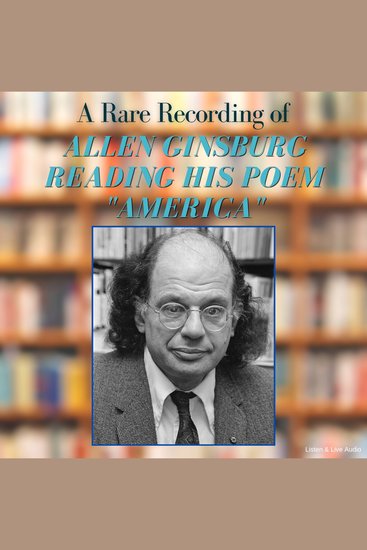
  • A Rare Recording of Allen Ginsberg Reading His Poem "America" - cover

    A Rare Recording of Allen...

    Allen Ginsberg

    • 0
    • 0
    • 0
    Irwin Allen Ginsberg (June 3, 1926 - April 5, 1997), born in Newark NJ, was an American poet and writer. As a student at Columbia University in the 1940s, he began friendships with Lucien Carr, William S. Burroughs and Jack Kerouac, forming the core of the Beat Generation. He vigorously opposed militarism, economic materialism, and sexual repression, and he embodied various aspects of this counterculture with his views on drugs, sex, multiculturalism, and hostility to bureaucracy. "America" is a poem by Ginsberg written in 1956. 
    Ver libro
  • The Top 10 Poets – Cambridge University - Five poems each from the best poets to attend Cambridge university - cover

    The Top 10 Poets – Cambridge...

    John Milton, Edmund Spenser,...

    • 0
    • 0
    • 0
    The language of Poetry is an art that most of us attempt at some point in our lives.  Although its commonplace exposure has been somewhat marginalised in today’s often fast-paced lives we all recognise good verse that can empathise with our thoughts or open us up to experience new things in new ways, to better understand and to enjoy the many strands of our lives. 
    But finding a starting point can be overwhelming, even off-putting, so in this series we offer up our Top 10 classic poets, who brim with talent and verse, on a range of subjects and themes that we can all enjoy. 
    The dreaming spires of Cambridge may be one of the great educational establishments of the Centuries.  But it is also a place where the Nation’s young learn much more.  Within its walls, courtyards and cloisters these 10 Poets mused and illuminated on the beauty of poetry with eager yet tender words.
    Ver libro
  • The Queen of Sorrow - cover

    The Queen of Sorrow

    Rachel Lawson

    • 0
    • 0
    • 0
    Sorrow 
    Astra Queen of Vampires was born of the union of two monsters a mad killer for a mother and a evil sorcerer for a father he mother was under a spell until she was born so sad was her mother by her marriage to the hated enemy of her people and bearing his child she named her child Sorrow. 
    The pair were murdered by a lunatic themselves when Sorrow was a baby. 
    Her uncle raise her with his own children who didn't have powers like their mother a fate from a parallel world and their father a necromancer and enchanter Sorrow's uncle. She later became not just a vampire but their queen. It was Sorrow's uncle who named her Astra as it was a better name for a child to forget her sad start in life with a new name her old name it was like a man being called Sue nothing a man could life down. 
    She later married a friend Max Starfire the Sun's King and had a child called- Astra known as Astry. She would never give her child a bad name like herself. Astry was a vampire/ werewolf like her mother and father. 
    Not alive or dead something in between. 
    They were day walkers Max, Astra and their daughter. 
    Strange creatures neither vampire nor werewolf they were 
    Includes stories with Sorrow or Astra Queen of Vampires from my the Magicians series 
    Narrated by the author and guest narrating Addison Fell as Alexa in Bad Omens
    Ver libro
  • Poets on Poetry - The most artistic and creative form of writing we have a selection of poems from those artistic and creative minds about poetry itself - cover

    Poets on Poetry - The most...

    Matthew Arnold, Sarojini Naidu,...

    • 0
    • 0
    • 0
    Who has not tried to write a poem?  The poetic form of words seems to be rather easy.  In its basic form, which we learn as children, the rhyming couplet is, in a child’s written and spoken words, pure joy - success!  In the hands of a Shakespeare it is magnificent with a reach and understanding that the rest of us enjoy but are far from even attempting.    
     
    As we listen to various poetic forms, schools and movements we can only react with wonder at how these innocent words are assembled to create symphonies of ideas, wonder and revelation.  The emotions they seek to invoke can be anything from happiness to sadness, from love to revulsion. 
     
    Arnold, Stevens, Keats, Akhmatova, Browning, Herrick, Hood, Killigrew are but a few of the roll-call of wordsmiths who with mere words create ravenous beauty that reveals tender lines and sensitive verse on how and why they are who they are. 
     
    01 - Poets on Poetry - An Introduction 
    02 - When I Write Poems by Anna Akhmatova 
    03 - Of My Poems by Thomas MacDonagh 
    04 - An Apology For Her Poetry by Duchess of Newcastle, Margaret Cavendish 
    05 - Sonnet 76 - Why is My Verse So Barren of New Pride by William Shakespeare 
    06 - The Austerity of Poetry by Matthew Arnold 
    07 - Of Modern Poetry by Wallace Stevens 
    08 - Poetry by Claude McKay 
    09 - The Poetry of Keats by George Meredith 
    10 - Future Poetry by Alice Meynell 
    11 - Sonnet 17 - Who Will Believe My Verse in Time to Come by William Shakespeare 
    12 - Poetic Eggs by Ezra Pound 
    13 - Poem by William Carlos Williams 
    14 - On the Grasshopper and Cricket by John Keats 
    15 - Ode on the Poetical Character by William Collins 
    16 - Introduction and Conclusion of a Long Poem by Alan Seeger 
    17 - A True Account of the Birth and Conception of a Late Famous Poem by Charles Sackville, Earl Of Dorset 
    18 - The Poem That Took the Place of a Mountain by Wallace Stevens 
    19 - The Poet and the Poem by Elizabeth Stuart Phelps 
    20 - Of English Verse by Edmund Waller 
    21 - Love, The Soul of Poetry by Anne Killigrew 
    22 - Why, If All Poets Crown Their Love with Verse by Emily Hickey 
    23 - Verse Making Was the Least of My Virtues by Robert Browning 
    24 - The Poet's Love-Song by Sarojini Naidu 
    25 - A Letter to a Brother of the Pen in Tribulation by Aphra Behn 
    26 - Not Every Day Fit for Verse by Robert Herrick 
    27 - On the Poetic Muse by George Moses Horton 
    28 - Sonnet - Written in Keats by Thomas Hood 
    29 - Sonnet 86 -Was It the Proud Full Sail of His Great Verse by William Shakespeare 
    30 - Song in Imitation of Shakespeare by James Beattie 
    31 - The High-toned Old Christian Woman by Wallace Stevens 
    32 - Poetry is a Destructive Force by Wallace Stevens 
    33 - To My Most Dearly Loved Friend Henry Reynolds Esquire of Poets and Poesie by Michael Drayton 
    34 - His Poetry His Pillar by Robert Herrick 
    35 - To Live Merrily and to Trust to Good Verses by Robert Herrick 
    36 - Poem for the End by Ivor Gurney
    Ver libro
  • A Century of Roundels - cover

    A Century of Roundels

    Algernon Charles Swinburne

    • 0
    • 0
    • 0
    A roundel (not to be confused with the rondel) is a form of verse used in English language poetry devised by Algernon Charles Swinburne (1837–1909). It is a variation of the French rondeau form. It makes use of refrains, repeated according to a certain stylized pattern. A roundel consists of nine lines each having the same number of syllables, plus a refrain after the third line and after the last line. The refrain must be identical with the beginning of the first line: it may be a half-line, and rhymes with the second line. It has three stanzas and its rhyme scheme is as follows: A B A R ; B A B ; A B A R ; where R is the refrain. Swinburne had published a book A Century of Roundels. He dedicated these poems to his friend Christina Rossetti, who then started writing roundels herself, as evidenced by the following examples from her anthology of poetry: Wife to Husband; A Better Resurrection; A Life's Parallels; Today for me; It is finished; From Metastasio. (Summary by wikipedia)
    Ver libro
  • Poetics - The Foundations of Storytelling and Dramatic Theory - cover

    Poetics - The Foundations of...

    Aristotle, Tim Zengerink

    • 0
    • 0
    • 0
    What if you could master the art of storytelling, understand the essence of great drama, and unlock the timeless secrets behind compelling narratives? 
    Poetics brings you Aristotle’s groundbreaking exploration of storytelling, carefully translated and adapted for the modern reader. 
    Written over two thousand years ago, Poetics is the cornerstone of literary theory and dramatic structure. Aristotle examines the elements that make stories resonate—plot, character, conflict, and catharsis—revealing what separates a great story from a forgettable one. His insights continue to influence writers, filmmakers, playwrights, and creators across the world. 
    This is not just an ancient text—it’s a practical guide to understanding the foundations of storytelling and how to create narratives that captivate audiences. Whether you’re a writer, filmmaker, student, or lover of literature, Aristotle’s teachings offer essential tools for mastering your craft and appreciating great works of art. 
    What You’ll Discover in This Modern Translation: 
    - Aristotle’s principles for crafting compelling stories with powerful structure, plot, and themes. 
    - How characters and their struggles create emotional impact and drive engaging narratives. 
    - The emotional power of drama and how stories can move and transform their audience. 
    - Aristotle’s insights in clear, modern language that makes his teachings practical and relevant for today. 
    Imagine having the knowledge to craft engaging stories, understand the mechanics of dramatic tension, and appreciate the art behind great literature and film. This modern translation of Poetics delivers Aristotle’s insights in a practical format, empowering you to master the art of storytelling. 
    Get your copy today and begin your journey toward mastering the foundations of storytelling with Aristotle’s timeless wisdom.
    Ver libro