Join us on a literary world trip!
Add this book to bookshelf
Grey
Write a new comment Default profile 50px
Grey
Subscribe to read the full book or read the first pages for free!
All characters reduced
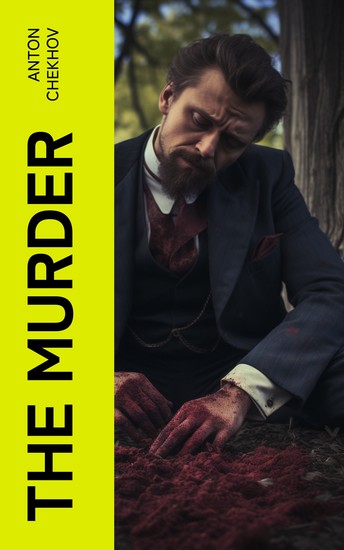
The Murder - cover

The Murder

Anton Chekhov

Translator Constance Garnett

Publisher: e-artnow

  • 0
  • 0
  • 0

Summary

'The Murder' is a short story written by Anton Chekhov. It begins at the evening service celebrated at Progonnaya Station. Before the great ikon, painted in glaring colors on a background of gold, stood the crowd of railway servants with their wives and children, and also of the timbermen and sawyers who worked close to the railway line. All stood in silence, fascinated by the glare of the lights and the howling of the snow-storm which was aimlessly disporting itself outside, regardless of the fact that it was the Eve of the Annunciation. The old priest from Vedenyapino conducted the service; the sacristan and Matvey Terehov were singing.
Available since: 12/12/2023.
Print length: 30 pages.

Other books that might interest you

  • Damned Un-English - cover

    Damned Un-English

    Andrew Wareham

    • 0
    • 0
    • 0
    Lieutenant Gilbert Maltravers is bored. It is 1912 and he has been promoted as fast as any in his Dartmouth class and is placed in a battleship where he can confidently look forward to promotion to post captain and a battleship of his own by the time he is forty. All he needs to do is keep a smart ship, polish the brass and salute every senior officer, while wearing an expensive uniform that testifies he is one of the right sort. His father is an admiral, so very little can go wrong. 


    He wants more than tedium from his existence, and the new submarine service will provide excitement . . . but possibly a far shorter life. If he is successful, then submarines will provide earlier promotion and a new challenge every day. Failure in the submarine service will mean the end of his career. 


    Against the protests of his father and the head-shaking of his friends, Gilbert goes off to join the deplorably new and ungentlemanly assassins of the sea, the enemies of all the old Navy stands for.
    Show book
  • Follow the Stars Home - cover

    Follow the Stars Home

    Diane C. McPhail

    • 0
    • 0
    • 0
    It's a journey that most deem an insane impossibility. Yet on October 20th, 1811, Lydia Latrobe Roosevelt—daughter of one of the architects of the United States Capitol—fearlessly boards the steamship New Orleans in Pittsburgh. Eight months pregnant and with a toddler in tow, Lydia is fiercely independent despite her youth. She's also accustomed to defying convention. Against her father's wishes, she married his much older business colleague, inventor Nicholas Roosevelt—builder of the New Orleans—and spent her honeymoon on a primitive flatboat. But the stakes for this trip are infinitely higher. 


    If Nicholas's untried steamboat reaches New Orleans, it will serve as a profitable packet ship between that city and Natchez, proving the power of steam as it travels up and down the Mississippi. Success in this venture would revolutionize travel and trade, open the west to expansion, and secure the Roosevelts' future. 


    Lydia believes herself ready for all the dangers ahead—growing unrest among native people, disease or injury, and the turbulent Falls of the Ohio, a sixty-foot drop long believed impassable in such a large boat. But there are other challenges in store, impossible to predict as Lydia boards that fall day. Challenges which—if survived—will haunt and transform her, as surely as the journey will alter the course of a nation . . .
    Show book
  • The Death Room - Former soldier and journalist that became a revered author and screenwriter - cover

    The Death Room - Former soldier...

    Edgar Wallace

    • 0
    • 0
    • 0
    Richard Horatio Edgar Wallace was born on the 1st April 1875 in Greenwich, London.  Leaving school at 12 because of truancy, by the age of fifteen he had experience; selling newspapers, as a worker in a rubber factory, as a shoe shop assistant, as a milk delivery boy and as a ship’s cook.  
     
    By 1894 he was engaged but broke it off to join the Infantry being posted to South Africa. He also changed his name to Edgar Wallace which he took from Lew Wallace, the author of Ben-Hur.  
     
    In Cape Town in 1898 he met Rudyard Kipling and was inspired to begin writing. His first collection of ballads, The Mission that Failed! was enough of a success that in 1899 he paid his way out of the armed forces in order to turn to writing full time.  
     
    By 1904 he had completed his first thriller, The Four Just Men. Since nobody would publish it he resorted to setting up his own publishing company which he called Tallis Press. 
      
    In 1911 his Congolese stories were published in a collection called Sanders of the River, which became a bestseller. He also started his own racing papers, Bibury’s and R. E. Walton’s Weekly, eventually buying his own racehorses and losing thousands gambling.  A life of exceptionally high income was also mirrored with exceptionally large spending and debts.  
     
    Wallace now began to take his career as a fiction writer more seriously, signing with Hodder and Stoughton in 1921. He was marketed as the ‘King of Thrillers’ and they gave him the trademark image of a trilby, a cigarette holder and a yellow Rolls Royce. He was truly prolific, capable not only of producing a 70,000 word novel in three days but of doing three novels in a row in such a manner. It was estimated that by 1928 one in four books being read was written by Wallace, for alongside his famous thrillers he wrote variously in other genres, including science fiction, non-fiction accounts of WWI which amounted to ten volumes and screen plays. Eventually he would reach the remarkable total of 170 novels, 18 stage plays and 957 short stories. 
     
    Wallace became chairman of the Press Club which to this day holds an annual Edgar Wallace Award, rewarding ‘excellence in writing’.  
     
    Diagnosed with diabetes his health deteriorated and he soon entered a coma and died of his condition and double pneumonia on the 7th of February 1932 in North Maple Drive, Beverly Hills. He was buried near his home in England at Chalklands, Bourne End, in Buckinghamshire.
    Show book
  • The Small Museum - cover

    The Small Museum

    Jody Cooksley

    • 0
    • 0
    • 0
    London, 1873. Madeleine Brewster's marriage to Dr Lucius Everley was meant to be the solution to her family's sullied reputation. After all, Lucius is a well-respected collector of natural curiosities. His 'Small Museum' of bones and specimens in jars is his pride and joy, although firmly kept under lock and key. His sister Grace's philanthropic work with fallen women is also highly laudable. 
     
    However, Maddie soon finds herself unwelcome in what is meant to be her new home. The more she learns about both Lucius and Grace, the more she suspects that unimaginable horrors lie behind their polished reputations. 
     
    Framed for a crime that would take her to the gallows and leave the Everleys free to continue their dark schemes, Maddie's only hope is her friend Caroline. She will do anything to prove Maddie's innocence before the trial reaches its fatal conclusion.
    Show book
  • Wetion - Historical fiction based on fact - cover

    Wetion - Historical fiction...

    James Allan Krause

    • 0
    • 0
    • 0
    Ever wondered about the paths of our ancestors? "Wetion" (2nd edn) appeals to those open to discovering ways to chart a future using lessons from the past. 
    There’s a part of us all in Addy’s tale. Combining 19 chapters of interconnected short stories with ten scene play, each with its own original song, listeners experience words making history, alongside the drama, tragedies, romance, lessons, lore and more. 
    Addy is the character connecting early human history to the present. Using a DNA test, he establishes the migration routes of the ancestors and conducts an experiment. Using plants gathered from places once inhabited, he concocts a salad. If his theory was correct, consumption would unlock deep memories of ancestors’ past. What follows is a state of altered consciousness too real to be a dream. 
    The highs and lows of 2,000 generations are told in stories revealing the meaning of Wetion. 
    This novel provides a new multimedia experience, is the first of a trilogy and only available in audiobook format. Experimental fiction it is, laced with homage to the bards. 
    Multiple Outstanding Creator Awards were received for the newly published audiobook "Wetion" (2nd edn). Of the "Wetion" awards, a first place prize for Historical Fiction was especially coveted. Second place finishes for the categories of Science Fiction and Education and Reference Books were also received, along with a third place prize for Audiobooks. Five honourable mentions for different categories added to the total.
    Show book
  • The New Galena Hotel - cover

    The New Galena Hotel

    Stephen The Storyteller

    • 0
    • 0
    • 0
    The New Galena Hotel follows Nick Poland, who sells his family farm to seek new opportunities and discovers the charming village of New Galena. There, he renovates a historic hotel while navigating the challenges of Prohibition, including whisky smuggling, pressures from the temperance movement, and risks tied to local mining operations. Each of these factors presents significant obstacles as Nick establishes his new venture. The story's ending catches the reader off guard, bringing a surprising twist to this engaging historical fiction set in Bucks County.
    Show book