Join us on a literary world trip!
Add this book to bookshelf
Grey
Write a new comment Default profile 50px
Grey
Subscribe to read the full book or read the first pages for free!
All characters reduced
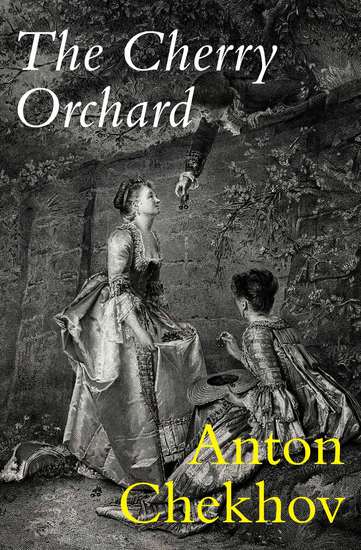
The Cherry Orchard - cover

The Cherry Orchard

Anton Chekhov, Julius West

Publisher: Open Road Media

  • 0
  • 0
  • 0

Summary

The highly acclaimed Russian classic of twentieth-century theatre about a wealthy family unable to let go of the past or face the future. At the turn of the century, Russia is undergoing massive changes. Feudalism has ended, the middle class is growing, and the aristocracy are uncertain of their future . . .  The cherry orchard on the Ranevskaya grounds is known throughout the country for its beauty, but it now sits on the brink of ruin. The entire estate is headed for auction if the family cannot pay off their debts. The land’s fate lies in the hands of the family’s matriarch, Madame Ranevskaya, recently returned from five years in Paris where she wasted away much of her fortunes.  Neither Ranevskaya nor anyone else in her household can fathom the gravity of the situation. But a merchant, the son of a former serf on the land, has an idea . . .  Written in 1903, The Cherry Orchard premiered in Moscow in 1904. It was Chekhov’s last play before his death that same year. Since then, the work has been translated and adapted into numerous languages and performed around the world.
Available since: 11/29/2022.
Print length: 81 pages.

Other books that might interest you

  • Comedie Hell - cover

    Comedie Hell

    Dante Alighieri

    • 0
    • 0
    • 0
    Dante Alighieri's*Inferno*, here titled *Hell*, is the first canticle of his great narrative poem *Commedìa* (1314-1321), considered by many to be the foundation of modern vernacular literature, which consigned to the past the literary use of Latin. Dante's visionary description of the afterlife and the profound humanity of his characters have been admired by many generations of readers and writers, and the beauty of its verse has never been surpassed. The translation presented here is by Leon Stephens, who is also the reader.
    Show book
  • Farhang - Book One - cover

    Farhang - Book One

    Patrick Woodcock

    • 0
    • 0
    • 0
    Farhang honors the people, places, and things Patrick Woodcock has seen while working as a migrant writer, volunteer, and teacher for almost three decades. This book is the first of three that will celebrate, memorialize, or eulogize the myriad moments that impacted his life while also shaping the shade and content of his writing. Beginning in Poland in 1994 and ending in the hamlet of Paulatuk in the Northwest Territories in 2022, Farhang travels the globe through Lithuania, Russia, Iceland, Bosnia and Herzegovina, Oman, Saudi Arabia, Colombia, the Kurdish North of Iraq, Azerbaijan, Tanzania, Kenya, and Rwanda. From the salt mines in Wieliczka to the dirt paths to the Baraa government school in Tanzania, where he volunteered, Woodcock has tried to honor the moment before it becomes muddled, dulled, or romanticized. Some of the poems are about friends or students, others are about the cracked knuckles of strangers, the crawling and the abandoned. Art, language, architecture, politics, and the suffering from politicians left unchecked are also a focus. Sadly, many of the poems are for friends and locations lost to either time, neglect, or warfare. Farhang tries to chronicle some of what no longer exists or only lives on in the poet’s head and soul.
    Show book
  • Born in the USA - The New England Poets - Exploring America in poems - cover

    Born in the USA - The New...

    Henry Wadsworth Longfellow,...

    • 0
    • 0
    • 0
    1 - Born in the USA - The New England Poets - An Introduction 
    2 - June by Horatio Alger Jr 
    3 - On the Discoveries of Captain Lewis, January 14th 1807 by Joel Barlow 
    4 - America the Beautiful by Katharine Lee Bates 
    5 - If You Could Come by Katharine Lee Bates 
    6 - Above the Battle by Katherine Lee Bates 
    7 - Turn Me to My Yellow Leaves by William Stanley Braithwaite 
    8 - A Hymn of the Sea by William Cullen Bryant 
    9 - Summer Wind by William Cullen Bryant 
    10 - November by William Cullen Bryant 
    11 - I Would Not Paint a Picture by Emily Dickinson 
    12 - I Have a Bird in Spring by Emily Dickinson 
    13 - The Name of it is Autumn by Emily Dickinson 
    14 - Some Too Fragile for Winter Winds by Emily Dickinson 
    15 - I Went to Heaven by Emily Dickinson 
    16 - Credo by W E B Du Bois 
    17 - Teach Me I Am Forgotten by the Dead by Ralph Waldo Emerson 
    18 - Waves by Ralph Waldo Emerson 
    19 - Culture by Ralph Waldo Emerson 
    20 - Berrying by Ralph Waldo Emerson 
    21 - Days by Ralph Waldo Emerson 
    22 - Tenebris by Angelina Weld Grimké 
    23 - The Black Finger by Angelina Weld Grimke 
    24 - The Eyes of My Regret by Angelina Weld Grimké 
    25 - In the Reading Room of the British Museum by Louise Imogen Guiney 
    26 - Address to the Moon by Nathaniel Hawthorne 
    27 - The Ocean by Nathamiel Hawthorne 
    28 - Go to the Grave by Nathaniel Hawthorne 
    29 - The Old Man of the Sea by Oliver Wendell Holmes 
    30 - Prologue by Oliver Wendell Holmes 
    31 - Old Ironsides by Oliver Wendell Holmes 
    32 - A Calender of Sonnets - December by Helen Hunt Jackson 
    33 - A Calender of Sonnets - January by Helen Hunt Jackson 
    34 - A Calendar of Sonnets - September by Helen Hunt Jackson 
    35 - Octobers Bright Blue Weather by Helen Hunt Jackson 
    36 - In London Town by Walter Learned 
    37 - The Slave's Singing at Midnight by Henry Wadsworth Longfellow 
    38 - Song of Haiwatha (Extract) by Henry Wadsworth Longfellow 
    39 - An April Day by Henry Wadsworth Longfellow 
    40 - Loss and Gain by Henry Wadswoth Longfellow 
    41 - A Psalm of Life by Henry Wadsworth Longfellow 
    42 - Despair by H P Lovecraft 
    43 - Sunset by H P Lovecraft 
    44 - Ode for July 4th 1917 by H P Lovecraft 
    45 - Pacifist War Song - 1917 by H P Lovecraft 
    46 - Providence by H P Lovecraft 
    47 - In a Garden by Amy Lowell 
    48 - Dog Days by Amy Lowell 
    49 - Monadnock in Early Spring by Amy Lowell 
    50 - The Crescent Moon by Amy Lowell 
    51 - March Evening by Amy Lowell 
    52 - The First Snowfall by James Russell Lowell 
    53 - Above and Below by James Russell Lowell 
    54 - Of the Dawn of Freedom by James Russell Lowell 
    55 - To H W L on His Birthday 27th February 1867 by James Russell Lowell 
    56 - Slaves by James Russell Lowell 
    57 - The Red Cross Nurses by Thomas L Masson 
    58 - A December Day by Robert Fuller Murray 
    59 - Warren's Address by John Pierpoint 
    60 - The Economy of Slavery by John Pierpoint 
    61 - Hymn for the First of August by John Pierpoint 
    62 - Prayer for the Slave by John Pierpoint 
    63 - The Natives of America by Ann Plato 
    64 - Reflections, Written on Visiting the Grave of a Venerated Friend by Ann Plato 
    65 - A Dream Within a Dream by Edgar Allan Poe 
    66 - Dreamland by Edgar Allan Poe 
    67 - The Sleeper by Edgar Allan Poe 
    68 - Sonnet - Silence by Edgar Allan Poe 
    69 - Annabel Lee by Edgar Allan Poe 
    70 - Luke Havergal by Edwin Arlington Robinson 
    71 - Mr Flood's Party by Edwin Arlington Robinson 
    72 - The Children of the Night by Edwin Arlington Robinson 
    73 - The Flying Dutchman by Edwin Arlington Robinson 
    74 - In No
    Show book
  • The Raven - cover

    The Raven

    Edgar Allan Poe

    • 0
    • 0
    • 0
    Step into the shadowed chamber of grief and longing in The Raven, Edgar Allan Poe's most celebrated and haunting poem. First published in 1845, this timeless masterpiece of gothic literature explores the fragile boundary between memory and madness, love and despair, reason and the supernatural.
    
    On a bleak December night, a solitary scholar sits alone, mourning the loss of his beloved Lenore. As he attempts to distract himself with old books and fading embers, a mysterious tapping at his chamber door disrupts the silence. What begins as a faint sound soon becomes an unforgettable encounter when a dark, stately raven enters and perches above his door—an uninvited guest who utters only a single, chilling word: "Nevermore."
    
    With each question the grieving narrator asks, the raven's refrain deepens his anguish. Is the bird merely a mindless creature repeating what it has learned? Or is it a supernatural messenger sent to torment him with the permanence of his loss? As the night stretches on, hope dissolves into obsession. The scholar's fragile composure unravels, and readers are drawn into a psychological descent where sorrow transforms into despair.
    
    Poe's masterful use of rhythm, repetition, and musical language creates a hypnotic atmosphere that lingers long after the final line. The poem's intricate structure and haunting refrain mirror the narrator's spiraling thoughts, building an emotional intensity that is both beautiful and devastating. Through vivid imagery and rich symbolism, The Raven captures the universal pain of lost love and the terrifying power of memory.
    
    More than a poem, The Raven is an experience—an immersion into the human soul at its most vulnerable. Its themes of grief, longing, isolation, and the search for meaning continue to resonate with readers across generations. The mysterious raven itself has become one of literature's most iconic figures, symbolizing both unrelenting sorrow and the shadowy depths of the mind.
    
    Darkly lyrical, emotionally charged, and unforgettable, The Raven stands as a cornerstone of gothic poetry and a testament to Poe's genius. Whether encountered for the first time or revisited anew, this classic work invites readers to listen closely in the quiet of the night—where a single whispered word can echo forever.
    Show book
  • Camp Roosevelt - cover

    Camp Roosevelt

    Bobby Burgess

    • 0
    • 0
    • 0
    Camp Roosevelt hadn't always had a reputation for murder, yet it's continues to open. Dwayne Washington arrives for a job, because he's down on his luck. However, when the murders start happening at the Camp again it becomes a fight for survival.
    Show book
  • Satiromastix - cover

    Satiromastix

    Thomas Dekker

    • 0
    • 0
    • 0
    Satiromastix by Thomas Dekker is a sharp and spirited Elizabethan satire that boldly engages in the famous "Poetomachia," or War of the Theatres. Written as a dramatic response to rival playwrights, the play combines comedy, satire, and social commentary to critique artistic pride, literary rivalry, and courtly pretension in early modern London.
    
    At the center of the work is a satirical portrayal of a self-important poet figure, whose inflated sense of artistic superiority becomes the target of Dekker's wit and theatrical humor. Through exaggerated characterization and playful dialogue, Dekker exposes the vanity and competitiveness that can exist within literary and courtly circles.
    
    The narrative unfolds through a series of comic encounters, witty exchanges, and ironic reversals, where reputation and ego are constantly challenged. Alongside its satirical focus on poets and playwrights, the play also presents a broader critique of social ambition and the performance of identity in a culture deeply concerned with status and recognition.
    
    Dekker's writing is lively, accessible, and sharply humorous, blending realism with theatrical exaggeration to create a work that is both entertaining and pointed in its criticism. The play reflects the vibrant and often contentious world of Elizabethan theatre, where artistic rivalry could become material for dramatic expression.
    
    Satiromastix remains an important example of early modern literary satire, offering insight into the dynamics of theatrical competition and the cultural environment of its time. Its enduring appeal lies in its energetic humor, clever dialogue, and fearless engagement with questions of artistic pride and public reputation.
    Show book