¡Acompáñanos a viajar por el mundo de los libros!
Añadir este libro a la estantería
Grey
Escribe un nuevo comentario Default profile 50px
Grey
Suscríbete para leer el libro completo o lee las primeras páginas gratis.
All characters reduced
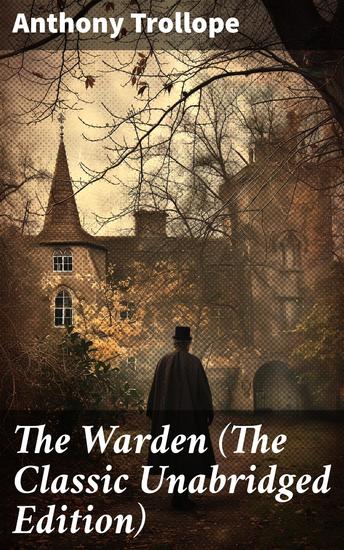
The Warden (The Classic Unabridged Edition) - A Moral Dilemma in Victorian England - cover

The Warden (The Classic Unabridged Edition) - A Moral Dilemma in Victorian England

Anthony Trollope

Editorial: Good Press

  • 0
  • 0
  • 0

Sinopsis

Anthony Trollope's "The Warden" serves as a poignant exploration of ethical dilemmas within the ecclesiastical structure of 19th-century England. Written in Trollope's characteristic realist style, the narrative unfolds through the life of Septimus Harding, a benevolent yet conflicted clergyman who must confront the moral implications of his position as the warden of an almshouse. Embedded within a richly detailed social context, Trollope examines themes such as institutional corruption, personal integrity, and the intersection of faith and duty, all while employing a nuanced, witty prose that reflects the Victorian concern with social reform. Born into a challenging economic environment, Trollope's diverse experiences as a clerk in the Post Office and his travels through Europe provided him with profound insights into the nature of British society. These elements shaped his writing, driving his commitment to critique social injustices while presenting a compassionate portrayal of human weakness. "The Warden" marks the beginning of his revered Barsetshire series, laying the groundwork for his keen observation of provincial life and moral complexity. Readers are encouraged to delve into this classic work not only for its rich narrative but also for its relevance to ongoing discussions about morality within institutions. Trollope's thoughtful characterizations and intricate plot continue to resonate, making "The Warden" an essential read for anyone interested in the interplay between ethics and social responsibility.
Disponible desde: 07/01/2024.
Longitud de impresión: 153 páginas.

Otros libros que te pueden interesar

  • Loss of the Royal George The (Unabridged) - cover

    Loss of the Royal George The...

    W.H.G. Kingston

    • 0
    • 0
    • 0
    William Henry Giles Kingston writer of tales for boys, William Henry Giles Kingston was born in London, but spent much of his youth in Oporto, where his father was a merchant.
    His first book, The Circassian Chief, appeared in 1844. His first book for boys, Peter the Whaler, was published in 1851, and had such success that he retired from business and devoted himself entirely to the production of this kind of literature, in which his popularity was deservedly great; and during 30 years he wrote upwards of 130 tales.
    THE LOSS OF THE ROYAL GEORGE: I am not likely to forget that next morning, the 28th of August, (17). It was a fine summer's morning, and there was just a little sea on, with a strongish breeze blowing from the eastward, but not enough to prevent boats coming off from Portsmouth. I counted forty sail-of-the-line, a dozen frigates and smaller ships of war, and well-nigh three hundred merchant vessels, riding, as of course we were, to the flood with our heads towards Cowes.
    Ver libro
  • Invisible Man The - HG Wells - cover

    Invisible Man The - HG Wells

    H. G. Wells

    • 0
    • 0
    • 0
    The Invisible Man is a science fiction novel by H. G. Wells. Originally serialized in Pearson's Weekly in 1897, it was published as a novel the same year. The Invisible Man to whom the title refers is Griffin, a scientist who has devoted himself to research into optics and who invents a way to change a body's refractive index to that of air so that it neither absorbs nor reflects light.  
     
    Track List 
     
    Act1 = Chapters 01-02 
    Act2 = Chapters 03-04 
    Act3 = Chapters 05-07 
    Act4 = Chapters 08-10 
    Act5 = Chapters 11-12 
    Act6 = Chapters 13-14 
    Act7 = Chapters 15-17 
    Act8 = Chapters 18-19 
    Act9 = Chapter 20            
    Act10 = Chapters 21-22 
    Act11 = Chapter 23 
    Act12 = Chapters 24-26 
    Act13 = Chapters 27-28
    Ver libro
  • Top 10 Short Stories The - European 19th - The top ten short stories written in the 19th Century by European authors - cover

    Top 10 Short Stories The -...

    Victor Hugo, Robert Louis...

    • 0
    • 0
    • 0
    The Top 10 – The European 19th Century – an Introduction 
     
    A century of change.  Some catastrophic, some fantastical.  Europe reaches out its national tentacles in a global grab for Empire.  At home, revolutions erupt and decay.  Literature gains a widespread audience through advancing technology.  Here, in this volume, authors absorb and then reveal their wondrous stories. 
     
    Short stories have always been a sort of instant access into an author’s brain, their soul and heart.  A few pages can lift our lives into locations, people and experiences with a sweep of landscape, narration, feelings and emotions that is difficult to achieve elsewhere. 
     
    In this series we try to offer up tried and trusted ‘Top Tens’ across many different themes and authors. But any anthology will immediately throw up the questions – Why that story? Why that author?  
     
    The theme itself will form the boundaries for our stories which range from well-known classics, newly told, to stories that modern times have overlooked but perfectly exemplify the theme.  Throughout the volume our authors whether of instant recognition or new to you are all leviathans of literature. 
     
    1 - Top 10 - The European 19th Century 
    2 - The Body Snatcher by Robert Louis Stevenson 
    3 - The Lady with the Dog by Anton Chekhov 
    4 - The Cloak by Nikolai Gogol also known as 'The Overcoat' 
    5 - The Necklace by Guy de Maupassant 
    6 - The Story of B24 by Arthur Conan Doyle 
    7 - The District Doctor by Ivan Turgenev 
    8 - A Fight with a Cannon by Victor Hugo 
    9 - A Legend of Old Egypt by Boleslaw Prus 
    10 - A Passion in the Desert by Honoré de Balzac 
    11 - The Bundle of Letters by Moritz Jokai 
     
    1 - Top 10 - The European 19th Century 
    2 - The Body Snatcher by Robert Louis Stevenson 
    3 - The Lady with the Dog by Anton Chekhov 
    4 - The Cloak by Nikolai Gogol also known as 'The Overcoat' 
    5 - The Necklace by Guy de Maupassant 
    6 - The Story of B24 by Arthur Conan Doyle 
    7 - The District Doctor by Ivan Turgenev 
    8 - A Fight with a Cannon by Victor Hugo 
    9 - A Legend of Old Egypt by Boleslaw Prus 
    10 - A Passion in the Desert by Honoré de Balzac 
    11 - The Bundle of Letters by Moritz Jokai
    Ver libro
  • Temptation of Harringay The (Unabridged) - cover

    Temptation of Harringay The...

    H. G. Wells

    • 0
    • 0
    • 0
    Herbert George Wells (21 September 1866 - 13 August 1946) was an English writer. Prolific in many genres, he wrote dozens of novels, short stories, and works of social commentary, history, satire, biography and autobiography. His work also included two books on recreational war games. Wells is now best remembered for his science fiction novels and is often called the "father of science fiction", along with Jules Verne and the publisher Hugo Gernsback.
    THE TEMPTATION OF HARRINGAY: It is quite impossible to say whether this thing really happened. It depends entirely on the word of R.M. Harringay, who is an artist.
    Ver libro
  • In Bayswater - One family is home to many secrets in this classic modernist short story - cover

    In Bayswater - One family is...

    Mary Butts

    • 0
    • 0
    • 0
    Mary Frances Butts was born on 13th December 1890 in Poole, Dorset. 
     
    Her early years were spent at Salterns, an 18th-century house overlooking Poole Harbour.  Sadly in 1905 her father died, and she was sent for boarding at St Leonard's school for girls in St Andrews. 
     
    Her mother remarried and, from 1909, Mary studied at Westfield College in London, and here, first became aware of her bisexual feelings.  She was sent down for organising a trip to Epsom races and only completed her degree in 1914 when she graduated from the London School of Economics.  By then Mary had become an admirer of the occultist Aleister Crowley and she was given a co-authorship credit on his ‘Magick (Book 4)’. 
     
    In 1916, she began the diary which would now detail her future life and be a constant reference point for her observations and her absorbing experiences. 
     
    During World War I, she was doing social work for the London County Council in Hackney Wick, and involved in a lesbian relationship.  Life changed after meeting the modernist poet, John Rodker and they married in 1918. 
     
    In 1921 she spent 3 months at Aleister Crowley's Abbey of Thelema in Sicily; she found the practices dreadful and also acquired a drug habit.  Mary now spent time writing in Dorset, including her celebrated book of short stories ‘Speed the Plough’ which saw fully develop her unique Modernist prose style. 
     
    Europe now beckoned and several years were spent in Paris befriending many artists and writing further extraordinary stories.   
     
    She was continually sought after by literary magazines and also published several short story collections as books. Although a Modernist writer she worked in other genres but is essentially only known for her short stories.  Mary was deeply committed to nature conservation and wrote several pamphlets attacking the growing pollution of the countryside. 
     
    In 1927, she divorced and the following year her novel ‘Armed with Madness’ was published.  A further marriage followed in 1930 and time was spent attempting to settle in London and Newcastle before setting up home on the western tip of Cornwall.  By 1934 the marriage had failed. 
     
    Mary Butts died on 5th March 1937, at the West Cornwall Hospital, Penzance, after an operation for a perforated gastric ulcer. She was 46. 
     
    Her story ‘In Bayswater’ grippingly describes a man’s friendship with a dysfunctional family he rents a room from.  As each facet reveals itself his opinion and decisions change, back and forth, this way and that….
    Ver libro
  • The Ambassadors - cover

    The Ambassadors

    Henry James

    • 0
    • 0
    • 0
    "The Ambassadors" is a 1903 novel by Henry James, originally published as a serial in the North American Review (NAR). This dark comedy follows the journey of the protagonist, Lewis Lambert Strether, to Europe. His mission is to bring back the son of his widowed fiancée to the family business. The novel is entirely told from Strether's point of view, chronicling his transformation from an American to a European perspective.
    Ver libro