¡Acompáñanos a viajar por el mundo de los libros!
Añadir este libro a la estantería
Grey
Escribe un nuevo comentario Default profile 50px
Grey
Suscríbete para leer el libro completo o lee las primeras páginas gratis.
All characters reduced
The Eustace Diamonds - cover

The Eustace Diamonds

Anthony Trollope

Editorial: Memorable Classics eBooks

  • 0
  • 0
  • 0

Sinopsis

The Eustace Diamonds by Anthony Trollope is a novel by Anthony Trollope, first published in 1871 as a serial in the Fortnightly Review. It is the third of the "Palliser" series of novels.

In this novel, the characters of Plantagenet Palliser, his wife Lady Glencora and their uncle the ailing Duke of Omnium are in the background. The plot centres on Lizzie Greystock, a fortune-hunter who ensnares the sickly, dissipated Sir Florian Eustace and is soon left a very wealthy widow and mother.

While clever and beautiful, Lizzie has several character flaws; the greatest of these is an almost pathological delight in lying, even when it cannot benefit her. (Trollope comments that Lizzie sees lies as "more beautiful than the truth.") Before he dies, the disillusioned Sir Florian discovers all this, but does not think to change the generous terms of his will.

The diamonds of the book's title are a necklace, a family heirloom that Sir Florian gave to Lizzie to wear. Though they belong to her husband's estate (and thus eventually will be the property of her son), Lizzie refuses to relinquish them. She lies about the terms under which they were given to her, leaving their ownership unclear. The indignant Eustace family lawyer, Mr Camperdown, strives to retrieve the necklace, putting the Eustaces in an awkward position.

On the one hand, the diamonds are valuable and Lizzie may not have a legal claim to them, but on the other, they do not want to antagonise the mother of the heir to the family estate (Lizzie having only a life interest).
Disponible desde: 02/06/2022.

Otros libros que te pueden interesar

  • The Secret World of Connie Starr - cover

    The Secret World of Connie Starr

    Robbi Neal

    • 0
    • 0
    • 0
    A stunning evocation of Australian life through the war to the 1950s, this novel is intimate and sweeping, immediate and dreamlike - a magical rendering of darkness and joy, and the beauty inherent in difference. For readers of Sarah Winman's Still Life, Trent Dalton's All Our Shimmering Skies and Rosalie Ham's The Dressmaker. 
      
    Connie Starr was always a difficult child. Her mother knew as soon as Connie entered the world that day in Ballarat in 1934 and opened her lungs to scream, there was more chaos in the world than before and it wouldn't leave until Connie did. From the safety of a branch high in her lemon tree where she speaks to angels, she sees the world for what it is - a swirling mass of beauty and darkness, of trauma and family, of love and war and truth and lies - lies that might just undo her and drive her to a desperate act. 
    This ambitious, complex and insightful novel intertwines numerous stories of lives from before World War II and beyond, recreating with intimacy and breadth a world that is now lost to us. This book is a brightly coloured patchwork quilt of everything from shoes to polio, lemon trees to rivers, death to life that melds into one beautiful, luminous work of art. 
    'The Secret World of Connie Starr will set the literary firmament ablaze. This brilliant, quintessentially Australian ode to difference, transcends time and place - it's an achingly lovely tale that shines long after the last page.' Karen Brooks, author of The Good Wife of Bath
    Ver libro
  • All the Days of Our Lives - cover

    All the Days of Our Lives

    Annie Murray

    • 0
    • 0
    • 0
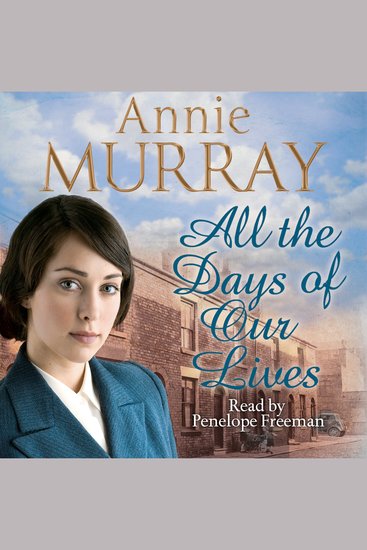
    It is 1946 in Birmingham: the Second World War is over and three young women face a new kind of life. But peacetime brings its own pressures . . .Read by Penelope Freeman (Her Wartime Secret)Katie O'Neill's childhood has been dominated by her temperamental mother and by frightening secrets that she barely understands. Innocent, yet hungry for love, she is easily taken in by male charm and is left outcast and alone with her young son.Emma Brown has spent the war at home in Birmingham, longing for her husband Norm to return and meet the son he has never seen. But she soon finds that the joy of homecoming only brings a whole new set of problems.And Molly Fox, after a sad and brutal childhood, found a place to belong during the war, in the women's army, the ATS. Now, the women are no longer wanted and Molly finds peacetime a bleak, difficult challenge. Finding work in guesthouses and holiday camps, she keeps running from herself, in search of a place she can call home.All the Days of Our Lives reunites the three girls from A Hopscotch Summer and Soldier Girl who first meet in a 1930s Birmingham classroom. Now adults, each of them faces life with all its joys, sorrows and surprises.Listeners love Annie Murray:'I absolutely loved this story, I lost myself in their world and I'm sad it's over''I've become an Annie Murray fan and Penelope Freeman does this book justice as its narrator''what a beautiful end to a great saga. couldn't stop listening!'
    Ver libro
  • Esther Kahn - A poor Jewish seamstress in late 19th-century London who finds a new life by becoming an actress - cover

    Esther Kahn - A poor Jewish...

    Arthur Symons

    • 0
    • 0
    • 0
    The bookshelves of British literature are incredible collections that have gathered together centuries of very talented authors.  From these Isles their fame spread and whilst among their number many are now forgotten or neglected their talents endure.  Among them is the famed Decadent author and poet Arthur Symons.
    Ver libro
  • Biloxi - A Story of Hope - cover

    Biloxi - A Story of Hope

    Scott Paris

    • 0
    • 0
    • 0
    A poignant tale of resilience, loss, and adaptation, Biloxi is set against the backdrop of rural Tennessee to Mississippi during the civil right movement. Forced to rebuild his life after a tragic accident, Charlie and his family befriend a local black family. But not everyone is as welcoming. Charlies must navigate life, work, and family through systemic enduring racism."This book is written so vividly that I wanted to know more about what happened to these families. …Captivating writing and storyline … how these families maneuvered through racism in the deep South and how their friendships grew despite racism. Loved it from beginning to ending!" – Stephanie J.“The narrative shines with vivid descriptions and compelling characters. Biloxi offers a heartfelt reminder of the human capacity to endure and thrive in adversity." - Olajide Ojeniyi
    Ver libro
  • 3 Stories with Deep conversations - A trio of classic tales perfect for a commute walk or quiet night in - cover

    3 Stories with Deep...

    Vladamir Korolenko, Bernard...

    • 0
    • 0
    • 0
    There is something about the number 3.    
    The Ancient Greeks believed 3 was the perfect number, and in China 3 has always been a lucky number, and they know a thing or two.   
    Most religions also have 3 this and 3 that and, of course, in these more modern times, three’s a crowd may be too many, except when it’s a ménage à trois.  It seems good things usually come in threes. 
    Whatever history and culture says WE think 3, a hat-trick of stories, is a great number to explore themes and literary avenues that classic authors were so adept at creating. 
     
     
    01 - 3 Stories - With Deep Conversations 
    02 - The Shades, A Phantasy by Vladimir Korolenko 
    03 - A Danse Macabre by Bernard Capes 
    04 - The Coffee-House of Surat by Leo Tolstoy
    Ver libro
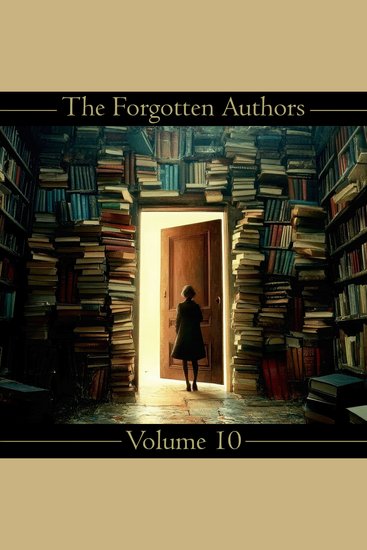
  • Forgotten Authors The - Volume 10 - Gertrude Barrows Bennett to Francis Brett Young - cover

    Forgotten Authors The - Volume...

    Josephine Tey, Hesba Stretton,...

    • 0
    • 0
    • 0
    Throughout the long centuries of human history is the want, and the need, to share information, to exchange ideas and for that knowledge and experience, for curiosity and learning, to be the basis of a civil society. 
    In literature the ambition is much narrower.  In order to be known, to be popular, you had to be published.  And for that people had to know you existed and your ideas worth reading.  Obviously for most of humanity’s time people couldn’t read and texts couldn’t be published in any great number. 
    In the 15th Century Gutenberg’s printing press began the revolution to address the second and by the 19th century had gathered pace with startling speed and mass distribution.  Education for the many was brought in to help people understand more of their world and, with new skills, how to have a better place within it.  Now, if the powers that owned the presses and means of distribution agreed an audience would now be able to avail themselves of your ideas, your printed words.  
    Sadly, in the thirst for the new, the recent and the past fell from sight, relegated to dark corners and dusty shelves.   
    But the printed word is rarely without someone, somewhere busying themselves through piles of papers and books rediscovering what a good story is, whatever its age. 
    Sadly, in the thirst for the new, the recent and the past fell from sight, relegated to dark corners and dusty shelves.    
    But the printed word is rarely without someone, somewhere busying themselves through piles of papers and books rediscovering what a good story is, whatever its age. 
    In this volume we offer up a small selection of those talents whose time has now come again.
    Ver libro