Junte-se a nós em uma viagem ao mundo dos livros!
Adicionar este livro à prateleira
Grey
Deixe um novo comentário Default profile 50px
Grey
Assine para ler o livro completo ou leia as primeiras páginas de graça!
All characters reduced
The Complete Works: Novels Short Stories Plays Articles Essays Travel Sketches and Memoirs - Exploring Victorian Society: A Comprehensive Collection of Literary Masterpieces - cover
LER

The Complete Works: Novels Short Stories Plays Articles Essays Travel Sketches and Memoirs - Exploring Victorian Society: A Comprehensive Collection of Literary Masterpieces

Anthony Trollope

Editora: Good Press

  • 0
  • 0
  • 0

Sinopse

Anthony Trollope's "The Complete Works: Novels, Short Stories, Plays, Articles, Essays, Travel Sketches and Memoirs" stands as a monumental achievement in Victorian literature, showcasing the author'Äôs prolific output and unique narrative style. This comprehensive compilation includes renowned novels such as "The Barchester Towers" and "The Way We Live Now," characterized by intricate character studies and social commentary. Trollope'Äôs writing is distinguished by its precise realism and deft humor, providing profound insights into the complexities of human relationships and societal structure in 19th-century England. Through his varied forms'Äîranging from poignant essays to vivid travel sketches'ÄîTrollope invites readers to engage with the world he meticulously observed and critiqued. Trollope, born in 1815, had a background steeped in both finance and literature that informed his literary career. His experiences as a postal surveyor offered him a keen perspective on the intricacies of bureaucracy and human nature, themes that resonate throughout his works. Additionally, his writing was often propelled by a commitment to social reform, reflecting his desire to illuminate the moral dilemmas of his time. This blend of personal experience and societal observation deeply shaped his narrative approach. For those seeking a richer understanding of Victorian society and a masterful exploration of human nature, Trollope's complete works are indispensable. This collection not only showcases his literary versatility but also serves as a testament to his enduring influence on literature. Readers will find themselves immersed in the captivating worlds he created, making this anthology a valuable addition to any literary library.
Disponível desde: 06/01/2024.
Comprimento de impressão: 20640 páginas.

Outros livros que poderiam interessá-lo

  • The Choice to Leave Abuse - cover

    The Choice to Leave Abuse

    Ryan Anderson

    • 0
    • 0
    • 0
    God strongly condemns any form of abuse. 
    In recent years, the struggles of Latter-day Saints in abusive relationships have made national headlines. The media attention has highlighted a deeply unfortunate perception: many Latter-day Saints fear that by choosing to leave an abusive relationship, they are at risk of breaking their covenants with God. Mental health professionals and law enforcement officers who work with Latter-day Saint populations attest to the number of people who continue to be hurt, humiliated, and even killed because they believe it is their religious obligation to endure abuse to the end. 
    This damaging misperception, and the traditions that have helped create and maintain it, must be corrected. With a direct and straightforward discussion of the doctrines and teachings about abuse, this book not only provides clear guidance for bishops and other local leaders on how to respond to abuse, but it will also help you discover God's true feelings about abuse and the love he has for all who suffer. 
    Learn to identify the signs of abuse in your own relationships and in others. 
    Overcome roadblocks that may be hindering escape from an abusive situation. 
    Follow the path of healing in mind, body, and spirit. 
    The gospel of Jesus Christ offers tremendous hope, healing, and redemption for those who suffer mistreatment, neglect, and abuse of all kinds. The deliverance offered is not only spiritual and post-mortal, it is temporal, applying to here and now. This message needs to work its way into our collective conscience and become an integral part of our culture.
    Ver livro
  • Conversational Phrases Danish Audiobook - Level 1 - Absolute Beginner - cover

    Conversational Phrases Danish...

    DanishClass101.com, Innovative...

    • 0
    • 0
    • 0
    Are you trying to learn Danish…but having trouble speaking?
     
    Do you struggle coming up with your own Danish sentences?
     
    Are you tired of not understanding how Danish grammar works?


    If you answered yes to any of these questions, …


    ...then the Conversational Phrases Audiobook, Level 1 - Absolute Beginner is for you!


    In this beginner-level Audiobook, you will master over 25 common sentence patterns across 25 simple lessons. By the end, you’ll be able to ask common questions and answer them in your own way, all while acquiring over 100 Danish words. 


    Most importantly, you’ll be able to have real conversations in various social situations.


    How, you may ask? Each lesson introduces a new conversation reflecting a real-world situation, including casual chats between friends as well as dialogues in more formal settings. Learning is made easy with three simple steps:


    1. Get familiar: First, you get a sample conversation and its translation.
     
    2. Understand: Then, we explain an underlying sentence pattern, so you can grasp the grammar and actually understand how the Danish works.
     
    3. Practice: Lastly, you create your own responses… and start speaking Danish!


    Lessons in this audiobook include:
     
    - Going Sightseeing
     
    - Going to a Restaurant
     
    - Giving Directions
     
    - Going to the Movies
     
    - Renting an Apartment
     
    And much more!


    Conversational Phrases Audiobook, Level 1 - Absolute Beginner contains:
     
    - 25 Lessons 
     
    - 4 Hours+ of Content
     
    - 1 Core Pattern Per Lesson
     
    - 100+ Danish Vocabulary Words
     
    - 28 Page Accompanying PDF eBook


    Download the PDF and read along
    Ver livro
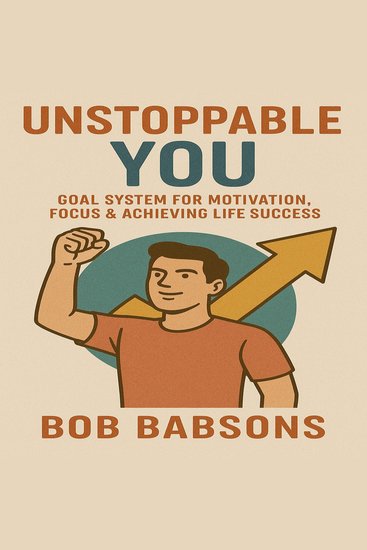
  • Unstoppable You: Goal System for Motivation Focus & Achieving Life Success - cover

    Unstoppable You: Goal System for...

    Bob Babsons

    • 0
    • 0
    • 0
    This audiobook is narrated by an AI Voice.   
    Unstoppable You – Goal System for Motivation, Focus & Achieving Life Success is your step-by-step guide to setting meaningful goals and actually reaching them. Whether you're aiming to improve your health, grow your career, or build better habits, this book gives you a clear system to stay focused, motivated, and consistent—even when life gets busy or challenging. 
    Inside, you’ll learn: 
    How to set goals that truly inspire and align with your purpose 
    The proven system for breaking goals into manageable daily actions 
    Techniques to stay motivated when progress feels slow 
    Mental strategies to overcome procrastination and self-doubt 
    How to build momentum and turn success into a sustainable lifestyle 
    If you're ready to stop starting over and start finishing strong, Unstoppable You will help you transform your mindset and follow through—no matter what.
    Ver livro
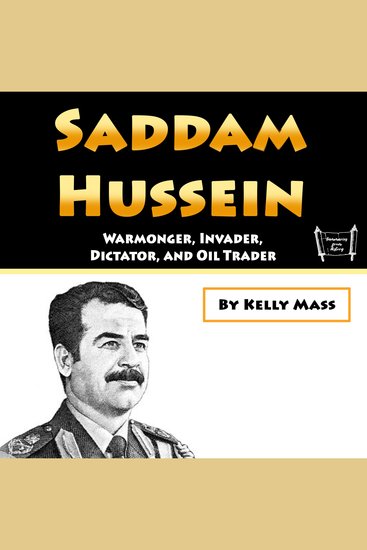
  • Saddam Hussein - Warmonger Invader Dictator and Oil Trader - cover

    Saddam Hussein - Warmonger...

    Kelly Mass

    • 0
    • 0
    • 0
    Saddam Hussein, the sixth president of Iraq, held power from July 16, 1979, until his downfall on April 9, 2003. A central figure in Iraq's political history, Saddam was a founding member of the Arab Socialist Ba'ath Party, which advocated for a fusion of Arab nationalism and socialism, known as Ba'athism. The party's rise to power in Iraq was marked by the 1968 coup, often referred to as the 17 July Revolution, which saw the Ba'ath Party assume control. Saddam, a key figure in the party, was instrumental in establishing its dominance in Iraq. 
    Saddam's path to the presidency was shaped by his political astuteness and ruthless consolidation of power. He became vice president under General Ahmed Hassan al-Bakr, who was severely weakened by ill health. At a time when numerous factions within the country threatened to destabilize the government, Saddam focused on building and strengthening the security forces that would enable him to suppress dissent. He carefully navigated the complexities of power struggles between the administration and the military, ensuring his influence over both the party and the state apparatus. His careful maneuvering eventually led to his formal assumption of power in 1979, though he had already been Iraq's de facto leader for several years. 
    In the early 1970s, Saddam took aggressive steps to nationalize Iraq's most important industries, including the Iraq Petroleum Company and various independent banks. This move, though initially successful in securing Iraq's economic independence, led to long-term financial instability. The nationalization policies, combined with inflation and a series of bad loans, contributed to the eventual collapse of Iraq's financial sector. Nevertheless, Saddam's regime was buoyed by the economic boom fueled by Iraq's oil exports, which provided the government with significant wealth and the ability to fund state projects.
    Ver livro
  • The Politics of Obedience - A Discourse on Voluntary Servitude - cover

    The Politics of Obedience - A...

    Etienne de la Botie

    • 0
    • 0
    • 0
    In this seminal work of political philosophy, Boetie asks one of the most obvious questions of political theory: why is it that a minority of rulers can remain in power over a majority of subjects who pay all the taxes? 
    The answer might be quite surprising to us all. The conclusion is that the people tend to enslave themselves, to let themselves be governed by tyrants. 
    Liberty is the natural condition of the people. Servitude, however, is fostered when people are raised in subjection. People are trained to adore rulers. While freedom is forgotten by many, there are always some who will never submit. 
    What is the answer then? 
    The author brilliantly and obviously outlines these points in the pages that follow in a way that is illuminating and also simple. It is we who enslave ourselves at the beck and call of 'authority'. Enjoy this classic work that roots sovereignty into philosophy and demonstrates how simply the tides can change.
    Ver livro
  • America’s Greatest Engineering Projects: The Construction History of the Transcontinental Railroad the Panama Canal and the Hoover Dam - cover

    America’s Greatest Engineering...

    Editors Charles River

    • 0
    • 0
    • 0
    The Transcontinental Railroad, laid across the United States during the 1860s, remains the very epitome of contradiction. On the one hand, it was a triumph of engineering skills over thousands of miles of rough terrain, but on the other hand, it drained the natural resources in those places nearly dry. It “civilized” the American West by making it easier for women and children to travel there, but it dispossessed Native American civilizations that had lived there for generations. It made the careers of many men and destroyed the lives from many others. It was bold and careless, ingenious and cruel, gentle and violent, and it enriched some and bankrupted others. In short, it was the best and worst of 19th century America in action. 
    Traveling around the tip of South America was fraught with danger, and European explorers and settlers had proposed building a canal in Panama or Nicaragua several centuries before the Panama Canal was actually built. Taking about 10 years to build, workers had to excavate millions of cubic yards of earth and fight off hordes of insects to make Roosevelt’s vision a reality. Roosevelt also had to tie up the U.S. Navy in a revolt in Colombia to ensure Panama could become independent and thus ensure America had control of the canal. 
    During the 1930s, at the height of the Great Depression, thousands of workers began work on the Hoover Dam, built in the Black Canyon, which had been cut by the powerful Colorado River. The Colorado River was responsible for the Grand Canyon, and by the 20th century, the idea of damming the river and creating an artificial lake was being explored for all of its potential, including hydroelectric power and irrigation. By the time the project was proposed in the 1920s, the contractors vowing to build it were facing the challenge of building the largest dam the world had ever known. As if that wasn’t enough, the landscape was completely unforgiving.
    Ver livro