¡Acompáñanos a viajar por el mundo de los libros!
Añadir este libro a la estantería
Grey
Escribe un nuevo comentario Default profile 50px
Grey
Suscríbete para leer el libro completo o lee las primeras páginas gratis.
All characters reduced
Barchester Towers - cover

Barchester Towers

Anthony Trollope

Editorial: DigiCat

  • 0
  • 0
  • 0

Sinopsis

In "Barchester Towers," Anthony Trollope masterfully weaves a captivating tale set against the backdrop of the fictional English cathedral town of Barchester. The novel explores the intricacies of ecclesiastical politics and personal ambition through a rich tapestry of well-drawn characters, including the scheming cleric, Mr. Slope, and the noble Mrs. Proudie. Trollope's prose is both incisive and humorous, showcasing his keen observational skills and providing a poignant commentary on Victorian society. As a part of the Chronicles of Barsetshire series, this work examines both the spiritual and social dynamics at play, blending satire with heartfelt moments that resonate with the contemporary reader. Trollope, a prolific novelist and a keen observer of human nature, drew upon his experiences within the Anglican Church and the social circles of his time to infuse authenticity and depth into his characters. His own career as a postmaster and a traveler through England and beyond informed his understanding of the societal hierarchies that flourish in "Barchester Towers." These insights allowed him to craft a narrative that grapples with the conflicts between ambition, integrity, and community, revealing both the shortcomings and strengths of his characters. I wholeheartedly recommend "Barchester Towers" to readers who appreciate the blend of wit, character depth, and social commentary. The novel not only entertains but also invites reflection on the enduring themes of power, ambition, and moral dilemmas within human relationships. Trollope's exquisite narrative style and rich thematic exploration make this an essential read for both fans of classic literature and those interested in the nuances of Victorian life.
Disponible desde: 17/05/2022.
Longitud de impresión: 493 páginas.

Otros libros que te pueden interesar

  • The Altar of the Dead - A spiritual and philosophical fable about life death and love - cover

    The Altar of the Dead - A...

    Henry James

    • 0
    • 0
    • 0
    Henry James was born 15th April 1843 in New York City. 
     
    His youth was spent travelling with his family receiving what was an "extraordinarily haphazard and promiscuous" education as they journeyed through London, Paris, Geneva, Boulogne-sur-Mer and Newport, Rhode Island, according to the father's current interests and publishing ventures. James studied primarily with tutors and only briefly attended schools.    
     
    Undoubtedly the quality of his writing has ensured his name is enshrined in the American literary tradition.  
     
    James was a committed Anglophile and spent most of his adult life as an expatriate in Europe.  Many of his novels juxtapose the Old World with the New World. Classics such as ‘The Portrait of a Lady’, ‘Daisy Miller’ and ‘The Ambassadors’, display the entanglement between American and European cultures and mentalities. They highlight the differences between the two worlds through following the experiences of American expatriates in Europe.  
     
    A prolific author he was able to easily move across genres to create vivid and totally real worlds and situations and to offer sophisticated observations of human relations as well as realistic, social criticism. 
    As a critic James was unafraid to venture into reviews and essays of those other literary giants around him.  These together with his short stories and, of course, classic novels, make Henry James an author to be not only admired but read, and read often.  
     
    In 1915 Henry James became a British citizen. 
     
    On 28th February 1916, at the age of 72, Henry James died in Chelsea, London. 
     
    He was nominated for the Nobel Prize in Literature in 1911, 1912 and 1916. He never won. 
     
    In this story James examines the effect that the death of a dearly loved person has on a man’s life.  How he copes, how he grieves and how he attempts to move forward.
    Ver libro
  • War And Peace - cover

    War And Peace

    Leo Tolstoy

    • 0
    • 0
    • 0
    War and Peace is a literary work by the Russian author Leo Tolstoy that mixes fictional narrative with chapters on history and philosophy. It was first published serially, then published in its entirety in 1869. It is regarded as Tolstoy's finest literary achievement and remains an internationally praised classic of world literature.The novel chronicles the French invasion of Russia and the impact of the Napoleonic era on Tsarist society through the stories of five Russian aristocratic families. Portions of an earlier version, titled The Year 1805, were serialized in The Russian Messenger from 1865 to 1867 before the novel was published in its entirety in 1869.Tolstoy said that the best Russian literature does not conform to standards and hence hesitated to classify War and Peace, saying it is "not a novel, even less is it a poem, and still less a historical chronicle". Large sections, especially the later chapters, are philosophical discussions rather than narrative. He regarded Anna Karenina as his first true novel.Before he can marry his fiancée Mercédès, Edmond Dantès, a French nineteen-year-old first mate of the Pharaon, is falsely accused of treason, arrested, and imprisoned without trial in the Château d'If, a grim island fortress off Marseille. A fellow prisoner, Abbé Faria, correctly deduces that romantic rival Fernand Mondego, envious crewmate Danglars, and double-dealing magistrate De Villefort are responsible. Over the course of their long imprisonment, Faria educates Dantès and tells him of a cache of treasure he found. After Faria dies, Dantès escapes and finds the treasure. As the powerful and mysterious Count of Monte Cristo, he enters the fashionable Parisian world of the 1830s to avenge himself.
    Ver libro
  • The Cask of Amontillado - cover

    The Cask of Amontillado

    Sampi Books, Edgar Allan Poe

    • 0
    • 0
    • 0
    Edgar Allan Poe's "The Cask of Amontillado" is a short story that explores themes of revenge and deceit. The story follows Montresor, who is deeply offended by Fortunato. Montresor devises a meticulous plan under the guise of cordiality, promising Fortunato a taste of a rare wine, Amontillado, during the carnival. The story unfolds in a tense and mysterious atmosphere.
    Ver libro
  • The Case of Vincent Pyrwhtt - From their pens to your ears genius in every story - cover

    The Case of Vincent Pyrwhtt -...

    Barry Pain

    • 0
    • 0
    • 0
    Barry Eric Odell Pain was born at 3 Sydney Street in Cambridge on 28th September 1864. He was one of 4 children. 
    He was educated at Sedbergh School and then Corpus Christi College, Cambridge. 
    In 1889, Cornhill Magazine published his short story ‘The Hundred Gates’.  This opened the way for Pain to advance his literary career on several fronts. He became a contributor to Punch and The Speaker, as well as joining the staff of both the Daily Chronicle and Black and White.  
    Pain was also a noted and prominent contributor to The Granta and from 1896 to 1928 a regular contributor to the Windsor Magazine. 
    It is often said that Pain was discovered by Robert Louis Stevenson, who compared his work to that of Guy de Maupassant.  It’s an apt comparison. Pain was a master of disturbing prose but was also able to inject parody and light comedy into many of his works.  A simple premise could in his hands suddenly expand into a world very real but somehow emotionally fraught and on the very edge of darkness. 
    Barry Pain died on 5th May 1928 in Bushey, Hertfordshire.
    Ver libro
  • 20000 Leagues Under the Sea - cover

    20000 Leagues Under the Sea

    Jules Verne

    • 0
    • 0
    • 0
    tbc
    Ver libro
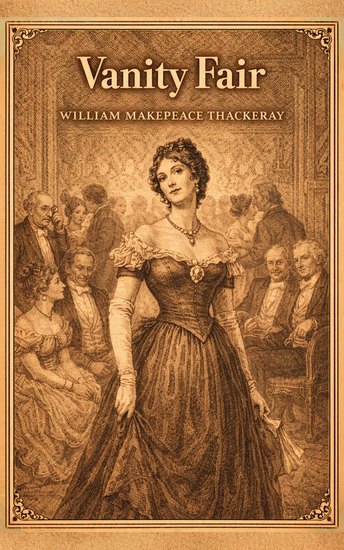
  • Vanity Fair - cover

    Vanity Fair

    William Makepeace Thackeray

    • 0
    • 0
    • 0
    Vanity Fair by William Makepeace Thackeray is a sweeping satirical masterpiece that offers a brilliant and unflinching portrait of ambition, greed, love, and social climbing in nineteenth-century England. First published in 1847–1848, this classic novel subtitled A Novel Without a Hero presents a vivid panorama of society, exposing its hypocrisies and moral contradictions with wit, irony, and sharp social observation.
    
    Set against the backdrop of the Napoleonic Wars and the rigid class structures of Victorian Britain, the story follows two contrasting women: the cunning and resourceful Becky Sharp and the gentle, kind-hearted Amelia Sedley. From their school days together to their entanglements in marriage, fortune, and scandal, their lives unfold in dramatically different ways. Through their journeys, Thackeray explores the complexities of character, revealing both virtue and vice in equal measure.
    
    Becky Sharp, one of literature's most unforgettable anti-heroines, is intelligent, charming, and fiercely determined to rise above her modest origins. With sharp wit and calculated ambition, she navigates the drawing rooms of high society, manipulating situations to secure wealth and status. Amelia, by contrast, embodies loyalty and devotion, often to her own detriment. The contrast between these two women forms the emotional and moral center of the novel.
    
    Thackeray's narrative voice is distinctive and playful, frequently addressing the reader directly and reminding us that society itself is a grand performance—a "vanity fair" where people chase wealth, prestige, and admiration. Through humor and biting satire, the novel critiques the shallow values of a world driven by appearances and self-interest.
    
    Richly populated with memorable characters—from dashing officers and aristocrats to scheming relatives and social climbers—the novel paints a detailed portrait of a society obsessed with status and success. Yet beneath the satire lies a deeper meditation on human nature, moral compromise, and the illusions people create to sustain their ambitions.
    
    Both entertaining and thought-provoking, Vanity Fair remains one of the great novels of English literature. Its enduring appeal lies in its lively storytelling, complex characters, and timeless insight into the pursuit of wealth and recognition. Thackeray's keen observations remind readers that while society may change, the human desire for admiration and advancement remains constant.
    Ver libro