Junte-se a nós em uma viagem ao mundo dos livros!
Adicionar este livro à prateleira
Grey
Deixe um novo comentário Default profile 50px
Grey
Assine para ler o livro completo ou leia as primeiras páginas de graça!
All characters reduced
Mrs Maxon Protests - cover
LER

Mrs Maxon Protests

Anthony Hope

Editora: DigiCat

  • 0
  • 0
  • 0

Sinopse

In "Mrs. Maxon Protests," Anthony Hope weaves a captivating narrative that explores themes of social justice and individual agency within the constraints of Victorian societal norms. Set against the backdrop of a rapidly changing world, the novel employs Hope's signature blend of sharp dialogue and poignant characterization, reflecting the tensions between personal desires and societal expectations. The story intricately examines the plight of a strong-willed woman, Mrs. Maxon, who defies conventions as she navigates her husband's controversial decisions, illuminating the struggles of women seeking to assert their voices in a patriarchal society. Anthony Hope, best known for his adventurous works such as "The Prisoner of Zenda," was deeply engaged with the sociopolitical landscapes of his time. His experiences as a playwright and novelist, combined with a keen awareness of the cultural shifts in late 19th-century England, informed his writing, allowing him to craft narratives that resonate with timeless relevance. Hope's exposure to various socio-political movements likely inspired him to address the often-overlooked challenges faced by women in his era. This novel is highly recommended for readers interested in historical fiction that challenges societal norms and highlights the complexities of human relationships. Hope's intricate storytelling and insightful social commentary will captivate those eager to explore the intersections of gender, power, and resistance in a compelling narrative.
Disponível desde: 16/09/2022.
Comprimento de impressão: 246 páginas.
Outros livros que poderiam interessá-lo

  • That Pinson Girl - cover

    That Pinson Girl

    Gerry Wilson

    • 0
    • 0
    • 0
    In a bleak Mississippi farmhouse in 1918, Leona Pinson gives birth to an illegitimate son whose father she refuses to name, but who will, she is convinced, return from the war to rescue her from a hardscrabble life with a distant mother, a dangerous brother, and a dwarf aunt. When, instead, her lover returns with a wife in tow, her dreams are shattered. As her brother's violence escalates and her aunt flees, Leona must rely on the help of Luther Biggs, the son of Leona's grandfather and one of his former slaves, to protect her child. Told against the backdrop of the deprivation of World War I, the tragedies of the influenza epidemic, and the burden of generations of betrayal, That Pinson Girl unfolds in lyrical, unflinching prose, engaging the timeless issues of racism, sexism, and poverty.
    Ver livro
  • The House of Mirth - cover

    The House of Mirth

    Edith Wharton

    • 0
    • 0
    • 0
    "The House of Mirth" is one of Edith Wharton's most critically acclaimed novels, shedding light on the opulent and superficial high society of New York in the Gilded Age. It follows the life and struggles of Lily Bart, a beautiful and intelligent woman of the upper class, as she navigates societal expectations, relationships, and her own aspirations in a world where appearances matter more than one's character. The novel presents a satirical and tragic look at the constraints placed upon women in the 19th and early 20th centuries and is a poignant critique of wealth and class.
    Ver livro
  • Rabies - A tale of disease from Spains greatest short story writer - cover

    Rabies - A tale of disease from...

    Vicente Blasco Ibáñez

    • 0
    • 0
    • 0
    Vicente Blasco Ibáñez was born in Valencia, Spain on 29th January 1867.  
     
    At university, he studied law and graduated in 1888 but never felt the urgency to practice - he was more interested in politics, journalism, literature and women.   
     
    Politically he was a militant Republican partisan and, in his youth, founded a newspaper, El Pueblo (The People). The newspaper was taken to court many times and he made many enemies. In one incident he was shot and almost killed. In 1896, Ibáñez was arrested and sentenced to a few months in prison. 
     
    Despite this colourful background he found time to write novels. His first published work was ‘La Araña Negra’ (The Black Spider) in 1892, a work that he later repudiated although at the time it was a useful vehicle for him to express his anti-clerical views. 
     
    In 1894, he published ‘Arroz y Tartana’ (Airs and Graces), about a late 19th Century widow in Valencia trying to keep up appearances in order to marry her daughters well.   
     
    Ibáñez’s next sequence of books studied rural life in the farmlands of Valencia and failed to gain much of an audience.   
     
    His writing now took on a new direction with its now familiar sensational and melodramatic themes in 1908 with ‘Sangre y Arena’ (Blood and Sand), which follows the career of Juan Gallardo from his poor beginnings as a child in Seville, to his rise to becoming a famous matador in Madrid 
     
    However, his greatest success was ‘Los Cuatro Jinetes del Apocalipsis (The Four Horsemen of the Apocalypse) in 1916, which tells a tangled tale of the French and German sons-in-law of an Argentinian land-owner who find themselves fighting on opposite sides in the First World War.  It was a literary and commercial sensation and became the best-selling book of 1919.  It also propelled Rudolph Valentino to stardom in the 1921 film. 
     
    Ironically his fame in the English-speaking world has come not as a novelist but as the stories behind some of Hollywood’s greatest silent movies. 
     
    Vicente Blasco Ibáñez died in Menton, France on January 28th, 1928, the day before his 61st birthday.
    Ver livro
  • The Banishment - cover

    The Banishment

    M. C. Beaton

    • 0
    • 0
    • 0
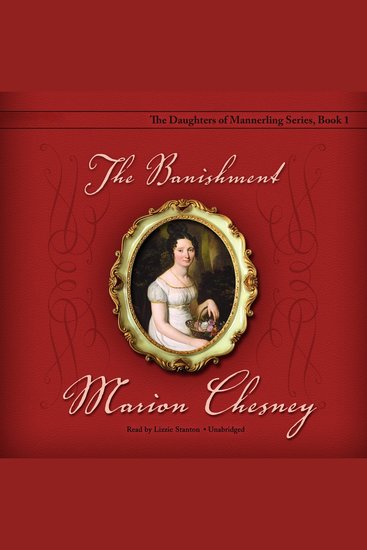
    Could she ever love a gentleman as much as she loved her magnificent home? 
    Isabella Beverley is blessed with unparalleled beauty but, unfortunately, has been raised in the most snobbish and haughtiest of families. When her father gambles away their fortune—including Mannerling, the exquisite family mansion—Isabella discovers there is very little sympathy for her plight. 
    As the eldest, Isabella is chosen to court Mr. Judd, the roguish bachelor who won Mannerling. Surely no sacrifice is too great to regain Mannerling? But tempting her away from Mr. Judd is Lord Fitzpatrick, an Irish rake who fears Isabella can never love a man as she does her home. He is nonetheless determined to convince her to choose man over manse.
    Ver livro
  • Marius' Mules XV: The Ides of March - Marius' Mules Book 15 - cover

    Marius' Mules XV: The Ides of...

    S.J.A. Turney

    • 0
    • 0
    • 0
    The war in Gaul is over. 
     
    The rebels are defeated. 
     
    Now the battle for Rome has begun.
    Ver livro
  • Forgotten Authors The - Volume 8 - S Mukerji to Eça de Queirós - cover

    Forgotten Authors The - Volume 8...

    Henry W Nevinson, Simon Newcomb,...

    • 0
    • 0
    • 0
    Throughout the long centuries of human history is the want, and the need, to share information, to exchange ideas and for that knowledge and experience, for curiosity and learning, to be the basis of a civil society. 
    In literature the ambition is much narrower.  In order to be known, to be popular, you had to be published.  And for that people had to know you existed and your ideas worth reading.  Obviously for most of humanity’s time people couldn’t read and texts couldn’t be published in any great number. 
    In the 15th Century Gutenberg’s printing press began the revolution to address the second and by the 19th century had gathered pace with startling speed and mass distribution.  Education for the many was brought in to help people understand more of their world and, with new skills, how to have a better place within it.  Now, if the powers that owned the presses and means of distribution agreed an audience would now be able to avail themselves of your ideas, your printed words.  
    Sadly, in the thirst for the new, the recent and the past fell from sight, relegated to dark corners and dusty shelves.   
    But the printed word is rarely without someone, somewhere busying themselves through piles of papers and books rediscovering what a good story is, whatever its age. 
    Sadly, in the thirst for the new, the recent and the past fell from sight, relegated to dark corners and dusty shelves.    
    But the printed word is rarely without someone, somewhere busying themselves through piles of papers and books rediscovering what a good story is, whatever its age. 
    In this volume we offer up a small selection of those talents whose time has now come again.
    Ver livro