¡Acompáñanos a viajar por el mundo de los libros!
Añadir este libro a la estantería
Grey
Escribe un nuevo comentario Default profile 50px
Grey
Suscríbete para leer el libro completo o lee las primeras páginas gratis.
All characters reduced
To the Lighthouse - cover

To the Lighthouse

Anónimo

Editorial: Zenith Whispering Pines Publishers

  • 0
  • 0
  • 0

Sinopsis

Unlock the Profound Beauty of Human Connection and the Unstoppable March of Time.

Experience the height of stream of consciousness storytelling with Virginia Woolf's most autobiographical and evocative work, To the Lighthouse. Set on the Isle of Skye, the novel centers on the Ramsay family and their visits to the Scottish coast, framed by the anticipation of a simple trip to a nearby lighthouse—a trip that will take ten years and a lifetime of emotional change to complete.

Through the shifting perspectives of the nurturing Mrs. Ramsay, the intellectually demanding Mr. Ramsay, and the struggling artist Lily Briscoe, Woolf explores the intricate tensions of family life and the fleeting nature of experience. The famous middle section, "Time Passes," stands as one of the most haunting passages in literature, depicting the decay of the family home while world events and personal tragedies unfold in the background.

A landmark of Modernist literature, To the Lighthouse is more than a story; it is a meditation on how we perceive reality and the struggle to create something permanent in a world of constant flux.

Journey into the heart of the Ramsay family. Buy "To the Lighthouse" today and experience one of the greatest novels of the 20th century.
Disponible desde: 17/12/2025.
Longitud de impresión: 223 páginas.


Otros libros que te pueden interesar

  • On the Genealogy of Morality - cover

    On the Genealogy of Morality

    Friedrich Nietzsche

    • 0
    • 0
    • 0
    “Without music, life would be a mistake.”“It is not a lack of love, but a lack of friendship that makes unhappy marriages.” ...“That which does not kill us makes us stronger.”“I'm not upset that you lied to me, I'm upset that from now on I can't believe you.”NietzscheIn 1887, with the view of amplifying and completing certain new doctrines which he had merely sketched in Beyond Good and Evil (see especially Aphorism 260), Nietzsche published The Genealogy of Morals. This work is perhaps the least aphoristic, in form, of all Nietzsche's productions. For analytical power, more especially in those parts where Nietzsche examines the ascetic ideal, The Genealogy of Morals is unequalled by any other of his works; and, in the light which it throws upon the attitude of the ecclesiast to the man of resentment and misfortune, it is one of the most valuable contributions to sacerdotal psychologyFriedrich Wilhelm Nietzsche was a German philosopher, cultural critic and philologist whose work has exerted a profound influence on modern intellectual history. He began his career as a classical philologist before turning to philosophy.
    Ver libro
  • Noah's Ark the Flood and the Rainbow - cover

    Noah's Ark the Flood and the...

    Pastor Philip

    • 0
    • 0
    • 0
    Noah was directed by the Lord to make an ark, in which he, his family, and a number of birds and animals, would not be drowned by the flood. God's decision to bring a flood upon the earth was deeply influenced by the reality of evil that He saw carried out by the human race. The song by Chey, 'The Book of Life' at the end of the sermon, gives the listener an opportunity to reflect on the sermon.
    Ver libro
  • The Hundred Years’ War - History of the War between the French and English in the 14th Century - cover

    The Hundred Years’ War - History...

    Kelly Mass

    • 0
    • 0
    • 0
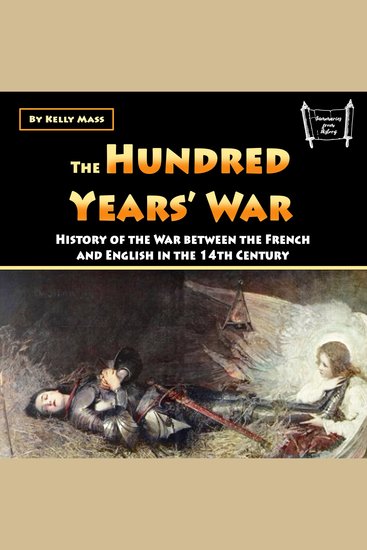
    The Hundred Years' War was a series of prolonged and intense conflicts between the kingdoms of England and France, spanning from 1337 to 1453. At its core, the war was rooted in a bitter dispute over the French throne, which was claimed by both the English royal House of Plantagenet and the French House of Valois. This disagreement over succession became more than a dynastic struggle; it evolved into a broader geopolitical and cultural clash, drawing in various powers from across Western Europe. The war became a defining event in medieval history, fundamentally shaping the course of European politics, society, and warfare. 
    The conflict was not a single, continuous battle but a series of engagements, truces, and temporary pauses in fighting, lasting a staggering 116 years. Over five generations, English and French rulers alternated between direct conflict and negotiated ceasefires, each side hoping to gain an upper hand in the long-running struggle. The war is commonly divided into three main phases: the Edwardian War (1337–1360), the Caroline War (1369–1389), and the Lancastrian War (1415–1453). These stages were marked by shifts in momentum and power, with the English initially achieving significant victories but eventually losing their dominance in the final stages of the war. 
    One of the most significant outcomes of the Hundred Years' War was its profound impact on European warfare. Both England and France introduced new military strategies and technologies, including the use of professional standing armies and the widespread deployment of artillery. These advancements marked a dramatic shift away from the feudal levies and knightly combat that had previously defined medieval warfare. The use of the longbow by English archers, for example, proved particularly effective in the decisive Battle of Crécy in 1346, and the war’s artillery, such as cannons and siege weapons, changed the way battles were fought.
    Ver libro
  • Bacon Shakespere and the Rosicrucians - cover

    Bacon Shakespere and the...

    Manly Palmer Hall

    • 0
    • 0
    • 0
    The present consideration of the Bacon--Shakspere--Rosicrucian controversy is undertaken not for the vain purpose of digging up dead men's bones but rather in the hope that a critical analysis will aid in the rediscovery of that knowledge lost to the world since the oracles were silenced. It was W. F. C. Wigston who called the Bard of Avon "phantom Captain Shakespeare, the Rosicrucian mask." This constitutes one of the most significant statements relating to the Bacon-Shakspere controversy.
    Ver libro
  • Relax Get Inspired: On the Art of War - cover

    Relax Get Inspired: On the Art...

    Sun Tzu

    • 0
    • 0
    • 0
    Welcome to our reading of "The Art of War," a timeless treatise on strategy, warfare, and leadership written by the ancient Chinese military strategist Sun Tzu. Composed over 2,500 years ago, this profound work remains as relevant today as it was in the era of chariots and sword battles. 
    "The Art of War" is not merely a book about conflict; it is a guide to navigating and overcoming challenges through wisdom, strategy, and adaptability. Its teachings can be applied beyond the battlefield, encompassing personal challenges, business conflicts, and the management of any competitive environment. 
    In today’s fast-paced world, where conflict can arise in many forms—whether in the boardroom, on the sports field, or within our own digital landscapes—Sun Tzu’s advice offers a strategic framework for approaching these challenges. His principles of understanding not just your own strengths and weaknesses but also those of your opponent have found new life in everything from corporate negotiations to sports coaching strategies. 
    As you listen, consider how these ancient words can be applied to the modern struggles you face. Whether you are a leader, a strategist, a thinker, or simply someone navigating the complexities of everyday life, "The Art of War" provides valuable insights into the art of making smart, calculated decisions that can lead to success in any arena. 
    Let us delve into Sun Tzu’s world, exploring how his understanding of strategy and human nature can inform and guide our own lives today. 
    Recommended to listen with headphones.
    Ver libro
  • The Big Tent - cover

    The Big Tent

    Santiago Machain

    • 0
    • 0
    • 0
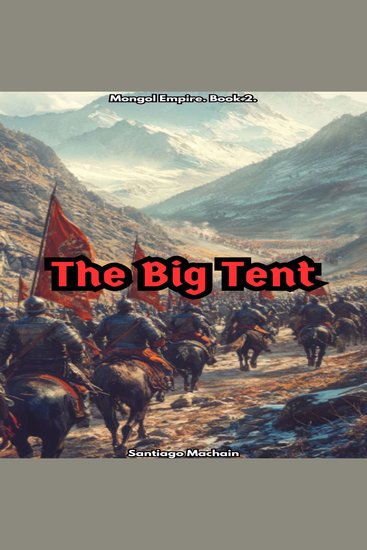
    This audiobook is narrated by an AI Voice.  This book reveals how a nomadic empire engineered the most ambitious peace of the medieval world—and what it cost to keep it. From the relay-station highways of the yam to the cosmopolitan capitals of Dadu, Tabriz, and Sarai, this volume shows how the Mongols turned conquest into governance, revived the Silk Roads, and moved people, ideas, and technologies at unprecedented speed. Readers meet rulers like Ögedei and Khubilai, merchants underwriting caravans with paper money, monks and qadis negotiating pluralism, and engineers dredging canals to feed cities. Across chapters on law, daily life, diplomacy, and long-distance trade, the book reconstructs a functioning imperial system—bold, pragmatic, and often surprisingly humane—before charting the stresses that strained it by the late 13th century: fiscal overreach, environmental shocks, regional rivalries, and administrative fatigue. Grounded in vivid scenes and careful analysis, this is a sweeping, accessible history of how the Mongol order worked on the ground—and why it began to creak even as it transformed Eurasia.
    Ver libro