Junte-se a nós em uma viagem ao mundo dos livros!
Adicionar este livro à prateleira
Grey
Deixe um novo comentário Default profile 50px
Grey
Assine para ler o livro completo ou leia as primeiras páginas de graça!
All characters reduced
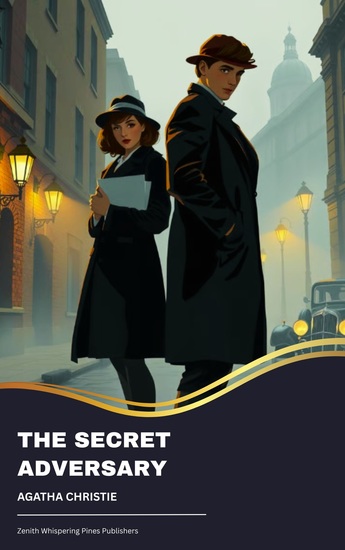
The Secret Adversary - cover
LER

The Secret Adversary

Anônimo

Editora: Zenith Whispering Pines Publishers

  • 0
  • 0
  • 0

Sinopse

A missing girl, a secret document, and a shadowy enemy who will kill to stay hidden—Tommy and Tuppence have just walked into the most dangerous adventure of their lives.
What begins as a simple business scheme quickly turns into a high-stakes race against a ruthless mastermind known only as Mr. Brown. With political power hanging in the balance, the spirited young duo plunge into a world of spies, disguises, coded messages, and deadly traps.

Praised as "a fast, witty thriller with irresistible charm," this novel introduces two of Christie's most beloved characters—bold, clever, and wonderfully unpredictable. Their chemistry, humor, and daring make the mystery as entertaining as it is suspenseful.

Perfect for readers who love thrilling twists, energetic characters, and espionage-style intrigue, this story keeps the tension high until the final shocking reveal.

Dive into the mystery now—and join Tommy and Tuppence as they chase the adversary no one else can catch.
Disponível desde: 02/12/2025.
Comprimento de impressão: 308 páginas.

Outros livros que poderiam interessá-lo

  • The Purloined Letter - cover

    The Purloined Letter

    SAMPI Books, Edgar Allan Poe

    • 0
    • 0
    • 0
    "The Purloined Letter" is a short story by Edgar Allan Poe that recounts the ingenuity of detective C. Auguste Dupin in recovering a stolen compromising letter, exploring themes of intellect, psychological analysis and the confrontation between the detective and the cunning thief.
    Ver livro
  • Effi Briest in simple language - based on plain language - cover

    Effi Briest in simple language -...

    Theodor Fontane

    • 0
    • 0
    • 0
    Theodor Fontane's best-known novel is published in simple language for the first time.Theodor Fontane's best-known novel is published in simple language for the first time. It largely complies with the ISO 24495-1:2023 plain language standard. We have also largely adapted it for plain language.The content is also typographically designed to be particularlyreader-friendly. The book is suitable for readers with limited readingability, English as a second language or with cognitive impairments.This means that as many people as possible can enjoy readingand understanding one of Germany's most famous novels.aibo publishing produces the World Literature series in simple and plain language. The first publications generated a media response across Europe, including in the FAZ and The Times London, and, according to the NZZ, triggered a "culture war"."Effi Briest" is about love and freedom. A young woman is married at an early age. She is torn between her feelings and the strict rules of society. Her curiosity and zest for life are her destiny. She is caught between two men. They fight a duel. This is no longer in keeping with the times. But they don't know better.The novel is set in 19th century Germany. It can be compared to the Russian novel "Anna Karenina" or the French "Madame Bovary". "Effi Briest" became world-famous and was often made into a film. Theodor Fontane is considered a representative of poetic realism.
    Ver livro
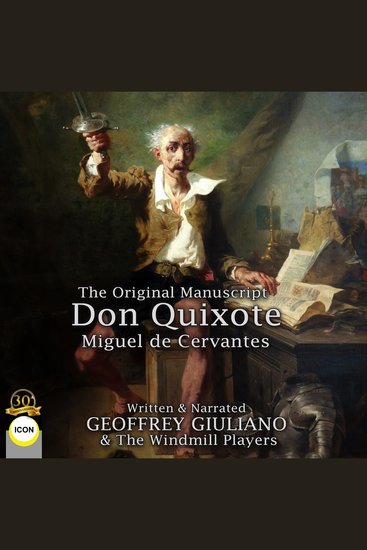
  • Don Quixote The Original Manuscript - cover

    Don Quixote The Original Manuscript

    Miguel de Cervantes

    • 0
    • 0
    • 0
    Don Quixote is a Spanish novel by Miguel de Cervantes. It was originally published in two parts, in 1605 and 1615. A founding work of Western literature, it is often labeled as the first modern novel and is considered one of the greatest works ever written Don Quixote also holds the distinction of being one of the most-translated books in the world. 
     
    The plot revolves around the adventures of a noble from La Mancha named Alonso Quixano, who reads so many chivalric romances that he loses his mind and decides to become a knight-errant (caballero andante) to revive chivalry and serve his nation, under the name Don Quixote de la Mancha. He recruits a simple farmer, Sancho Panza, as his squire, who often employs a unique, earthy wit in dealing with Don Quixote's rhetorical monologues on knighthood, already considered old-fashioned at the time. Don Quixote, in the first part of the book, does not see the world for what it is and prefers to imagine that he is living out a knightly story.
    Ver livro
  • The Oblong Box - cover

    The Oblong Box

    SAMPI Books, Edgar Allan Poe

    • 0
    • 0
    • 0
    "The Oblong Box" is a short story by Edgar Allan Poe that explores human mysteries and obsessions. The narrative follows a man who, during a sea voyage, becomes intrigued by a strange oblong box brought on board by a friend, triggering a series of enigmatic events and surprising revelations.
    Ver livro
  • Shades A Phantasy - Ukranian born Korolenko creates a fictional dialogue of Socrates to examine lifes biggest questions - cover

    Shades A Phantasy - Ukranian...

    Vladimir Korolenko

    • 0
    • 0
    • 0
    Vladimir Galaktionovich Korolenko was born in Zhytomyr, Ukraine, then part of the Russian Empire on 27th July 1853. 
     
    His father died when he was 13 and life was then often struck with bouts of poverty, which resulted in his education being somewhat erratic.   A spell in exile at 23 was followed by another as the politics of the times opposed his volatile but heart-felt passions. 
     
    Writing was also coming to the fore and in 1879 his debut short story telling of a young Narodnik searching for social and spiritual identity, was published. 
     
    In 1881, Korolenko refused to swear allegiance to the new Russian Tsar and was again exiled, this time much farther afield.  He spent the next three years doing manual work, but took time to study local customs and history.  These impressions in exile provided rich material for his writings. 
     
    In 1885 he was allowed to settle in Nizhny, where again he repeatedly questioned the authorities.  That same year ‘Makar's Dream’ established his literary reputation and was part of his first collection ‘Sketches and Stories’, the following year. 
     
    In the early 1890’s when famine struck Central Russia, he went to work on relief missions, collecting donations, supervising the delivery and distribution of food, opening 45 free canteens, all this while writing the graphic reports that would later be published as ‘In the Year of Famine’ in 1893. 
     
    By 1896 despite some psychological disorders, he was well regarded amongst Russian writers and was even a member of the Russian Academy of Sciences.  Throughout his writing career Korolenko was a staunch advocate of human rights, putting that sacred activity above what he called his 'part-time-writing'. 
     
    In the Revolutionary year of 1905, under his editorship, Russkoye Bogatstvo published the Manifest by the Petersburg Soviet of the Workers' deputies. Korolenko was now repeatedly harassed by the authorities, had his flat raided many times and materials confiscated. 
     
    As a lifetime opponent of Tsarism, he guardedly welcomed the Revolution of 1917.  Once the nature of Bolshevism was established, he soon started to criticize it. During the Russian Civil War that ensued, he condemned both the Red Terror and the White Terror.  
     
    Despite suffering from a progressive heart disorder, he collected food packages for children in famine-stricken Moscow and Petrograd as well as organised orphanages and shelters for the homeless.  
     
    Vladimir Korolenko died in Poltava, Ukraine, of the complications of pneumonia on 25th December 1921.  He was 68. 
     
    In this story Korolenko invokes the characters of Socrates and Elpidias who, after their deaths, involve themselves in a debate on God.  This is a tour-de-force of conception and execution.
    Ver livro
  • Antigone - Full Cast Drama - cover

    Antigone - Full Cast Drama

    Sophocles

    • 0
    • 0
    • 0
    "Antigone" is a Greek tragedy written by Sophocles in the 5th century BCE. The play is part of a trilogy, but only "Antigone," the third installment, has survived. The narrative revolves around Antigone, the daughter of Oedipus, who defies the king's decree and buries her brother Polynices, in defiance of the law. The king, Creon, orders that Polynices' body should remain unburied as punishment for his rebellion against the city. 
     
    Antigone's act of burial is not only an expression of familial loyalty but also an assertion of divine laws over human laws. She believes in the moral duty to honor her brother, even in death and is willing to face the consequences. Creon, however, sees her actions as an affront to his authority and issues a decree that anyone attempting to bury Polynices will be put to death. 
     
    As the plot unfolds, the clash between divine and human laws intensifies. Antigone is caught and brought before Creon, where she staunchly defends her actions. Creon remains resolute in his decision to punish her, regardless of her familial ties. The play explores themes of morality, duty, and the consequences of pride and authoritarian rule. 
     
    Tragedy unfolds as Antigone is sentenced to be entombed alive. The narrative weaves the fates of various characters, including Antigone, Haemon (Creon's son and Antigone's fiancé), and Eurydice (Creon's wife). The play culminates in a series of tragic events, leading to Creon's realization of his own tragic flaw and the devastating consequences of his decisions.
    Ver livro