¡Acompáñanos a viajar por el mundo de los libros!
Añadir este libro a la estantería
Grey
Escribe un nuevo comentario Default profile 50px
Grey
Suscríbete para leer el libro completo o lee las primeras páginas gratis.
All characters reduced
The Trial of Susan B Anthony Beverly Jones Edwin Marsh and William Hall - On the Charge of Illegal Voting at the Presidential Election in Nov 1872 - cover

The Trial of Susan B Anthony Beverly Jones Edwin Marsh and William Hall - On the Charge of Illegal Voting at the Presidential Election in Nov 1872

Anónimo

Editorial: Good Press

  • 0
  • 0
  • 0

Sinopsis

The Trial of Susan B. Anthony, Beverly Jones, Edwin Marsh and William Hall is a compelling courtroom drama that delves into the intricacies of justice and civil rights in 19th century America. The narrative, framed through a meticulous recounting of the proceedings against the iconic suffragist Susan B. Anthony, showcases a blend of legal discourse and societal critique. Anthony'Äôs defiance against unjust laws, particularly regarding women's voting rights, is presented in a style that juxtaposes stark legalistic language with the soaring rhetoric of individual freedom, highlighting the tensions of a nation grappling with evolving notions of democracy and equality. Written by an anonymous author, this work emerges from a rich tradition of politically charged literature aimed at social reform. The author likely draws upon firsthand accounts of the trial, along with the fervent activism surrounding the women'Äôs suffrage movement. This context enhances the text's authenticity and emotional weight, illuminating the formidable spirit of its subjects, who were at the forefront of a transformative period in U.S. history. This book is essential reading for anyone interested in the intersections of law, gender, and civil rights. It invites readers to consider not only the legal arguments presented but also the moral imperatives that underpinned the suffragists' fight for equality. Engaging and provocative, it is an essential addition to the canon of American literature and history.
Disponible desde: 22/08/2023.
Longitud de impresión: 173 páginas.

Otros libros que te pueden interesar

  • Nara Period - Imperial Splendor and the Rise of Buddhist Influence - cover

    Nara Period - Imperial Splendor...

    Rolf Hedger

    • 0
    • 0
    • 0
    The Nara Period (710–794) marked a transformative era in Japanese history, characterized by the establishment of a centralized government, the increasing influence of Buddhism, and cultural exchanges with China and Korea. It was during this time that Japan’s first permanent capital was established in Nara, shaping the foundations of political and cultural development for centuries to come. 
    Before the Nara Period, Japan’s capitals frequently shifted locations with the death of each emperor, a practice rooted in Shinto beliefs regarding spiritual purity. However, in 710, Emperor Genmei broke this tradition by moving the capital to Heijō-kyō (modern-day Nara), modeling it after the grand Tang dynasty capital of Chang’an. This decision signified Japan’s growing commitment to a stable and sophisticated political structure. Nara’s grid-like city layout, Buddhist temples, and administrative buildings reflected Chinese architectural and governmental influences, showcasing the era’s desire for centralized control and cultural refinement. 
    At the heart of the Nara government was the ritsuryō system, an adaptation of China’s bureaucratic model, which aimed to solidify imperial rule through codified laws, land distribution policies, and taxation systems. The emperor held supreme authority, but powerful aristocratic families, particularly the Fujiwara clan, played a crucial role in court politics. The implementation of the Taihō Code in 701 reinforced these administrative reforms, further consolidating the emperor’s influence while allowing aristocrats to maintain their dominance over court affairs.
    Ver libro
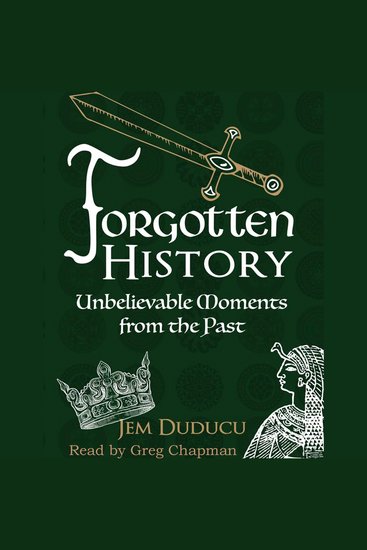
  • Forgotten History - Unbelievable Moments From The Past - cover

    Forgotten History - Unbelievable...

    Jem Duducu

    • 0
    • 0
    • 0
    Not all history is recorded in school textbooks or cast into towering monuments that shape city skylines. Quite often the most intriguing (and most bizarre) bits are forgotten and fall away into obscurity. In this fascinating book, Jem Duducu shines light on the almost forgotten, wonderfully strange, and often hilarious moments of history that would otherwise be lost forever. Forgotten History tells in delightful detail the stories of hard-to-believe events, people and inventions. Spanning the breadth of human history, this light-hearted and easy-to-read book is full to bursting with the bits from history that even a history enthusiast may otherwise have never known. Covering a wide variety of topics, from the time a Pope put his dead predecessor on trial to the awkward moment when the US Air Force accidentally dropped nuclear bombs on Spain, Forgotten History provides a journey through time to discover the weird and wonderful history that you didn’t learn about in school.
    Ver libro
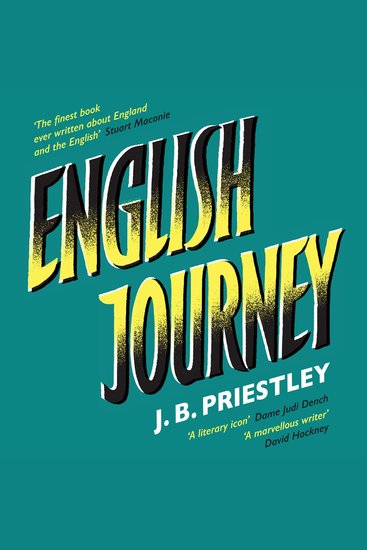
  • English Journey: ‘The finest book ever written about England and the English’ - cover

    English Journey: ‘The finest...

    J. B. Priestley

    • 0
    • 0
    • 0
    ‘The finest book ever written about England and the English’ Stuart Maconie 
    ‘J. B. Priestley is one of our literary icons of the 20th Century and it is time that we all became re-acquainted with his genius.’ Dame Judi Dench 
    Three years before George Orwell made his expedition to the far and frozen North in The Road to Wigan Pier, celebrated writer and broadcaster JB Priestley cast his net wider, in a book subtitled ‘a Rambling but Truthful Account of What One Man Saw and Heard and Felt and Thought During a Journey Through England During the Autumn of the Year 1933.’ Appearing first in 1934, it was a huge and immediate success. Today, it still stands as a timeless classic: warm-hearted, intensely patriotic and profound. 
    An account of his journey through England – from Southampton to the Black Country, to the North East and Newcastle, to Norwich and home – English Journey is funny and tender. But it is also a forensic reading of a changing England and a call to arms as passionate as anything in Orwell’s bleak masterpiece. Moreover, it both captured and catalysed the public mood of its time. In capturing and describing an English landscape and people hitherto unseen, writing scathingly about vested interests and underlining the dignity of working people, Priestley influenced the thinking and attitudes of an entire generation and helped formulate a public consensus for change that led to the birth of the welfare state. 
    Prophetic and as relevant today as it was nearly ninety years ago, English Journey is an elegant and readable love letter to a country Priestley finds unfathomable. 
    Priestley's English Journey is a special exploration of Britain, a top choice for those who appreciate travelogues and social history. His essays are a testament to his deep affection for his homeland, marking this book as one of the best in non-fiction. 
    For fans of Rory Stewart (The Marches), Maggie O'Farrell (I Am, I Am, I Am), and Marion Turner (The Wife of Bath). 
    HarperCollins 2023
    Ver libro
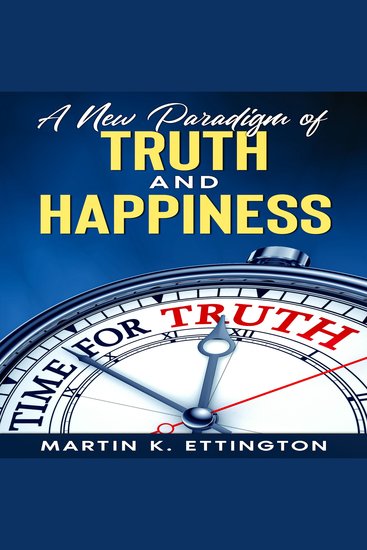
  • A New Paradigm of Truth and Happiness - cover

    A New Paradigm of Truth and...

    Martin K. Ettington

    • 0
    • 0
    • 0
    This book is for people who want to become happier by applying the truth concepts given here to their lives. It is all about seeing through the distortions and misinformation in our lives, civilization, science, and common beliefs.  
    What you can learn from this book: 
    ·        Examples on how to apply these ideas to improve happiness in your daily life. 
    ·        See why replacing illusions with truth leads to better peace of mind and happiness 
    ·        A new paradigm about how to improve objectivity 
    ·        How our Ego affects how well we can see truth 
    ·        Approaches which will aid your Spiritual Growth 
    ·        Seeing the truth beyond many lies and misinformation you are taught 
    ·        How to measure the paranormal scientifically 
    ·        How Integration of diverse knowledge leads to new answers and understandings 
    Follow the ideas given here to improve your life. You will not regret it.
    Ver libro
  • Madame Q’s Dolly Mops - cover

    Madame Q’s Dolly Mops

    Dorian Shellan

    • 0
    • 0
    • 0
    Sometimes, a gentleman may not want the company of one of the fine ladies at The Nunnery, but rather a pretty young thing to use as a toy. Madame Q must therefore hire dolly mops to fulfill her client's requirements. 
    A dolly mop is a girl, usually a domestic like a maid, who seeks to earn extra money by occasional prostitution. However, most of these girls have no idea what they're getting themselves in to, imagining dolly mopping as some sort of romantic adventure. This means Madame Q needs a trusted accomplice to introduce prospective dolly mops to the realities of what will be expected of them. When she learns of Dr. Onan's predilections, she realizes that he is the perfect person to break them in. 
    This is the story of how Mary and Gertie became dolly mops at The Nunnery.
    Ver libro
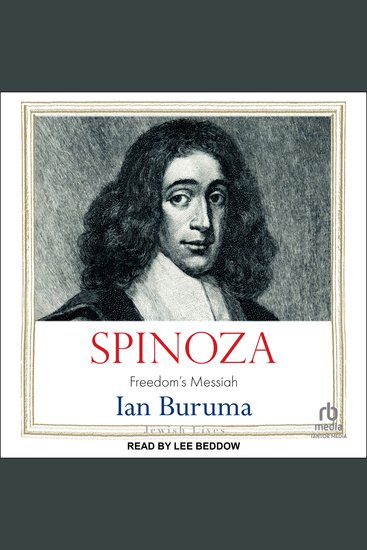
  • Spinoza - Freedom's Messiah - cover

    Spinoza - Freedom's Messiah

    Ian Buruma

    • 0
    • 0
    • 0
    Ian Buruma explores the life and death of Baruch Spinoza, the Enlightenment thinker whose belief in freedom of thought and speech resonates in our own time 


    Baruch (Benedictus) Spinoza (1632–1677) was a radical free thinker who led a life guided by strong moral principles despite his disbelief in an all-seeing God. Seen by many as Satan's disciple during his lifetime, Spinoza has been regarded as a secular saint since his death. Many contradictory beliefs have been attached to his name: rationalism or metaphysics, atheism or pantheism, liberalism or despotism, Jewishness or anti-Semitism. However, there is no question that he viewed freedom of thought and speech as essential to an open and free society. 


    In this insightful account, the award-winning author Ian Buruma stresses the importance of the time and place that shaped Spinoza, beginning with the Sephardim of Amsterdam and followed by the politics of the Dutch Republic. Though Spinoza rejected the basic assumptions of his family's faith, and was consequently expelled from his Sephardic community, Buruma argues that Spinoza did indeed lead a modern Jewish life. To Heine, Hess, Marx, Freud, and no doubt many others today, Spinoza exemplified how to be Jewish without believing in Judaism. His defense of universal freedom is as important for our own time as it was in his.
    Ver libro