Join us on a literary world trip!
Add this book to bookshelf
Grey
Write a new comment Default profile 50px
Grey
Subscribe to read the full book or read the first pages for free!
All characters reduced
The Four Books of Confucianism - Enriched edition Bilingual Edition: English-Chinese - cover

The Four Books of Confucianism - Enriched edition Bilingual Edition: English-Chinese

Anonymous, Mencius

Translator James Legge

Publisher: DigiCat

  • 0
  • 0
  • 0

Summary

The Four Books of Confucianism presents a profound exploration of classical Chinese philosophy, culture, and ethics through a curated selection of ancient texts. This anthology delves into central Confucian tenets, highlighting the insightful teachings and dialogues central to Confucian thought. While the texts span a range of literary forms, including discourses, anecdotes, and meditative reflections, they collectively illuminate themes of morality, humaneness, and governance. Among the standout pieces, the discussions on virtuous leadership and the cultivation of personal character underscore the enduring relevance of these philosophies in contemporary society. The anthology features contributions from venerable figures like the anonymous authors and the philosopher Mencius. These contributors have profoundly shaped Confucian discourse, drawing from varying historical and cultural contexts to elaborate on Confucian doctrines. Mencius, in particular, is renowned for his expansion on innate human goodness, offering interpretations that align with historical movements emphasising moral self-cultivation. By bringing together such diverse voices, this collection enriches the reader's understanding and appreciation of Confucianism's nuanced teachings and their historical legacy. Recommended to both seasoned scholars and newcomers, this collection provides an invaluable opportunity to traverse the philosophical landscapes of Confucianism. The collection not only imparts foundational knowledge of ancient Chinese thought but also fosters a dialogue across time and culture, encouraging readers to reflect on their own values and societal norms. Within these pages, learners and enthusiasts alike will find a treasure trove of insights, each contributing to a more profound comprehension of ethical and philosophical principles enduring through centuries.

In this enriched edition, we have carefully created added value for your reading experience:
- An Introduction draws the threads together, discussing why these diverse authors and texts belong in one collection.
- Historical Context explores the cultural and intellectual currents that shaped these works, offering insight into the shared (or contrasting) eras that influenced each writer.
- A combined Synopsis (Selection) briefly outlines the key plots or arguments of the included pieces, helping readers grasp the anthology's overall scope without giving away essential twists.
- A collective Analysis highlights common themes, stylistic variations, and significant crossovers in tone and technique, tying together writers from different backgrounds.
- Reflection questions encourage readers to compare the different voices and perspectives within the collection, fostering a richer understanding of the overarching conversation.
Available since: 11/27/2023.
Print length: 353 pages.


Other books that might interest you

  • A Cullenden of Virginia - From their pens to your ears genius in every story - cover

    A Cullenden of Virginia - From...

    Thomas Wolf

    • 0
    • 0
    • 0
    Thomas Clayton Wolfe was born at the family home, 92 Woodfin Street, in Asheville, North Carolina on October 3rd, 1900.  
    Aged 15, Wolfe began his studies at the University of North Carolina at Chapel Hill (UNC) where he enrolled in a playwriting course. Wolfe graduated in 1920 and enrolled at the Graduate School for Arts and Sciences at Harvard. Here he studied playwriting under the tutelage of George Pierce Baker. In 1922 he received his master's degree from Harvard.  
    Wolfe now began the transition from studying to commercial playwright. He went to New York in November, 1923 trying to sell his plays to Broadway.  The Theatre Guild came close to producing Welcome to Our City but in the end declined.  Wolfe now believed his style of writing was more suited to fiction.  Grasping the opportunity this afforded him he sailed to England in October 1924 to write and from there on to France, Italy and Switzerland. 
    In 1926 Wolfe began writing a novel, O Lost. This would eventually become Look Homeward, Angel. It was based on his years in Asheville. The original manuscript of O Lost was over 1100 pages. Maxwell Perkins, one of the great book editors of the age, worked at his publishers, Scribner’s and he began to focus the book, cutting and re-shaping it to center it on the character of Eugene.   
    The novel was published in 1929. It was a success.   
    Wolfe now committed the next 4 years to writing a multi-volume epic entitled The October Fair.  At Scribner’s Perkins once more decided to edit it down to a single volume; Of Time and the River.  It was even more successful than his first. It was hailed as the literary event of 1935 and cemented his reputation as one of America’s foremost novelists.  
    In 1938, after submitting his new opus, which ran to an incredible one million words, to his new editor, Edward Aswell, Wolfe left to tour the West, a part of the country he had never before visited. Whilst travelling Wolfe became ill with pneumonia and spent three weeks in a Seattle hospital. Complications arose. The prognosis was serious.  He was diagnosed with miliary tuberculosis of the brain. 
    On September 6th, he was sent to Baltimore's Johns Hopkins Hospital for treatment. The ensuing operation revealed that the disease had overrun the entire right side of his brain.  
    Thomas Clayton Wolfe never regained consciousness and died shortly before his 38th birthday on September 15th, 1938.
    Show book
  • EXPIRATION DATE 20** - 10 Year´s Later and than? - cover

    EXPIRATION DATE 20** - 10 Year´s...

    Ines Vasku

    • 0
    • 0
    • 0
    Is book feels like a glimpse behind a facade that has long "worked"—and yet has repeatedly developed cracks. At its center is a narrator who, even as a child, learned to read her surroundings like an early warning system: moods, potential dangers, unspoken expectations. Not because she was "too sensitive," but because her inner self understood early on that security is not a given. From this attitude arise patterns that extend to the present day: taking responsibility before anyone demands it; looking for fault within oneself before anyone assigns it; striving to create stability, even when the foundation for it is actually lacking. In parallel, the text opens a second level: life with chronic illness—not as an abstract medical topic, but as a daily reality. Multiple sclerosis appears here as an unpredictable path that drains energy, narrows choices, and divides everyday life into limits of pain and exhaustion. It's a life where "normal" doesn't mean everything is fine, but rather that one has learned to plan, manage, and endure with limitations. And it is precisely through this that the amount of inner work involved in seemingly small things becomes palpable: getting through the night, making it through the next day, not losing oneself. The text's description of relationships is particularly poignant: not as clear categories of "good" or "bad," but as fragile spaces where love, loyalty, grief, and the need for self-protection can coexist. There's, for example, the sibling relationship, which has been difficult since their teenage years. Not loudly dramatic, but worn down by repetition: accusations, misunderstandings, the feeling that one's own pain is not believed or is downplayed ("you're faking it"). At the same time, there remains a willingness to consider the other side: that a sibling might feel overlooked…
    Show book
  • Earned - The True Cost of Greatness From One of Hockey's Fiercest Competitors - cover

    Earned - The True Cost of...

    Chrs Pronger, Teemu Selänne

    • 0
    • 0
    • 0
    In Earned, NHL legend Chris Pronger reveals the hard truth behind greatness—that talent opens doors, but only relentless standards, ownership, and grit keep them open. 
    Success isn’t owed—it’s earned. 
    In the high-stakes world of professional hockey, talent alone doesn’t cut it. Chris Pronger—one of the NHL’s most dominant and controversial defensemen—learned that the hard way. In Earned: The True Cost of Greatness from One of Hockey’s Fiercest Competitors, he reveals the raw truth behind an eighteen-year career defined by triumph, adversity, and transformation 
    From being booed by his own fans in Hartford and St. Louis as a twenty-year-old phenom to hoisting the Stanley Cup with Anaheim in 2007, Pronger’s journey was anything but smooth. A Hockey Hall of Famer, two-time Olympic gold medalist, and Hart Trophy winner, he shares what the stats don’t show: the relentless standards and hard lessons that forged his success. 
    At the heart of Earned is a simple question—“What are your standards?”—that fueled Pronger’s evolution from underachiever to champion. Through gripping stories of betting on himself, surviving brutal trades, enduring career-ending injuries, and reinventing himself as an entrepreneur, Pronger distills a powerful formula: Standards + Adversity + Ownership = Success. 
    This isn’t just a hockey memoir—it’s a playbook for excellence in any arena. Pronger opens up about rebuilding his family life, quitting drinking, and living by his Difference Maker’s Code. Packed with insider stories, motivational insights, and practical tools like the 30-Day Standards Challenge, Earned will push you to raise your game. 
    As Pronger says, “Talent opens doors. Standards keep them open.” 
    If you’re ready to own your story and earn your success, this is your guide.
    Show book
  • Clouds of Witness - The Lord Peter Wimsey Mysteries Vol: 2 - cover

    Clouds of Witness - The Lord...

    Dorothy L. Sayers

    • 0
    • 0
    • 0
    Clouds of Witness: A Murder Mystery Novel by Dorothy L. SayersDelve into the captivating world of Lord Peter Wimsey with Clouds of Witness, the second installment in Dorothy L. Sayers' iconic mystery series. This timeless classic offers a gripping tale of murder, family secrets, and aristocratic intrigue.When the Duke of Denver, Lord Peter's own brother, is accused of murder, the stakes couldn't be higher. Armed with his razor-sharp intellect and unyielding determination, Lord Peter uncovers a web of secrets, lies, and political entanglements. As the truth unfolds, readers are treated to Sayers' signature blend of wit, suspense, and literary charm.Perfect for fans of classic detective fiction, Clouds of Witness showcases Dorothy L. Sayers' masterful storytelling and the enduring appeal of her brilliant and charismatic sleuth, Lord Peter Wimsey.
    Show book
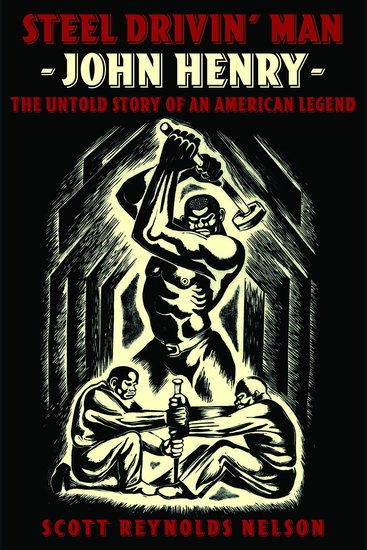
  • Steel Drivin' Man: John Henry the Untold Story of an American Legend - cover

    Steel Drivin' Man: John Henry...

    Scott Reynolds Nelson

    • 0
    • 0
    • 0
    The ballad "John Henry" is the most recorded folk song in American history and John Henry--the mighty railroad man who could blast through rock faster than a steam drill--is a towering figure in our culture. 
    In Steel Drivin' Man, Scott Reynolds Nelson recounts the true story of the man behind the iconic American hero, telling the poignant tale of a young Virginia convict who died working on one of the most dangerous enterprises of the time, the first rail route through the Appalachian Mountains. Using census data, penitentiary reports, and railroad company reports, Nelson reveals how John Henry, victimized by Virginia's notorious Black Codes, was shipped to the infamous Richmond Penitentiary to become prisoner number 497, and was forced to labor on the mile-long Lewis Tunnel for the C&O railroad. Equally important, Nelson masterfully captures the life of the ballad of John Henry, tracing the song's evolution from the first printed score by blues legend W. C. Handy, to Carl Sandburg's use of the ballad to become the first "folk singer," to the upbeat version by Tennessee Ernie Ford. 
    Attractively illustrated with numerous images, Steel Drivin' Man offers a marvelous portrait of a beloved folk song--and a true American legend.
    Show book
  • Show Don't Tell - A Writer Her Teacher and the Power of Sharing Our Stories - cover

    Show Don't Tell - A Writer Her...

    Kristine Gasbarre

    • 0
    • 0
    • 0
    From the #1 New York Times bestselling writer and author of How to Love an American Man comes a memoir that inspires us to remember the special teachers in our lives and reflect on the change we create when we share our stories. Mrs. Korthaus has always been ahead of her time—an educator who inspired her students to dream bigger, think deeper, and live boldly. For decades, she led an English classroom with caring and conviction, but it’s not until she’s retired, and then fighting cancer, that she begins to share her story: long ago marching with Dr. Martin Luther King Jr., building a corporate career, and overcoming heartbreak before “accidentally” becoming a teacher and forever shaping the lives of countless young adults—including bestselling author Kristine Gasbarre. In Show, Don’t Tell, Kristine reflects on her thirty-year friendship with this extraordinary teacher who shaped her life so significantly. She shares the profound lessons Mrs. Korthaus taught her and other students on self-discovery, resilience, strength, and showing up fully for life. It shines a spotlight on the power of sharing our lives and our stories with each other as it moves between tragedy, awe, and the heartwarming relationship forged over decades between two women from different generations. Above all, it delivers a moving reminder about the elders who’ve believed in us—and a call to thank them for the lives they influenced us to lead.
    Show book