¡Acompáñanos a viajar por el mundo de los libros!
Añadir este libro a la estantería
Grey
Escribe un nuevo comentario Default profile 50px
Grey
Suscríbete para leer el libro completo o lee las primeras páginas gratis.
All characters reduced
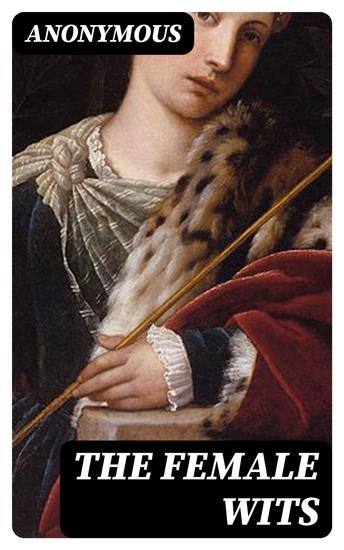
The Female Wits - cover

The Female Wits

Anónimo

Editorial: DigiCat

  • 0
  • 0
  • 0

Sinopsis

The Female Wits is a remarkable early 18th-century play that intricately navigates the burgeoning landscape of women's participation in the literary and theatrical worlds. Composed in a lively and humorous style, this work engages with themes of gender roles, societal expectations, and the burgeoning feminist discourse of the period. The plot revolves around the lives and aspirations of intelligent, witty women who challenge the patriarchal confines of early modern England, reflecting the cultural milieu of a time ripe for change in the literary context and feminist thought. The author, though anonymous, is presumed to be influenced by the evolving representation of women in literature and society, perhaps drawing on personal experiences or observations of the vibrant salons and literary circles of the time. The anonymity engenders a collective voice, emphasizing the shared struggles of women writers who faced considerable societal opposition. The work stands as a testament to the courage and creativity of women in a male-dominated literary field, challenging traditional narratives while championing female intellectualism. Readers interested in the intersection of gender and literature will find The Female Wits an essential read, as it not only entertains with its wit and humor but also offers a critical lens on the role of women in the 18th-century literary scene. It serves as a precursor to modern feminist literature, illuminating the voices of those who dared to challenge their societal roles, making it a significant addition to any scholarly collection.
Disponible desde: 31/07/2022.
Longitud de impresión: 61 páginas.

Otros libros que te pueden interesar

  • A Grotesque Animal - cover

    A Grotesque Animal

    Amy Lee Lillard

    • 0
    • 0
    • 0
    At the age of forty-three, Amy Lee Lillard learned she was autistic. She learned she was part of a community of unseen women who fell through the gaps due to medical bias and social stereotypes. 


    A Grotesque Animal explores the making, unmaking, and making again of a woman with an undiagnosed disorder. How did a working-­class background and a deep-rooted Midwest culture of silence lead to hiding in plain sight for decades? How did sexuality and anger hide the roots of trauma among the women in her family? And what does it mean to be a queer, disabled, aging woman, a descendant of wild but tamed mothers and a survivor of the things patriarchy inflicts? 


    Through wide-ranging styles and a combination of personal storytelling and cultural analysis, Lillard dissects anger, sexuality, autistic masking, bodies, punk, and female annihilation to create a new picture of modern women.
    Ver libro
  • Ludwig van Beethoven: A short biography - 5 Minutes: Short on time - long on info! - cover

    Ludwig van Beethoven: A short...

    5 Minutes, 5 Minute Biographies,...

    • 0
    • 0
    • 0
    Ludwig van Beethoven, legendary composer: Life and works in a short biography! Everything you need to know, brief and concise. Infotainment, education and entertainment at its best!
    Ver libro
  • The Amateur Hour - A History of College Teaching in America - cover

    The Amateur Hour - A History of...

    Jonathan Zimmerman

    • 0
    • 0
    • 0
    American college teaching is in crisis, or so we are told. But we've heard that complaint for the past 150 years, as critics have denounced the poor quality of instruction in undergraduate classrooms. Students daydream in gigantic lecture halls while a professor drones on, or they meet with a teaching assistant for an hour of aimless discussion. The modern university does not reward teaching, so faculty members at every level neglect it in favor of research and publication. In the first book-length history of American college teaching, Jonathan Zimmerman confirms but also contradicts these perennial complaints. Drawing upon a wide range of previously unexamined sources, The Amateur Hour shows how generations of undergraduates indicted the weak instruction they received. But Zimmerman also chronicles institutional efforts to improve it, especially by making teaching more "personal." As higher education grew into a gigantic industry, he writes, American colleges and universities introduced small-group activities and other reforms designed to counter the anonymity of mass instruction. They also experimented with new technologies like television and computers, which promised to "personalize" teaching by tailoring it to the individual interests and abilities of each student.But, Zimmerman reveals, the emphasis on the personal inhibited the professionalization of college teaching, which remains, ultimately, an amateur enterprise. The more that Americans treated teaching as a highly personal endeavor, dependent on the idiosyncrasies of the instructor, the less they could develop shared standards for it. Nor have they rigorously documented college instruction, a highly public activity which has taken place mostly in private. Pushing open the classroom door, The Amateur Hour illuminates American college teaching and frames a fresh case for restoring intimate learning communities, especially for America's least privileged students. Anyone who wants to change college teaching will have to start here.
    Ver libro
  • The Letters of Charlotte Brontë - Performed by IMOGEN STUBBS in a dramatised setting - cover

    The Letters of Charlotte Brontë...

    Alan Drury

    • 0
    • 0
    • 0
    Immerse yourself in the captivating world of Charlotte Brontë featuring the remarkable performance of Imogen Stubbs as the iconic author herself in “The Letters of Charlotte Brontë”. 
     
    “Imogen Stubb’s reading of her letters show us a character so fine, so sympathetic that in the end we are uplifted” Good Book Guide 
     
    “Imogen Stubbs reading is enthusiastic... and her reading of Emily’s slow death could not be faulted. 5-star rating.”  Talking Business 
     
    Step back in time to the early 19th century as we unveil the poignant and tragic life of Charlotte Brontë (1816-1855). From the desolate Haworth parsonage to the captivating landscapes of Brussels and the windswept Yorkshire moors, Charlotte's life unfolds before your ears through her heartfelt letters to her closest friend and confidante, Ellen Nussey.  
     
    Witness her triumphant creation of "Jane Eyre," only to be struck by the heart-wrenching loss of her siblings. Discover the resilience of a woman who, despite personal tragedy, continued to pen timeless novels and wander her cherished moors. 
     
    Enjoy a gripping narrative of Charlotte Brontë's remarkable life and untimely death, filled with passion, perseverance, and profound literary legacy. This is Charlotte Brontë’s world, a literary genius who left an indelible mark on literature. 
     
    Also available as part of the CLASSIC LETTERS & JOURNALS BOX SET, a sixteen hour, seven-volume edition featuring the letters and journals of Lord Nelson, Charlotte Brontë, Scott of the Antarctic, Queen Victoria, Lord Byron, Jane Austen and Dorothy Wordsworth. Performed by Charles Dance, Imogen Stubbs, Edward Fox, Virginia McKenna, Robert Powell, Fiona Shaw and Jenny Agutter. 
     
    © & ℗ 2022 Mr Punch Audiobooks Ltd
    Ver libro
  • Free Exercise - Religion the First Amendment and the Making of America - cover

    Free Exercise - Religion the...

    Chris Beneke

    • 0
    • 0
    • 0
    CONGRESS SHALL MAKE NO LAW RESPECTING AN ESTABLISHMENT OF RELIGION, OR PROHIBITING THE FREE EXERCISE THEREOF. Those words, scratched on parchment in 1789, open the US Constitution's First Amendment. From them, countless interpretations have been drawn. As a consequence, an astonishing variety of activities in modern America—prayer after football games, Bible reading in classrooms, company healthcare policies, the baking of wedding cakes, and Ten Commandment displays around courthouses—have been alternately authorized, prohibited, or modified. 


    In this compelling historical account, Chris Beneke explains how the religion clauses came into existence and how they were woven into American culture. He brings prominent early national figures to life, including George Washington, James Madison, and Thomas Paine, while chronicling the First Amendment's relationship to defining social conditions like slavery, civility, family life, and the free market. 


    Going beyond traditional church-state scholarship, Beneke also demonstrates how white women, African Americans, Roman Catholics, Jews, and nonbelievers widened religious liberty's application and illuminated its boundaries. In doing so he makes a groundbreaking contribution to both constitutional history and the history of American pluralism.
    Ver libro
  • We Become What We Normalize - What We Owe Each Other in Worlds That Demand Our Silence - cover

    We Become What We Normalize -...

    David Dark

    • 0
    • 0
    • 0
    From one of the most respected thinkers and public intellectuals of our day comes a book that is both a cultural critique of the state of our country and a robust summons to resist complicity. As we move through the world, we constantly weigh our conscience against what David Dark calls "deferential fear"—going along just to get along, especially in relation to our cultural, political, and religious conversations. Dark reveals our compromised reality: the host of hidden structures and tacit social arrangements that draw us away from ourselves and threaten to turn us slowly into what we decry in others. 


    We Become What We Normalize counsels a creative, slow, and artful response to the economy of reaction, hurry, shaming, and fearmongering. Dark offers a deep analysis of the ways our conceptions of ourselves and our use of technology often lead us away from what we believe, reinforcing the false narrative that we must humiliate others in order to survive. "I suspect we become what we sit still for, what we play along with, and what we abide in our attempts to access more perceived power and more alleged influence," Dark writes. We Become What We Normalize calls for a new kind of struggle, ethic, witness, and spirit that helps us step away from the infinite loop of normalizing harm into effecting true change for ourselves and the worlds we inhabit.
    Ver libro