Junte-se a nós em uma viagem ao mundo dos livros!
Adicionar este livro à prateleira
Grey
Deixe um novo comentário Default profile 50px
Grey
Assine para ler o livro completo ou leia as primeiras páginas de graça!
All characters reduced
Ten Months in the Field with the Boers - cover
LER

Ten Months in the Field with the Boers

Anônimo

Editora: DigiCat

  • 0
  • 0
  • 0

Sinopse

In "Ten Months in the Field with the Boers," the anonymous author provides a gripping first-hand account of the Second Boer War (1899-1902), exploring the complexities of guerrilla warfare through a lens of vivid personal experience. The narrative combines elements of memoir and reportage, employing a straightforward yet evocative prose style that immerses readers in the harsh realities faced by soldiers on both sides of the conflict. Rich with detail, the book illustrates the landscape and human cost of war, revealing the moral ambiguities inherent in imperialistic endeavors while maintaining a reflective tone steeped in the literary traditions of war literature. The identity of the author remains anonymous, perhaps reflecting the intimate nature of the account and the desire to prioritize the experiences over individual recognition. Yet, it is evident that they possess deep insights into military strategy, the psychology of combat, and the socio-political implications of the war. Having witnessed the brutalities of the battlefield, this individual captures the complexities of South African identities and foreshadows the conflicts that would follow in the region. "Ten Months in the Field with the Boers" stands as a vital contribution to the canon of war literature, providing readers with an unfiltered perspective on a pivotal historical moment. It is highly recommended for historians, students of military strategy, and general readers alike who seek to understand the human dimensions of conflict amidst the backdrop of a tumultuous era.
Disponível desde: 15/09/2022.
Comprimento de impressão: 107 páginas.

Outros livros que poderiam interessá-lo

  • The People Who Own the World - Behind the Scenes of Global Power and Influence - cover

    The People Who Own the World -...

    John Harpoon

    • 0
    • 0
    • 0
    Power has always been a driving force behind the world's greatest shifts, shaping nations, economies, and cultures. While political leaders and public figures often take the spotlight, true power often lies in the hands of those who operate behind the scenes. These individuals, families, and organizations wield influence not through democratic processes, but through wealth, strategic connections, and the ability to manipulate societal frameworks. Understanding this hidden power structure is crucial to grasping how the world truly functions. 
      
    Wealth has long been a powerful tool for control, enabling elites to shape policies, industries, and even social norms. Financial empires built by powerful banking families, corporate giants, and investment firms have grown to dominate global economies. Their influence extends far beyond Wall Street or corporate boardrooms — it reaches into political systems, media narratives, and cultural trends. Those with the greatest financial resources have the capacity to mold the world to their advantage, often with little public awareness. 
      
    Secret societies, elite networks, and exclusive organizations further strengthen these power structures. Groups like the Bilderberg Group, the Trilateral Commission, and other closed-door forums provide platforms for powerful individuals to collaborate and strategize. While their intentions may vary, these groups foster an environment where a select few can guide global agendas without public scrutiny. This covert decision-making shapes economic trends, diplomatic relations, and social movements in ways that are difficult to trace.
    Ver livro
  • Position of Power - How to Win And Have Ultimate Power Over Your Narcissistic EX - cover

    Position of Power - How to Win...

    Warren MCFADDEN

    • 0
    • 0
    • 0
    Chapter 1 
    How to regain your power after begging and pleading 
    How can you regain the power back after doing all the begging and pleading and crying and all that shit like that? 
      when you are begging and pleading and crying, understand that’s natural. It’s called the fear of loss, you have the fear of losing something. You might not notice that the person already mentally checked out on you for whatever reason only they can tell you.  
    This is what you can do to regain your power back: 
    1. Stop all that- because it’s not going to do any good. The more you beg and plead and do all this nice stuff and jump though all these monkey ass hoops for this person, they don’t care, they are not there mentally, their mind gone, so the best thing for you to do is stop, just stop. That’s the first thing you can do to start regaining your power back, stop all that. 
    2. Then what you want to do is Become independent- the more you don’t need that person, the more that person wants you. It’s backwards, its nature, it is set up that way. The more you don’t want something the more you get it. Kind of like rich people, they get richer because they are already rich, they are not working for money. But what I’m trying to tell you is this, when you don’t need them and you are self-reliant, and you are independent and you don’t need them for absolutely nothing, they’ll want you. Now this goes in business, whatever area of your life you want to place it in, when you don’t need it there it is. Really this is how you operate from a position of power, always remember people want what they can't have.
    Ver livro
  • The Great Famine of the 14th Century - Europe's Population Crisis - cover

    The Great Famine of the 14th...

    Sarah Willards

    • 0
    • 0
    • 0
    The Great Famine of the 14th century did not erupt suddenly; it was the result of a long-simmering crisis deeply rooted in environmental, agricultural, and demographic factors. Europe, by the early 1300s, was already teetering on the edge of unsustainability. For decades, the continent had experienced a population boom, pushing communities to cultivate every inch of arable land. Marginal lands—forests, wetlands, and rocky hills—were cleared to make room for crops, but the soil was thin and poorly suited for long-term farming. This overuse exhausted the land, reducing yields and straining food supplies even in stable years. 
    At the same time, Europe entered a period of climatic deterioration now known as the Little Ice Age. Beginning in the early 14th century, temperatures across the continent began to drop slightly but consistently. This seemingly minor shift had devastating effects on agriculture. Cooler, wetter summers shortened the growing season and increased rainfall, which flooded fields and rotted seeds before they could sprout. Harsh winters extended well into the spring, delaying planting and shrinking the harvest window. These erratic weather patterns culminated in a series of catastrophic crop failures between 1315 and 1317. 
    Adding to these environmental pressures was a demographic crisis. By the turn of the century, Europe’s population had grown to levels unseen in centuries. Villages were packed, and food demand had reached unprecedented highs. Yet agricultural output could not keep pace. The productivity of medieval farming methods had plateaued, and innovations were slow to arrive. The result was a fragile system stretched beyond its limits. Even a single poor harvest could lead to hunger; multiple bad years spelled disaster.
    Ver livro
  • Transform Your Perspective: Secrets to Revolutionary Thinking - "Transform your thinking! Discover powerful audio lessons designed to ignite revolutionary ideas and inspire change" - cover

    Transform Your Perspective:...

    Lysander Corbin

    • 0
    • 0
    • 0
    Transform Your Perspective: Secrets to Revolutionary Thinking 
    Are you eager to advance in your career and deepen your understanding of life by uncovering insights that reshape your perspective? 
    Looking for a thorough guide that encompasses everything you need to transform your thinking? 
    Your quest ends here! 
    This guide serves as your essential companion for enhancing your understanding, applying revolutionary insights, and engaging in practical exercises. With this resource, you're set on the path to success. 
    Updated for the latest thinking techniques and insights. 
    Key features of this enriched guide: 
    - In-depth insights into revolutionary thinking techniques 
    - Comprehensive explanations that reshape your understanding of life 
    - Effective strategies for applying new perspectives and overcoming challenges 
    Our guide stands out with its broad coverage, crucial for your personal transformation. Concepts are explored in depth, not merely glossed over. 
    Please note that this guide is an independent resource and is not affiliated with any official entities. 
    Crafted with a clear layout and straightforward language, our guide ensures seamless transitions between topics. Say farewell to complicated jargon and embrace clear, accurate, and insightful content. 
    So, why hesitate? Click the BUY NOW button, secure your guide, and embark on your journey toward revolutionary thinking! 
    Transform your approach today!
    Ver livro
  • Digital Feedback Methods - cover

    Digital Feedback Methods

    Jennifer Schluer

    • 0
    • 0
    • 0
    Feedback spielt eine entscheidende Rolle im Lernprozess. Doch welche Möglichkeiten gibt es, Lernprozesse durch digitales Feedback zu unterstützen? Dieses Buch bietet Lehrenden und Studierenden ein wissenschaftlich fundiertes Orientierungs- und Anwendungswissen zu digitalen Feedbackmethoden. Diese können nicht nur im Online- oder Hybridunterricht eingesetzt werden, sondern auch den Präsenzunterricht bereichern. Die Vorzüge und Grenzen der jeweiligen digitalen Feedbackmethoden werden diskutiert und Umsetzungsempfehlungen abgeleitet. Dies umfasst u.a. schriftliches Feedback im Texteditor, in Cloud-Dokumenten, in Chats, Diskussionsforen, Wikis, Umfragen und E-Mails sowie multimodales Feedback in Videokonferenzen und per Audio-, Video- und Bildschirmaufnahme. Darüber hinaus werden Vorschläge gegeben, um verschiedene Methoden sinnhaft miteinander zu kombinieren und Lerndialoge anzuregen.
    Ver livro
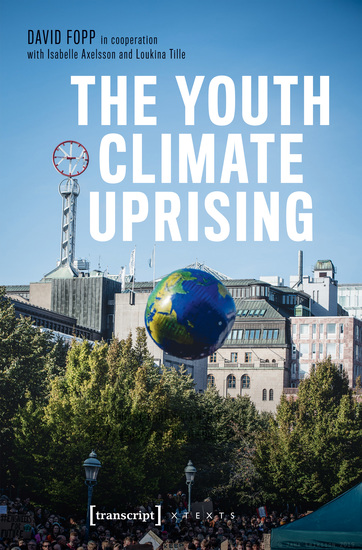
  • The Youth Climate Uprising - From the School Strike Movement to an Ecophilosophy of Democracy - cover

    The Youth Climate Uprising -...

    David Fopp, Isabelle Axelsson,...

    • 0
    • 0
    • 0
    Species are going extinct, forests are burning, and children are worried about the future and their peers worldwide. But that is not the whole story: One Friday in 2018, a few young people joined Greta Thunberg to protest, and the global climate strike movement was born. Scientist David Fopp spent 250 Fridays with the newly formed grassroots movements. Together with activists Isabelle Axelsson and Loukina Tille, he offers an insider perspective on how scientists and activists can fight for a just and sustainable global society. The volume also offers both an introduction to ecophilosophy and a unified science of democracy in times of interdependent crises. How can research in all disciplines - from (drama) education and economics to psychology - help with this struggle? And how can we all fight the climate crisis by transforming and deepening democracy?
    Ver livro