Junte-se a nós em uma viagem ao mundo dos livros!
Adicionar este livro à prateleira
Grey
Deixe um novo comentário Default profile 50px
Grey
Assine para ler o livro completo ou leia as primeiras páginas de graça!
All characters reduced
Folk-Lore and Legends: Scotland - cover
LER

Folk-Lore and Legends: Scotland

Anônimo

Editora: DigiCat

  • 0
  • 0
  • 0

Sinopse

"Folk-Lore and Legends: Scotland" delves into the rich tapestry of Scottish folklore, capturing the essence of its unique cultural narrative through a diverse collection of myths, legends, and oral traditions. The book's literary style exhibits a blend of descriptive elegance and narrative vigor, inviting readers to traverse the highlands and lowlands while engaging with tales of fairies, ghosts, and heroic exploits. Its context resides within the Victorian era's fascination with folklore, reflecting a scholarly quest to preserve oral histories that were rapidly fading in a modernizing Scotland. The identity of the author remains anonymous, which adds an intriguing layer to the text; it suggests a communal effort in the compilation of these stories, possibly stemming from the author's deep-seated appreciation for the Scottish landscape and cultural heritage. This work reflects the era's ethos of preserving folk narratives, carrying the weight of tradition in a time of growing urbanization and cultural disintegration. This book is highly recommended for readers interested in anthropology, literature, and Scottish culture, as it provides invaluable insight into the collective imagination of Scotland. Through its enchanting tales, it reaffirms the significance and continuity of folklore in understanding the human experience.
Disponível desde: 15/09/2022.
Comprimento de impressão: 191 páginas.

Outros livros que poderiam interessá-lo

  • Morphine - This story is perhaps the greatest depiction and description in literature of the human psyche going through addiction - cover

    Morphine - This story is perhaps...

    Mikhail Bulgakov

    • 0
    • 0
    • 0
    Mikhail Bulgakov was born on 15th May 1891 in Kiev, in the Kiev Governorate of the Russian Empire, into a Russian family.  He was one of seven children. 
     
    In 1901, Bulgakov attended the First Kiev Gymnasium, and developed a keen interest in Russian and European literature, theatre and opera.  After the death of his father in 1907, his mother assumed responsibility for his education.  After graduating Bulgakov entered the Medical Faculty of Kiev University and then took up a post as physician at the Kiev Military Hospital. 
     
    At the outbreak of the First World War, he volunteered as a doctor and was sent directly to the front, where he was badly injured at least twice.  To suppress chronic pain, especially in the abdomen, he injected morphine.  It took years to wean himself off. 
     
    He now took up medical posts in various towns and in 1919, he was mobilised by the Ukrainian People's Army and assigned to the Northern Caucasus.  There, he became seriously ill with typhus and barely survived.  
     
    After this illness, Bulgakov abandoned his medicine to pursue writing.  He moved to Vladikavkaz and had two plays staged there with great success.  He wrote too for various newspapers and other outlets, but his critics were many.  And growing. 
     
    When a Moscow's theatre director severely criticised Bulgakov, Stalin personally protected him, saying that a writer of Bulgakov's quality was above ‘party words’ like ‘left’ and ‘right’.   Indeed, it is said that Stalin watched ‘The Days of the Turbins’ at least 15 times. 
     
    It was not to last and by March 1929, Bulgakov's career was ruined when Government censorship stopped publication of any of his work and plays. 
     
    In despair, Bulgakov wrote a personal letter to Stalin.  He requested permission to emigrate.  He received a phone call from the Soviet leader, who asked the writer whether he really desired to leave. He replied that a Russian writer cannot live outside of his homeland.  Stalin thus gave him permission to continue working. In May 1930, he re-joined the theater, as stage director's assistant.  
     
    During the last stressful decade of his life, and in poor health, Bulgakov continued to work on ‘The Master and Margarita’, wrote plays, critical works, stories, and continued translations and dramatisations of novels.  Many of them were not published, others were derided by critics.  
     
    On 10th March 1940, Mikhail Afanasyevich Bulgakov died from nephrosclerosis.  He was 48. 
     
    ‘The Master and Margarita’ was not published in any form until the mid-1960’s 
     
    In this story Bulgakov relates the terrifying and hellish descent into addiction that seems so avoidable and yet so chillingly not.
    Ver livro
  • A Child in Translation - cover

    A Child in Translation

    Maria K

    • 0
    • 0
    • 0
    A Child in Translation is a deeply personal autobiographic narrative about growing up in Soviet Ukraine that delivers a vivid picture of life in a part of the world most outsiders have never thought about. Please meet Maria from the Ukraine. She came to the West as an alien, bringing with her a childhood yet to be defined by translation.
    Ver livro
  • A Broken Trust - From their pens to your ears genius in every story - cover

    A Broken Trust - From their pens...

    Elizabeth Corbett

    • 0
    • 0
    • 0
    Elizabeth Burgoyne Corbett was born on the 16th August 1846 at Standishgate, near Wigan. 
    After a good education she worked as a journalist for the Newcastle Daily Chronicle and went on to become a widespread and popular writer of adventure and society novels. 
    As a feminist writer it is a little bizarre that she published as Mrs George Corbett.  Her most ardent feminist work was ‘New Amazonia: A Foretaste of the Future,’ though other of her works were also similarly themed and dealt with one of the great issues of the day in Victorian society. 
    She married George Corbett in Sheffield in 1868.  They went on to have 4 children, of which only 3 survived. 
    As a writer she was not overly prolific but was perhaps most admired for her female detectives.  During her literary career Detective books were all the rage and authors of both sexes attempted to bring new and unusual angles of characters and narratives before the voracious public.   
    Corbett’s first was in a collection of short stories ‘Adventures of a Lady Detective featuring Dora Bell'.  A later novel introduced a further detective in the guise of Annie Cory. 
    Elizabeth Corbett died on in 1930.
    Ver livro
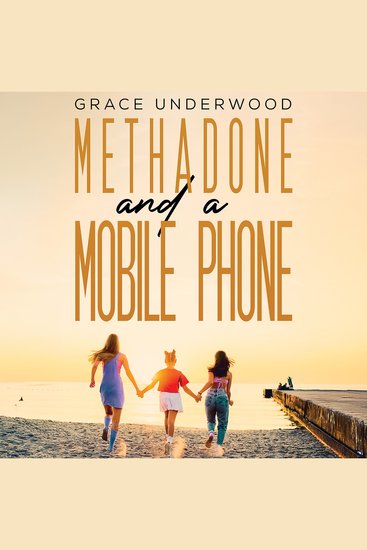
  • Methadone and a Mobile Phone - cover

    Methadone and a Mobile Phone

    Grace Underwood

    • 0
    • 0
    • 0
    In Methadone and a Mobile Phone,  delve into the turbulent world of Melissa Jane, a woman ensnared by choices that lead her astray. As life’s winding path becomes a treacherous terrain, Melissa grapples with the weight of addiction, an affliction that touches countless souls globally.
     
    While  many bear the scars of this battle, the decision to heal and rise is deeply personal. Melissa, tethered to methadone’s deceptive solace, overlooks the commitment needed to truly reclaim herself, descending further into the abyss of her own making.
     
    A  poignant reflection on the fragility of human spirit, choices, and the battles we wage within, this narrative is a heart-wrenching reminder of the cost of surrendering to one’s demons.
    Ver livro
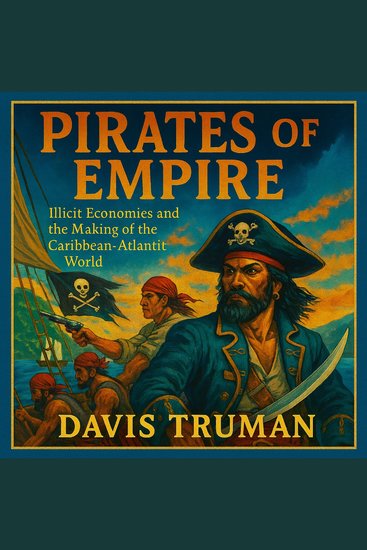
  • Pirates of Empire - Illicit Economies and the Making of the Caribbean-Atlantic World - cover

    Pirates of Empire - Illicit...

    Davis Truman

    • 0
    • 0
    • 0
    In the turbulent centuries of empire, the Caribbean was not merely a battlefield of nations, it was the beating heart of a global underground. Pirates of Empire reveals how smugglers, privateers, and rogue traders built an illicit economy that reshaped the Atlantic world, fueling fortunes, revolutions, and the birth of modern capitalism itself. 
    From Havana to Port Royal, from Bristol’s counting houses to the hidden coves of Hispaniola, Davis Truman uncovers the shadow networks that thrived beneath imperial rule. These were the real architects of the empire’s wealth, men and women who blurred the line between outlaw and entrepreneur, freedom and servitude, conquest and survival. Their ships carried more than plunder: they carried people, ideas, and commodities that transformed continents. 
    With gripping storytelling and cutting-edge scholarship, Pirates of Empire reframes piracy not as rebellion against empire, but as its indispensable partner. It exposes how colonial powers quietly relied on black markets to sustain their ambitions, and how these hidden economies gave rise to the modern Caribbean, multicultural, volatile, and endlessly creative. 
    Blending adventure and analysis, Pirates of Empire invites readers to sail into the murky waters where legality and legitimacy collided, and where the foundations of the modern world were forged in contraband and courage.
    Ver livro
  • Bucket to Greece - Volume 2 - cover

    Bucket to Greece - Volume 2

    V.D. Bucket

    • 0
    • 0
    • 0
    The delightfully comic account of a British couple and their imported cats starting over in a new country continues in Bucket to Greece Volume 2. It is now three months since Victor and Marigold moved to the mountain village of Meli, developing new friendships and marking their life-changing move with a traditional house blessing ceremony. Victor integrates into village life and improves his language skills by helping out at the local taverna, after sanitizing the place to his exacting hygiene standards. Barry's budding romance with Cynthia continues apace, whilst Marigold turns to a spot of matchmaking, arranging a dinner party for Meli's eligible bachelors and her best friend Geraldine who is over for a visit. 


    Following a late night brawl, Guzim goes on the missing list, creating a quandary for Victor as he contemplates the wisdom of bringing the disappearance of an illegal Albanian to the attention of the authorities. Victor experiences the ups of and downs of everyday Greek life; the up of the novelty of a sea dip in December even though the locals consider such behavior quite bizarre, and the down of being forced out of bed on a cold windy morning to bake bread for the village in an outside oven. As Victor settles into his new life he is haunted by the specter of his absconded parent turning up on his doorstep.
    Ver livro