¡Acompáñanos a viajar por el mundo de los libros!
Añadir este libro a la estantería
Grey
Escribe un nuevo comentario Default profile 50px
Grey
Suscríbete para leer el libro completo o lee las primeras páginas gratis.
All characters reduced
Agnes Grey - Enriched edition - cover

Agnes Grey - Enriched edition

Anne Brontë

Editorial: DigiCat

  • 0
  • 0
  • 0

Sinopsis

In "Agnes Grey," Anne Brontë crafts a poignant narrative that delves into the trials of a young governess in Victorian England. Through the eyes of Agnes, the protagonist, Brontë explores themes of social class, gender roles, and the often-overlooked struggles of intellectual women. The novel, imbued with realism and rich character development, critiques the societal norms of the time while highlighting the emotional turmoil experienced by those confined to the domestic sphere. Brontë's eloquent prose and keen observation of human behavior add depth to the story, reflecting the emerging literary style of the 19th century that combined moral purpose with a strong sense of realism. Anne Brontë, the youngest of the famous Brontë sisters, was shaped by her own experiences as a governess, which provided her with firsthand insight into the complexities of that profession. Her literary career, though overshadowed by her sisters, was marked by an acute awareness of women's plight in a patriarchal society, and "Agnes Grey" emerged as a semi-autobiographical exploration of her struggles and rebellion against societal constraints. Brontë's commitment to authenticity and moral integrity resonates throughout her work, making her voice significant. "Agnes Grey" is a compelling read for those interested in feminist literature and the historical context of women's roles in the 19th century. Brontë's masterful storytelling not only entertains but also challenges readers to reflect on the ongoing issues of gender inequality and personal agency. This novel is essential for anyone seeking to understand the roots of feminist thought in literature and the poignant realities faced by women during the era.

In this enriched edition, we have carefully created added value for your reading experience:
- A succinct Introduction situates the work's timeless appeal and themes.
- The Synopsis outlines the central plot, highlighting key developments without spoiling critical twists.
- A detailed Historical Context immerses you in the era's events and influences that shaped the writing.
- An Author Biography reveals milestones in the author's life, illuminating the personal insights behind the text.
- A thorough Analysis dissects symbols, motifs, and character arcs to unearth underlying meanings.
- Reflection questions prompt you to engage personally with the work's messages, connecting them to modern life.
- Hand‐picked Memorable Quotes shine a spotlight on moments of literary brilliance.
- Interactive footnotes clarify unusual references, historical allusions, and archaic phrases for an effortless, more informed read.
Disponible desde: 11/10/2022.
Longitud de impresión: 187 páginas.
Otros libros que te pueden interesar

  • Sense and Sensibility - cover

    Sense and Sensibility

    Jane Austen

    • 0
    • 0
    • 0
    Sense and Sensibility tells the story of the Dashwood sisters, Elinor and Marianne. Left almost penniless and homeless on the death of their father, each needs to resolve their problems by marrying well. But fate takes them on a bumpy road as impetuous Marianne falls for the duplicitous Willoughby while Elinor seems to be unlucky in love. As ever, Austen resolves her heroines' fortunes in her inimitable and witty way.
    Ver libro
  • Births - Mrs Meek of a Son (Unabridged) - cover

    Births - Mrs Meek of a Son...

    Charles Dickens

    • 0
    • 0
    • 0
    Births. Mrs. Meek, of a Son and A Child's Dream of a Starmare short stories by Charles Dickens. Charles John Huffam Dickens (7 February 1812 - 9 June 1870) was an English writer and social critic. He created some of the world's most memorable fictional characters and is generally regarded as the greatest novelist of the Victorian period. During his life, his works enjoyed unprecedented fame, and by the twentieth century his literary genius was broadly acknowledged by critics and scholars. His novels and short stories continue to be widely popular. Born in Portsmouth, England, Dickens was forced to leave school to work in a factory when his father was thrown into debtors' prison. Although he had little formal education, his early impoverishment drove him to succeed.
    Ver libro
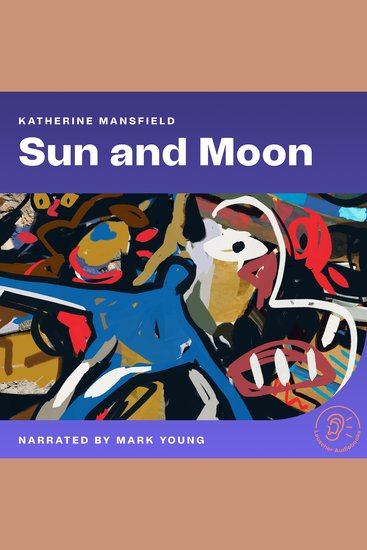
  • Sun and Moon - cover

    Sun and Moon

    Katherine Mansfield

    • 0
    • 0
    • 0
    "Sun and Moon" is a 1920 short story by Katherine Mansfield. It was first published in the Athenaeum on 1 October 1920, and later reprinted in Bliss and Other Stories.
    The children, Sun and Moon, are hanging around the house while a party is being prepared. They play games, then are sent off to bed. The party wakes them up; their parents find them out of their beds and instead of scolding them, they let them go downstairs for a bite - but Sun starts sobbing because Moon has eaten the nut from the centerpiece (the moment of ruined perfection, a recurring theme in Mansfield's work), and they are sent off to bed again.
    Ver libro
  • The Painted Veil - cover

    The Painted Veil

    William Somerset Maugham

    • 0
    • 0
    • 0
    The Painted Veil by W. Somerset Maugham is a story about a woman named Kitty, who marries Walter Fane so that she can live out her fantasies of being a lady in a grand household and meet wealthy people. The marriage to Walter Fane only lasts three years because he begins to cheat on her. Kitty leaves him for Shanghai, China to work as a doctor with the Red Cross Society.
    Ver libro
  • The Antichrist - cover

    The Antichrist

    Friedrich Nietzsche

    • 0
    • 0
    • 0
    Friedrich Nietzsche's "The Antichrist" is a philosophical work that presents his critical analysis of Christianity and its impact on Western culture. Written in 1888, towards the end of Nietzsche's productive life, "The Antichrist" reflects his deep-seated criticisms of traditional Christian values and morality. In the text, Nietzsche vehemently opposes what he sees as the life-denying aspects of Christianity. He argues that the Christian emphasis on otherworldly concerns, asceticism, and moral values such as humility and self-sacrifice are detrimental to the flourishing of human life. Nietzsche contends that Christianity has fostered a culture of weakness, passivity, and resentment, suppressing the natural instincts and drives that lead to individual strength and vitality. 
     
    "The Antichrist" also delves into Nietzsche's critique of the figure of Jesus Christ, whom he views as a symbol of weakness and a distortion of true strength. Nietzsche contends that the Christian notion of God represents a negation of life, promoting an idealized realm beyond this world at the expense of embracing earthly existence. Nietzsche's writing style in "The Antichrist" is often controversial and provocative, reflecting his desire to challenge established beliefs and provoke critical thinking. The work serves as a forceful critique of organized religion, morality, and the cultural influence of Christianity in Western societies. 
     
    It's essential to approach Nietzsche's "The Antichrist" within the broader context of his philosophical works, as it contributes to his overarching critique of morality, metaphysics, and the prevailing cultural values of his time. While the title may suggest a direct opposition to Christian beliefs, Nietzsche intends to provoke thought and encourage a reevaluation of existing values rather than presenting a straightforward condemnation.
    Ver libro
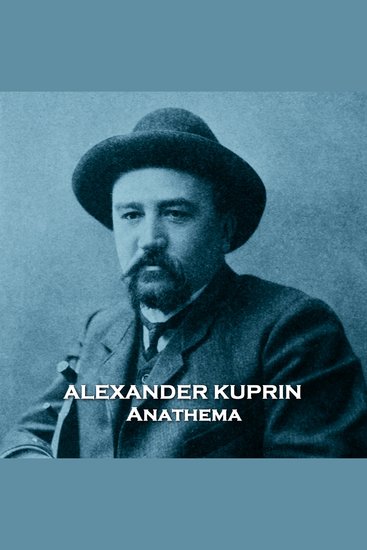
  • Anathema - From their pens to your ears genius in every story - cover

    Anathema - From their pens to...

    Alexander Kuprin

    • 0
    • 0
    • 0
    Alexander Kuprin was born in Narovchat, Penza in Russia on 7th September 1870. 
    At 3 his Father died and he and mother moved to Moscow. By 10 he was enrolled at the Second Moscow Military High School and there his interest in literature began. The Alexander Military Academy followed and two years later he was a sub-lieutenant and posted to an Infantry Regiment for a further four years. 
    Despite his duties he was a now a keen writer and published his first short story at this time. His military duties also garnered him experiences for his breakthrough work ‘The Duel’.  Leaving the military he left for Kiev to work for local newspapers.  He continued to publish both stories and novels and by 1901 he was in St Petersburg becoming part of a group that included Chekhov, Ivan Bunin, Maxim Gorky and Leonid Andreyev.  
    In the years that followed further controversial works and acclaim followed.  His comments on the regime meant he was also put under secret police surveillance.   
    As World War I erupted, Kuprin opened a military hospital but was then given command of an infantry company in Finland. He was soon discharged on grounds of ill health.  
    The October Revolution saw him praise Lenin, but he warned that the Bolsheviks threatened Russian culture and might cause further widespread suffering to the peasants.  As Civil War raged he took his family to Helsinki and then on to Paris. 
    Exile saw his talents decline further and his succumbing to alcoholism. He became lonely and withdrawn. The family's poverty increased his malaise.   
    In May 1937, the Kuprin’s returned to Moscow.  He now saw his work published but wrote almost nothing new.  In 1938 his health rapidly deteriorated.  Already suffering from a kidney problems and sclerosis, he had now developed cancer of the oesophagus.  
    Alexander Kuprin died on 25th August 1938.
    Ver libro