¡Acompáñanos a viajar por el mundo de los libros!
Añadir este libro a la estantería
Grey
Escribe un nuevo comentario Default profile 50px
Grey
Suscríbete para leer el libro completo o lee las primeras páginas gratis.
All characters reduced
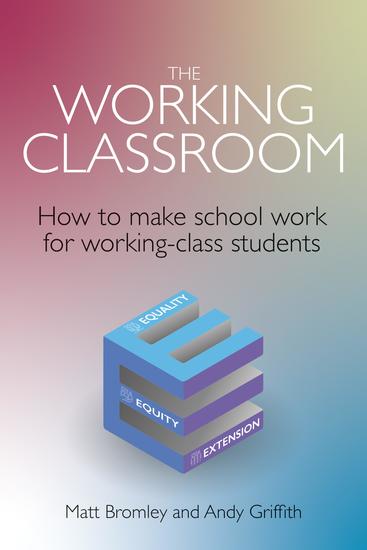
The Working Classroom - How to make school work for working-class students - cover

The Working Classroom - How to make school work for working-class students

Andy Griffith, Matt Bromley

Editorial: Crown House Publishing

  • 0
  • 0
  • 0

Sinopsis

Schools do amazing work to support children from disadvantaged backgrounds. But this book will enable them to do more. Disadvantage comes in many forms, but cultural poverty, where some students have relative knowledge gaps compared with their more affluent peers, can be addressed successfully by schools. The Working Classroom explores how working-class students are disadvantaged by a flawed system and what schools can do to close the gap.
Written by two experienced authors with a deep understanding of the challenges that poverty and low aspiration can bring, and a passion for social justice, The Working Classroom examines how and why we must seek systemic changes. The book focuses on actions within the control of teachers and school leaders which will ensure that we create a socially just education system - one that builds on the rich heritage of the working-class, rather than seeing their background as a weakness. It offers practical ways for students and families to build on the best of working-class culture, whilst also empowering teachers, students and parents to change the system.
The Working Classroom provides teachers with useful methods to improve the cultural capital of students from disadvantaged backgrounds that can be easily replicated and implemented in their own setting. Backed up by practical case studies that have a proven impact in schools with high levels of deprivation, this book will enable teachers to audit their current provision and encourage them to adopt new systems and practices so that they, and the wider school, will have a greater impact on the lives of working-class students and their families.
Suitable for both teachers and leaders in a secondary school or sixth form college setting who seek to support social change in education and anyone in the corporate or non-education world who wants to practice effective altruism or philanthropy.
Disponible desde: 08/11/2023.
Longitud de impresión: 272 páginas.

Otros libros que te pueden interesar

  • Ion - cover

    Ion

    Plato

    • 0
    • 0
    • 0
    In Plato's ION, Socrates questions Ion, whether he should really claim laud and glory for his 'rhapsodic' recitals of Homer's poetry.-Description by Simon-Peter Zak
    Ver libro
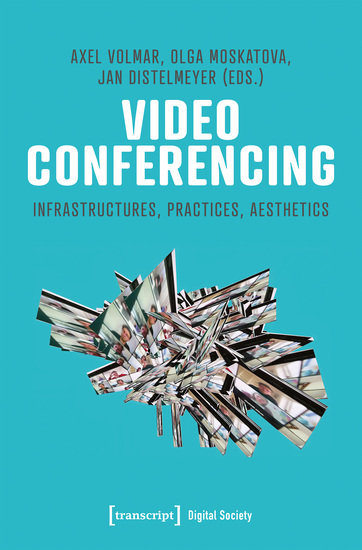
  • Video Conferencing - Infrastructures Practices Aesthetics - cover

    Video Conferencing -...

    Jan Distelmeyer, Axel Volmar,...

    • 0
    • 0
    • 0
    The COVID-19 pandemic has reorganized existing methods of exchange, turning comparatively marginal technologies into the new normal. Multipoint videoconferencing in particular has become a favored means for web-based forms of remote communication and collaboration without physical copresence. Taking the recent mainstreaming of videoconferencing as its point of departure, this anthology examines the complex mediality of this new form of social interaction. Connecting theoretical reflection with material case studies, the contributors question practices, politics and aesthetics of videoconferencing and the specific meanings it acquires in different historical, cultural and social contexts.
    Ver libro
  • Mixed Problem Solving Methodology - The skill that changes your life - cover

    Mixed Problem Solving...

    Rocco Mela

    • 0
    • 0
    • 0
    This book is a resume of all the problem solving techniques known by me so far: ITIL, Lean Six Sigma, CompTIA, Agile, Scrum, Applied Problem Solving, SWOT etc etc. 
    I resumed the techniques in 10 core points: 
    1- Be Googley 
    2- Going to the Gemba 
    3- Set the Goal 
    4- Prevent the problem 
    5- Be Customer Focused 
    6- Define the Problem 
    7- Analyze the Problem 
    8- Test the Solution 
    9- Document the Process 
    10- Be Kaizen 
    The result is a mixed problem solving methodology ready to be used in every working environment. 
    Enjoy and use this guide starting from the next problem you have to solve. 
    To your success! 
    - Second Edition -
    Ver libro
  • Contraduction - cover

    Contraduction

    Dan Barker

    • 0
    • 0
    • 0
    In a quiet and unassuming way, Contraduction is utterly brilliant. Every page has a thought so deep and unexpected that it stops you in your tracks, as you not only realize, “That’s a different, really interesting way to think about the world, exactly the opposite of how I normally view things” but also, “And it is absolutely equally valid (and enriching) to adopt this opposite way of thinking.” I loved this book. — Robert Sapolsky, author of The Blank Slate and Determined.An ingenious word for an invaluable concept. Sharp, clear, and timely. — Steven Pinker, Johnstone Professor of Psychology, Harvard University, and the author of The Blank Slate and RationalityBoth a delightful read and a penetrating argument: Barker has invented an invaluable new concept, and puts it to work with clarity, wit, and above all conclusiveness. A must-have book! — A. C. Grayling, author of The History of Philosophy and The God ArgumentI am completely down with the concept of contraduction. It fills a need. False pattern recognitions pose a real danger to our survival. Well done! — Ann Druyan, author (with Carl Sagan) of Cosmos, Contact, and Demon Haunted WorldI love it when brilliant ideas are conveyed clearly and soundly. That’s why I love this book. Dan Barker has provided a much-needed explication of a common fallacy that needs to be understood and rebutted. It is an engaging, enlightening, and insightful book.—Phil Zuckerman, author of Society Without God and What it Means to be MoralWith Contraduction, Dan Barker gives us a new word—and a new way of looking at things. I thoroughly enjoyed this! So much to think about—and it made me laugh. What else could I ask for? — Kate Cohen, contributing columnist for the Washington Post and author of We of Little FaithI love how Dan Barker offers us a new word to help us understand how to think rationally in a fun, simple way. I will never look at my reflection in the mirror the same! — Bailey Harris, author of My Name is Stardust
    Ver libro
  • Our Vietnam Wars Volume 2 - As told by more veterans who served - cover

    Our Vietnam Wars Volume 2 - As...

    William F. Brown

    • 0
    • 0
    • 0
    Want to know what Vietnam was really like? 
    From a Marine sniper in Hue, to a medevac dust-off pilot going into a hot LZ, Navy Corpsmen, A-6 pilots taking out bridges and SAM sites in North Vietnam, a nurse on the USS Repose, combat medics deep in the jungle, machine gunners in I-Corps, mechanics working on the rolling deck of a big carrier on Yankee Station, squad leaders on infantry sweeps in “the Arizona Territory,” truck convoys under fire, riverine patrol boats in the Delta, Coast Guard “Jolly Green” search and rescue helicopters pulling downed pilots from the jungle, tank platoons in an all-out armor assault, Loach pilots in hunter-killer teams, and many more -- from the Delta to the DMZ, this book puts you in their boots. 
    Some of us were drafted. Some enlisted. Some were true war heroes, but most were just trying to survive. As everyone “in-country” knew, Vietnam was all about luck, good or bad. If you were there, you understand. If you weren’t, grab a copy and start reading, anywhere in the book. The stories are like Doritos. Try a few and you won’t be able to stop. 
    Like any war, none of us who served had much if any control over our fates. We went where they told us to go, did what they told us to do, and over 58,200 of us paid the ultimate price. Now, 50 years later, the war continues to take its toll on many who did come home, with PTSD and Agent Orange induced diabetes, heart disease, neuropathy, leukemia, Hodgkin’s Disease, and many forms of cancer. As they say, “Vietnam is the gift that keeps on giving.” 
    This is the audio edition of Volume 2 of my popular 4-volume book series, Our Vietnam Wars. It was so titled because everyone who served there fought a different war depending on the year, our branch and unit, location, sex, race, and rank. This volume 60 Stories, 271 photographs you can't appreciate from just the audio book alone. The book has 4.6 Stars on 631 Amazon customer reviews.
    Ver libro
  • I Think I Own That - John Locke’s Guide to Justifying Land Theft with Polite Language - cover

    I Think I Own That - John...

    Sophia Blackwell

    • 0
    • 0
    • 0
    John Locke: Enlightenment philosopher, father of liberalism, inventor of “natural rights,” and accidental spiritual patron of land developers, libertarians, and your uncle who won’t shut up about property taxes. 
    In this gloriously sarcastic takedown of one of Western philosophy’s most over-quoted minds, Sophia Blackwell (Kant You Not, No Self, No God, No Clue) guides you through Locke’s greatest hits—including: 
    The blank slate theory, which basically says you’re born dumb and the world makes you worse 
    His ideas on identity, which collapse the second you forget your phone password 
    His version of consent, which mostly consists of “You didn’t leave, so I assume you’re fine with it.” 
    And of course, property rights—where mixing your labor with the earth somehow makes it yours, and stealing land becomes morally correct as long as you bring a shovel 
    Locke’s political philosophy inspired democracies, revolutions, and every 400-comment Reddit thread titled “Taxation is theft.” 
    This is not a respectful biography. 
    This is a roast. A eulogy. A survival guide for understanding how Locke gave us: 
    Liberalism 
    Landlords 
    Legal headaches 
    And a political system that thinks fencing off a patch of dirt = moral superiority 
    Perfect for: 
    Recovering philosophy students 
    Political skeptics 
    Enlightenment haters 
    Property law survivors 
    And anyone who wants to laugh while questioning whether government is just a giant metaphor for a really passive-aggressive roommate agreement 
    You don’t need to read Two Treatises of Government. 
    You just need to know Locke said, “I think I own that,” and people believed him.
    Ver libro