Join us on a literary world trip!
Add this book to bookshelf
Grey
Write a new comment Default profile 50px
Grey
Subscribe to read the full book or read the first pages for free!
All characters reduced
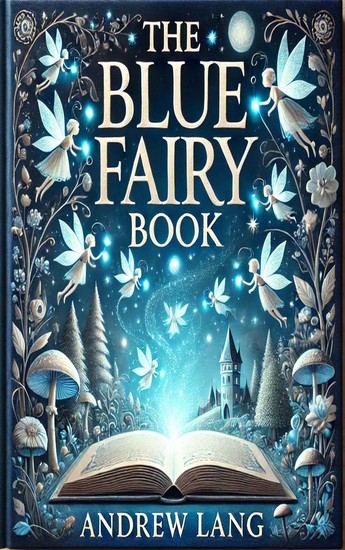
The Blue Fairy Book - Timeless Fairy Tales for All Ages - cover

The Blue Fairy Book - Timeless Fairy Tales for All Ages

Andrew Lang, Zenith Blue Ridge Books

Publisher: Zenith Blue Ridge Books

  • 0
  • 0
  • 0

Summary

Step into a magical world filled with classic fairy tales that have enchanted readers for generations. The Blue Fairy Book by Andrew Lang brings timeless stories to life, captivating young and old alike.

Discover a treasure trove of over 30 beloved fairy tales, including Cinderella, Beauty and the Beast, and Sleeping Beauty. This enchanting collection weaves together tales of adventure, romance, bravery, and wonder. From mischievous goblins to courageous heroes, Lang's storytelling transports you to fantastical realms where anything is possible.

Perfect for bedtime reading, family bonding, or simply revisiting childhood favorites, this beautifully written compilation has stood the test of time. With its vivid imagery and enchanting narratives, it's no wonder The Blue Fairy Book continues to captivate hearts worldwide.

Hailed as one of the finest collections of fairy tales ever published, Andrew Lang's The Blue Fairy Book has delighted generations of readers since its first publication in 1889. It remains a cornerstone of classic literature, earning a spot in countless family libraries.

Experience the magic of Andrew Lang's The Blue Fairy Book. Add this timeless collection to your library today and dive into a world of wonder, imagination, and inspiration.
Available since: 01/28/2025.
Print length: 384 pages.

Other books that might interest you

  • Nostromo - cover

    Nostromo

    Joseph Conrad

    • 0
    • 0
    • 0
    Nostromo by Joseph Conrad: Set in the fictional South American country of Costaguana, "Nostromo" is a gripping tale of political intrigue, revolution, and human greed. The novel follows the life of the enigmatic protagonist, Nostromo, a respected and trusted figure in the port town of Sulaco. As the political landscape shifts and a silver mine becomes the focal point of power struggles, Nostromo finds himself Qembroiled in a web of deceit and betrayal. Joseph Conrad's masterful prose and deep exploration of human nature create a timeless work that delves into themes of corruption, the allure of wealth, and the consequences of ambition. 
     
    Joseph Conrad Joseph Conrad was a renowned English novelist and one of the most significant literary figures of the late 19th and early 20th centuries. A master storyteller, Conrad's works often explored the human psyche and the complexities of human nature. His experiences as a sailor heavily influenced his writing, and many of his novels, such as "Heart of Darkness," "Lord Jim," and "Nostromo," showcased his deep understanding of the sea and the human condition. Conrad's profound insights into the darkness and moral ambiguity within individuals have made his literature enduring and relevant, leaving a lasting impact on the world of literature and beyond.
    Show book
  • The Adventure of the Priory School - cover

    The Adventure of the Priory School

    Arthur Conan Doyle

    • 0
    • 0
    • 0
    The Adventure of the Priory School, one of the 56 Sherlock Holmes short stories written by Sir Arthur Conan Doyle, is one of 13 stories in the cycle collected as The Return of Sherlock Holmes. Doyle ranked "The Adventure of the Priory School" tenth in his list of his twelve favorite Holmes stories.Holmes receives a visit from Dr. Thorneycroft Huxtable, the founder and principal of a preparatory school called Priory School in Northern England. He beseeches Holmes to come back to Mackleton with him to look into the disappearance of one of his pupils, the ten-year-old Lord Saltire, whose father is the very rich and famous Duke of Holdernesse. Huxtable explains that not only the boy has disappeared, but also the German master, Heidegger, along with his bicycle.Once in the North, the Duke says to Holmes that he does not think that his estranged wife has anything to do with his son's disappearance, nor has there been a ransom demand. Holmes establishes that the boy and his kidnappers could not have used the nearby road without being seen, suggesting that they went cross-country. As if to confirm this, the police find the boy's school cap in some gypsies' possession. They swear that they simply found it on the moor, but the police lock them up...Famous works of the author Arthur Conan Doyle: A Study in Scarlet, The Sign of the Four, The Adventures of Sherlock Holmes, The Memoirs of Sherlock Holmes, The Hound of the Baskervilles, The Return of Sherlock Holmes, The Valley of Fear, His Last Bow, The Case-Book of Sherlock Holmes, Stories of Sherlock Holmes, The Lost World.
    Show book
  • At Christmas Time - From their pens to your ears genius in every story - cover

    At Christmas Time - From their...

    Anton Chekhov

    • 0
    • 0
    • 0
    Anton Pavlovich Chekhov was born on 29th January 1860 in Taganrog, on the south coast of Russia.  
    His family life was difficult; his father was strict and over-bearing but his mother was a passionate story-teller, a subject Chekhov warmed to. As he later said; ‘our talents we got from our father, but our soul from our mother’.  
    At school Chekhov was distinctly average. At 16 his father mis-managed his finances and was declared bankrupt. His family fled to Moscow. Chekhov remained and eked out a living by various means, including writing and selling short sketches to newspapers, to finish his schooling. That completed and with a scholarship to Moscow University obtained he rejoined his family. 
    He was able to help support them by selling satirical sketches and vignettes of Russian lifestyles and gradually obtained further commissions. In 1884, he qualified as a physician and, although it earned him little, he often treated the poor for free, he was fond of saying ‘Medicine is my lawful wife, and literature is my mistress.’ 
    His own health was now an issue as he began to cough up blood, a symptom of tuberculosis.  Despite this his writing success enabled him to move the family into more comfortable accommodation.  
    Chekhov wrote over 500 short stories which included many, many classics including ‘The Kiss’ and ‘The Lady with a Dog’.  His collection ‘At Dusk’ won him the coveted Pushkin Prize when was only 26.  
    He was also a major playwright beginning with the huge success of ‘Ivanov’ in 1887.   
    In 1892 Chekhov bought a country estate north of Moscow. Here his medical skills and money helped the peasants tackle outbreaks of cholera and bouts of famine. He also built three schools, a fire station and a clinic.  It left him with less time for writing but the interactions with real people gained him detailed knowledge about the peasantry and their living conditions for his stories.  
    His most famous work, ‘The Seagull’ was received disastrously at its premiere in St Petersburg. It was later restaged in Moscow to highlight its psychological aspects and was a huge success. It led to ‘Uncle Vanya’, ‘The Three Sisters’ and ‘The Cherry Orchard’.  
    Chekhov suffered a major lung hemorrhage in 1897 while visiting Moscow. A formal diagnosis confirmed tuberculosis and the doctors ordered changes to his lifestyle.  
    Despite a dread of weddings the elusive literary bachelor quietly married the actress Olga Knipper, whom he had met at rehearsals for ‘The Seagull’, on 25th May 1901. 
    By May 1904 with his tuberculosis worsening and death imminent he set off for the German town of Badenweiler writing cheerful, witty letters to his family and assuring them his health was improving.  
    On 15th July 1904 Anton Chekhov died at Badenweiler.  He was 44.
    Show book
  • Aloysha the Pot - From their pens to your ears genius in every story - cover

    Aloysha the Pot - From their...

    Leo Tolstoy

    • 0
    • 0
    • 0
    Leo Tolstoy was born in 1828 in the Russian province of Tula to a wealthy noble family. As a child, he had private tutors but he showed little interest in any formal education. When he went to the University of Kazan in 1843 to study oriental languages and law, he left without completing his courses.  Life now was relaxed and idle but with some writing also taking place.  Gambling debts forced an abrupt change of path and he joined the army to fight in the Crimean War.  He was commended for his bravery and promoted but was appalled at the brutality and loss of life.  He recorded these and other earlier experiences in his diaries which formed the basis of several of his works. 
    In 1852 ‘Childhood’ was published to immediate success and was followed by ‘Boyhood’ and ‘Youth’. 
    His experience in the army and the horrors he witnessed resulted in ‘The Cossacks’ in 1862 and the trilogy ‘Sevastopol Tales’. After the war he travelled around Europe, visiting London and Paris and meeting such luminaries as Victor Hugo and Charles Darwin.  
    It was now that Tolstoy began his masterpiece, ‘War and Peace’. Published in 1869 it was an epic work that changed literature. He quickly followed this with ‘Anna Karenina’.  
    These successes made Tolstoy rich and helped him accomplish many of his dreams but also brought problems as he grappled with his faith and the lot of the oppressed poor. These revolutionary views became so popular that the authorities now kept him under surveillance.  
    He led a life of asceticism and vegetarianism and put his socialist ideals into practice by establishing numerous schools for the poor and food programmes. He also believed in giving away his wealth, which caused much discord with his wife.  
    His writing continued to bring forth classics such as ‘The Death of Ivan Ilyich’ and many brilliant and incisive short stories such as ‘How Much Land Does A Man Need’.  
    In 1901 Tolstoy was excommunicated from the Church and controversially deselected for the Nobel Prize for Literature. 
    Whilst undertaking a pilgrimage by train in October 1910 with his daughter Aleksandra he caught pneumonia in the nearby town of Astapovo.  Leo Tolstoy died on November 9th, 1910, he was 82.
    Show book
  • Dead Souls - cover

    Dead Souls

    Nikolai Gogol

    • 0
    • 0
    • 0
    Dead Souls by Nikolai Gogol is a satirical exploration of 19th-century Russian society through the eyes of Pavel Chichikov, a cunning opportunist. Traveling across the countryside, Chichikov buys "dead souls"—deceased serfs still registered on census records—to secure loans and wealth. His scheme exposes the corruption, greed, and absurdities of landowners he encounters. Each character represents a caricature of human folly, from miserly farmers to pompous nobles. As Chichikov’s plan unravels, Gogol critiques the moral decay of imperial Russia, blending dark humor with social commentary. The novel remains an unfinished masterpiece, leaving readers pondering the fate of its antihero and the soulless world he inhabits.
    Show book
  • The Novels of F Scott Fitzgerald - cover

    The Novels of F Scott Fitzgerald

    F. Scott Fitzgerald

    • 0
    • 0
    • 0
    Experience the height of the Jazz Age through the eyes of F. Scott Fitzgerald, one of the most notable authors in American literature. This collection includes: This Side of Paradise The Beautiful and the Damned The Great Gatsby
    Show book