¡Acompáñanos a viajar por el mundo de los libros!
Añadir este libro a la estantería
Grey
Escribe un nuevo comentario Default profile 50px
Grey
Suscríbete para leer el libro completo o lee las primeras páginas gratis.
All characters reduced
Books and Bookmen - cover

Books and Bookmen

Andrew Lang

Editorial: DigiCat

  • 0
  • 0
  • 0

Sinopsis

In "Books and Bookmen," Andrew Lang embarks on a scholarly exploration of the world of literature, blending his keen insights with a lively narrative style that invites readers into the intellectual milieu of the late 19th century. The book is a collection of essays that examine the nature of books, the role of authors, and the evolution of literary taste, showcasing Lang's skillful prose. Drawing from his extensive experiences as a poet, historian, and folklorist, Lang reflects on the cultural value of books and their impact on society, all while maintaining a conversational tone that engages literary enthusiasts and casual readers alike. Andrew Lang, a prominent literary figure of the Victorian era, was renowned for his contributions to poetry, anthropology, and the compilation of folk tales. His diverse interests and academic background shaped his views on literature, leading him to champion lesser-known authors and advocate for the appreciation of literature's varied forms. Lang's ability to dissect and contextualize works of literature speaks to his deep understanding of the literary landscape, influenced by contemporary societal changes and intellectual currents. "Books and Bookmen" is an essential read for anyone with a passion for literature, offering a profound appreciation for the written word and its myriad influences. Lang's eloquent prose and insightful commentary provide an engaging journey through the literary world, making this work a timeless treasure for both scholars and book lovers alike.
Disponible desde: 04/09/2022.
Longitud de impresión: 94 páginas.

Otros libros que te pueden interesar

  • The Prince - A guide to understanding power With detailed chapter-by-chapter insights - cover

    The Prince - A guide to...

    Niccolò Machiavelli

    • 0
    • 0
    • 0
    🔥 The Prince by Niccolò Machiavelli 
    The ultimate guide to understanding power. 
     With detailed chapter-by-chapter insights. 
    The world is not built for the weak. 
     Behind every great conquest, every successful career, every life that leaves a mark… lies an uncomfortable truth: 
     Power is not given. It’s taken. It’s defended. It’s built, day after day. 
    The Prince is not just a book of history. 
     It’s a ruthless, timeless manual—a roadmap for anyone who wants to understand the unwritten rules of leadership, control, and survival in a competitive world. 
     This edition, enhanced with chapter-by-chapter explanations, won’t just let you hear Machiavelli’s words—you’ll truly understand them. 
     You’ll learn how to think like a leader. How to make tough decisions. How to avoid being crushed by circumstances—and how to master them. 
     And how to build a power that lasts, even when the world around you falls apart. 
    This is not an audiobook for those looking for easy answers. 
     It’s for those who are ready to take control of their own destiny.
    Ver libro
  • Homo Sapiens 20 - Introduction to a Natural History of Hyperinformation - cover

    Homo Sapiens 20 - Introduction...

    Gérard Ayache

    • 0
    • 0
    • 0
    How can we use information rather than be subjected to it? Does life have a digital logic? Is the internal structure of the universe made up of information? Is the Internet generating a collective brain?
    Ever since Homo sapiens, armed with his electronic machines, learned to unlock the secret of information and its alchemy by digitizing it, he has unleashed hyperinformation. This force is a subtle blend of matter and thought, animate and inanimate, virtual and real. For the first time in human history, technology seems to be generating a collective intelligence. Does this mean that reason is becoming truly alien to itself, potentially hostile and dangerous? Or are we witnessing the happy dawn of a new era?
    Homo sapiens 2.0 offers a journey into the mysteries of the human brain, the mysteries of genes and memes (their mental equivalent), and the secrets of language, religion and new technologies. From René Girard to Richard Dawkins, from Teilhard de Chardin to Joël de Rosnay, the author recounts the saga of thought in the age of the virtual. In-between each chapter, “Interludes” take us on a journey through literary works or enlightening scientific experiments.
    Ver libro
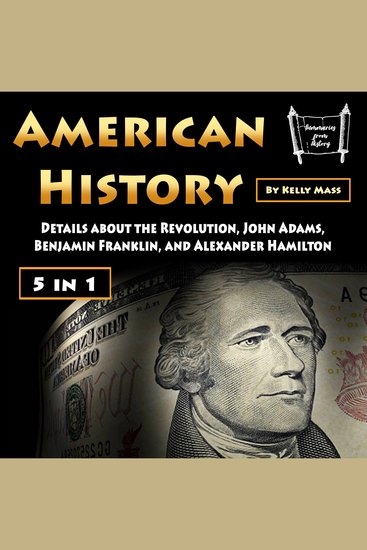
  • American History - Details about the Revolution John Adams Benjamin Franklin and Alexander Hamilton - cover

    American History - Details about...

    Kelly Mass

    • 0
    • 0
    • 0
    This set of books contains the following titles: 
    1: Benjamin Franklin was an author, physicist, innovator, statesman, diplomat, printer, publisher, and political thinker who resided in America. Franklin was just one of the Founding Fathers of the United States, a drafter and signer of the US Declaration, and the first postmaster general of the United States. 
    2: Alexander Hamilton was a Caribbean-born American leader, political leader, legal scholar, army leader, legal representative, lender, and economic expert who lived from January eleventh, 1755 or 1757 till July twelfth, in 1804. He was a founding father of the US of America. 
    3: John Adams was the 2nd president of the United States, serving from 1797 to 1801. He was an American leader, lawyer, diplomat, author, and Founding Father. He was the first vice president of the U.S.A. and a leader of the American Revolution, which caused the nation's independence from Great Britain. 
    4: Between 1765 to 1791, the American Revolution was an ideological and political revolution in British America. In the American Revolutionary War (between 1775 to 1783), the Americans in the Thirteen Groups established sovereign countries that beat the British, getting independence from the British Crown and establishing the USA of America, the first modern-day constitutional liberal democracy. 
    5: The Industrial Revolution was a period of shift in Britain, continental Europe, and the USA from around 1760 till at some point between 1820 and 1840, when new production innovations were introduced. The shift from hand to device production, new chemical and iron production strategies, increased use of steam and waterpower, the development of device tools, and the rise of the mechanized factory system were all part of this change. The Industrial Revolution also introduced a period of remarkable population growth.
    Ver libro
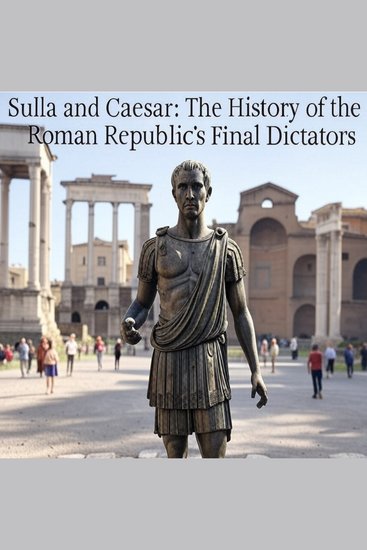
  • Sulla and Caesar: The History of the Roman Republic’s Final Dictators - cover

    Sulla and Caesar: The History of...

    Editors Charles River

    • 0
    • 0
    • 0
    Julius Caesar is still remembered for winning a civil war and helping bring about the end of the Roman Republic, leaving a line of emperors in its place, but it’s quite possible that none of what Caesar did would’ve happened without the template for such actions being set 40 years earlier. At the time, when Caesar was in his teens, war was being waged both on the Italian peninsula and abroad, with domestic politics pitting the conservative, aristocratic optimates against the populist, reformist populares, and this tension ultimately escalated into an all-out war. One of the leading populares was Caesar’s uncle, Gaius Marius, a military visionary who had restructured the legions and extended the privileges of land ownership and citizenship to legionaries on condition of successful completion of a fixed term of service. In the late 2nd century B.C., Marius had waged a successful campaign against several Germanic tribes, and after earning eternal fame in the Eternal City, Marius was appointed a consul several times. In 88 B.C., he entered into conflict with his erstwhile protégé, the optimate Sulla, over command of the army to be dispatched against Mithridates VI of Pontus, a long-time enemy of Rome and its Greek allies.   
    	Ironically, Marius’s reforms had made the legions fiercely loyal to their individual generals rather than the state, which allowed Sulla to march his army against Rome and force Marius into exile. With that, Rome’s first civil war was officially underway, but Sulla’s triumph proved short-lived. Just as Sulla departed for a campaign, Marius returned at the head of a scratch army of veterans and mercenaries, taking over the city and purging it of Sulla’s optimate supporters, and though Marius died in 86 B.C., his party remained in power. After Sulla finished mopping up the last scraps of resistance, he intended to take back Rome for himself at the head of his legions. 
    Ver libro
  • How to Control Your Emotions - 10 Tips to Help You Conquer Your Emotions - cover

    How to Control Your Emotions -...

    Alex Wolf

    • 0
    • 0
    • 0
    You’re having a bad day, all your emotions are overwhelming you, and you have no idea what to do! All you feel like doing is laying in bed, crying, and eating some grossly saturated food. Going through emotional phases can be really difficult, as it feels like you’ve lost complete control over yourself. What if you were told you could take back control over yourself now? 
    Emotions can feel so strong and influential because they are! They can influence the decisions you make, how you live your life, and how you interact with others. It’s time to leave the negativity, stress, and depression behind, so you pursue life with positivity and freedom. 
    You have the power within you to conquer your emotions once and for all, through these 10 powerful tips. Read this book to learn how you can take back control over your emotions.
    Ver libro
  • The Sterilization Experiments - The Barbaric Legacy of Carl Clauberg - cover

    The Sterilization Experiments -...

    Davis Truman

    • 0
    • 0
    • 0
    In the shadows of history, some stories challenge our understanding of humanity. 'The Sterilization Experiments: The Barbaric Legacy of Carl Clauberg' is one such story. 
    The atrocities committed during the Nazi era are a dark stain on human history. Among the many horrors of this period were the medical experiments conducted on concentration camp prisoners by Nazi doctors. One of the most notorious of these doctors was Carl Clauberg, an expert in gynecology who was tasked with developing a method for sterilizing women quickly and inexpensively. Clauberg's experiments were carried out with a callous disregard for human life and dignity, resulting in immeasurable suffering for his victims. The legacy of these experiments continues to shape our understanding of medical ethics, human rights, and the dangers of unchecked power and ideology.  
    The Sterilization Experiments' is not just a recounting of facts; it is a solemn reminder of the depths to which humanity can sink and a call to remember the victims who endured unimaginable suffering. 
    This book is an essential read for those who seek to understand the true cost of hatred and the importance of vigilance against such evils. It challenges us to confront the past and ensure that such atrocities never happen again.
    Ver libro