Begleiten Sie uns auf eine literarische Weltreise!
Buch zum Bücherregal hinzufügen
Grey
Einen neuen Kommentar schreiben Default profile 50px
Grey
Jetzt das ganze Buch im Abo oder die ersten Seiten gratis lesen!
All characters reduced
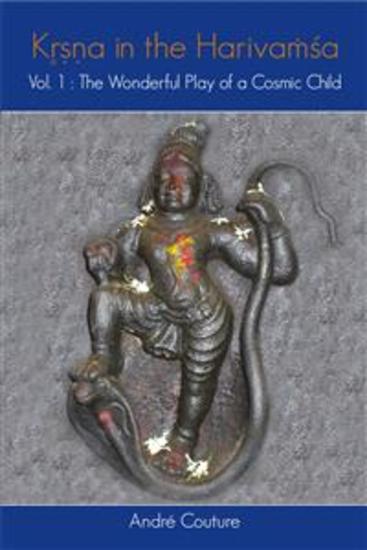
Kr̥ṣṇa in the Harivaṁśa (Vol I) - The Wonderful Play of a Cosmic Child - cover

Kr̥ṣṇa in the Harivaṁśa (Vol I) - The Wonderful Play of a Cosmic Child

André Couture

Verlag: D.K. Printworld

  • 0
  • 0
  • 0

Beschreibung

Written over a thirty-year period, the thirteen texts of this book — some of which have been updated, others translated from the original French — address various aspects of Krishna’s childhood in the Harivamsha. As a part of a continuous effort to better understand this oft-neglected complement to the Mahabharata, the present book demonstrates that these stories of Krishna’s childhood were carefully composed by brahmanas who knew fully well what they were doing.During the ten or so years he spends as a herder in the forest surrounding Mathura, Krishna prepares himself to kill the evil king Kamsa: when packs of wolves spring from the hairs of his body, he manifests his destructive power; he appears as a true avatara when he dives into the Yamuna to subdue the snake Kaliya; he reveals himself as a new Brahma able to create a new world when he uplifts Mount Govardhana with which he has just identified himself, then sheltering cows and herders in his own body.It is author’s contention throughout these chapters that these episodes cannot be dismissed as a hotchpotch of legends borrowed from the Abhiras or similar pastoral tribes. Neither does one do justice to the genre when one reinterprets the story symbolically, as if it were the product of an overactive imagination. Rejecting these positions, the author instead attempts to show here how these talented storytellers carefully crafted a narrative, often using material drawn from their own Vedic tradition, in order to address the new concerns of their audiences.
Verfügbar seit: 09.03.2023.

Weitere Bücher, die Sie mögen werden

  • Darshan With Divinity - cover

    Darshan With Divinity

    Radha Krsna Das

    • 0
    • 0
    • 0
    * "Whoever works for God, his work will be done by itself."* "Keep God in your heart like you keep money in the bank."Neem Karoli Baba known to his followers as Maharaj-ji - was a great Hindu guru, mystic, and devotee of Lord Hanuman. He is very well known outside India for being the spiritual master of a number of prominent Americans who traveled to India in the 1960s and 70s, including spiritual teachers Ram Dass, Bhagavan Das, and musicians Krishna Das and Jai Uttal. His ashrams are in Kainchi, Vrindavan, Rishikesh, Shimla, Neem Karoli village near Khimasepur in Farrukhabad, Bhumiadhar, Hanumangarhi, Delhi in India, and in Taos, New Mexico. Maharaji was a lifelong adept of bhakti-yoga and encouraged service to others (seva) as the highest form of unconditional devotion to God.There can be no biography of him. Facts are few, stories many. He seems to have been known by different names in many parts of India, appearing and disappearing through the years. His non-Indian devotees of recent years knew him as Neem Karoli Baba, but mostly as “Maharajji” – a nickname so commonplace in India that one can often hear a tea vendor addressed thus. Just as he said, he was "nobody". He gave no discourses; the briefest, simplest stories were his teachings. Usually, he sat or lay on a wooden bench wrapped in a plaid blanket while a few devotees sat around him. Visitors came and went; they were given food, a few words, a nod, a pat on the head or back, and they were sent away. There was gossip and laughter for he loved to joke.
    Zum Buch
  • Beauty and Imitation - A Philosophical Reflection on the Arts - cover

    Beauty and Imitation - A...

    Daniel McInerny

    • 0
    • 0
    • 0
    The human person is a truth seeker, and one of the most compelling ways human beings pursue truth is through the arts. In Beauty and Imitation: A Philosophical Reflection on the Arts, Daniel McInerny argues for an understanding of art as a form of inquiry into truth that proceeds by way of sensible beauty.  Drawing upon the thought of Aristotle and St. Thomas Aquinas, McInerny argues for the unfashionable yet philosophically compelling view that art is essentially “mimetic,” imitative of human action. But what does it mean for art to imitate human action? It means that art imitates the way human beings by nature quest for fulfillment, or happiness. In questing for fulfillment, human life takes the form of a story, and so the arts—all the arts, from painting to music, from fiction to film—are storytelling arts whose beauty reveals the truth about human happiness.  The first part of the book features a renewed defense of the ancient Aristotelian claim that art is mimetic and that its imitation of the human story takes the form of a moral argument. The second part shows how audiences are transformed by the moral arguments the mimetic arts make, and the third concludes with a guided tour of the mimetic arts, where specific arts are considered in light of the Aristotelian and Thomistic principles advanced earlier.
    Zum Buch
  • The Author's Craft - A rumination on the kind of person that becomes an author - cover

    The Author's Craft - A...

    Arnold Bennett

    • 0
    • 0
    • 0
    Why do we write? What does it mean to be a writer?This book contains no useful tips on grammar, style, or plot. Instead, it focuses on the observation and perspective that is needed to be a good writer - on the fact that writing is an expression of the art of living. A lovely journey through a very Edwardian world.Covers Writing novels and plays, dealing with the public, and most importantly, the seeing of life.
    Zum Buch
  • The Brainwashing of My Dad - How the Rise of the Right-Wing Media Changed a Father and Divided Our Nation-And How We Can Fight Back - cover

    The Brainwashing of My Dad - How...

    Jen Senko

    • 0
    • 0
    • 0
    After her beloved dad got addicted to right-wing talk radio and Fox News, Jen Senko feared he would never be the same again . . . 


    Frank Senko had always known how to have a good time. But after a job change forced Frank to begin a long car commute every day, his daughter Jen noticed changes in his personality and beliefs. Long hours on the road listening to talk radio commentators like Rush Limbaugh sucked her father into a suspicion-laden worldview dominated by conspiracy theories, fake news, and rants about the "coastal elite" and "libtards" trying to destroy America. 


    Over the course of a few years, Jen's dad went from a nonpolitical, open-minded Democrat to a radical, angry, and intolerant right-wing devotee who became a stranger to those closest to him. As politics began to take precedence over everything else in her father's life, Jen was mystified. What happened to her dad? Jen began the search for answers, and found them . . . as well as stories from countless other families like her own. 


    Based on the award-winning documentary, The Brainwashing of My Dad uncovers the alarming right-wing strategy to wield the media as a weapon against our very democracy.
    Zum Buch
  • Aunty Mae’s Punishment Book - cover

    Aunty Mae’s Punishment Book

    Paul Amann

    • 0
    • 0
    • 0
    Step back in time to 1960, when the quiet town of Upper Middleton was forever changed by the unyielding hand of Aunty Mae. Widowed and grieving, Aunty Mae stumbled upon a young thief in her garden – Emma Dixon. What began as a spontaneous act of discipline blossomed into a peculiar arrangement: Emma, at the tender age of 19, willingly toiled in Aunty Mae's garden, subject to regular bare-bottomed spankings.Aunty Mae  
    The twist in this tale unravels when Aunty Mae and a group of young women unearth an old punishment book in the dusty recesses of the community school. As fate would have it, the book becomes a token of a secret pact, binding these six 19-year-olds to Aunty Mae's disciplinary world. The echoes of their spankings lingered through the years, some returning willingly, others at the insistence of their husbands. 
    Aunty Mae's penchant for punishment took an unexpected turn in 1962 when she found herself offering advice as an agony aunt for the local church paper. Her columns, laden with the wisdom of a disciplinarian, skyrocketed in popularity. Aunty Mae's notoriety spread beyond Upper Middleton, as she fearlessly recommended spankings for the undisciplined, both young and old. 
    Enter the captivating world of "Aunty Mae's Punishment Book" by Paula Mann, where discipline meets nostalgia, secrets are exposed, and Aunty Mae's unorthodox methods leave an indelible mark on the quaint town of Upper Middleton. Spanning decades, this tale is a unique blend of history, humour, and a touch of spice, promising a journey through time that you won't soon forget.
    Zum Buch
  • Jesusland - Stories from the Upside Down World of Christian Pop Culture - cover

    Jesusland - Stories from the...

    Joelle Kidd

    • 0
    • 0
    • 0
    An empathetic, funny, and sharply critical collection of essays exploring the Christian pop culture of the 2000s and its influence on today’s politically powerful evangelicalism
    		 
    “Braiding relentless curiosity, sharp argument, and wry comedy, Kidd offers a lucid critique of evangelicalism that is always attentive to, and respectful of, the mysteries of faith. This is cultural criticism at its finest. I’ll read anything Kidd writes.” — Tajja Isen, author of Some of My Best Friends
    		
    		 
    In 1999, after three years of secular living in Eastern Europe, Joelle Kidd moved back to Canada and was enrolled in the strange world of an evangelical Christian school. Immediately, she found herself in a strange world of upbeat Christan pop music, purity education, and desperately trendy Bible redesigns, trying to make sense of this unfamiliar preteen cultural landscape.
    		 
     In Jesusland, Joelle writes about the Christian pop culture that she was suddenly immersed in, from perky girl bands to modest styling tips, and draws connections between this evangelical subculture and the mainstream, a tense yet reciprocal relationship that both disavows the secular while employing its media markers. But none of this was just about catchy songs; every abstinence quiz in a teen magazine was laying the foundation for what would become a conservative Christian movement that threatens women’s healthcare, attacks queer and trans rights, and drives present-day political division.
    		 
    Through nine incisive, honest, and emotional essays, Jesusland exposes the pop cultural machinations of evangelicalism, while giving voice to aughts-era Christian children and teens who are now adults looking back at their time measuring the length of their skirts, and asking each other if their celebrity crush was Christian enough. With care and generosity, Jesusland shows us how the conservative evangelical movement became the global power it is today by exploring the pop culture that both reflected and shaped an entire generation of young people.
    Zum Buch