Junte-se a nós em uma viagem ao mundo dos livros!
Adicionar este livro à prateleira
Grey
Deixe um novo comentário Default profile 50px
Grey
Assine para ler o livro completo ou leia as primeiras páginas de graça!
All characters reduced
Birth of Digital - cover
LER

Birth of Digital

Ami Wright

Tradutor A AI

Editora: Publifye

  • 0
  • 0
  • 0

Sinopse

"Birth of Digital" chronicles the sweeping transformation of photography from film to digital, exploring its technological roots, business battles, and artistic adaptations. The book reveals how digital imaging, fueled by innovations like CCD and CMOS sensors, revolutionized not just photography but also diverse fields like medicine and social media. It highlights how the rise of digital photography wasn't merely about superior technology; it was a convergence of technological advancements, market dynamics, and cultural shifts that favored instant feedback and ease of sharing. The book delves into the strategies employed by companies such as Kodak, Sony, and Canon as they navigated disruptive technologies, offering insights into innovation management and market dynamics. Furthermore, it examines how photographers embraced or resisted digital tools, showcasing the evolving relationship between technology and artistic expression. One notable debate addressed is the impact of digital photography on image authenticity, particularly concerning digital manipulation. Beginning with the scientific foundations of digital imaging, the book progresses to analyze the competitive landscape and the reactions of photographers to digital technology. It culminates with an examination of the societal implications of ubiquitous digital imaging, including issues of privacy and the democratization of image production, making it a valuable resource for anyone seeking to understand the complex interplay between technology, business, and art.
Disponível desde: 26/02/2025.
Comprimento de impressão: 70 páginas.

Outros livros que poderiam interessá-lo

  • Milo and the Pocket Planets - A Tiny Boy’s Big Adventure Through the Cosmos - cover

    Milo and the Pocket Planets - A...

    Celeste Dreamly

    • 0
    • 0
    • 0
    In Milo and the Pocket Planets: A Tiny Boy’s Big Adventure Through the Cosmos, young Milo discovers a magical, pocket-sized universe hidden within his own backyard. Shrunk down to miniature size, he embarks on an extraordinary journey through dazzling planets, swirling galaxies, and mysterious cosmic wonders. Along the way, Milo meets quirky alien friends, solves cosmic puzzles, and learns that even the tiniest explorers can have the biggest adventures. This enchanting tale celebrates curiosity, courage, and the limitless wonders of the universe—proving that sometimes, the greatest journeys happen in the smallest places.
    Ver livro
  • A World Away - Will We Ever Own the Shadows of Point Puer Boys? - cover

    A World Away - Will We Ever Own...

    Nalda Kingston

    • 0
    • 0
    • 0
    This narrative invites adult readers to reimagine themselves as an 11-year-old child in 19th-century County Somerset, England. You have a younger brother… both sons of a once-proud apple cider artisan who left for London one morning, never to return. His last words to you: "While away, take care of your brother and help Mother, son."
    
    Already in ill health, your mother dies within the year. Now orphans, your only means of survival is stealing food and clothing from villagers. After being caught twice and released with warnings, a new English law against child felons forces your constabulary to send you to the Old Bailey for sentencing. (Children had recently been hanged there for lesser crimes.) You escape execution but are sentenced to transportation… from England to Port Arthur Penal Settlement in Van Diemen's Land… first imprisoned on a derelict hulk in the Thames, surrounded by adult male convicts: unhygienic, cruel, and predatory.
    
    You survive… both the hulk and the voyage to the Great South Land… but nothing prepares you for Point Puer. Many friends, already frail and undernourished, are forced into adult labour gangs with matching expectations. Homesickness, illness, and constant vigilance to avoid convict violence leave you in perpetual terror. So traumatised are some boys that they vanish into the infirmary, never to return.
    
    This faction-genre narrative blends fact with fiction. Such boys existed. Such conditions existed. Such harrowing treatment of children served economic ends. While historians recount their fates, few authors explore the minds of these children… undoubtedly filled with fear, horror, and trauma.
    
    A reminder: This story of fiction woven with fact is for adult readers only.
    Ver livro
  • Brilliant Sounding Rubbish - A Lone Voice In The Music Business - cover

    Brilliant Sounding Rubbish - A...

    Kev Nixon

    • 0
    • 0
    • 0
    A sharp, thoughtful and ultimately hopeful look at the past, present and future of the music industry from one of the people who helped shape it. 
    Kev Nixon, musician, songwriter, producer, artist manager, music educator and writer charts the unprecedented fall of British music’s global dominance with unflinching honesty, deep affection and biting wit.  Drawing on five decades in the business, Nixon reveals how the UK’s once world-leading musical culture has suffered from an obsession with technology, addiction to nostalgia and has become increasingly disconnected from artistic substance. 
    What began as a phrase coined while observing music students making overly-polished recordings using GarageBand, Nixon evolved “brilliant sounding rubbish” into a damning metaphor for an entire industry. Part memoir, part manifesto, and part behind-the-scenes exposé, the book journeys from Nixon’s childhood musical awakenings in 1960s Yorkshire to the chaos of modern streaming culture, tracing the roots of the crisis in everything from the collapse of artist development, to the rise of corporate ownership, and the devaluation of true music education. 
    Nixon details class prejudice in genre and music industry hierarchies, the myth of the self-made artist and the digital structures that control what the world hears and what it doesn’t.  Through personal stories, case studies and bold provocations, Brilliant Sounding Rubbish offers a clear-eyed vision for rebuilding an industry with heart, integrity and risk at its core while returning to the musical standards that put British music into world domination.  Nixon believes there’s still time to turn things around. If we bring back risk, nurture real talent and cease allowing technology to dominate creativity, the music business might just get its soul back. The future, he says, could have brilliant sounding substance – this time for all the right reasons.
    Ver livro
  • Summary of Vicky Nguyen's Boat Baby - cover

    Summary of Vicky Nguyen's Boat Baby

    Milkyway Media

    • 0
    • 0
    • 0
    Listen now to get the key ideas from Vicky Nguyen's, Boat Baby. 
     
    In Boat Baby (2025), Vicky Nguyen recounts her family’s escape from Vietnam in 1979 and her journey from young refugee to award-winning journalist. Growing up in the US, Vicky navigated cultural clashes and prejudice. The resilience and optimism of her parents guided her forward. Her memoir explores themes of family, survival, ambition, and what it means to create a life in a new country.
    Ver livro
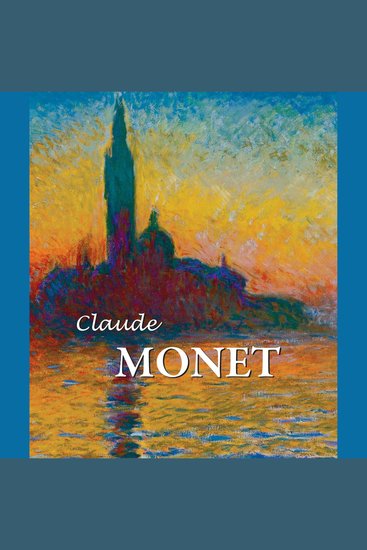
  • Claude Monet - The Father of Impressionism - cover

    Claude Monet - The Father of...

    Nina Kalitina, Nathalia Brodskaya

    • 0
    • 0
    • 0
    For Claude Monet the designation 'impressionist' always remained a source of pride. In spite of all the things critics have written about his work, Monet continued to be a true impressionist to the end of his very long life. He was so by deep conviction, and for his Impressionism he may have sacrificed many other opportunities that his enormous talent held out to him. Monet did not paint classical compositions with figures, and he did not become a portraitist, although his professional training included those skills. He chose a single genre for himself, landscape painting, and in that he achieved a degree of perfection none of his contemporaries managed to attain. Yet the little boy began by drawing caricatures. Boudin advised Monet to stop doing caricatures and to take up landscapes instead. The sea, the sky, animals, people, and trees are beautiful in the exact state in which nature created them – surrounded by air and light. Indeed, it was Boudin who passed on to Monet his conviction of the importance of working in the open air, which Monet would in turn transmit to his impressionist friends. Monet did not want to enrol at the Ecole des Beaux-Arts. He chose to attend a private school, L'Académie Suisse, established by an ex-model on the Quai d'Orfèvres near the Pont Saint-Michel. One could draw and paint from a live model there for a modest fee. This was where Monet met the future impressionist Camille Pissarro. Later in Gleyre's studio, Monet met Auguste Renoir Alfred Sisley, and Frédéric Bazille. Monet considered it very important that Boudin be introduced to his new friends. He also told his friends of another painter he had found in Normandy. This was the remarkable Dutchman Jongkind. His landscapes were saturated with colour, and their sincerity, at times even their naïveté, was combined with subtle observation of the Normandy shore's variable nature. At this time Monet's landscapes were not yet characterized by great richness of colour. Rather, they recalled the tonalities of paintings by the Barbizon artists, and Boudin's seascapes. He composed a range of colour based on yellow-brown or blue-grey. At the Third Impressionist Exhibition in 1877 Monet presented a series of paintings for the first time: seven views of the Saint-Lazare train station. He selected them from among twelve he had painted at the station. This motif in Monet's work is in line not only with Manet's Chemin de fer (The Railway) and with his own landscapes featuring trains and stations at Argenteuil, but also with a trend that surfaced after the railways first began to appear. In 1883, Monet had bought a house in the village of Giverny, near the little town of Vernon. At Giverny, series painting became one of his chief working procedures. Meadows became his permanent workplace. When a journalist, who had come from Vétheuil to interview Monet, asked him where his studio was, the painter answered, "My studio! I've never had a studio, and I can't see why one would lock oneself up in a room. To draw, yes – to paint, no". Then, broadly gesturing towards the Seine, the hills, and the silhouette of the little town, he declared, "There's my real studio."Monet began to go to London in the last decade of the nineteenth century. He began all his London paintings working directly from nature, but completed many of them afterwards, at Giverny. The series formed an indivisible whole, and the painter had to work on all his canvases at one time. A friend of Monet's, the writer Octave Mirbeau, wrote that he had accomplished a miracle. With the help of colours he had succeeded in recreating on the canvas something almost impossible to capture: he was reproducing sunlight, enriching it with an infinite number of reflections. Alone among the impressionists, Claude Monet took an almost scientific study of the possibilities of colour to its limits; it is unlikely that one could have gone any further in that direction.
    Ver livro

  • Way of Being: Indigenous Traditions for Canadian Youth - cover

    Way of Being: Indigenous...

    Corinne Isaacs

    • 0
    • 0
    • 0
    In a world where cultural values and traditions often fade with each generation, "Way of Being: Indigenous Traditions for Canadian Youth" stands as a beacon of preservation and education. This enlightening book delves into the core values, belief systems, and cultural practices of Indigenous Peoples in Canada, offering Indigenous cultural insights for Canadian youth. The book highlights the significance of Indigenous cultural heritage, emphasizing its vital role in shaping Canada's identity and history.
    Ver livro