Junte-se a nós em uma viagem ao mundo dos livros!
Adicionar este livro à prateleira
Grey
Deixe um novo comentário Default profile 50px
Grey
Assine para ler o livro completo ou leia as primeiras páginas de graça!
All characters reduced
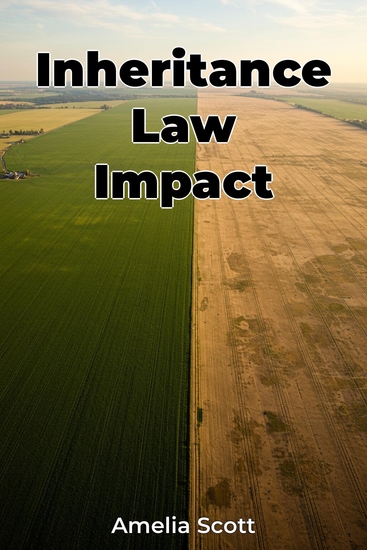
Inheritance Law Impact - cover
LER

Inheritance Law Impact

Amelia Scott

Tradutor A AI

Editora: Publifye

  • 0
  • 0
  • 0

Sinopse

Inheritance Law Impact offers a deep dive into how inheritance laws shape wealth distribution and social mobility, impacting a nation's economic landscape. It highlights that these laws are not neutral; they actively influence wealth trajectories across generations. For example, legal systems favoring primogeniture concentrate wealth, while those mandating equal division among heirs foster greater economic opportunity.

 
The book explores the interplay between inheritance law regimes, wealth concentration, and social mobility. It examines how various legal systems, from feudal systems to modern egalitarian approaches, influence capital accumulation and wealth distribution.

 
By synthesizing economic research, legal scholarship, and statistical data from multiple countries, it reveals common threads and unique divergences in inheritance laws worldwide. Approaching the topic with an interdisciplinary lens, the book progresses logically across chapters, beginning with key concepts and definitions, then moving to direct and indirect effects of inheritance laws on wealth inequality, and finally exploring policy implications.

 
This comprehensive overview makes Inheritance Law Impact valuable for economists, legal scholars, policymakers, and anyone interested in the root causes of wealth inequality and potential policy interventions.
Disponível desde: 21/02/2025.
Comprimento de impressão: 80 páginas.


Outros livros que poderiam interessá-lo

  • Crusades in Europe The: The History of the Catholic Crusaders’ Campaigns against the Ottomans and Christians across the Continent - cover

    Crusades in Europe The: The...

    Editors Charles River

    • 0
    • 0
    • 0
    Christianity was not a state religion for its first three centuries, and it was only when Emperor Constantine the Great declared it so in the early 4th century that the Church was faced with the thorny problem of state-sanctioned violence. The first major Christian authority to justify the use of arms in defense of Church and State was Augustine, Bishop of Hippo, who wrote in the 5th century, “They who have waged war in obedience to the divine command or in conformity with His laws, have represented in their persons the public justice or the wisdom of government, and in this capacity have put to death wicked men; such persons have by no means violated the commandment, ‘Thou shalt not kill.’”  
    	This opinion gained increasing influence in Western Christianity, though in the East, the attitude was (and continues to be) more nuanced. War was tolerated as a regrettable necessity in a world wounded by sin but never blessed. Canon law enacted in the Byzantine (Eastern Roman) Empire tended to treat soldiers who had killed as sinners needing to repent, and Bishop Basil of Caesarea (d. c. 330) believed that they needed to abstain from receiving communion for three years after battle. It was not that that the Eastern Roman Empire was a particularly peaceable state–far from it, in fact: it was engaged in almost continuous warfare for its entire existence. However, its conflicts were mostly defensive in character, fighting barbarians, Persians, or Muslims, and the idea of consecrating arms for the cause of Christianity was considered alien to its spirit.  
    At the Council of Clermont in July 1095, Pope Urban II canonized religious war by urging Western Europe's nobility to take up arms in defense of the Byzantine Empire against the Muslims, thus launching the Crusades, and religious military orders such as the Knights of Saint John, the Templars, and the Hospitallers arose.
    Ver livro
  • Kingdom of Mapungubwe - The Precursor to Great Zimbabwe and Southern Africa's First Kingdom - cover

    Kingdom of Mapungubwe - The...

    Rolf Hedger

    • 0
    • 0
    • 0
    The discovery of Mapungubwe in the early 20th century marked a turning point in the understanding of Southern Africa’s ancient civilizations. Hidden for centuries, this once-thriving kingdom remained unknown to the modern world until 1933, when a group of researchers stumbled upon its ruins on Mapungubwe Hill in present-day South Africa. What they uncovered would challenge colonial-era narratives and reshape the history of African state formation. 
    Archaeological excavations at the site revealed an advanced society that flourished between the 11th and 13th centuries. The remains of elaborate stone structures, pottery, and intricate gold artifacts painted a picture of a powerful kingdom with a sophisticated political and economic system. Among the most significant discoveries was the famous Golden Rhino, a small yet exquisitely crafted artifact that symbolized the wealth and status of Mapungubwe’s elite. Made from delicate sheets of gold carefully shaped around a wooden core, the rhino became an enduring emblem of the kingdom’s prosperity. 
    The site also yielded evidence of a complex social hierarchy. The ruling class resided atop Mapungubwe Hill, separated from the common people who lived in the surrounding lowlands. This physical division suggested a structured society where power was centralized, a departure from earlier African settlements where leadership was more communal. The arrangement of dwellings, burial sites, and ceremonial areas further confirmed that Mapungubwe had developed into a true kingdom with a distinct ruling elite.
    Ver livro
  • A Rare Recording of Bobby Seale Founder of the Black Panther Party - cover

    A Rare Recording of Bobby Seale...

    Bobby Seale

    • 0
    • 0
    • 0
    Robert George Seale (born October 22, 1936) is an African American revolutionary, political activist and author. Seale is widely known for co-founding the Marxist–Leninist and black power political organization the Black Panther Party (originally called the Black Panther Party for Self-Defense) with fellow activist Huey P. Newton to monitor police activities and challenge police brutality in black communities, first in Oakland, California, and later in cities throughout the United States. Seale was also one of the “Chicago Eight” defendants, charged by the US government with conspiracy charges related to anti-Vietnam War protests in Chicago during the 1968 Democratic National Convention, later called the “Chicago seven” when Seale's case was severed from the other defendants. After which, the government declined to retry Seale on the conspiracy charges, and he was never convicted in the case.
    Ver livro
  • My Father's Suitcase - A story of family secrets abuse betrayal - and breaking free - cover

    My Father's Suitcase - A story...

    Mary Garden

    • 0
    • 0
    • 0
    A gripping tale of resilience and survival that offers hope to others who have experienced family violence and suffered at the hands of a sibling.A deeply personal and heart-breaking memoir that explores the troubled relationship between Mary Garden and her younger sister, Anna, who died in 2023 after a short illness. Mary unpacks her life of growing up in New Zealand in the 1950s and ’60s, before making Australia home. She reveals complex layers of intergenerational trauma, including the baggage of her eccentric, deeply flawed father and the secret her mother kept from all of them, revealed only after her death. Mary deals movingly with her sister’s long battle with mental illness and how she once saved Anna’s life. As she unravels these narratives, Mary touches on the guilt and shame familiar to anyone who has had to deal with secrets, violence and ‘madness’ in their family. And she shines a light on sibling abuse, the most common form of abuse in the context of family violence ‒ occurring up to five times as frequently as spousal or parental child abuse ‒ although it is often dismissed as ‘sibling rivalry’. It causes far-reaching, long-lasting harm.
    Ver livro
  • Inca Empire - The Builders of Machu Picchu and Masters of the Andes - cover

    Inca Empire - The Builders of...

    Rolf Hedger

    • 0
    • 0
    • 0
    The story of the Inca Empire begins with a mix of myth and history, deeply rooted in the Andean highlands of South America. According to Inca legend, the empire’s origins trace back to the Sun God, Inti, who sent his son, Manco Cápac, to establish a kingdom on Earth. Manco Cápac and his sister-wife Mama Ocllo emerged from the waters of Lake Titicaca, tasked with finding the place where the sun would set forever. Guided by this divine mission, they journeyed through the Andes, eventually founding the city of Cusco, which would become the heart of the Inca Empire. This mythic narrative blended with historical elements, shaping the early identity of the Incas as a people divinely chosen and destined for greatness. 
    The rise of the Inca Empire began in earnest during the 12th century, but it wasn’t until the 15th century that the Inca began their ambitious expansion under the leadership of Pachacuti. Before this period, the Inca were a small ethnic group living in the valley of Cusco, a modest settlement by the standards of the Andean world. The powerful Wari and Tiwanaku civilizations had already left their marks on the region, and other neighboring cultures, such as the Chanka and the Nazca, vied for dominance in the highlands. However, it was the strategic leadership and military genius of the early Inca rulers that laid the foundation for what would become the largest empire in pre-Columbian America. 
    Manco Cápac, the first Sapa Inca (the title for the emperor), established the social and political framework that would support future conquests. He was followed by a line of rulers who solidified Cusco’s position as the seat of power, but it wasn’t until Pachacuti’s reign that the Inca’s ambitions expanded beyond their small kingdom. Under Pachacuti’s rule, the Inca adopted a highly organized and disciplined military structure, which allowed them to conquer surrounding territories and absorb them into their growing empire.
    Ver livro
  • Spanish Crash Course - The Best Way to Learn a New Language? Like Kids Do! Level 2 Intermediate (Lessons 31-60) Crazy Effective Conversational & Easy to Follow at Home Office or Driving Your Car! - cover

    Spanish Crash Course - The Best...

    Paul Jackson

    • 0
    • 0
    • 0
    Learning Spanish has never been so easy and fun!  
     Lessons 31-60: Take it to the next level!  
    We are thrilled to present the second part of this extraordinary Spanish course, designed specifically for those who want to reach an intermediate level in the language. With our method, you will learn to communicate in Spanish fluently and naturally, just like kids do! 
     Innovative learning methods that truly work!  
    ✅ Flexibility at home, office, or on the go! 
    Imagine being able to learn Spanish wherever you are: at home, in the office, or even while driving your car! Our audiobook provides you with the opportunity to learn while comfortably sitting in your living room, focused at work, or driving towards your next adventure. 
    ✅ Authentic and engaging conversations! 
    We believe that practicing conversations is crucial for acquiring a new language. Through realistic dialogues, you will learn to express yourself fluently in Spanish and effortlessly understand the responses. Discover how to converse like a native speaker in no time! 
    ✅ Fun and effective method! 
    Our unique approach will make you fall in love with Spanish. Through interactive exercises, role-playing games, and engaging activities, you will have fun while learning. Forget about boring and rote studying: with us, learning Spanish will be an exciting adventure! 
    ✅ Structured and organized content! 
    The lessons have been carefully designed to ensure a gradual and effortless progression. Each topic is presented clearly and concisely, providing you with the solid foundation you need to communicate effectively. Additionally, practical exercises will help you reinforce what you have learned. 
     Get ready to impress with your new language skills!
    Ver livro